
Château Giscours: Profile and 10 vintages tasted
Château Giscours has been reborn following investment from the Albada-Jelgersma family in the last 25 years, reports James Lawther MW, who tastes several vintages back to 1995, including 2010 and 2005.


Château Giscours, like so many flagship Médoc estates, has ebbed and flowed with the times, dependent on cycles of new investment to keep the property and wines in tip-top shape.
In the 19th century Jean-Pierre Pescatore and his innovative Polish régisseur, Pierre Skawinski, came to the rescue (securing third growth status in 1855) followed in turn by Edouard Cruse.
In the mid-20th century, the Tari family resuscitated the property after the ravages of economic depression and the war years but the coffers eventually ran dry, at which point in time Dutch entrepreneur Eric Albada-Jelgersma entered the fray – acquiring Giscours in 1995.
Twenty-five years on and after much toil and investment the Margaux cru once again looks to be in a pretty good place.
Scroll down for new scores and tasting notes for Château Giscours wines
This article contains:
- Château Giscours: the facts
- Initial changes at the estate
- The present era
- The winemaking philosophy
- New projects
Château Giscours: the facts
- Date founded: 1552
- Owner: Albada-Jelgersma family
- Area under vine: 165ha of which 100ha in AOP Margaux (the rest AOP Haut-Médoc)
- Grape varieties: Cabernet Sauvignon, Merlot, Cabernet Franc, Petit Verdot
- Annual production: Château Giscours 250,000-300,000 bottles; La Sirène de Giscours (second wine) 100,000-150,000 bottles; Haut-Médoc Giscours 225,000-300,000 bottles; Le Rosé x Giscours 6,000 bottles
What were the initial changes?
Giscours is a massive estate of some 400 hectares, including 19th century château, park, farm, forest, arboretum, lakes, marshland and 165 hectares of vineyard, 100 of which are in the Margaux appellation.
Rundown and in disarray when the Albada-Jelgersma family arrived on the scene, a huge amount of work and capital was necessary to get things back on track.
The first concern was the vineyard, where certain parcels were missing up to 45% of the vines.
So, following the 1996 harvest, more than 130,000 vines were planted and the trellising renewed. Original estimates were two to three years of labour but Albada-Jelgersma insisted the work was completed in a year. Manual harvesting was also reintroduced and subsequently individual parcels replanted.
In the cellars, the barrel park of some 1,500 barrels needed to be entirely renewed, hence the 1995 vintage was aged in 100% new oak barrels. In subsequent years the norm has been around 50%. Buildings were also renovated and the vat room modernised and extended.

And what about the present era?
Fine tuning and an environmental response to climate change have been high on the agenda, with the vineyard again the principal centre of concern.
With so many parcels of varying age (one parcel of Merlot dates back to 1923) and younger vines planted within, the maturity of the fruit can be variable.
A trial parcel was set aside in 2018, the younger vines marked, the maturity of old and young measured and the grapes harvested by selective tris, with up to three passages through the parcel.
The same exercise was repeated in 2019 but this time for parcels within the historical heart of Giscours, a gravelly plateau known as Cantelaude that extends over some 40 hectares.
Finally, in 2020, the entire Margaux vineyard was controlled and harvested this way, the fruit for each selection picked at optimum maturity.
The soils, too, have been given greater attention. Ploughing is now more restrained and cover crops like barley, oats and clover (the latter has the capacity to fix atmospheric nitrogen) sown to help avoid erosion and maintain microbial life.
Weedkillers were abandoned some time ago and, if not fully organic, the approach is heading in that direction.
‘Our other property in Tuscany, Caiarossa, is biodynamically run so that gives us plenty of food for thought but the objective is to find a way that works for Giscours,’ explains general manager Alexander van Beek.
What is the winemaking philosophy?
The two core vineyards of Giscours, Cantelaude and Poujeau, both have deep sandy-gravel soils, the former with a little more clay, the latter drier and stonier.
Both form small hillocks or croups. The late professor Denis Dubourdieu, consultant oenologist at the estate from 2000 to 2015, described Cantelaude as one of the largest and most uniform croups in the Médoc.
Both vineyards are ideal for cultivating Cabernet Sauvignon and through the years the Giscours character has been naturally Cabernet Sauvignon-based.
Fashion dictated a change in the 1980s and early 1990s with Merlot pushed to the fore; the 1995 vintage contained 60% Merlot.
But the new regime has reasserted Cabernet Sauvignon as the prime variety, making up 81% in of the blend in Giscours 2016, although 65 to 70% is probably more the norm these days.
This is not to say that Merlot doesn’t have its place, particularly when sourced from parcels like Casino, planted in 1923. After a disappointing showing in 2017, Merlot has been a crucial part of the blends in 2018, 2019 and 2020.
Giscours has always been on the more masculine side of Margaux with an inherent power, so there is no need to over-extract in the cellar.
The tannins in some past vintages (e.g., 2000) have perhaps been on the robust side due to this. But with the quality of the fruit now being harvested softer extraction is the name of the game, the new approach manifest in 2019 and 2020.
In practice this means lower temperatures for fermentation and more reductive winemaking with a closed circuit for pump-overs and racking with the aid of nitrogen.
Other characteristics of Giscours include an innate freshness in all vintages – even in hot years like 2003 – and remarkable staying power but less Margaux finesse when it comes to aroma and bouquet.

Over the years Giscours has engaged a who’s who of consultant oenologists, including Pascal Ribereau-Gayon, Michel Rolland, Denis Dubourdieu and, since 2019, Thomas Duclos.
Each has left a trace of his era. The most identifiable from the Dubourdieu period was the planting of Petit Verdot in 2004 and an increase in Cabernet Sauvignon in the blend.
Thomas Duclos, until now deemed a Right Bank specialist, has arrived with youthful enthusiasm and the desire to push fruit and freshness to the fore by, amongst other methods, optimising the picking dates for each of the many parcels and selections.
Are there any other new projects of note?
In 2019 Giscours launched the first vintage of a limited-edition rosé, Le Rosé x Giscours. Fashionably pale in colour, it is produced from a parcel of Cabernet Sauvignon that has been more generously pruned and set aside for the purpose. Direct pressing is the method of vinification and the fruit expression pure.
Looking to the future a programme of massal selection is also underway in the vineyards. Vines from some of the old pre-1960s parcels have been selected for use in propagating new material for planting in the vineyard.
It’s also worth noting that the Albada-Jelgersma family recently sold Château du Tertre, also in Margaux, with the stated intention of increasing its focus on the other estates, Giscours and Caiarossa.
‘There is an enormous determination to really put Giscours where it belongs,’ Van Beek told Decanter after the du Tertre sale was announced.
See scores and tasting notes for 10 vintages of Château Giscours wines back to 1995*
*Including one vintage of the estate’s second wine, La Sirène de Giscours 2019.
Related content
Best Margaux 2020 wines tasted en primeur
Finding value in the Médoc plus 12 top wines to seek out
Bordeaux 2011: The top-rated wines tasted 10 years on
Giscours owner sells Château du Tertre in Bordeaux
Château Giscours, La Sirène de Giscours, Margaux, Bordeaux, France, 2019
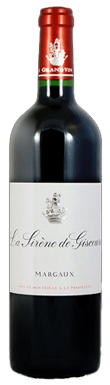

Giscours' second wine has improved tremendously in recent years (2020 is also cracking). The wine has a deep, crimson hue. Recent bottling has left the...
2019
Château GiscoursMargaux

Château Giscours, Margaux, 3ème Cru Classé, Bordeaux, France, 2011
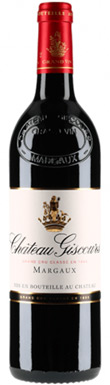
Of course the 2011s show higher acidity on average, but Giscours did a great job here, with smooth tannins and bright fruit. One of the...
2011
Château GiscoursMargaux
Château Giscours, Margaux, 3ème Cru Classé, Bordeaux, France, 2010
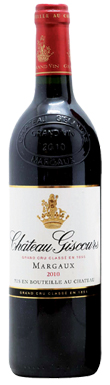
Very perfumed: violets, irises and blackcurrants, supple and lively. Lifted and bright, with fruit and acidity to the fore. Lean and streamlined, tannic structure is...
2010
Château GiscoursMargaux
Château Giscours, Margaux, 3ème Cru Classé, Bordeaux, France, 2005
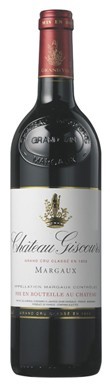
This is a wine that displays the warmth of the vintage with an opulent show of sweet juicy fruit and sweet oak. A medley of...
2005
Château GiscoursMargaux
Château Giscours, Margaux, 3ème Cru Classé, Bordeaux, France, 2004
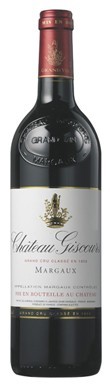
This blend of 58% Cabernet Sauvignon and 42% Merlot was aged in 50% new casks for a year under the watchful gaze of consulting oenologist...
2004
Château GiscoursMargaux
Château Giscours, Margaux, 3ème Cru Classé, Bordeaux, France, 2003
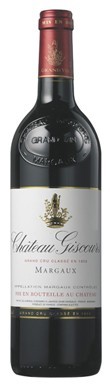
The wine has held up well and is clearly one of the better examples from this hot, dry vintage. There's some brick at the rim...
2003
Château GiscoursMargaux
Château Giscours, Margaux, 3ème Cru Classé, Bordeaux, France, 2001
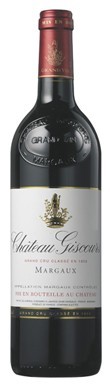
Following the 2000, the 2001 seems finer in style with more zest and energy. The colour is deep and the bouquet complex with floral and...
2001
Château GiscoursMargaux
Château Giscours, Margaux, 3ème Cru Classé, Bordeaux, France, 2000
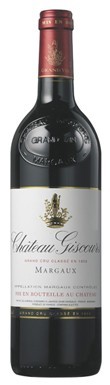
This is a big, rich style of wine with a deep inner core of colour and fruit that is almost on the overripe side. The...
2000
Château GiscoursMargaux
Château Giscours, Margaux, 3ème Cru Classé, Bordeaux, France, 1998
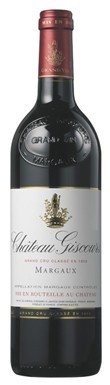
The colour is red with brick at the rim. The bouquet is attractively mature with cedar, tobacco and forest floor notes. It clearly shows more...
1998
Château GiscoursMargaux
Château Giscours, Margaux, 3ème Cru Classé, Bordeaux, France, 1995
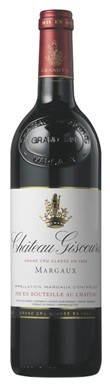
The colour is brick red, the wine rich and sweet (lots of Merlot and 100% new oak) and clearly at its apogee. There's a hint...
1995
Château GiscoursMargaux
