
Anson: Tasting Château La Gaffelière shows St-Emilion’s reinvention
There is a fresh buzz building around this Premier Grand Cru Classé B estate in St-Emilion following a series of investments in the vineyard, says Jane Anson, who offers detailed tasting notes on every vintage since 2011 and an insight into what's been happening.


‘La Gaffelière is easily becoming one of my favourite estates in an appellation that is undergoing a series of reinventions’
Is St-Emilion’s best-kept secret that Ausonius’ villa is almost certainly to be found, not under Ausone’s land, but under La Gaffelière’s?
It is, to be fair, at the foot of the Ausone hill and unquestionably spreads over both. But it is at La Gaffelière, hidden for now underneath a 0.5 hectare plot of vines, that you can find the most significant crop of murals, the floor of a room paved with mosaics, pottery, drains and other archaeological artefacts of the Roman Villa du Palat.The remains were discovered in 1969, when the Count Léo de Malet-Roquefort was pulling up vines for replanting. They were then covered up again for protection while funds were raised for the excavation work.In the 1980s, local archeologists established that the remains had once formed the southern wall of a rural villa from late Antiquity, so 4th century, complete with columns and a large ornamental pool that was 60m long by 7m wide.Even more excitingly for the locals, the murals depicted vines heavy with grapes, suggesting this was a wine-producing estate.
Money for the restoration work ran out, however, and the remains were once again covered up. Today it is Count Léo’s daughter Bérangère Peges de Malet-Roquefort, an art historian, who is in charge of the project. She hopes to create a 3D digital reconstruction of the villa while continuing to raise funds for a public visitor centre.
From 1066 to St-Emilion
La Gaffelière is one of the most fascinating estates in St-Emilion, a place where you can read the history of the town both in the glass and in the vineyards.
Its own history dates back to the same time as the Villa du Pilat, but takes its name from a leper colony that was found at the foot of the village in the Middle Ages; the ‘gaffe’ was the stick that lepers carried to help them walk.
La Gaffelière’s owner, the Malet-Roquefort family, has been at the estate since 1705 and in St-Emilion for 400 years. Its members also hold much of the history of France, and England. William Malet fought in the 1066 Battle of Hastings, playing a significant role in the Norman victory and later becoming high sheriff of Yorkshire before dying in 1071.
A later ancestor was to captain a 1782 ship that took Lafayette to America to fight in the War of Independence.
The names hang on the wall of the tasting room, opposite a Roman mosaic, neatly bringing the two sides of the property’s history together.
A buzz is building around this property
But La Gaffelière is doing much more than celebrating its past.
There is a buzz building around this property that is getting increasingly audible, and it’s easily becoming one of my favourite estates in an appellation that is undergoing a series of reinventions.
You can feel it not only in the wider critics’ reaction to the wines over recent vintages, but in the sense of excitement in the tasting room when chatting with current owner Alexandre de Malet-Roquefort.
This vertical, of vintages dating back to 2011, helps to explain why.
The changes at La Gaffelière come from hard work in the vineyard. More than 50% of the vines have been replanted over the past 20 years, with better matching of grapes to soils and rootstock, following advice from Stéphane Derenoncourt, consultant since 2004.
Natural cover crops grow between the rows to reduce soil erosion and all new plantings are at 9,615 vines per hectare, compared to 7,600v/ha previously. This programme is set to continue until 2024.
But there is another investment happening here that is easy to miss among the many intricacies of the local classification system.
La Gaffelière has been a Premier Grand Cru Classé B estate since 1955, something that makes it part of a select band of 14 châteaux.
St-Emilion’s classification system has invariably been overshadowed by arguments and legal battles that run alongside the ranking, but at its heart it is a rebuke to those who believe Bordeaux has no understanding of terroir.
This is because, in contrast to the Médoc, it is the land and not the estate that is classified in this appellation. Even the biggest names often find that only the best parts of their vineyards are given classified status. Angélus, for example, has 27ha out of 39ha classified as Premier Grand Cru Classé A.
At the Grand Cru Classé level, La Fleur Morange has 2ha out of 3.8ha classified, Villemaurine has 7ha out of 11ha and Laroque has 27ha of its 61ha.
It means that when you are buying a bottle of a classified estate, the juice in the bottle only comes from those sections of the vineyard, with the other parts invariably going into a second wine.
Here at La Gaffelière, 22ha out of the 38ha of vines are classified Premier Grand Cru Classé B. The Roman villa remains, rather happily, are under the Grand Cru, non-classified vines. The vines are located across three different spots: one on the Astéries limestone plateau at 80m altitude; another on south and southwest facing slopes with clay-limestone soils; and a third on lower black sand soils that are AOC Grand Cru.
Classified land means greater value on paper and also in what can be charged for the wine.
Yet, as of the 2017 vintage, La Gaffelière has chosen to use only 15ha of its classified 22ha in the first wine.
‘The frost in 2017 meant that we were forced to use only certain plots of our classified vineyard,’ Alexandre de Malet-Roquefort tells me.
‘We liked the results so much that we decided these would be the plots that we would always use in the wine from now on.’
The main result of this is higher levels of Cabernet Franc in the blend, back to levels last seen in the early 20th century. The oldest Cabernet Franc vines, propagated using massal selection, are used.
La Gaffelière’s vineyard make-up is 70% Merlot and 30% Cabernet Franc, but the first wine generally has a blend of 60% Merlot to 40% Cabernet Franc. Only a decade ago, that grand vin blend was was 85% Merlot and 15% Cabernet Franc.
These changes reflect Cabernet Franc’s ability to better withstand a warming climate and also a redraw the aromatic palate that the best wines of St-Emilion are looking to capture.
It shows, in my opinion, that producers are now more willing to work with the limestone soils, which can create wines that are austere when young but reward with salinity, balance and grace with age. More producers have embraced this rather than covering up these traits with overly ripe fruit and too much oak.
And there’s something particularly heartening about this happening at La Gaffelière, on the same limestone soils that attracted the Romans to this spot 2,000 years ago.
Tasting La Gaffelière wines
This tasting also includes a look at Malet-Roquefort’s Pomerol estate, La Connivence, that has also been undergoing replanting work with an increase of Cabernet Franc.
See also: Our Bordeaux 2018 en primeur verdict
Château La Gaffelière, Clos la Gaffelière, St-Émilion, Grand Cru, Bordeaux, France, 2018
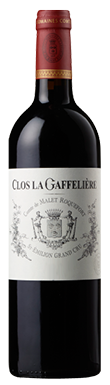

Full of rich red fruits, this is long, sweet and powerfully silky. It's an excellent second wine which now includes some Premier Grand Cru Classé...
2018
Château La GaffelièreSt-Émilion

Château La Gaffelière, Clos la Gaffelière, St-Émilion, Grand Cru, Bordeaux, France, 2016
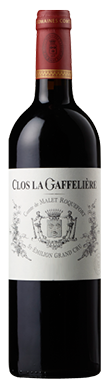
A little tighter than the 2015, this is good quality but needs shaking out with a few hours in a carafe. Once it unfurls, you...
2016
Château La GaffelièreSt-Émilion
Château La Gaffelière, Clos la Gaffelière, St-Émilion, Grand Cru, Bordeaux, France, 2015
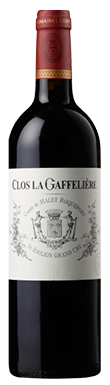
This wine is mainly sourced from the estate's St-Emilion Grand Cru vines, although as of 2017 they have included some fruit from Premier Grand Cru...
2015
Château La GaffelièreSt-Émilion
Château La Gaffelière, St-Émilion, 1er Grand Cru Classé B, Bordeaux, France, 2018
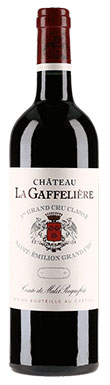
The combination of Cabernet Franc and limestone give this wine both a beautifully floral-laced nose, and a sense of energy and lift as it travels...
2018
Château La GaffelièreSt-Émilion
Château La Gaffelière, St-Émilion, 1er Grand Cru Classé B, Bordeaux, France, 2012
Reserved on the nose. Round but fine on the palate. Long, firm finish. Harmonious.
2012
Château La GaffelièreSt-Émilion
Château La Gaffelière, St-Émilion, 1er Grand Cru Classé B, Bordeaux, France, 2011
This takes its time to open, still feeling tight (rather than closed) even at seven years old, with evident tannic grip. You will find some...
2011
Château La GaffelièreSt-Émilion
Château La Gaffelière, St-Émilion, 1er Grand Cru Classé B, Bordeaux, France, 2016
The Malet-Roquefort family has produced an extremely lovely wine in 2016, with the playoff of intensity and juiciness very well handled. The clay-limestone terroir has...
2016
Château La GaffelièreSt-Émilion
Château La Gaffelière, St-Émilion, 1er Grand Cru Classé B, Bordeaux, France, 2014
Things were really getting into their stride at this point at La Gaffelière, with a clear step forward in terms of precision, balance and power....
2014
Château La GaffelièreSt-Émilion
Château La Gaffelière, St-Émilion, 1er Grand Cru Classé B, Bordeaux, France, 2015
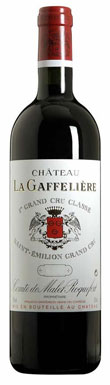
An extremely good quality wine, this is juicy, rich and welcoming. There's perhaps the slightest trace of summer heat but the tannins are silky and...
2015
Château La GaffelièreSt-Émilion
Château La Gaffelière, St-Émilion, 1er Grand Cru Classé B, Bordeaux, France, 2013
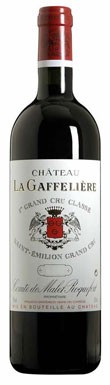
Pure and fresh. Attractive berry aromatics.Tannins finely honed. Fairly persistent finish.
2013
Château La GaffelièreSt-Émilion
Château la Connivence, Pomerol, Bordeaux, France, 2016
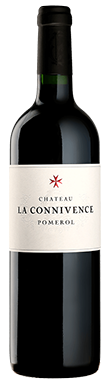
This exceptional 2016 is even better than the 2015. It's still full of brushed damson and black cherry fruits, with a seductive quality to the...
2016
Château la ConnivencePomerol
Château la Connivence, Pomerol, Bordeaux, France, 2015
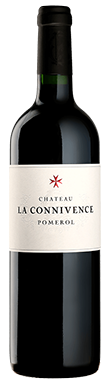
Complex plum, damson and berry fruits with a saline, mineral edge; intense and concentrated with a long, gravelly finish.
2015
Château la ConnivencePomerol
Château la Connivence, Pomerol, Bordeaux, France, 2014
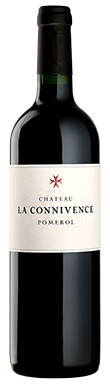
As ever with Connivence, this is a powerful blackberry- and raspberry-filled wine with silky tannins and tons of liquorice and dark chocolate notes. The blend...
2014
Château la ConnivencePomerol
