
Château Léoville Poyferré: producer profile
One of the famous trio of second-growth Léoville estates in St-Julien, Léoville Poyferré is embarking on a bright new chapter in its nearly 400-year history, under the guidance of the latest generation of the Cuvelier family.

The art of mastering a job you never expected to have has been played out twice over at Château Léoville Poyferré, the family-owned and -run property situated in the north of the Médoc’s St-Julien appellation.
It is one of five second-growth classified estates in the commune, three of those sharing, perhaps confusingly, the Léoville name: Châteaux Léoville Las Cases, Léoville Barton and Léoville Poyferré. What unites the estates, apart from a shared property in the case of Las Cases and Poyferré, is also what sets them apart – each the result of family inheritances and property divisions of the original Léoville vineyard (see ‘history’, below).
Scroll down for a selection of top Léoville Poyferré wines to try
One of the most fascinating parts of the Léoville Poyferré story – and there are many – is that the current, and previous, general managers were both somewhat unexpectedly handed the reins to their family’s estates: Châteaux Léoville Poyferré, Moulin Riche, Le Crock and Cuvelier Los Andes in Argentina (see ‘family’, below).
But after an abrupt career change for one, and a life overhaul for another, Léoville Poyferré is now at the top of its game, thanks to these two unlikely candidates and their team.
Passing the baton
First was Didier Cuvelier, who in 1979 at the age of 26 left a career in accountancy to take charge after the then régisseur (vineyard manager) suddenly quit. Under the guidance of his teacher and mentor Emile Peynaud, Didier modernised winemaking facilities and implemented a vineyard restructuring and replanting programme that saw the area under vine almost double to today’s 60ha, with an additional 20ha dedicated to Moulin Riche and its second wine. After only three years, the magnificent 1982 vintage was produced, with consistency a key goal from that point on, leading up to a 100-point Robert Parker score for the 2009 vintage.
More recently, it has been Sara Lecompte Cuvelier taking Léoville Poyferré forward. Joining later in life, Sara left a career in human resources to head the estate in 2018, at the age of 50. ‘If you had told me when I was 20, or even 30, that one day I would move here, and manage the estate, I never could have imagined it,’ she says. It was only as Didier’s retirement neared that she began to imagine her involvement more permanently. Following encouragement from her husband and the Léoville Poyferré board, she moved the family from Lyon and enrolled on a wine estate management master’s course.
Sara’s sister Anne was already at Léoville Poyferré, joining in 2005 to head wine tourism and event management. Completing stints at Châteaux Malartic-Lagravière in Pessac-Léognan and Grand Corbin-Despagne in St-Emilion, Sara fully took charge on 1 January 2018.
Léoville Poyferré: a rich history
The vineyard of Léoville dates back to 1638 when it carried the name Mont-Moytié. At this time it was one of Bordeaux’s largest vineyards with more than 200ha under vine, continuing that way until the French Revolution, when one part was confiscated and then auctioned by the revolutionary government of the day. Following this partial acquisition by the Barton family in 1826, the remainder was inherited by the Marquis de Las Cases and his sister. Her share was passed on to her daughter Marie-Jeanne, wife of Baron Jean-Marie de Poyferré, creating Château Léoville Poyferré in 1840. Each Léoville then added the surname of their family to the estate, all of which were ranked as second growth in the 1855 classification. The Poyferré family sold the property to Lalande and Erlanger, wine merchant and banker respectively, in 1865. It was then bought, alongside Moulin Riche from Armand Lalande’s son-in-law, by the Cuvelier family in 1920, thus beginning the modern era for the estate.

Team spirit
‘The wines were already at a high quality [so] there were no changes to the team,’ Sara says. She retained the assistance of vineyard manager Bruno Clenet, cellarmaster Didier Thomann and oenologist and winemaker Isabelle Davin, all of whom have lengthy tenures at the estate. Clenet arrived in 1998, followed by Davin in 2000 and Thomann in 2005. Michel Rolland was brought in as consultant in 1998, and was joined by Julien Viaud in 2006. Viaud then assumed full-time consultancy duties in 2020 while also working at Cuvelier Los Andes, the family’s Argentinian estate. ‘Julien has such good energy,’ says Sara. ‘We have a very positive way of working with him.’
‘Sara’s team have a lot of experience and rigour,’ Viaud says. ‘She pushes them to be involved right up to their fingertips. They live for Léoville Poyferré, and it’s the same for me,’ he adds.
Rounded character
Of the three Léovilles, Poyferré’s wines are the most voluptuous, generally carrying a greater percentage of Merlot in the blend, and the only ones to use Petit Verdot. ‘Léoville Poyferré owns attractive parcels of very high-quality Merlot,’ Viaud explains.
The Léoville Poyferré vineyard is planted to 68% Cabernet Sauvignon, 24% Merlot, 6% Cabernet Franc and 2% Petit Verdot. ‘Our Merlot can be as concentrated as Cabernet Sauvignon and is sometimes confused for it in blind tastings,’ says Davin. Vine age is another key factor in the wine’s complexity, with vines ‘at their peak’ averaging 30-40 years. ‘Petit Verdot brings spicy aromas, Cabernet Franc finesse and elegance, Cabernet Sauvignon structure, freshness and concentration, and Merlot sexiness, plus roundness and sucrosity,’ says Sara.
Aerial analysis and soil studies led to the introduction of more specially adapted rootstocks – meticulously selected by Clenet from five different suppliers – and of different intra-plot processes, pruning and harvesting plot by plot. This is matched with increased precision in the winery, using vats of varying sizes.
While ‘the only problem with the most recent 2021 vintage was the yield’ – a low 23hl/ha, as opposed to a more normal 45hl/ha – this did allow the team to use smaller tanks, for greater precision. There are now 57 temperature-controlled stainless steel tanks (up from 35 in 2010) ranging in capacity from 15hl to 180hl. Grapes are sorted twice, manually and via an optical sorter, since 2011, before pre-maceration cold fermentation to retain freshness and purity of fruit. Malolactic fermentation takes place in new French oak before the wine is aged for 18-20 months in 80% new oak.
Cuvelier family & estates: the story
Originally from Lille in northern France, the Cuvelier family has been involved in the wine trade for more than 200 years. They started out as merchants and still operate a Bordeaux-based négociant firm, run by Olivier Cuvelier (also formerly president of the Alliance des Crus Bourgeois du Médoc, until June last year). The first winery acquisition was in 1903 with the purchase of Château Le Crock, a 32ha property in St-Estèphe, now ranked cru bourgeois exceptionnel.
Château de Camensac, a fifth growth in Haut-Médoc, was acquired in 1912 but was sold in 1964. The purchase of Châteaux Léoville Poyferré and Moulin Riche followed in 1920. The name and grapes from Moulin Riche’s single 20ha block in St-Julien were used as the second wine of Léoville Poyferre until Moulin Riche became its own grand vin in 2009, with a second wine, M de Moulin Riche, from 2018. The 65ha property Cuvelier Los Andes in Mendoza, Argentina was added in 1998.
Vintage notes
A fascinating tasting covered a mini-vertical from 2019 back to 2014, as well as 2008, 2005 and 2003 (see below). ‘The 2015 is emblematic of us and the appellation, while 2016 is the same quality as ’18, ’19 and ’20,’ Sara says, with Thomann adding: ‘The 2018 is exuberant and rich, like 2010, while 2008 needs food to complete the experience.’
When asked their favourite vintages, Sara alights on 2011, referring to it as a ‘magnifique vintage’ that wasn’t well received at the time but now outperforms 2012 in terms of consumer preference, and as such commands higher prices. For me, a highlight of the tasting was 2005, and yet Davin laments that if they had only had the technology and equipment they have now, the quality could have been even better.
All of the wines display energy and power alongside elegance and class – indeed the latter two were words I wrote on the whiteboard wall of their tasting room before ending my visit. Detail, precision, concentration and finesse, each expressed through the conditions of the vintage.

A taste of the future
Since arriving, Sara has concentrated efforts into marketing and communication, social media and tourism – prior to Covid, the estate welcomed up to 7,000 visitors annually. ‘We want to be accessible,’ she says. Also offered are international shipping services for exclusive back-vintages available only at the château.
New labels have been designed in order to better distinguish the grand vin and second wines of both Léoville Poyferré and Moulin Riche, and celebrations to mark 100 years of family ownership – put on hold due to Covid – will take place in several cities around the world later this year.
Sara’s goal to raise the estate’s reputation seems to be on track. As Matthew O’Connell, CEO of LiveTrade and head of investment at Bordeaux Index, says: ‘It’s a well-followed, top-25 château, and demand has been pretty strong – trading on our LiveTrade online platform was up around 40% in 2021.’
O’Connell adds: ‘We have a view that Léoville Poyferré outperforms in tougher vintages, for instance 2002, 2004, 2007. But buyer interest tends to be focused on the best vintages, so last year our most active trading was in 2016 and 2018, as well as 2009 and 2010.’
‘Some people call us une belle en dormis (‘a sleeping beauty’), because we’re not so known,’ says Sara. ‘All the classified estates are working to strengthen their brands and we must do the same. We take nothing for granted – you have to prove yourself.’ Judging by the quality of the 2018, 2019, 2020 vintages, and the excellent 2021, the team at Léoville Poyferré are certainly doing that.
Georgina Hindle is Decanter’s regional editor for Burgundy and Bordeaux, and editor of Decanter Premium online. She lives in Bordeaux.
Savour a second growth: the Léoville Poyferré wines to try
Related articles
- Bordeaux 2021 wines: Our en primeur verdict
- Left and right bank Bordeaux explained
- Stephen Brook: ‘It is astonishing how rapidly changes can take place in the Bordeaux region’
- Château Léoville-Las Cases: A ‘Super Second’ Masterclass in NYC – Buy Tickets
Château Léoville Poyferré, St-Julien, 2ème Cru Classé, Bordeaux, France, 2019
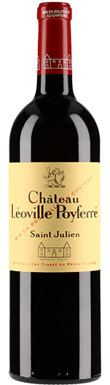

So aromatic with real complexity of notes on the nose, perfume and black fruits. Quite tannic on the palate, broad-shouldered and carefully detailed with a...
2019
Château Léoville PoyferréSt-Julien

Château Léoville Poyferré, St-Julien, 2ème Cru Classé, Bordeaux, France, 2018
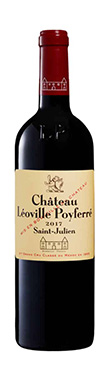
Gorgeously rich, heady and seductive nose, really expressive - you can sense the concentration in the rich blackcurrant aromas, soft hints of bramble bush, perfume...
2018
Château Léoville PoyferréSt-Julien
Château Léoville Poyferré, St-Julien, 2ème Cru Classé, Bordeaux, France, 2017
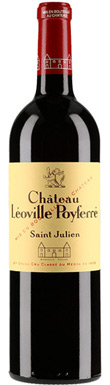
Much more bramble aromas, still quite expressive, a little bit vegetal on the nose still, more direct and straight. Lovely hit of bright red and...
2017
Château Léoville PoyferréSt-Julien
Château Léoville Poyferré, St-Julien, 2ème Cru Classé, Bordeaux, France, 2016
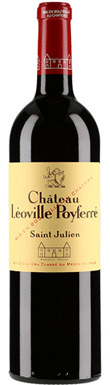
What a wine - such class from the excellent 2016 vintage. A touch of meatiness to the nose with bacon, green peppers and black pepper....
2016
Château Léoville PoyferréSt-Julien
Château Léoville Poyferré, St-Julien, 2ème Cru Classé, Bordeaux, France, 2015
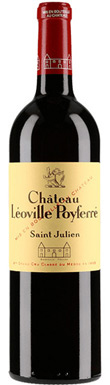
Bramble tones with gorgeous green pepper Cabernet styling, from the 65% in the blend, alongside chocolate and raspberry and a delicate hint of perfume on...
2015
Château Léoville PoyferréSt-Julien
Château Léoville Poyferré, St-Julien, 2ème Cru Classé, Bordeaux, France, 2014
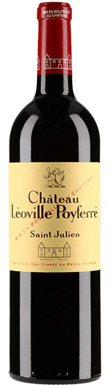
Strong nose, supple and forward, quite highly charged in terms of fruit ripeness. Fruit fades a little quickly, leaving some mineral stones and dry tannins...
2014
Château Léoville PoyferréSt-Julien
Château Léoville Poyferré, St-Julien, 2ème Cru Classé, Bordeaux, France, 2008
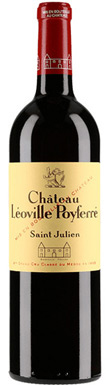
You're getting the aged, mature aromas; cola, toffee, caramel, vanilla and blackcurrant. Slightly subdued on the palate. still knitted down but so well structured, this...
2008
Château Léoville PoyferréSt-Julien
Château Léoville Poyferré, St-Julien, 2ème Cru Classé, Bordeaux, France, 2005
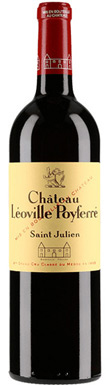
A classic St-Julien that exhibits a dabble of perfume, incense and florality which complement the blackberry and blackcurrant fruits. A beautifully silky palate and well-integrated...
2005
Château Léoville PoyferréSt-Julien
Château Léoville Poyferré, St-Julien, 2ème Cru Classé, Bordeaux, France, 2003
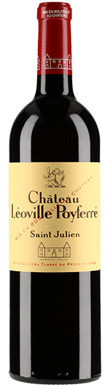
Smells really lovely, you get that burnt caramel note, cola, sour cherry, some bramble blackcurrant and dried flowers in the background. Really chewy and mouth...
2003
Château Léoville PoyferréSt-Julien
Château Léoville Poyferré, St-Julien, 2ème Cru Classé, Bordeaux, France, 2001
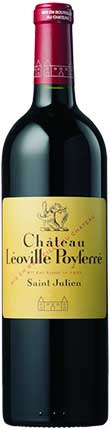
The finesse of St-Julien comes through clearly in the glass, heightened by both bottle age and the character of the 2001 vintage itself. Expect cured...
2001
Château Léoville PoyferréSt-Julien