
Inside Cheval des Andes – A New World ‘grand cru’
Jane Anson's 2016 interview with the team behind Argentina's Cheval des Andes, dubbed a 'grand cru' of the New World - plus Decanter contributors taste the wines...


It can’t be easy committing to a stylistic change in an already successful wine.
Cheval des Andes has long been seen as one of Argentina’s stars; a joint project started in 1999 between two LVMH estates: Cheval Blanc in Bordeaux and Terrazas de Los Andes in Argentina. Known for its stunning location in the Andes foothills, its polo field and its award-winning Malbec and Cabernet blends, it has a reputation as a ‘New World grand cru’.
I last visited Cheval des Andes in 2006 on a trip around Mendoza’s vineyards, and it stood out both for its polished flavours and high hopes of becoming one of those prestigious international partnerships in the mould of California’s Opus One.So getting a chance to taste a vertical of Cheval des Andes when the team arrived in Bordeaux was unmissable. And it was then we were told about the reservations some of them had had about the style of the wine.‘It was the 2009 vintage that really brought the concerns home to Pierre Lurton,’ the winery’s Italian technical director Lorenzo Pasquini explained.‘Pierre had been at the origin of the Cheval des Andes project, and yet he felt the 2009 was at the extreme end of ripeness, with lots of over-exuberant new oak.‘He knew it was well regarded, but felt it was losing the identity of its soils and location’.
Cheval des Andes is still sexy, spicy and clearly from a dry Southern Hemisphere climate
Our tasting of vintages from 2009 to 2014 followed the evolution of the wine’s style and, although you always have perfect vision in hindsight, it’s hard to disagree that the 2009 vintage is an exuberant international style. But as we moved to the more recent years, the wine both deepened and yet grew more taut, more subtle.
But for fans of the early wines, don’t worry: the style hasn’t changed too much.
Cheval des Andes is still sexy, spicy and clearly from a dry Southern Hemisphere climate. Black olives and liquorice abound.
And yet more recent wines show a vintage variation that is not always evident in Argentinian wines.
‘It’s not that they don’t have it, it’s that they over compensate to hide it,’ is how Pasquini describes it.
Moving away from a successful style always invites the possibility of disappointing customers. So why take the risk? ‘We are lucky enough to be at 1,100m above sea level for our main Las Compuertas site,’ says Pasquini, who has been with Cheval des Andes since 2014 and previously worked at both Château Palmer in Bordeaux and Tenuta San Guido in Tuscany.
‘There are no other vineyards between us and the Andes, which gives us the direct benefit of the altitude, freshness and nuance offered by the mountains. We simply want to ensure the wines are a true reflection of their location.’
To understand Cheval des Andes’ new direction, you have to get under the skin of Cheval Blanc in Bordeaux.
Not the style (Argentina is a long way from St-Emilion, in terms of altitude, rainfall, soils – everything) but the philosophy of winemaking.
Most important is the idea of lifting the veils that stand between soil and wine. These veils can come in many forms, from too much reliance on irrigation to artificially low yields to too much new oak.
In the vineyards, a dedicated team is being assembled only for Cheval des Andes, where once it was shared with Terrazas de Los Andes.
A new irrigation system uses much less water because in hot climates particularly, the key is slowing down ripening to encourage complexity.
The natural taste of well ripened grapes – Cabernet Franc and Petit Verdot round out the Malbec and Cabernet Sauvignon – are left to express themselves. In the cellar, no tricks are used: no adding of acid or leaving behind of sugar.
At the same time, the 100% new oak seen in the early 2000s has today fallen to 30% to 50% depending on vintage, with barrel size increased from 225 litres to between 400l and 500l, with trials of the large 1,500l wooden vats commonly found in the Rhône.
And the polo field and the stables have disappeared to make room for a new winery and cellar.
‘We still have a polo team,’ says Paquini, ‘but we had to choose between that or a cellar extension. There was no contest’.
This article first appeared in the January 2017 issue of Decanter magazine.
Tasting Cheval des Andes
The following wines have been tasted by a range of Decanter contributors.
Cheval des Andes, Mendoza, Argentina, 2009
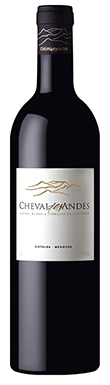

Very ripe bouquet with aromas of blackberries and spices. Dense and lacking in energy. Slightly thick tannins, a lot of wood and a strong presence...
2009
Cheval des Andes

Cheval des Andes, Mendoza, Argentina, 2011
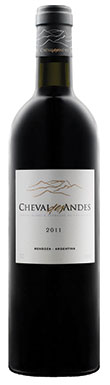
A wine of serious Bordeaux pedigree. A blend of Malbec, Cabernet and a clone of Petit Verdot from Château Margaux. Tight, linear and brooding.
2011
Cheval des Andes
Cheval des Andes, Mendoza, Argentina, 2012
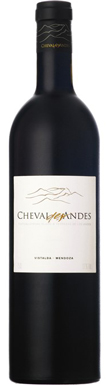
Supple in its age with tertiary notes of leather and tobacco coming to the fore, and undertones of black olive and fig. This vintage has...
2012
Cheval des Andes
Cheval des Andes, Luján de Cuyo, Mendoza, Argentina, 2013
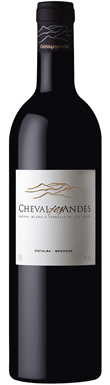
When Château Cheval Blanc’s Pierre Lurton visited Mendoza in the late 1990s, he teamed up with Roberto de la Mota, finding a block of ungrafted...
2013
Cheval des AndesLuján de Cuyo
Cheval des Andes, Mendoza, Argentina, 2014
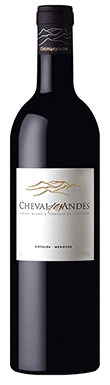
<p>The 2014 is made by the Cheval-Blanc team. With a peppery nose, the bouquet is reminiscent of northern Rhône and the Syrah grape. Precise and...
2014
Cheval des Andes
Cheval des Andes, Mendoza, Argentina, 2015
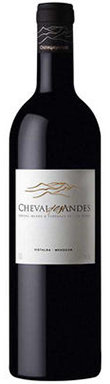
An expressive nose with fragrant red fruit notes and hints of bay leaf and cloves; a harmonious balance of the plushness of Malbec (69%) and...
2015
Cheval des Andes
Cheval des Andes, Mendoza, Argentina, 2016
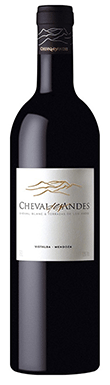
A cooler vintage which shows delicious freshness in the wine with tension on the palate and crunchy red and black berry fruit profile. Showing very...
2016
Cheval des Andes
