Chianti Classico 2019 plus late releases
Michaela Morris tastes and rates the Chianti Classico 2019 vintage, plus some late releases from 2018. Read her report plus tasting notes for 48 wines.


Chianti Classico’s annual ‘Collection’ tasting at Florence’s Stazione Leopolda is typically a two-day, surround-sound immersion complete with 200 producers and hundreds of wines.
Not to be defeated by Covid 19, this year’s event was postponed, rolling out in several locations this month – albeit without wineries attending.
Unable to travel, I climbed Chianti Classico’s ladder in the silence of my home in Vancouver, Canada, tasting over 120 new releases.
Scroll down for Michaela Morris’ top-scoring Chianti Classico 2019 and 2018 wines
The denomination’s three-tier classification – annata (vintage), Riserva and Gran Selezione – makes for a multi-vintage panorama.
On the first rung, annata wines require twelve months of ageing before release. As numerous estates choose to age theirs longer, I sized up 2019 while revisiting 2018.
The 2019 vintage
For context, the 2019 growing season was off to a good start in early spring. Budbreak occurred at the regular time and abundant rainfall built up reserves. However, cool wet conditions in May delayed the vegetative cycle. Temperatures fell as low as 2°C at night. ‘At the end of May, I wouldn’t have bet one Euro on the quality of the year given that the vines had barely grown at all,’ says Poggerino’s Piero Lanza.
Summer weather arrived suddenly at the beginning of June and it remained warm and dry all the way through to September. Sporadic rain showers were just enough to refresh the vines and fresh nighttime temperature countered the balmy days. ‘It was a very regular summer – warm but not excessively so,’ says Tommaso Francione at Rocca della Macìe.
Despite the clement weather, the vines did not completely catch up after the delayed start. As such, harvest was late for many estates. ‘Normally we finish between the 5 and 7 October,’ states Laura Bianchi at Castello di Monsanto. ‘In 2019, we finished on 17 October.’ Favourable conditions made for a relatively stress-free, ‘leisurely’ harvest. It was also a plentiful crop, especially coming after the severely short 2017 vintage and the lower than average 2018.
Enthusiasm for the 2019 vintage is palpable among Chianti Classico’s growers. However, not everyone describes it as picture perfect.
In the warm zone of San Casciano Val di Pesa, Castello di Gabbiano’s winemaker Federico Cerelli noted significant heat spikes. ‘The summer was warmer than 2018 with less marked diurnal temperature differences,’ he says.
At Isole e Olena in Barberino Tavarnelle, Paolo de Marchi adds, ‘it was the first year with warm nights.’ He suggests that this may have contributed to lower acidity and higher alcohol.
Of the 20 or so 2019 annatas I sampled, the first sips were very promising. The wines are focused, well-defined and mouthwatering. Besides freshness and intensity of flavours, the structure is more assertive than the early 2018 annata releases last year. Nevertheless, most are already approachable and will drink beautifully over the next five to eight years.
Some, like Castello di Ama, Poggerino and Rocca di Montegrossi punch well above their weight. In all honesty, I would not turn down a glass of any of the wines I tried.
The 2018 vintage
I fleshed out my tasting of 2019 with a couple of dozen late-release annatas. An atypical vintage, 2018 was humid with frequent downpours in August – a month that often does not see a drop of rain. However, the frequency and quantity of rain varied from one pocket to another. ‘We had record rainfall in August,’ says Roberto Stucchi at Badia a Coltibuono, ‘however, our neighbours literally just a few miles down the road struggled with severe drought.’
The weather turned in September, bringing warm, drying winds. Timing of the harvest had a considerable impact on the style of wine produced. ‘Those who were able to wait made quite muscular wines with solid structure,’ says Giovanni Manetti, president of the Chianti Classico consorzio and owner of Fontodi. But this wasn’t possible for everyone – ‘We had to harvest mid-September because the rain compromised the quality of the grapes a bit,’ says Matteo Vaccari at Cigliano di Sopra. He describes the resulting wine as less concentrated.
There were also implications in the cellar. ‘Due to the rain, the grape skins were thinner,’ explains Monica Raspi at Pomona. She responded by making less frequent punch downs and giving a shorter maceration of two weeks rather than three or four.
These differences are manifest in the wines and there are successes on both sides of the spectrum. I appreciated the slender, lightly structured Badia a Coltubuono as much as the more robust Fontodi, though the latter will have more ageing potential.
Also among my top wines were classy mid-weights Isole e Olena, Tenuta di Carleone and Istine’s Vigna Cavarchione, which captured the beautiful aromas of the vintage.
Are Chianti Classico annata wines worth buying?
Most patently obvious in tasting both the 2018 and 2019 vintages is the overall quality of the annata category.
It is a treasure trove of incredible value for money, but the wines should not simply be considered as ‘entry level’. These are arguably Chianti Classico’s most transparent wines, with an immediate ability to demonstrate the intricate differences of altitude, latitude, exposure and soil of the region’s diverse terroir.
It would be a mistake to scale Chianti Classico’s hierarchy too quickly and overlook this category.
Top Chianti Classico 2019 and 2018 releases:
View all 48 Chianti Classico 2019 and late releases tasted
View all 48 Chianti Classico 2019 and late releases tasted
You may also like:
Brunello di Montalcino 2016: vintage report and top wines
Brunello di Montalcino Riserva 2015: vintage report and top wines
Bibi Graetz Colore: Celebrating 20 vintages
Istine, Vigna Cavarchione, Chianti Classico, Tuscany, Italy, 2018
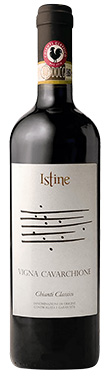

Though firmly rooted in the township of Radda, Istine’s Angela Fronti slips into the neighbouring commune of Gaiole to craft this single-vineyard bottling. At 430 metres on rocky Galestro soil, the six-hectare site is planted entirely to Sangiovese. It exudes aromas of fennel, mint, tarragon and wild cherry, with blood orange and crushed stones on the palate. Though midweight, it has an extra layer of flesh compared to the classic annata. Firm, chalky tannins expand across the palate giving an assertive grip, with a slightly salty finish.
2018
IstineChianti Classico

Castello di Ama, Ama, Chianti Classico, Tuscany, Italy, 2019
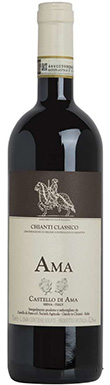
The 2019 Ama is a lovely and nuanced wine, crafted from the estate’s youngest vines with an average age of 10 to 12 years old. Refined in second-use barriques, the aromas are framed by understated oak nuances, however intriguing scents of cherry, sage blossom, dried flowers and exotic herbs are uninhibited. The sumptuous palate is lifted by citrus zest, and finessed tannins coat the mouth with a caressing clay-like texture.
2019
Castello di AmaChianti Classico
Tenuta di Carleone, Chianti Classico, Tuscany, Italy, 2018
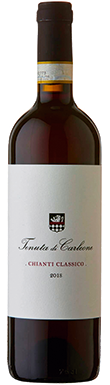
Sean O’Callaghan, formerly at Riecine, heads up winemaking at Carleone. He ferments this with 10% whole bunches and gives it a long maceration of two months. Ageing is in a combination of stainless steel and old oak. Capturing the lightness, brightness and depth of Radda, it soars with cherry, strawberry and rhubarb, then touches down effortlessly with liquorice root and sweet moist earth. Though midweight, there is a sneaky tactile grip. It finishes with a green, spicy note.
2018
Tenuta di CarleoneChianti Classico
Fèlsina, Berardegna, Chianti Classico, Tuscany, Italy, 2019
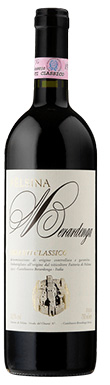
At the southeastern limit of Chianti Classico, Fèlsina’s expansive vineyards look towards Montalcino. The annata is assembled from various parcels rising from 320 to 420 metres on rocky calcareous soil with layers of sandstone. As usual, it is more earthy than fruity, bringing in evocative accents of violet, liquorice and pepper. The palate is superbly textured with fine, grainy tannins providing a sensuous grip. Dark fruited and tangy with admirable depth, it will drink well now and over the next decade. Finishes with a sprinkle of cinnamon.
2019
FèlsinaChianti Classico
Monteraponi, Chianti Classico, Tuscany, Italy, 2019
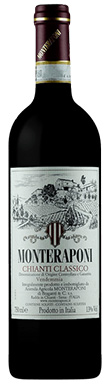
After a slow start to the growing season, Monteraponi's Michele Braganti anticipated picking his 2019 in mid-October. However, ripening suddenly accelerated during the last few days of September, bringing harvest forward to the beginning of October. Delightfully tousled, this is dripping with wild dark forest berries, garden herbs and spice. There is a crunchiness on the palate with some upfront mineral notes and juicy tannins. Though midweight, it has the structure and substance for another seven to eight years in the cellar.
2019
MonteraponiChianti Classico
Poggerino, Chianti Classico, Tuscany, Italy, 2019
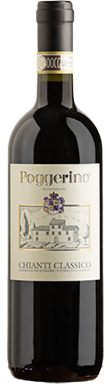
Owner and winemaker Piero Lanza crafts this from the estate’s younger vines, averaging 20 years old. In 2019 he says the vines were able to catch up after the late start, ripening evenly until harvest which lasted from late September until early October. It has penetrating aromas redolent of currants, fresh forest growth and liquorice roots. The palate exhibits pure, youthful, pulpy dark fruits with a sour-cherry twang and offsetting flintiness. Linear tannins sneak up and cinch like a belt, while nuances of cinnamon linger on the finish.
2019
PoggerinoChianti Classico
Rocca di Montegrossi, Chianti Classico, Tuscany, Italy, 2019
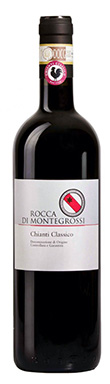
Owner Marco Ricasoli recalls the harvest of 2019 as unusually calm – one of the few in which he didn’t have to base his picking strategy on the weather forecast. While his wines never lack freshness, the 2019 is positively racy! Scents of blackberry and fennel are interlaced with smoke, and the palate brings together brambly fruit with fleshy red plum. This is mouthfilling and clean, with ripe, smooth tannins that are chalky textured - plus all of that vibrant acidity.
2019
Rocca di MontegrossiChianti Classico
Fontodi, Chianti Classico, Tuscany, Italy, 2018
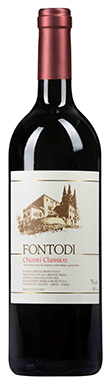
Fontodi’s 2018 is one of the vintage’s denser annata. Besides lower rainfall in the area of Panzano, owner Giovanni Manetti also points to a sudden drop in nighttime temperatures just before the harvest - close to 0°C - which dried the grapes slightly, giving extra concentration. A deeply coloured, dark fruited, full-bodied Chianti Classico with polished oak nuances, it offers up aromas of leather, tobacco, black plum and spice. It flexes its muscles on the palate with layers of ripe tannins but allows space for the pure blackcurrant to ring out. You could forget about this in the cellar for a couple of years.
2018
FontodiChianti Classico
Isole e Olena, Chianti Classico, Tuscany, Italy, 2018

Besides a healthy dose of Canaiolo Nero, proprietor Paolo De Marchi blends in a dash of Syrah to give backbone, especially in lighter vintages - he believes it to be less invasive than other international varieties. Fragrantly expressive, enticing notes of aromatic herbs, rose, fennel, clove and fresh forest floor greet the nose. While wonderfully medium in weight, this packs a lot in, especially tangy blackcurrant. Chalky tannins are subtly assertive and will carry the wine through the midterm.
2018
Isole e OlenaChianti Classico
Istine, Chianti Classico, Tuscany, Italy, 2018
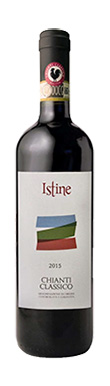
While Angela Fronti makes a top-notch trio of distinct single-vineyard bottlings, her estate blend is no slouch. It’s also among the region’s best value for money. Mostly Radda fruit with a little bit from Gaiole, the 2018 bursts with vitality and freshness. Gorgeous scents of violet and juniper meet crunchy raspberry and redcurrant. It’s lightweight but not flimsy with fine, powdery tannins caressing the mid-palate. Simply a joy to drink.
2018
IstineChianti Classico
