
Bibi Graetz Colore: celebrating 20 vintages
Stephen Brook talks with 'cult winemaker' Bibi Graetz, and tastes a vertical of his sought after Colore bottling spanning the vintages 2000 - 2018.


Bibi Graetz trained in Florence as an artist, but by the late 1990s he had caught the wine bug. It was fortunate that his family property, the Castello di Vincigliata in Fiesole, was surrounded by vineyards.
There were two concepts that guided him as a wine producer: he wanted to focus solely on local varieties, and he wanted to source his grapes from very old vineyards, which he likes to think of as ‘gardens’, each being meticulously tended by hand.
Scroll down for tasting notes and scores of 14 Bibi Graetz Colore wines spanning 2000 – 2018
Graetz is keen too on local white varieties such as Ansonica and Vermentino, which flourish on the island of Giglio off the Tuscan coast. He had to negotiate leases on the vineyards he discovered, as he found that their owners were very reluctant to sell them. So he developed a patchwork of sources in various parts of Tuscany.
‘Sometimes I have 50 different lots of Sangiovese in the cellar, which gives me exciting blending possibilities,’ he says.
Relaxed and informal, with an engaging smile, Graetz doesn’t appear to have allowed his status as a cult winemaker go to his head. At the same time he doesn’t come over as self-deprecating. On the contrary, he seems fully persuaded by the path he is following, even if it means ignoring Italy’s hallowed DOC/DOCG system of appellations and championing unorthodox styles of vinification and ageing.
His principal wine is Testamatta, a pure Sangiovese of which he produces around 60,000 bottles, but his greatest efforts – and selection – go into his scarcer and costlier Colore, which is adorned with colourful labels based on his own paintings.
Colore was originally produced from vineyards in Fiesole, and production was limited to 600 bottles. Over the years, Graetz has located new sites that fit with his vision, and production has grown to around 9,000 bottles today.
In 2004 he found vineyards near Siena, but he takes particular pride in the 80-year-old vines he located in Lamole, which lies within the Chianti Classico zone at an elevation of around 650 metres. ‘I find the elevation at Lamole brings me greater purity of flavours, with more red fruits than black’.
From the 2020 vintage, Graetz will add grapes from a site in San Donato with 70-year-old vines.
Colore’s changing style
There is a clear change in style from the first decade of Colore to more recent vintages. ‘As I was self-taught, I felt I needed some guidance and initially hired a consultant winemaker to advise me. He was keen to follow what he perceived as the demands of the market, so he opted for super-ripe grapes, very low yields, and a lot of new oak.’
When I noted that, contrary to expectations, the older vintages were much darker in colour than recent ones, he explained: ‘Those original vineyards for Colore were mostly planted with Colorino and Canaiolo, which give darker wines than Sangiovese.
Today, with the additional vineyards, there is a majority of Sangiovese – generally 80-90% – so the colour is lighter. And the winemaking has changed too, as I’m looking more for elegance and vibrancy than power and extraction.’
There is no winemaking formula.
Since 2005 Graetz has used indigenous yeasts, and most of his vineyards have been organic since 2010. ‘It’s difficult to be entirely organic, as some of the guys who farm the very old vineyards don’t find it easy to adapt to new methods.’
Colore is mostly aged in older barriques for at least 24 months, though Graetz also uses some larger casks and cement vats.
It’s clear that he’s an instinctive winemaker rather than one who uses a textbook – I doubt that many university-trained oenologists would agree with his statement: ‘The older the wood, the more beautiful the wines.’ However, it’s not an outlandish view, as many of the most renowned wines from Châteauneuf-du-Pape, for example, are also aged in very old barrels.
Colore doesn’t come cheap: around £200 for current vintages, and considerably more for some older ones. Whether that offers good value is debatable, but the wines are consistent in quality, if not always in style, and they avoid the dangers of over-ripeness. Moreover, they age well.
This vertical tasting revealed no disappointing vintages, and to have made an excellent wine in the tropical 2003 vintage requires skill and judgment.
The tasting
Fine & Rare hosted this rare opportunity to taste a vertical of Bibi Graetz Colore to celebrate the wine’s 20th vintage, with the release of the 2019 later this year.
Sadly, the 2001 was corked, so I have omitted this from the tasting results below.
Although all the wines were excellent, if there is one vintage worth looking out for it is the 2006. A splendid wine in its own right, it can be drunk with pleasure now but also has the structure to age for a decade to come.
Bibi Graetz Colore: 14 vintages
You may also like:
Brunello di Montalcino 2016: vintage report and top wines
Chianti Classico: a glowing future plus 12 must-try wines
Finding value: smart picks from Italy’s top producers
Tua Rita: producer profile plus latest releases tasted
Bibi Graetz, Colore, Tuscany, Italy, 2000
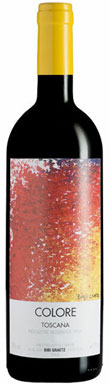

The hot dry August and September led to high sugars but often limited phenolic ripeness. The harvest was early but many wines lacked acidity. The...
2000
Bibi Graetz

Bibi Graetz, Colore, Tuscany, Italy, 2003
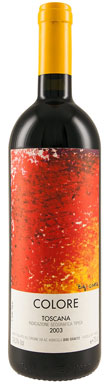
In Italy as well as elsewhere in Europe, this was the hottest summer in over a century. Some rain in early September saved the day....
2003
Bibi Graetz
Bibi Graetz, Colore, Tuscany, Italy, 2004
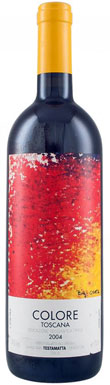
A moderate summer ensured slow even ripening. The crop was both generous and perfectly ripe. Even though the wine shows considerable extraction and power on...
2004
Bibi Graetz
Bibi Graetz, Colore, Tuscany, Italy, 2005

The mixed summer was followed by a warm September, and Graetz wisely harvested quickly before the heavy autumnal rains. The nose is leafy and brambly,...
2005
Bibi Graetz
Bibi Graetz, Colore, Tuscany, Italy, 2006
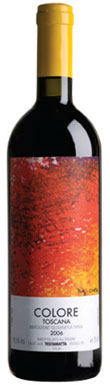
Rain and cool weather in August concerned growers, but cool September nights saved the quality, and the wines were concentrated, ripe, and powerful. This Colore...
2006
Bibi Graetz
Bibi Graetz, Colore, Tuscany, Italy, 2007
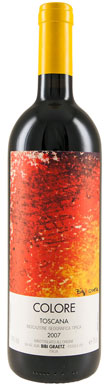
A mixed summer, with some cool and rainy spells, led to an early and copious harvest. Relatively low acidity suggests the wines will not age...
2007
Bibi Graetz
Bibi Graetz, Colore, Tuscany, Italy, 2008
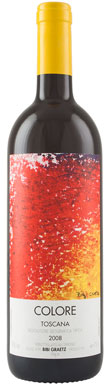
A late ripening year and rain at harvest meant sorting was essential, but potential quality was high. The nose is remarkable for its elegance, with...
2008
Bibi Graetz
Bibi Graetz, Colore, Tuscany, Italy, 2009
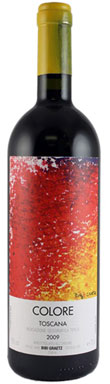
Very hot conditions, especially in August and September, led to wines with high alcohols and limited finesse. Yields were generous but the colour here is...
2009
Bibi Graetz
Bibi Graetz, Colore, Tuscany, Italy, 2010
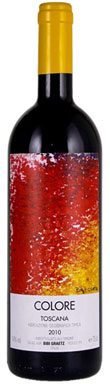
This was a late harvest and most growers struggled to reach full ripeness. Many, including Graetz, green-harvested severely, and the resulting wines - from healthy...
2010
Bibi Graetz
Bibi Graetz, Colore, Tuscany, Italy, 2011
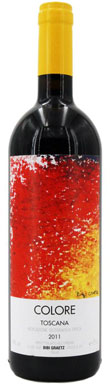
After a capricious summer, August was exceedingly hot, and this persuaded Graetz to leave more bunches on the vines than had been customary, the idea...
2011
Bibi Graetz
Bibi Graetz, Colore, Tuscany, Italy, 2012
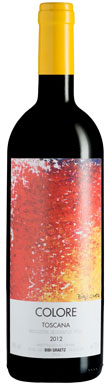
A tricky year with a very hot dry summer that resulted in low yields, but also marked by a wet September. The sour-cherry nose is...
2012
Bibi Graetz
Bibi Graetz, Colore, Tuscany, Italy, 2015
The persistent heat that marked the summer in Tuscany was interrupted by welcome rain in late August. Graetz's change of approach, aiming for more Sangiovese...
2015
Bibi Graetz
Bibi Graetz, Colore, Tuscany, Italy, 2016
A very fine vintage with enough rain to refresh the vines during a warm growing season. A deep warm colour, reflected in the ripe and...
2016
Bibi Graetz
Bibi Graetz, Colore, Tuscany, Italy, 2018
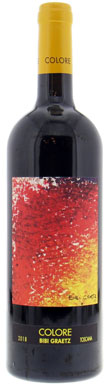
The summer and autumn weather was impeccable, with warm days and cool nights. Deep but not opaque red. Sumptuous black-cherry nose. Quite rich and sleek,...
2018
Bibi Graetz
