Chianti Classico annata new releases: The wines to buy in 2025
The 2023 vintage tested growers, but quality ultimately prevailed. Michaela Morris reviews the season and the wines, along with a clutch of late releases from 2022, 2021 and 2020.


Every year, wineries in Chianti Classico release their newest wines, which rather than being one homogeneous vintage are always represented by a range of different vintages.
This is partly dictated by regulations (for example, Chianti Classico Riserva and Gran Selezione require more ageing before they can be released) but is also a matter of choice which varies from winery to winery, with some choosing to age their wines for extended periods before releasing them onto the market.
Below, Michaela Morris talks us through the recently bottled 2023 vintage of annata, the first step on the Chianti Classico ladder, and also discusses the various late releases launched in 2025.
Chianti Classico annata 2023 vintage rating: 3.5 /5
An incessantly rainy spring with high humidity led to widespread peronospora (downy mildew) attacks. Summer was hot and dry with higher-than-average temperatures persisting through to harvest. Quantities are down overall but the first crop of annata wines make for lively and exuberant near-term drinking.
Michaela’s pick of top scoring and notable Chianti Classico wines below
Chianti Classico’s annata category has long been a reliable source for value. Given the diverse challenges of the most recent vintages and the efforts made to overcome them, these latest releases are all the more impressive.
Several estates hit hard by peronospora (downy mildew) such as Tregole, Quercio al Poggio and Castello di Ama ended up making just one Chianti Classico bottling in 2023. Poggerino opted to forgo a Riserva selection this year, to the benefit of the estate’s annata, which is among my top value picks. Other standouts include Castello di Monsanto and Fèlsina.
Revisting 2022 with some late releases, I rediscovered what I appreciated last year – the freshness, crunch and succulence that belie the vintage’s heat. For this, look no further than Tenuta di Carleone and Rocca di Montegrossi.
Without sacrificing the charm of the annata category, these releases also show more gravitas next to 2023 and in general suggest more longevity – between five to seven years. Appealingly textured tannins are dry and powdery rather than soft and velvety, and wines like Le Fonti and Fontodi exemplify the grip and punch of the vintage.
See all of Michaela’s tasting notes & scores from her Chianti Classico report
By comparison, Le Miccine’s 2022 is on the more lithesome side. It represents the first vintage without Colorino, which is now being grafted to Sangiovese.
‘It’s a north-facing plot which I believe will help us in the future to maintain some nice acidity,’ explains Paula Papini Cook.
Equally concerned about the changing climate, Tenuta di Casanuove has invested in north-facing parcels and is also replanting Canaiolo Nero.
‘It is a great tool because it doesn’t accumulate a lot of sugar and has a gentle structure that blends with Sangiovese,’ explains oenologist Cosimo Casini. The 2022 speaks to the new direction at this estate.
Completing my selection of 90 annata recommendations are half a dozen new releases from 2021, with Le Cinciole and I Fabbri’s Terra di Lamole particularly of note, as well as the excellent 2020 Castell’in Villa.
‘The 2023s are poised to give plenty of pleasure over the next four to five years’

The 2023 vintage
Presenting a new set of challenges, ‘2023 was as much a year for the skilled as it was for the lucky,’ asserts Angela Fronti at Istine.
With minimal rainfall, another warmer-than-average winter brought inevitable fears of spring frost. The region breathed a collective sigh of relief when cool temperatures in early April delayed bud break. Growers were equally happy when it began to rain, especially given the previous years’ drought.
April, therefore, wasn’t the problem. But when temperatures rose and the rain didn’t stop, May and June were. ‘It was like a tropical climate’, describes Michela Rossi at Quercia al Poggio. With the humidity, peronospora (downy mildew) exploded.
When it comes to fungal disease, oidium rather than peronospora is much more common in Chianti Classico’s typically warm, dry climate. Producers, therefore, are well versed in dealing with the former but less so the latter.
‘Some of us made the mistake of trusting terroir and experience’, says Jurij Fiore. Despite spraying eight times, he lost 50% of his grapes.

Punishing weather
As vineyards didn’t have time to dry out between downpours, leaves remained damp for a month and a half, requiring constant treatments.
‘If you were late by a day, you were in trouble,’ recalls Natascia Rossini at Podere La Cappella – ‘but it was impossible to enter the vineyard’.
Sophie Conti at Tregole decided to skip two treatments because the risk of slipping with the tractor was too high. At Viticcio, Daniele Innocenti performed 19 sprays, compared to just six in 2022.
‘We applied less copper more often to stay under the organic certification limits but still lost grapes.’
Monteraponi’s Michele Briganti believes that organic producers were particularly punished, yet in the same breath he notes, ‘when there is an infection, it is too late – even with conventional treatments. The illness remains asleep so it can do damage later.’
To add insult to injury, the temperamental spring also dished out localised hail. ‘For us, 2023 was not so much a problem with peronospora,’ says Monica Raspi at Pomona. Instead, she estimates hail damage between 30-40%.
Others grappled with both. Gabriele Buondonno saw 80% of one of his vineyards decimated by hail in half an hour. Fifteen days later, another storm took out the rest of it. ‘Then there was peronospora…’, he adds.
July finally brought dry, clement conditions corresponding with the region’s norms. ‘It was hot but not extreme like 2022’, says Maddelena Fucile at Cigliano di Sopra. Both water and heat stress were mostly kept at bay.
However, by the end of August, temperatures reached 40℃. ‘It was as if it hadn’t rained in the spring’, says Cosimo Casini at Tenuta Casenuove, who was among those that observed a slowdown in maturation.
Above-average temperatures persisted through September and harvest, with estates largely picking between 20 September and 10 October. Grapes required careful sorting, ‘but what was healthy was healthy’, Conti asserts.
Quality prevails
For 2023, quantity rather than quality is the issue. The consorzio reports a total production of 200,000hl – 22 to 30% less than the decade’s average.
Individual losses, however, vary enormously. Monte Bernardi was down a whopping 80%, whereas Le Cinciole estimates a more modest shortfall of 10-15%, for example.
Overall, quality prevails in the glass. The wines are clean, lively and exuberant, with a slight Sangiovese tartness that I love. I noticed a glossier candied or confected character, however they are not overripe, stewed or exaggerated in alcohol.
The 2023s are poised to give plenty of pleasure over the next four to five years – an absolutely respectable drinking window for annata.
Michaela’s top scoring and notable Chianti Classico recommendations:
See all of Michaela’s tasting notes & scores from her Chianti Classico report
Italy newsletter: Sign up today
Get the best recommendations, vintage analysis, regional and cultural insights and more delivered to your inbox once a month, helping you to stay up-to-date with the latest in Italian wine.

Related articles
- Chianti Classico Gran Selezione: New releases rated
- Bordeaux 2024: Full vintage review and top-scoring wines
- Napa Cabernet 2022: Vintage report and buyer’s guide
Castell'in Villa, Chianti Classico, Tuscany, Italy, 2020
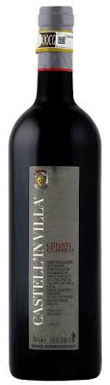

Widowed in 1985, Princess Coralia Pignatelli della Leonessa immediately took charge of the estate. She gleaned knowledge from the best consultants and continues to work with Federico Starderini (think Poggio di Sotto) today. Direction and decisions are always ultimately and unequivocally hers. The 2020 evokes that resolve – as well as the region’s wild terrain and luminous ambience. Sundried cherry, dusty earth, scrubby brush and a touch of meat swirl from the glass. The palate is packed with substance and flavour, intersected by a tingly spine of acidity. It delivers sunshine, with firm structure all the way through the long, stony-mineral finish.
2020
Castell'in VillaChianti Classico

Monte Bernardi, MB1933, Chianti Classico, Tuscany, Italy, 2022
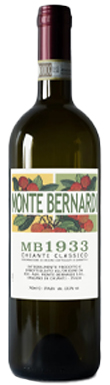
A relatively new and absolutely stellar bottling from a single vineyard purchased in December 2018. MB stands for Marcello Bartolini, whose family cultivated the plot for almost 50 years, while 1933 represents the year it was planted. A co-ferment of 10 native grapes, it wafts with gorgeously heady jasmine, bougainvillea and raspberry blossom. Light in weight yet prolific and intricate in flavours, the palate conveys ginger, orange zest, fleshy apricot and crunchy red plum. This is thrillingly rustic in grip, with some salty minerals to finish. Don't expect polish and sophistication – instead, be prepared to be transported to a long bygone era.
2022
Monte BernardiChianti Classico
Castello di Monsanto, Chianti Classico, Tuscany, Italy, 2023
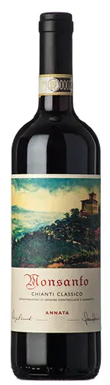
Castello di Monsanto inverts Chianti Classico’s pyramid with this annata bottling, producing only one bottle for every four of Riserva. It was also only introduced decades after the latter, in 1990. The 2023 demonstrates the estate’s tight knit signature while remaining friendly and accessible. Flint, graphite and wild purple flowers entice on the nose, and the palate pops with fruit purity. Dark bramble berries are underscored by succulent acidity, and silky tannins grip subtly as this lingers with zesty citrus. Just delicious.
2023
Castello di MonsantoChianti Classico
Fattoria San Giusto a Rentennano, Chianti Classico, Tuscany, Italy, 2023
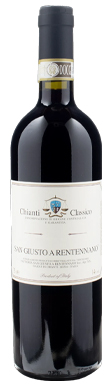
The estate’s annata is crafted from the largest bunches with the biggest berries. In 2023, this meant finishing harvest a bit sooner than desired as the grapes started to lose juice due to the heat. The resulting wine shows an initial immediacy of ripe but pure raspberry and strawberry with accents redolent of warm sand. Fruit intensity is balanced by savoury nuances on the palate, and the fine, grainy tannins are marvellously tactile but still quite demanding. While far from easygoing, this has great capacity to reward over the next seven to eight years.
2023
Fattoria San Giusto a RentennanoChianti Classico
Fontodi, Chianti Classico, Tuscany, Italy, 2022
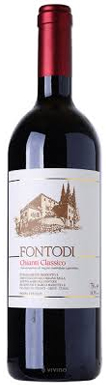
With 20 of its 110 hectares in the western sector of Panzano, Fontodi ended up losing over 20% of its total volume of grapes in the violent mid-August hailstorm. Despite reduced quantities, quality certainly wasn’t compromised. The hot, arid summer has yielded a particularly dense and still somewhat austere wine. Coffee, blackcurrant and dusty stone surface furtively on the nose. Powerful and hearty with just enough of a wild edge, this is saturated with dark fruit and gravelly minerals. The tannins are properly chewy. but it is that intrinsic juiciness that stands out and has me craving a grilled steak.
2022
FontodiChianti Classico
I Fabbri, Terra di Lamole, Chianti Classico, Tuscany, Italy, 2021
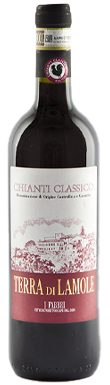
The ‘Terra di Lamole’ bottling hails from three terraced plots between 450 to 550 metres. It includes the estate’s old-vine Canaiolo Nero from plantings dating back to 1969. Ageing is in a combination of cement vats and used tonneaux. It soars with Lamole’s enchanting perfumes – a medley of iris, mint, tarragon and lavender. Seemingly delicate, it possesses depth, density and a striking mouthful of stones. Succulent acidity is assimilated into the crunchy red berry core, and the tannins are light and fine yet persistent. A simply gorgeous Chianti Classico that highly warrants being sought out.
2021
I FabbriChianti Classico
Jurij Fiore e Figlia, Porcacciamiseria, Chianti Classico, Tuscany, Italy, 2022
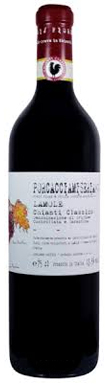
From a single vineyard at 650 metres, one of the highest in Chianti Classico. Among the 80-year-old Sangiovese vines are a smattering of other indigenous grapes – and one single plant of Cabernet Sauvignon. All are co-fermented to produce fewer than 1,000 bottles. Gorgeous fragrances of white pepper, dog rose, brushwood and cranberry introduce the wine. Midweight and understated in power, its lean flesh clings to taut and slender tannins like a tightly drawn elastic. The acidity is crisp and stony. Floral nuances repeat with rose and iris root, and wild red berries burst on the finish.
2022
Jurij Fiore e FigliaChianti Classico
Le Cinciole, Chianti Classico, Tuscany, Italy, 2021
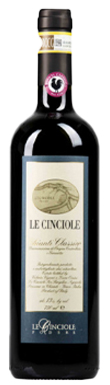
Owners Luca Orsini and Valeria Vignano say that 2021 was the first time since establishing the winery in 1992 that their vineyards were hit by frost, and they estimate an overall loss of 30%. But quality-wise, the annata is top-notch! It is discreet yet attractively floral, with sprightly pepper and redcurrant scents. The palate offers depth with lightness, brightness and crunch. Pristine red berries meet stony minerals. The tannins are suave and chalky in texture, giving a gracious yet confident backbone. All is effortlessly in harmony. Lovely and quite simple delicious.
2021
Le CincioleChianti Classico
Poggerino, Chianti Classico, Tuscany, Italy, 2023
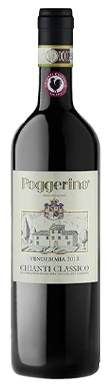
Piero Lanza managed to come out relatively unscathed by peronospora attacks in 2023. A perennial over-achiever, even in this challenging vintage, the annata exhibits exceptional complexity for this level without sacrificing brightness or drinkability. Pristine and vivacious, it launches with dark cherry, tea leaf, lavender and violet scents. The palate follows with gumption; juicy, fleshy fruit is underscored by Radda’s crisp acidity and rocky minerals. Sweet tannins are decidedly chalky in texture. It closes with a liquorice twist.
2023
PoggerinoChianti Classico
Rocca di Montegrossi, Chianti Classico, Tuscany, Italy, 2022
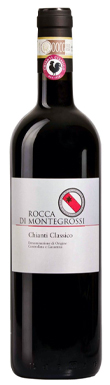
Marco called the 2022 harvest ‘a slalom’ between heavy showers at the end of September. He managed to get in most of the grapes for his annata before a localised hailstorm on the 29th. It saw less time in wood but longer before bottling, and was well worth the wait. Exhibiting spectacular purity and vivacity, the nose is a cornucopia of dark purple fruit scented with violet and lilac. This scrumptious mouthful is almost grapey in flavour with a ton of fruit sweetness. Black cherry and boysenberry meet plush, velvety tannins you can sink your teeth into. Succulent acidity buoys all that fleshiness, and hints of pepper flit throughout. A must-buy!
2022
Rocca di MontegrossiChianti Classico
Tenuta di Carleone, Chianti Classico, Tuscany, Italy, 2022
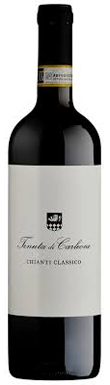
Overreaching its annata categorisation, the estate’s single Chianti Classico bottling showcases Sangiovese in purezza. It captures the freshness and clarity of the cool, forested heights even in this hot, arid vintage. Beyond the glorious perfumes of cardamom, juniper and orange zest, the palate is where this really shines. Midweight with a redcurrant, raspberry crunch and tangy mineral depths. Chalky tannins are long and layered, clinging firmly in all the right places and lending ample textural drama. It rings out with energy and agility.
2022
Tenuta di CarleoneChianti Classico
Val delle Corti, Chianti Classico, Tuscany, Italy, 2022
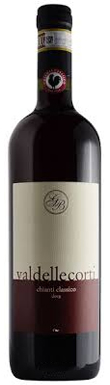
To soften Radda’s racy acidity and ‘grumpy tannins’, Roberto Bianchi vinifies with whole berries. He also uses a type of submerged cap maceration for 40% of the mass. The separate lots are blended before long ageing in 30-hectolitre casks. Despite its deeper-than-usual hue, the 2022 flaunts its signature appetising aromas. Raspberry, strawberry blossom, cranberry bush and juniper waft in succession. The palate too is more densely weighted than previous vintages, though this is relative as it still lands nimbly in the midweight category. So much inner tanginess and tautness, with powdery tannins clearly drawn around the edges.
2022
Val delle CortiChianti Classico
Badia A Coltibuono, Chianti Classico, Tuscany, Italy, 2022
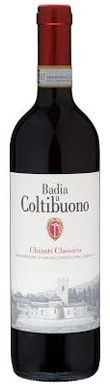
Made since 1972, Badia a Coltibuoni’s ambassador bottling remains as true to its style as it does to expression of place. It always includes small but varying proportions of Canaiolo Nero, Ciliegiolo and Colorino. As evocatively scented as ever, the 2022 wafts with strawberry blossom, rose, mint and fennel. The palate is midweight and linear, with a profusion of minerals ricocheting from the red cherry and pomegranate backdrop. Powdery tannins provide a sophisticated backbone that grips securely on the finish without over-imposing.
2022
Badia A ColtibuonoChianti Classico
Fattoria Cigliano di Sopra, Chianti Classico, Tuscany, Italy, 2023
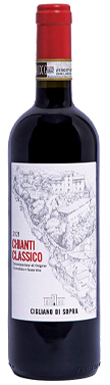
This exuberant and characterful Chianti Classico sees a spontaneous fermentation with approximately 50% whole-bunch fruit and a maceration of 25 days. Ageing is in small used casks. The nose is an explosive abundance of spiced plum, wild blackberry and tarragon. There is satisfying fruit density as well as brightness, lightness and vigour. Preserved strawberry is infused with sweet herbs, and the pliant fruit tannins are well-embedded, giving further texture and a gracious grip. Zesty and persistent. Just 10,000 bottles made.
2023
Fattoria Cigliano di SopraChianti Classico
Fèlsina, Chianti Classico, Tuscany, Italy, 2023
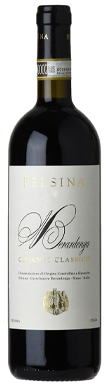
This renowned estate puts out one of the vintage’s best value annata wines in 2023. Offering complexity and sense of place, it is so emblematic of the warm southeastern reaches of Castelnuovo Berardenga, where diverse terrains converge. Subtle toasty and vanilla top notes are joined by baked earth, dried scrub and grilled thyme. The well endowed palate proposes dark cherry and plum, and the round, supple fruit is corseted by dry, decisive tannins. Wood accents are well-placed throughout, and hints of mint and minerals linger on the finish. Above all, it retains freshness and vibrancy.
2023
FèlsinaChianti Classico
Bertinga, La Porta di Vertine, Chianti Classico, Tuscany, Italy, 2022
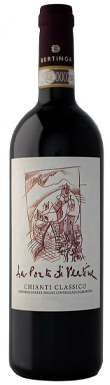
With a focus on single-vineyard IGT bottlings, Bertinga’s sole Chianti Classico comes from a steep, south-facing site at 500 metres. Matured in 25-hectolitre Austrian oak casks, the just-released 2022 is still in a reductive, surly state. After ample swirling, dense red berries and freshly turned earth emerge. Despite its medium weight, the palate packs some oomph with punchy, slightly bitter tannins and brisk, cranberry-esque acidity. Perhaps a bit over-zealous and tightly stitched, but there is fruit depth lurking and the wood nuances are well-embedded.
2022
BertingaChianti Classico
Castello di Volpaia, Volpaia, Chianti Classico, Tuscany, Italy, 2023
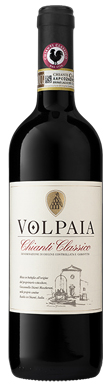
Cool heights upwards of 600 metres with sunny exposures from southwest through to southeast make for a well-defined, vibrant annata. Scents of pepper-inflected wild dark and redcurrants lead to a juicy mouthful, where that small pinch of Merlot lends fleshy plum to the mix. Frisky, citrussy acidity meets easy going, rounded tannins for a harmonious package. Cheerful and moreish, this is a trusty example from the Radda district.
2023
Castello di VolpaiaChianti Classico
Montesecondo, Chianti Classico, Tuscany, Italy, 2023
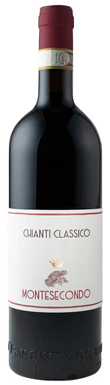
Silvio Messana crafts a single Chianti Classico from his oldest vines, choosing the annata category rather than the loftier Riserva or Gran Selezione designations. The 2023 demonstrates his signature lightness of touch. Scents of brushwood, raspberry, redcurrants and rich earth emerge slowly but steadily. This is full of flavour and intrigue yet light on its feet. Bright, harmonious acidity buoys the whole, giving an uninterrupted easy flow. The sweet berry core is held in place by slender grape tannins, and the alcohol is a refreshingly modest 12.5%. I could drink a lot of this!
2023
MontesecondoChianti Classico
Mazzei, Castello di Fonterutoli, Fonterutoli, Chianti Classico, Tuscany, Italy, 2022
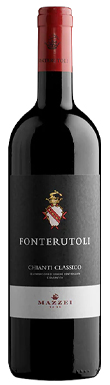
The Mazzei family has made considerable strides at the Gran Selezione level, honing the identity of the estate’s three distinct UGA bottlings. This is not, however, to the detriment of the annata. A flagbearer for the denomination, it hails from seven different sites between 220 and 570 metres. The 2022 shines brightly with dark red cherry underscored by mint, tarragon and nutmeg. Zesty, concentrated acidity sparks the palate, while polished tannins give a subtle gratifying chew. Clean, sleek and well-proportioned with plenty of flavour appeal.
2022
MazzeiChianti Classico
Banfi, Chianti Classico, Tuscany, Italy, 2023
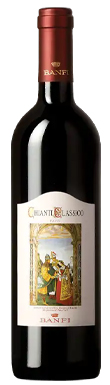
Since the successful launch of Montalcino’s Castello Banfi in 1978, the Mariani family has expanded throughout Tuscany and beyond. The company’s base in Chianti Classico is in Castellina but grapes for this are sourced throughout the zone. The 2023 displays classic dusty cherry and strawberry with sweet garden herbs and earthy accents. Midweight and straightforward in appeal, it is pleasantly concentrated with red berry and floral charms. Bright and graciously structured, this satisfies – especially at a price that is easy to swallow.
2023
BanfiChianti Classico
