
Clos de Vougeot masterclass: DFWE Singapore 2024
The recent Decanter Fine Wine Encounter in Singapore included a masterclass on one of Burgundy's grandest grand crus – Clos de Vougeot. Charles Curtis MW recounts how this one vineyard became many and what it means for the wines produced today.

Why Vougeot?
The Clos de Vougeot masterclass Decanter Fine Wine Encounter Singapore set out to demonstrate that the Clos is among the most fascinating terroirs in Burgundy.
The class was led by François Labet, proprietor of Château de la Tour and the largest owner of its vines, and co-chaired by myself.
At the start, the tasters were introduced to the premise that Clos de Vougeot is neither the oldest (since the Clos de Bèze is older) nor the largest of the great vineyards in Burgundy (since Corton is almost twice the size), but that in some sense, it is the grandest of them all.
Scroll down for notes on the 12 wines tasted at the masterclass
Monkish beginnings
The Clos was founded around 1110 AD by the monks of Cîteaux Abbey following a gift from Hugues II, Duke of Burgundy, confirmed by his son Eudes II in 1162.
To consolidate their claim, the reforming monks of Cîteaux signed a treaty with the older, more well-established abbey of Saint-Vivant de Vergy, clearing the way for the development of the vineyard.
The abbey continued to acquire parcels of land in and around this gift until 1336, and after this final purchase the vineyard, 50 hectares in size, was enclosed with walls.
The Clos remained property of the church until the French Revolution. Sold by the revolutionary government as property of the state, it ended up in the hands of Gabriel-Julien Ouvrard, arms dealer and banker to Napoleon Bonaparte.
It passed to his son Victor and then to his heirs before being auctioned in 1889 to several wine merchants from Beaune.

An array of names
The Clos was thus property of a single owner for more than seven and a half centuries. During this time it was worked by sharecroppers, who gave their smaller sub-parcels distinctive names.
These names are no longer used, but they persist in the imagination of growers and wine-lovers. At the top of the slope are the parcels called Musigni, La Garenne, Plant Chamel and Plant l’Abbé.
Just downslope from here are Montiottes Hautes, Chioures, Quartier de Marei Haut, Grand Maupertuis and Petit Maupertuis, followed by Montiottes Bas, Dix Journaux; Marei Bas, and then finally Baudes St.-Martin, Baudes Hautes and Baudes Basses.
These names today cannot appear on the label; their occasional use has been tolerated, but growers inform us that the customs and excise officials are again enforcing the restriction with increasing rigour.
One issue with place names within the Clos is that they reinforce long-held ideas that have recently been cast into doubt.
Since the early 19th century, most authorities have suggested there was a three-fold division of the clos, into the top, mid-slope, and bottom. While such a division is intuitive, it is also apocryphal, and recent research suggests that it is misguided.
Threefold terroir
The Clos has recently been analysed by geologists Françoise Vannier and Emmanuel Chevigny, whose extensive report was issued in the spring of 2023.
Their careful mapping suggests a more nuanced view of the Clos. Their conclusions upend, or at least add nuance to centuries of received wisdom about this walled vineyard.
Their first observation is that far from being a monolithic rectangle, the Clos is rippled by the remains of three valleys.
The first is plainly visible, the continuation of the Combe d’Orveau. The Clos is almost centered on this valley which brings cool air from higher elevations, and its influence is obvious.
There are two further ripples in the Clos caused by underlying faults, which create two ‘valleys’ that are difficult to detect but leave their trace in the terroir.
The study by Vannier and Chevigny also gives much more detailed information about the subsoil and soil of the Clos than existed previously.
The decree of appellation from the INAO contains a very simplified schema, with marl at the bottom, Jurassic limestone at the top, and the middle a combination of the two.
The geologists show that there is a complex mix of thin soils with limestone, deeper soils with a marl, clay or alluvial base.
These sections do not track neatly top, middle, and bottom but needs to be understood with the context of the combe d’Orveaux and the other two valleys that ripple gently through the clos.
The human factor
Today, there are more than 80 owners in Clos de Vougeot. To come to grips with the complexity of the Clos, one must remember that for 750 years, the climat was a monopole under the direction of one winemaking team, but that today each owner today has a different style of working the vines and making the wines.
They often pick different days to start the harvest and age the wines in barrel differently; some have young vines, others, very old.
This diversity means the only way to understand the wines produced here is to taste through them.
Decanter’s Singapore masterclass was not meant as a history or geography lesson but as an exploration of the wines and a discussion of their style.
Each of the wines in the tasting gave a very distinctive facet of what is possible from the Clos de Vougeot.
The range of style and quality on offer helps us to understand the high regard in which it was held by connoisseurs in previous eras.
The wines and their domaines
Château de la Tour, Clos de Vougeot Grand Cru, 2019
The first wine tasted was the Cuvée Classique from Château de la Tour. The cuvée represents an accurate snapshot of the entire Clos since the vines are scattered throughout the Clos. These parcels include a large block that runs straight back from their winery, beginning in the section known as Montiottes, running through Dix Journaux into the section called Quartier de Marei Bas. There are also vines at the top of the slope in Plante Chamel and Plant l’Abbé, and others at the base of the slope. All of these vines were part of the purchase by Alphonse Beaudet in 1889, whose son sold the vines to the grandfather of François Labet.
Maison Edouard Delaunay, Clos de Vougeot Grand Cru, 2019
Laurent Delaunay produces a small cuvée from purchased grapes sourced in two parts of the Clos – roughly half of the grapes from the Petit Maupertuis near Echézeaux grand cru. The balance comes from a plot that lies between the medieval château and the vines owned by Château de la Tour. Delaunay has chosen to destem the former and to ferment the latter entirely as whole clusters. The wine was aged in 60% new casks to produce this approachable, elegant wine.
Domaine de la Vougeraie, Clos de Vougeot, 2019
The grapes for the Domaine de la Vougeraie bottling come from two parcels. The domaine owns a hectare of vines along the road that leads to the château in the upper section of the Clos known as Montiottes Hautes, and also owns a half-hectare at the bottom of the Clos in Baudes St-Martin. Sylvie Poillot, director of the domaine, relates that the two parcels were picked four days apart and blended after the wines were finished. Domaine de la Vougeraie is owned by Boisset, who acquired the holdings in the Clos de Vougeot from the estate of Pierre Ponnelle, who had acquired them from the heirs of Léonce Bocquet, one of the original purchasers of Clos when it was broken up in the 19th century.
Domaine d’Eugénie, Clos de Vougeot Grand Cru, 2016
The Domaine d’Eugénie is owned by François Pinault’s Artemis Group. The nucleus of this holding was the very fine domaine that had been assembled by winemaking legend René Engel. Engel (like Pierre Ponnelle) acquired his vines from the family of Léonce Bocquet. They own 1.37 hectares near the château in the Quartier de Marei Haut region. This wine was vinified as 80% whole clusters and aged in cask (73% new).
Domaine Anne Gros, Clos Vougeot Grand Cru, 2022
The various members of the Gros family have long been important proprietors in the Clos de Vougeot. There are several branches of the Gros family; tasters at the Singapore masterclass were lucky to taste the version made by Anne Gros. She owns nearly a hectare of vines in Grand Maupertui that were purchased by her ancestor Jules Gros. The parcel was originally planted in 1904. The average vine age is still 80 years, even with the occasional replanting that has occurred. The grapes are entirely destemmed and gently fermented before ageing in cask, one-third new.
Domaine Joseph Drouhin, Clos de Vougeot Grand Cru, 2016
The Drouhin family own two parcels in the Clos de Vougeot. One is at the bottom of the Clos between Leroy and Jadot; the other is in the centre next to the vines of Château de la Tour. In wet years, they are not blended, but in dry years such as 2019 they are. Veronique Drouhin partially destems the grapes before a traditional fermentation by punching down and pumping over to produce this particularly elegant iteration of the Clos. The yields in 2016 were limited by frost, bringing considerable concentration to this wine.
Château de la Tour, Clos de Vougeot Grand Cru, Vielles Vignes, 2019
The Vieilles Vignes bottling at Château de la Tour is produced from a block of vines in Quartier de Marei Bas at the centre of the Clos planted in 1910. Due to some replanting, the average age of the vines today is 80. The 2019 vintage was produced entirely with whole cluster fermentation. The old vines and the whole cluster fermentation give a powerful, concentrated wine whose style is the archetype of the Clos.
Domaine Henri Rebourseau, Clos de Vougeot Grand Cru Vielles Vignes, 2019
Domaine Rebourseau is owned today by the Bouygues family, who purchased it from Jean de Surrel, great-grandson of Général Henri Rebourseau, whose father was one of the original purchasers of the vineyard in 1889. The Rebourseau legacy includes a spectacular 2.21 hectare parcel in the centre of the Clos, mainly in the Quartier de Marei Bas, south of the old vines of Château de la Tour. The parcel was planted in 1927 and partly replanted in 1968, 1973, and 1977.
Domaine Thibault Liger-Belair, Clos de Vougeot, 2019 (magnum)
Thibault Liger-Belair describes his 0.75 hectares in Baudes at mid-slope as ‘up against the wall’ along the southern edge of the clos. Liger-Belair explains that his parcel has three parts: 25% on limestone at the top, the central portion on fairly deep clay, and the bottom on silt. He notes that 60% of the vines were planted in 1944 and are vinified as whole clusters; the balance is destemmed by hand; he tames the sometimes tannic nature of the old vine fruit with vigorous punching down and ageing in cask (60% new).
Domaine Jean Grivot, Clos de Vougeot Grand Cru, 2017
Mathilde Grivot explains that her family’s large parcel (1.86 hectares) at the base of the slope in the Quatorze Journaux section along the bottom of the Route Nationale overlaps into three different soils. As seen in the analysis from Vannier and Chevigny, the soils vary from deep silt to thin clay over limestone. Grivot notes that in wet years, some portions are declassified and are not used in the domaine bottling. She destems the grapes completely before fermentation; the 2017 vintage exemplifies an elegant, almost delicate style of Clos de Vougeot.
Domaine Faiveley, Clos Vougeot Grand Cru, 2009
Faiveley is the proprietor of three parcels in the Clos that total 1.27 hectares. One of these is in Grand Maupertuis next to Anne Gros and was planted after WWII. Two other parcels are nearer the bottom of the Clos. This expressive, elegant wine was chosen to illustrate the importance of vintage. In a warm vintage such as 2009, the parcels at the base of the slope ripened to perfection, and 15 years later the wine is starting to show a bit of development, yet it will continue to improve for years.
Château de la Tour, Clos de Vougeot Grand Cru, Hommage à Jean Morin, 2019
The final wine in today’s tasting is perhaps the ultimate cuvée produced in the Clos, Château de la Tour’s Hommage à Jean Morin. François and his son Edouard produce tiny quantities of this wine (often only three of four barrels) by taking only the bunch closest to the trunk from vines that date to the original plantation in 1910. The domaine divides their holdings into six sections according to the location and the age of plantation. Each is farmed, vinified, and aged separately, but the Hommage is only bottled in certain years. 2010 was the first year; it was not bottled in 2011, 2014, or 2021. The 2019 vintage has delivered a wine of astounding concentration.
Masterclass wines: Twelve Clos de Vougeot
Related articles
- Château Ducru-Beaucaillou masterclass: DFWE London 2024
- Penfolds Icon masterclass: DFWE London 2024
- Rare Champagne masterclass: DFWE London 2024
Domaine d’Eugénie, Clos de Vougeot Grand Cru, Burgundy, France, 2016
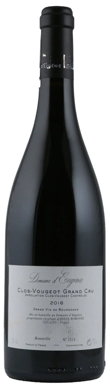

Last tasted in 2022, the 2016 Clos de Vougeot from Domaine d’Eugenie was a bit forbidding, with the fresh acidity and firm grip still very...
2016
Domaine d’EugénieClos de Vougeot Grand Cru

Domaine Anne Gros, Le Grand Maupertui, Clos de Vougeot Grand Cru, Burgundy, France, 2022
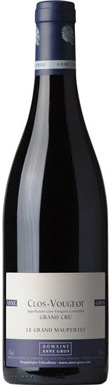
Tasted out of barrel a year ago, the Clos Vougeot 2022 from Anne Gros impressed with its fragrant, high-toned red fruit aromas of cranberry, pomegranate,...
2022
Domaine Anne GrosClos de Vougeot Grand Cru
Chateau de la Tour, Hommage à Jean Morin, Clos de Vougeot Grand Cru, Burgundy, France, 2019
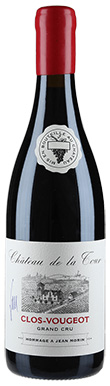
I found the Hommage 'slightly reserved, tightly packed with flavour, powerful and rich' when tasted out of barrel four years ago. In the Singapore tasting...
2019
Chateau de la TourClos de Vougeot Grand Cru
Domaine Thibault Liger-Belair, Clos de Vougeot Grand Cru, Burgundy, France, 2019
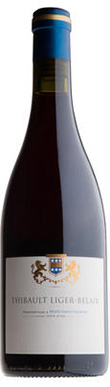
Thibault Liger-Belair's 2019 Clos de Vougeot was ‘sophisticated and elegant’ when I tasted it out of barrel in the fall of 2020. Today it is...
2019
Domaine Thibault Liger-BelairClos de Vougeot Grand Cru
Chateau de la Tour, Vieilles Vignes, Clos de Vougeot Grand Cru, Burgundy, France, 2019
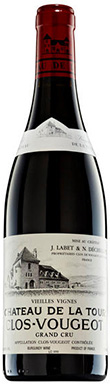
The Clos de Vougeot Vieilles Vignes from Château de la Tour was already impressively dark and concentrated when I tasted it out of barrel in...
2019
Chateau de la TourClos de Vougeot Grand Cru
Domaine Faiveley, Clos de Vougeot Grand Cru, Burgundy, France, 2009
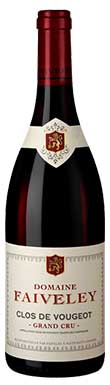
It was a great pleasure to re-taste the 2009 Faiveley Clos Vougeot out of bottle 15 years after the vintage. I tasted it out of...
2009
Domaine FaiveleyClos de Vougeot Grand Cru
Chateau de la Tour, Clos de Vougeot Grand Cru, Burgundy, France, 2019
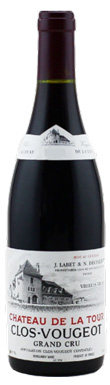
The 2019 Cuvée Classique from Château de la Tour has taken on depth and complexity since I last tasted it at the domaine, and I...
2019
Chateau de la TourClos de Vougeot Grand Cru
Domaine de la Vougeraie, Clos de Vougeot Grand Cru, Burgundy, France, 2019
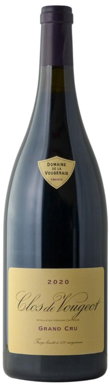
This Clos de Vougeot has fortified itself since I tasted it from the barrel. The wine has lost none of its perfumed, elegant plum and...
2019
Domaine de la VougeraieClos de Vougeot Grand Cru
Domaine Joseph Drouhin, Clos de Vougeot Grand Cru, Burgundy, France, 2016
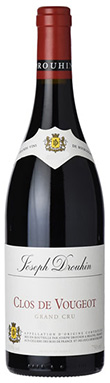
Our tasting in Singapore was my first encounter with the 2016 Clos de Vougeot from Drouhin, which left a delightfully elegant, sophisticated impression. The aromas...
2016
Domaine Joseph DrouhinClos de Vougeot Grand Cru
Domaine Jean Grivot, Clos de Vougeot Grand Cru, Burgundy, France, 2017
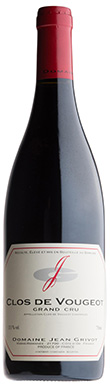
My first taste of the 2017 Clos de Vougeot from Grivot was enchanting, with an elegant, high-toned fruit character of black cherry and pomegranate, accented...
2017
Domaine Jean GrivotClos de Vougeot Grand Cru
Edouard Delaunay, Clos de Vougeot Grand Cru, Burgundy, France, 2019
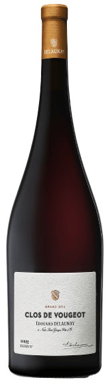
The 2019 Clos de Vougeot from the team at Delaunay is easy to love, with an open, accessible aroma of plum and fig, underscored by...
2019
Edouard DelaunayClos de Vougeot Grand Cru
Domaine Henri Rebourseau, Clos de Vougeot Grand Cru, Burgundy, France, 2019
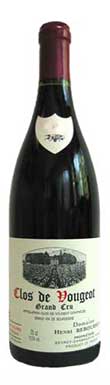
Henri Rebourseau's Clos de Vougeot was pleasant and typical of the cru, with a firm, plummy fruit, fairly firm tannic grip, and a slightly rustic...
2019
Domaine Henri RebourseauClos de Vougeot Grand Cru