
Comparing Artadi terroirs: Single vineyard wines


A recent sale preview tasting at Christie's gave Sarah Jane Evans MW an opportunity to examine Artadi's terroir-driven approach...
From the beginning, Artadi’s focus has been on the terroirs of their vineyards – hence the strapline on their tasting sheets: ‘Artadi Is Terroir’.
In 2014, says fifth-generation owner Juan Carlos López de Lacalle, ‘I moved to a single vineyard [Burgundian] concept, from the more old-fashioned coupage approach of Bordeaux. The age of the vineyard is not what’s important; it’s the soil.’
Scroll down to see Sarah Jane’s tasting notes & scores
As a result, the established ‘Pagos Viejos’, a blend of old vineyards, ceased to exist and was replaced by a selection of single vineyard wines; Valdeginés, La Poza de Ballesteros and El Carretil.Artadi left the Rioja DOCa at the end of 2015, disillusioned with the international perception of Rioja and lack of official recognition for single vineyard wines. The Consejo Regulador subsequently introduced three new single vineyard categories for the 2017 vintage.Effectively, Artadi’s wines are now Vinos de España, however the front labels of the wines now emphasise more closely than ever their origin –Bodegas y Viñedos Artadi de Laguardia and Álava both feature.
Production has been structured into four categories: Tempranillo from the younger vineyards; village wines; single vineyard wines; and other wines (Joven – a screwcapped young wine; Tempranillo with Viura made by carbonic maceration according to the traditional local method; and Cava Brut vintage).
Their top wine, Viña El Pisón, is from a vineyard of that name planted by López de Lacalle’s grandfather in 1945. It’s one of Rioja’s great names, highlighting the significance of single vineyards, something which Rioja’s regulatory body has finally come to recognise officially.
By contrast, Viñas de Gaín is the village wine, from a selection of vineyards at around 30 years old. It retains the keynote purity of Artadi, and is generally more approachable in its youth.
López de Lacalle works with Tempranillo, but does he also have an interest in local varieties such as Mazuelo (Carignan), Graciano or Garnacha?
No, not really: ‘Pure Tempranillo is the way to express Rioja. It’s a chameleon. It lies between Nebbiolo and Pinot Noir – it’s delicate and elegant, but you have to be careful as it’s also high-yielding.’
‘We’re a young company, and we’re always evolving,’ comments López de Lacalle. Quite true – there’s often something new in the Artadi empire, and when there is it will have the producer’s distinctive purity and intensity.
Artadi: Fact box
- Founded in 1985 as a co-operative, in Laguardia in the subregion of Álava
- 83ha of vineyards, mainly in the villages of Laguardia and Elvillar
- Vineyards sit on a mix of soils, predominantly clay and limestone, with a range of aspects and altitudes
- Average annual production: 400,000 bottles
Artadi properties in Navarra and Alicante:
- Artazu Launched in 1996 in Navarra, focusses on old vine Garnacha
- El Sequé Established in Alicante in 1999, draws on the Mediterranean heritage of Monastrell. El Sequé Dulce is the one sweet wine in the portfolio
In each region Artadi works with estate grown fruit, and the traditional varieties
Comparing Artadi terroirs – single vineyard wines:
You might also like:
Are these Spanish whites in your cellar?
Best Rioja: Top wines to try
The changing face of Vega Sicilia Valbuena
Artadi, El Carretil, Spain, 2015
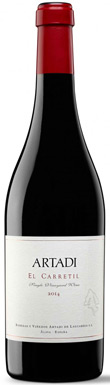

El Carretil is the most striking of Artadi’s three single-vineyard wines in the 2015 vintage. Located in Laguardia at 500m on clay-limestone soils, it produces...
2015
Artadi

Artadi, Viña El Pisón, Rioja, Spain, 1998
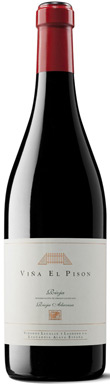
Tasting Viña El Pisón 1998 twenty years on is a firm reminder that far too many wines are drunk too young. This is a wine...
1998
ArtadiRioja
Artadi, Viña El Pisón, Rioja, Spain, 2007
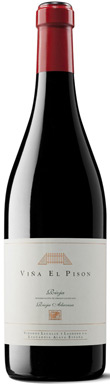
‘This is my Musigny’, notes Juan Carlos López de Lacalle. Artadi’s top wine comes from a 2.4ha vineyard planted in 1945, and its first vintage...
2007
ArtadiRioja
Artadi, Grandes Añadas, Rioja, Spain, 1998
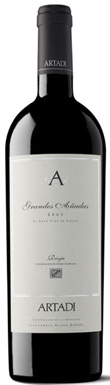
Grandes Añadas, ‘top vintages’, appeared but rarely: 1994, 1998, 1999, 2000 and 2001. It came from a single vineyard, very close to the bodega and,...
1998
ArtadiRioja
Artadi, La Poza de Ballesteros, Spain, 2015
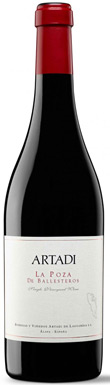
La Poza is a vineyard in Elvillar at 600m that gets the evening sun, and it produces expressive wines. The vineyard is clay-limestone, and in...
2015
Artadi
Artadi, Valdeginés, Northern Spain, Spain, 2015
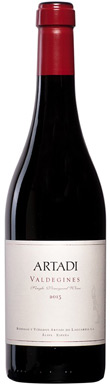
Valdeginés used to go into Pagos Viejos, a wine which gave way as Artadi focused on single-vineyard wines. First impression is of freshness and delicacy,...
2015
Artadi
