
Top Corison wines: From 1989 to 2014
See William Kelley's ratings from a vertical tasting of Cathy Corison's Napa Cabernet wines conducted exclusively for Decanter Premium members. Plus, read his interview with Corison, originally published in Decanter magazine's May 2016 issue...


When Cathy Corison packed all her possessions into her Volkswagen Beetle and moved to Napa in 1975, the valley was a very different place.
Back then, she recalls, Napa was ‘rural, poor and depressed: just scratching its way out of Prohibition’. But it was also ‘a time of amazing energy’, as new wineries opened their doors and began to reach a global audience.
Only a year later, Steven Spurrier’s Judgement of Paris tasting of 1976 would prove that California’s wines could compete with France’s best. ‘So the industry was just exploding,’ Corison explains, ‘and there were so many opportunities for young winemakers coming out of school.’
Continue reading below
A Corison vertical:
How it all started
Arriving in the valley, her first move was to take a job in a wine store. But Corison knew the sales world was not for her and began to spend more and more time at the University of California, Davis – ‘taking wine classes and learning all the chemistry I’d avoided’.
A masters in oenology from Davis followed, and within eight months, after working a harvest at Freemark Abbey, Corison found herself running a winery.
A few years later, she became winemaker at prestigious Chappellet Vineyard on Pritchard Hill, the source of some of Napa’s most brooding and long-lived mountain Cabernets. It was while working at Chappellet that Corison began to feel the urge to break out on her own: ‘There was a wine inside me that wanted to get out.’
In 1987 she made her first vintage for her own label, leaving Chappellet shortly afterwards to take on a series of other clients as both winemaker and consultant, ‘to help pay the bills’. It was not until 2003 that Corison finally stopped making wine for other people, devoting all her attention to her own project; a moment she remembers with a half-disguised sigh of relief.
The journey has not always been easy. Female winemakers were few and far between when Corison began her career, and she believes she may well have been the first woman in Napa Valley to ‘haul hoses around’ and work in the cellar.
Setting up her own winery brought new challenges: ‘I like to say I was buying grapes and barrels instead of cars and houses as a young adult’. Well-timed purchases and a certain amount of luck, she believes, have been central to her success.
What’s more, since her debut vintage, Corison’s wines have consistently eschewed the fads of the moment in favour of an abiding commitment to classical balance. Sometimes that has left her feeling ‘like the Lone Ranger’, as new consumers and journalists flocked to riper, headier and oakier Napa Cabernets.
Over the years, however, that consistency has won Corison a loyal following of private clients and sommeliers; and as California’s stylistic pendulum swings once more towards restraint, she finds herself the subject of an admiring press. Perhaps because she’s seen the cycle before, Corison’s response is sanguine: ‘There’s fashion in wine, and I’ve never been terribly interested in chasing that, in any aspect of my life.’ All she wants to do, she insists, is make the kind of wine she likes.
A matter of taste
It all began with a wine appreciation course at age 19. ‘Wine just grabbed me by the neck and ran with me,’ Corison remembers, as she describes how she ‘cut her teeth on European wines’, thanks to a Francophile professor. Today her love affair with France continues, and she cites wines from Côte-Rôtie, St-Julien and Champagne – along with Rieslings from Germany’s Mosel – among her favourites.
How has that classical sensibility informed her winemaking? ‘Stylistically, I haven’t changed since the very beginning’, she says. ‘I continue to believe that balanced wines are more interesting at maturity, they age better, and they grace the table better.’ She aspires to make Cabernet Sauvignon that is both powerful and elegant: ‘Cabernet is going to be powerful wherever and however you grow it, but it’s way more interesting to me at that intersection with elegance.’
It was during her time at Chappellet that Corison discovered where wines like that come from in Napa Valley. In drought years, Chappellet’s hillside plantings suffered, so she purchased fruit grown on the valley floor in the gravelly loam soils between Rutherford and St Helena.
In the resulting wines, she found what she was craving in Cabernet, and that was no coincidence: ‘If you look at many of the great wines of Napa historically, you’ll find they were from Bale series gravelly loam.’ Those soils, she explains, retain just enough moisture but no more: the vines run out of water at the right time, prompting them to stop growing and start ripening. ‘If the vines stop growing you can get the grapes fully ripe and not green, without the sugars getting too high’. And those ripe grapes retain bright acidity, thanks to the influence of cooling evening fog from the San Francisco Bay. It’s here Corison can achieve the ‘beautiful acidities and luscious, velvety tannins’ she’s looking for.
Mountain Cabernet tends to reveal much more aggressive and astringent tannins, as well as ‘more brooding, darker flavours’, with fewer of the bright red and blue fruit tones she wants. She learned a lot from working in the hills, ‘but I couldn’t make my style of wines up there, or vice versa’.
The soils she was looking for account for only 2% of Napa Valley’s vineland, so she counts herself lucky to have sourced grapes from the same sites for almost 30 years. In 1995, as her fledgling business matured and property prices plateaued, she was able to acquire the Kronos Vineyard, a prime parcel of low-yielding Cabernet vines planted in 1971 on heritage rootstocks. And in 2016 she bought another of her long-time fruit sources.
Corison has long believed the benchland between Rutherford and St Helena is one of the finest places in the world to grow Cabernet Sauvignon, and as a winemaker there she doesn’t take the responsibility lightly: ‘It’s almost a moral imperative for me to make a wine that will be long lived and do interesting things in the bottle.’
A question of style
Corison is still grateful for her ‘technical foundation’ – as she calls it – of winemaking studies at UC Davis in the 1970s. ‘I know a lot of great winemakers who don’t have degrees’, she says, ‘but they still have to learn all that stuff.’ While that education ‘helps to keep you out of trouble’, she says she’s no longer conscious of drawing on it: ‘Every year I make wine more intuitively. I’ve learned to make wine by making wine’.
Back in the 1970s, for example, Davis taught young winemakers to add tartaric acid to ‘correct’ the balance of their fruit, but Corison hasn’t done that since her first vintage at Chappellet in 1981. ‘My philosophy has been to do as little as necessary, and stay out of the way as much as possible’. ‘I’m not a technical winemaker’, she insists: ‘I don’t manipulate what the vines and the vineyards give me’.
Since her early days, winery equipment has improved immensely. ‘My first crusher was made in Healdsburg, Sonoma,’ she recalls, ‘and it just shredded the grapes. We’ve now got European machinery: gentler presses, gentler pumps, gentler destemmers. So everything is more gentle’.
Winemakers have learned to handle their wine more sensitively too. But the real improvements have taken place in the vineyard: ‘We’ve gotten so much better at growing grapes,’ she says. Since the 1970s, Napa’s grape-growers have learned a great deal about canopy management: balancing their vines to handle the valley’s intense sun and heat. ‘That’s translated directly into making better wines,’ Corison says, adding that she can ripen her fruit more completely at lower sugars than was possible even a few decades ago.
The most important decision she makes all year, of course, is when to pick. ‘I’m looking at the numbers: the alcohol, the acidity. I’m looking at flavours and aromas and the seeds and the skins. And just as importantly, I’m watching the vines: they’re tired and it hasn’t rained since the spring. When the vines give up, it’s finished.’
Ripeness, Corison explains, is a complicated thing, and there is no rule book: ‘It happens at different numbers each year, and unless you’re out there you don’t see it.’ Timing the harvest is so critical because the bright fruit flavours and aromas that Corison admires can easily be lost in a climate as balmy as Napa Valley’s. ‘The concept of “ripe” is different for each winemaker,’ she admits, ‘but if I’ve lost the red and blue fruit, for me it’s overripe.’
She’s happy that she’s no longer alone in thinking that way: ‘I hope we don’t lose the very ripe style of wine, but it’s better we don’t have a monoculture.’ Indeed, Corison eschews polemic just as assiduously as she eschews fashion. She is proud of her vineyards and her body of work; the ageing potential of her wines is surprising even her. But above all, she continues to delight in wine itself. ‘Wine is alive,’ she says; ‘it’s a whole series of living systems.’
In a sense, that young biologist who took a wine appreciation course in 1972 is still studying biology nearly 45 years later.
Related content:
Tasting Gallica: Elegant Napa Cabernet
Spottswoode vintages rated from 1997 to 2014
Top Harlan Estate wines for the cellar and to drink
Corison, Cabernet Sauvignon (Magnum), Napa Valley, California, USA, 1989
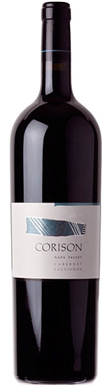

Cathy Corison's second vintage is drinking beautifully from magnum right now, with a very pure bouquet of black raspberry, dusty cocoa-like soil tones and an...
1989
CorisonNapa Valley

Corison, Cabernet Sauvignon (Magnum), Napa Valley, California, USA, 1993
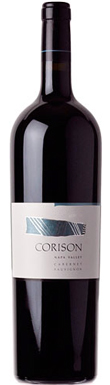
From magnum, the 1993 Corison is ageing very gracefully indeed, bursting from the glass with a fragrant bouquet of red and black cherry and chocolatey,...
1993
CorisonNapa Valley
Corison, Cabernet Sauvignon, Napa Valley, California, USA, 1995
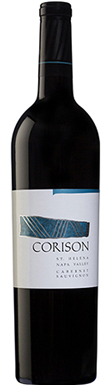
Cathy Corison's 1995 is a nice example of this rather under-appreciated vintage, revealing an expressive bouquet of red and black fruit, subtle herbs and telltale...
1995
CorisonNapa Valley
Corison, Cabernet Sauvignon, Napa Valley, California, USA, 1997
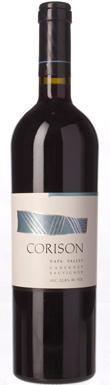
The balmy 1997 vintage is not one of Cathy Corison's favourites, and the heat of the season is revealed by notes of torrefaction - coffee,...
1997
CorisonNapa Valley
Corison, Cabernet Sauvignon, Napa Valley, California, USA, 1998
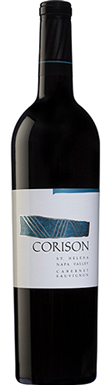
The distinctly unfashionable 1998 vintage is a great success for Cathy Corison. Opening in the glass with notes of red and black fruit, autumn leaves,...
1998
CorisonNapa Valley
Corison, Cabernet Sauvignon, Napa Valley, California, USA, 2001
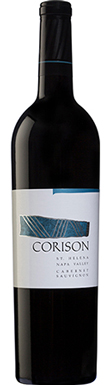
2001 is a fantastic vintage at Corison. A bouquet of black cherry, wild rose, cassis, cocoa powder, subtle cigar smoke and rich soil is followed...
2001
CorisonNapa Valley
Corison, Cabernet Sauvignon, Napa Valley, California, USA, 2005
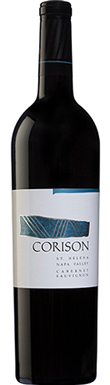
Cathy Corison's 2005 is showing well, though it promises much more to come. Red and black fruits marry with notes of dark chocolate, coffee and...
2005
CorisonNapa Valley
Corison, Cabernet Sauvignon, Napa Valley, California, USA, 2010
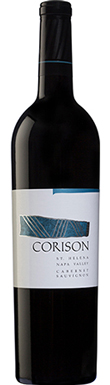
It's early days for the 2010 Corison, but it is from an excellent vintage. Juicy black cherry fruit and incipient loamy soil tones marry with...
2010
CorisonNapa Valley
Corison, Cabernet Sauvignon, Napa Valley, California, USA, 2013
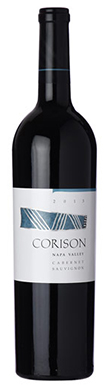
Beautifully perfumed aromas of rose petal, violets, blackberry, dark chocolate and incipient cigar tobacco burst from the glass in a striking array, the prelude to...
2013
CorisonNapa Valley
Corison, Cabernet Sauvignon, Napa Valley, California, USA, 2014
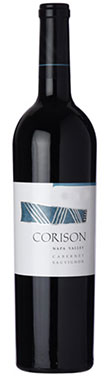
Another classic from Cathy Corison, the 2014 Cabernet displays a pretty bouquet of black cherry, petroleum jelly, cocoa nib and dried rose. On the palate...
2014
CorisonNapa Valley
