
Crown caps and pop: The rising tide of British pét-nats
In his Decanter debut, Henry Jeffreys slips on a chore jacket and blends in with the cool kids at the recent 'Brit-Nat' tasting of English and Welsh pét-nats. But will this 'pét-nat agnostic' be converted?


Pét-nat has gone mainstream. Even M&S, surely a barometer of the tastes of Britain’s middle classes, stocks one.
And it’s from England; which really should be no surprise seeing as this country’s speciality is sparkling wine.
Scroll down for six British pét-nats to try
What are pét-nats?
To show off the sheer diversity of the British pét-nat scene, last year Tim Wildman MW put on the inaugural ‘Brit Nat’ tasting in London.
This year there was the sequel with over 50 wines to taste. Wildman is the man behind the Lost in a Field ‘Frolic’ pét-nat made from grape varieties that once underpinned English winemaking, like Madeleine Angevine, Reichensteiner and Schönburger, and has become a champion for the category.
He also makes pét-nats in Australia and indeed the term comes from there – it’s short for ‘pétillant naturel’ (naturally sparkling). Those Aussies do love a snappy abbreviation.
Pét-nat is a broad category using three main winemaking techniques. The first is what is known in France as ‘méthode ancestrale’ and Wildman calls ‘interruption’.
This involves bottling a fermenting wine so it finishes in the bottle and the resulting carbon dioxide will be absorbed into the wine. These wines are occasionally disgorged to remove sediment.
According to Will Davenport in Sussex who has been making pét-nats longer than anyone else in England, they can be tricky.
‘You have to measure sugar level assiduously and then bottle at the right time. It works with a slow ferment but one year the ferment was so fast that the last bottles had much less sugar in so they had barely any fizz. Some years we get it right, some years we don’t make it.’
All this needs to be done at harvest time when there are tonnes of grapes coming in.

Bottoms Up
No wonder some producers use a method which Wildman calls ‘intermission’.
This involves starting with a base wine and then provoking a secondary fermentation. This is often achieved by adding unfermented grape juice, either a fresh batch or even frozen from a previous year – though sugar might be used instead.
‘The majority of pét-nats in the world are made this way,’ according to Wildman.
When this secondary fermentation takes place in bottle, the wines are sometimes referred to as ‘col fondo‘, a reference to the traditional, bottle-fermented Prosecco style.
Hugo Stewart at Domaine Hugo in Wiltshire describes it as the, ‘missing link between pét-nat and English Sparkling Wine’.
To make his, he adds the still fermenting wine from one vintage to the finished wine of another, and then bottles it under a crown cap.
Styles, grapes and regions
It’s hard to generalise about regional styles as there are wines like Wildman’s which are made from grapes harvested all over the country.
But, largely in England’s sparkling wine heartlands of Kent, Sussex etc, the wines tend to be made from classic French varieties.
They also tend to be more accessible to pét-nat agnostics like me. The further north and west you go, the more hybrids like Rondo and Solaris come in.
That said, Solaris with its heady peach and satsuma flavours seems to work especially well in a pét-nat – as it does with orange wines.
Production ranges from 100 bottles for Woodfine Interconnections from Beaconsfield in Bucks to 9,000 for the M&S pét-nat which is made by Defined Wine, a contract business that employs ex-Cloudy Bay winemaker Nick Lane.
And as you might expect from producers of different sizes around the country using different techniques and grape varieties, the wines were varied.
Many of the newly-bottled wines tasted (to me) a little simplistic, a character Wildman described in his own wines as ‘tank juice.’
He thinks the wines change after 12 months in bottle. Indeed tasting Wildman’s own wines, the 2022 was hugely superior to the rather raw 2023.

The verdict
On the whole, I found the best were those made by larger experienced producers like Davenport and London Cru.
Among some of the smaller producers, there was a lot of Brett and volatile acidity (VA), some very rough tannins and a little mouse taint.
There were at least three wines I found undrinkable. Plus the occasional bottle that gushed all over the floor on opening.
According to Wildman this last problem is caused by tartrate crystals in undisgorged bottles causing the wine to fizz uncontrollably when opened (they act as vectors for bubble formation).
Having said all this, the standard was higher than I thought they would be (perhaps because my expectations were low).
There were around 20 bottles I enjoyed, with a special mention going to the M&S one which offers outstanding value for money at £15.99.
Scores were generally low because these are not complex wines for pontificating over, they’re wines for drinking though they are expensive for such basic quality.
Overall the more conventional wines got the highest marks from me, but some people love the VA bombs.
Maybe it’s a fashion thing.
This article was amended on 13/11/2024 to clarify details around the key production methods.
Henry’s pick of British pét-nats
Related articles
Woolton Conduit, Chardonnay Pet-Nat, England, United Kingdom, 2022
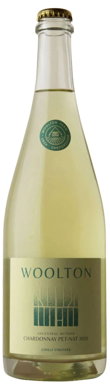

There’s green apple and peach on the nose. Clean, frothy and creamy, ripe fruit with lovely texture - like essence of fermenting Chardonnay. This would...
2022
Woolton Conduit

London Cru, Pinot Gris Sparkling Rosé, England, United Kingdom, 2022
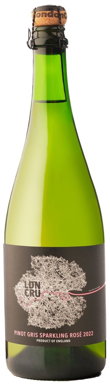
Spiced bruised apple on the nose, while the taste is zingy fresh and spicy with a touch of tannin and a nice balancing sweetness to...
2022
London Cru
Davenport, Pet Nat, England, United Kingdom, 2023
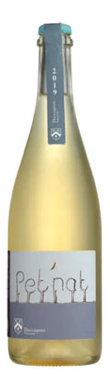
Orchard fruit on the nose with subtle floral notes. Clean and floral with grapefruit and just a little tannin. Only 9.5% ABV. A blend of...
2023
Davenport
Domaine Hugo, Botley's Col Fondo, England, United Kingdom, 2022
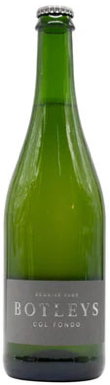
The nose is of baked apples while the palate is lemony with high acidity and gentle fizz. Lots of class here, I think this could...
2022
Domaine Hugo
Gros Canon, Virement de Bord, England, United Kingdom, 2023
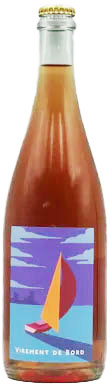
Wonderful English summer aromas on the nose with rhubarb, strawberries and nose petal. Fresh and clean on the palate with red fruit and just a...
2023
Gros Canon
Sandridge Barton, Don't Feed the Ponies Lizwell, England, United Kingdom, 2022
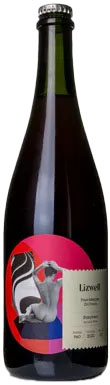
The nose is vibrant with sour cherries and raspberries with a yeasty bready quality. It’s pretty, floral and fun. A great introduction to the style....
2022
Sandridge Barton
