
The cru-isation of Barolo


The trend towards ‘cru’ bottlings in Barolo is a thorny issue. Michaela Morris explores the background to the designation of these areas and picks out 18 shining examples...
It’s easy to get lost in the hills of Barolo, especially when the fog rolls in. Spellbinding as it is disorienting, Barolo’s convoluted landscape is best demonstrated by dizzying hand gestures only Italians have perfected.
This region, totalling about 2,000ha of vineyards, is a jumble of ever-changing slopes with diverse aspects, altitudes, gradients, microclimates and soil composition. A wine from one corner will express itself very differently from another, even though both are made from the same grape, Nebbiolo.Wine-growers in Barolo have long recognised the differences within their territory and which vineyards are superlative. yet the tradition here was to make a wine that combined an estate’s various parcels, rather than keeping each separate.
Scroll down to see Michaela’s pick of the best Barolo cru bottlings
It has often been explained that a vineyard within the area of Serralunga would contribute powerful structure, while another in La Morra might lend softness and elegance. The historical reasons for blending, however, were likely more practical.
Among these was the difficulty of fully ripening Nebbiolo in all plots for much of the last century. Combining them allowed winemakers to achieve a balanced whole consistently every vintage.

The first crus
As such, ‘cru’ bottlings were rare in the past. Cantina Mascarello’s Canubbi [sic] of the 1950s and ’60s was in fact a mix of sites. Owner Giulio Mascarello simply labelled his wine with the name of his most prized holding.
Among the first true cru wines were Prunotto’s Bussia and Vietti’s Rocche di Castiglione in 1961. ‘My father did this because he was in love with Burgundy, and believed that there were some zones in Barolo that were better than others,’ explains Luca Currado of Vietti.
Influential journalist Luigi Veronelli encouraged others to vinify and bottle their parcels separately. By the 1980s, there was a proliferation of cru names appearing on Barolo labels.
Yet until 2010, these sites were not legally delimited, exposing them to exploitation. In the 1990s, producers and authorities alike recognised the need for regulations. The consorzio worked together with the local municipalities to clearly define the boundaries of each, a process which took 20 years.
The result is Barolo’s official Menzioni Geografiche Aggiuntive (MGA). Wine writer and cartographer Alessandro Masnaghetti’s comprehensive tome Barolo MGA: The Barolo Great Vineyards Encyclopedia details all 181 MGA.
He describes the motivation for formalising the MGA as both a legal and cultural safeguard. ‘If these crus weren’t officially recognised in the production disciplinare there was a concrete risk they would no longer be allowed on labels at all,’ says Masnaghetti.

Pros and cons
The work to define Barolo’s MGA cannot be downplayed, and the rigour with which it was carried out is widely acknowledged. The region’s producers are largely in favour. ‘It has given value to our hills and elevated the territory of Barolo,’ asserts Marta Rinaldi of Giuseppe Rinaldi.
Pietro Ratti of Renato Ratti is justifiably gratified. His father, and namesake of the property, produced the first Barolo vineyard map in the 1970s, which provided the foundation for the MGA map.
Yet it’s not without its shortcomings. Each of Barolo’s 11 municipalities was responsible for identifying its MGA. Some, specifically the townships of Monforte d’Alba and Barolo, registered every piece of land. Others, namely Serralunga d’Alba and Castiglione Falletto, registered only the best or historical sites.
Castiglione Falletto’s 20 MGA are all less than 25ha in size. Monforte d’Alba, meanwhile, has 11 MGA almost all larger than this. Bussia alone covers almost 300ha and its area under vine is equal to all Castiglione Falletto’s MGA vineyards combined.
The large MGA within Monforte d’Alba are essentially confederations of crus and rely on vigna (single-vineyard) bottlings to indicate more precise origins.
The greatest sore spot is the EU regulation which permits only one MGA to be listed on a label – front or back. While the law is based on traceability and transparency issues, producers argue that it doesn’t value the tradition of the region. ‘It’s a paradox that after such important work on the MGA, the labelling regulations do not allow producers who blend crus to write on the labels the MGA that are present in the bottle,’ laments Rinaldi.
Maria Teresa Mascarello echoes Rinaldi’s sentiments. She has carried on the philosophy of her father, Bartolo Mascarello, and the heritage of Barolo by making one wine from her four sites. She is most outspoken about the introduction of the MGA into the Barolo disciplinare. ‘I am not against the zonation, which has given order to the names of the vineyards,’ she states. ‘I am against the way they are used.’
She is referring to the increase in separate cru bottlings and describes it as imposing French customs on Italian territory. ‘It’s a practice which belongs to Burgundy, but doesn’t belong to our history or past.’
Of further contention is the loss of some original historic boundaries. Both Mascarello and Rinaldi point to Cannubi specifically, which has been enlarged to include the adjoining sub-zones of Cannubi Valletta, Cannubi San Lorenzo, Cannubi Muscatel and Cannubi Boschis, all of which can now simply claim the name Cannubi.

In favour
Nevertheless, support for the MGA is fervent. Currently, more than 80% of the 181 MGA are used on labels. In 2011, 39% of the DOCG’s production was cru Barolo. By 2016, this had increased to 57%. ‘More than one in every two bottles of Barolo bears an MGA, and 90% of producers bottle an MGA,’ reports Andrea Ferrero, director of the Consorzio di Tutela Barolo, Barbaresco, Alba, Langhe and Dogliani.
On average, estates produce two crus in addition to a ‘classic’ Barolo crafted from a blend of MGAs. In this case, the cru wines tend to be a winery’s more prestigious bottlings.
The increased production of cru wines isn’t concerning to Masnaghetti. ‘It’s part of maturing’, he says. ‘We can’t expect a wine like Barolo would remain fossilised in the 1950s or 1960s.’ For him, quality is what counts and in Barolo it has never been higher.
On the other hand, Luca Sandrone of Luciano Sandrone does acknowledge a possible detriment. ‘There is a risk that a classic Barolo becomes a basic Barolo,’ he says, ‘though it will never be the case with ours.’
The quality of an estate’s classic Barolo is dependent on how a winemaker approaches his or her blend. If all the best fruit is reserved for crus, then the classic Barolo may indeed be markedly inferior. However, many producers regard this as their calling card, crafting a wine they are proud to put their name on.
Massolino, for example, has a prime vineyard in the Briccolina cru of Serralunga. ‘We decided to use these precious grapes to help elevate the quality of our classic Barolo, essentially sacrificing an MGA for this objective,’ emphasises Franco Massolino.
Anyone who has the misconception that a Barolo made from a blend of crus must be sub-standard runs the risk of missing out on some of the region’s best value wines. And, in some cases, these are among Barolo’s greatest wines, sitting alongside the finest of crus.

Grand cru?
As for the crus, not all are equal; which leads one to ask whether a hierarchy should be established. While producers are divided on the merits of creating an official ranking, they agree that it would be a colossal and complex undertaking. ‘It would be logical, but it’s a utopia,’ says Alex Sánchez of Brovia. ‘There are too many people with vested interests.’
And what criteria should be considered? In terms of a scientific classification based on soil composition and elevation, for example, Masnaghetti comments: ‘Even though I’m an engineer, this scares me.’ Historical reputation is another option. Yet the great sites of yesterday might not be the best today, given the changes in climate. While a direct south exposition used to be considered optimal, studies by both Richard Ballantyne MW and the University of Turin concluded that southwest is now most desirable.
The other complicating factor is human impact. In the 1960s and 1970s everyone worked the land similarly, which means the best crus – namely Brunate, Cannubi and Cerequio – always excelled. As viticulture and vinification have improved, the quality differences between crus has diminished.
Today less famous crus are giving great results. ‘Twenty years ago, crus like Le Coste, Monvigliero, Mosconi and Ravera weren’t even considered,’ says Currado. Now they are seen as gems. ‘The illusion of the consumer is that the “best” vineyard always makes the best wine,’ adds Mascarello.
‘It’s best to go very slowly’ advises Masnaghetti. First producers must get used to using MGAs and explaining what they are; while consumers need time to recognise them and understand what they mean.
Cru Barolo is like a zoom lens providing an intimate close-up of the intricacies of the region’s terroir, while a classic Barolo is akin to an aerial shot which can offer a greater general understanding or completeness.
The two different approaches present wine lovers with myriad wines to enjoy, while getting to know Barolo from every angle.
Michaela’s top Barolo cru bottlings:
Related content:

Truffle hunting in Piedmont
Autumn is the time to find some truffles...

Top Barolo 2011 Riservas: Riding the rollercoaster
Stephen Brook picks out wines to buy...

Barolo 2013: Top wines and vintage review
Stephen Brook's vintage report and top wines...

Barolo 2014: Vintage report and tasting notes
Read Stephen's report on the 2014 Barolo vintage and see his top picks...
GB Burlotto, Monvigliero, Barolo, Verduno, Piedmont, Italy, 2013
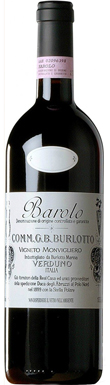

In the township of Verduno, Monvigliero has only recently been hailed as one of Barolo's finest crus, offering elegance over brawn. In this example, stems...
2013
GB BurlottoBarolo

Vietti, Rocche di Castiglione, Barolo, Castiglione Falletto, Piedmont, Italy, 2013
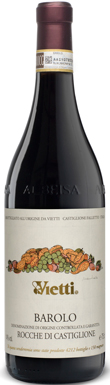
The venerated Rocche di Castiglione MGA is noted for its extremely steep slope, southeastern exposure and pure white limestone soil. Vietti has been bottling it...
2013
ViettiBarolo
Brovia, Brea Vigna Ca' Mia, Barolo, Serralunga d’Alba, Piedmont, Italy, 2013
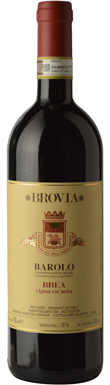
Very elegant, lifted cherry and raspberry nose. The attack is fresh and limpid yet concentrated, with admirable freshness and zest as well as forceful tannins....
2013
BroviaBarolo
Elvio Cogno, Vigna Elena Ravera, Barolo, Novello, Piedmont, Italy, 2010
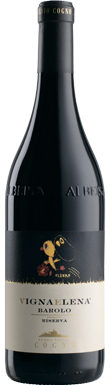
This single hectare vineyard in the Ravera cru was planted in 1991, the same year Elvio Cogno's granddaughter, Elena, was born. It consists entirely of...
2010
Elvio CognoBarolo
Fratelli Alessandria, Gramolere, Barolo, Monforte d’Alba, Piedmont, Italy, 2013
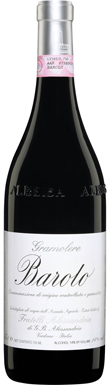
This Verduno based producer also owns two hectares in the Monforte d'Alba cru of Gramolere. A steep, south-facing parcel with lots of sand, it sits...
2013
Fratelli AlessandriaBarolo
E Pira & Figli, Cannubi, Barolo, Barolo, Piedmont, Italy, 2013
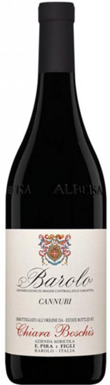
Chiara Boschis has united 26 producers across the Cannubi hill to create a bio-district. As of 2015, 80% of the vineyards are farmed organically. Boschis'...
2013
E Pira & FigliBarolo
Sandrone, Aleste, Barolo, Barolo, Piedmont, Italy, 2013
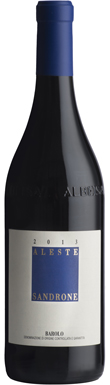
As of 2013, Sandrone's iconic Cannubi Boschis bottling has been rebranded with the fantasy moniker Aleste, which fuses the names of Luciano's grandchildren Alessia and...
2013
SandroneBarolo
Fratelli Alessandria, Monvigliero, Barolo, Verduno, Piedmont, Italy, 2013
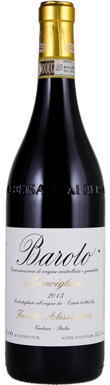
Fratelli Alessandria's 1.4 hectares of this exceptional Verduno cru are positioned in a south facing amphitheatre. As with all of their Baroli, the Monvigliero is...
2013
Fratelli AlessandriaBarolo
Vietti, Lazzarito, Barolo, Serralunga d’Alba, Piedmont, Italy, 2013
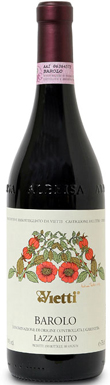
Vietti's two hectare holding is in a choice southwest facing section of Lazzarito's natural amphitheatre in Serralunga d'Alba. It sees a short passage in mostly...
2013
ViettiBarolo
Ceretto, Bricco Rocche, Barolo, Castiglione Falletto, Piedmont, Italy, 2013
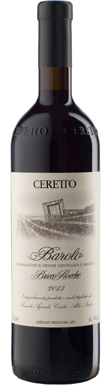
Barolo's smallest MGA, at 1.46 hectares, is owned solely by Ceretto. The southeast to southwest exposed Bricco Rocche is sandwiched between the prestigious Villero and...
2013
CerettoBarolo
Azelia, San Rocco, Barolo, Serralunga d’Alba, Piedmont, Italy, 2013
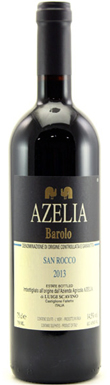
For the San Rocco, Azelia uses small, lightly toasted French oak barrels, only 10% new, to stabilise the colour and give the wine the gentle...
2013
AzeliaBarolo
Ceretto, Cannubi (Magnum), Barolo, Barolo, Piedmont, Italy, 2006
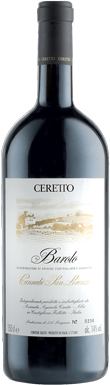
Crafted from 0.25 hectares of mostly 90 year old vines, planted at the highest point of the Cannubi hill in the San Lorenzo sub-zone. After...
2006
CerettoBarolo
Poderi Luigi Einaudi, Terlo Vigna Costa Grimaldi, Barolo, Barolo, Piedmont, Italy, 2013
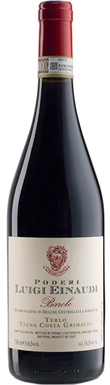
Though Terlo is predominantly east facing, Einaudi's Costa Grimaldi vineyard curves southward, creating a southeastern exposure. The wine is aged in a combination of medium-toast...
2013
Poderi Luigi EinaudiBarolo
E Pira & Figli, Mosconi, Barolo, Monforte d’Alba, Piedmont, Italy, 2013
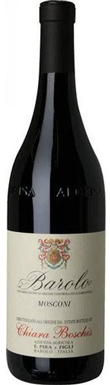
Very ripe, waxy, cherry nose, perfumed and seductive. It's fleshy, concentrated and tannic, but has invigorating spiciness and intensity too. Long.
2013
E Pira & FigliBarolo
Oddero, Vigna Rionda, Barolo, Serralunga d’Alba, Piedmont, Italy, 2007
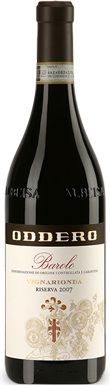
Serralunga d'Alba's Vigna Rionda MGA is a rounded hill with a south to southwest exposure, the soils made up of compact grey marl and layers...
2007
OdderoBarolo
Azelia, Margheria, Barolo, Serralunga d’Alba, Piedmont, Italy, 2012
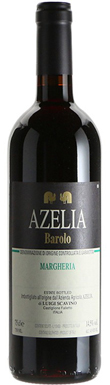
Azelia purchased a 2.5 hectare south-facing parcel in this Serralunga d'Alba cru in 2002, producing the first vintage in 2003. The 60 to 65 year...
2012
AzeliaBarolo
Giovanni Sordo, Monprivato, Barolo, Castiglione Falletto, Piedmont, Italy, 2013
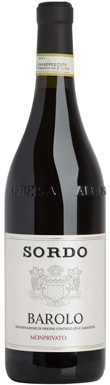
The celebrated Monprivato cru has long been associated exclusively with Giuseppe Mascarello, yet Sordo cultivates a small slice and as of 2013 has started bottling...
2013
Giovanni SordoBarolo
Rocche Costamagna, Rocche dell'Annunziata, Barolo, La Morra, Piedmont, Italy, 2013
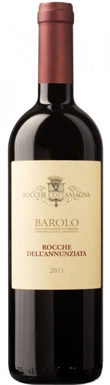
Rocche Costamagna owns a contiguous 5.2 hectare southeast facing parcel on the upper part of this superior MGA in La Morra. It's given a two...
2013
Rocche CostamagnaBarolo
GB Burlotto, Monvigliero, Barolo, Verduno, Piedmont, Italy, 2013
In the township of Verduno, Monvigliero has only recently been hailed as one of Barolo's finest crus, offering elegance over brawn. In this example, stems...
2013
GB BurlottoBarolo
Vietti, Rocche di Castiglione, Barolo, Castiglione Falletto, Piedmont, Italy, 2013
The venerated Rocche di Castiglione MGA is noted for its extremely steep slope, southeastern exposure and pure white limestone soil. Vietti has been bottling it...
2013
ViettiBarolo
Brovia, Brea Vigna Ca' Mia, Barolo, Serralunga d’Alba, Piedmont, Italy, 2013
Very elegant, lifted cherry and raspberry nose. The attack is fresh and limpid yet concentrated, with admirable freshness and zest as well as forceful tannins....
2013
BroviaBarolo
Elvio Cogno, Vigna Elena Ravera, Barolo, Novello, Piedmont, Italy, 2010
This single hectare vineyard in the Ravera cru was planted in 1991, the same year Elvio Cogno's granddaughter, Elena, was born. It consists entirely of...
2010
Elvio CognoBarolo
Fratelli Alessandria, Gramolere, Barolo, Monforte d’Alba, Piedmont, Italy, 2013
This Verduno based producer also owns two hectares in the Monforte d'Alba cru of Gramolere. A steep, south-facing parcel with lots of sand, it sits...
2013
Fratelli AlessandriaBarolo
E Pira & Figli, Cannubi, Barolo, Barolo, Piedmont, Italy, 2013
Chiara Boschis has united 26 producers across the Cannubi hill to create a bio-district. As of 2015, 80% of the vineyards are farmed organically. Boschis'...
2013
E Pira & FigliBarolo
Sandrone, Aleste, Barolo, Barolo, Piedmont, Italy, 2013
As of 2013, Sandrone's iconic Cannubi Boschis bottling has been rebranded with the fantasy moniker Aleste, which fuses the names of Luciano's grandchildren Alessia and...
2013
SandroneBarolo
Fratelli Alessandria, Monvigliero, Barolo, Verduno, Piedmont, Italy, 2013
Fratelli Alessandria's 1.4 hectares of this exceptional Verduno cru are positioned in a south facing amphitheatre. As with all of their Baroli, the Monvigliero is...
2013
Fratelli AlessandriaBarolo
Vietti, Lazzarito, Barolo, Serralunga d’Alba, Piedmont, Italy, 2013
Vietti's two hectare holding is in a choice southwest facing section of Lazzarito's natural amphitheatre in Serralunga d'Alba. It sees a short passage in mostly...
2013
ViettiBarolo
Ceretto, Bricco Rocche, Barolo, Castiglione Falletto, Piedmont, Italy, 2013
Barolo's smallest MGA, at 1.46 hectares, is owned solely by Ceretto. The southeast to southwest exposed Bricco Rocche is sandwiched between the prestigious Villero and...
2013
CerettoBarolo
Azelia, San Rocco, Barolo, Serralunga d’Alba, Piedmont, Italy, 2013
For the San Rocco, Azelia uses small, lightly toasted French oak barrels, only 10% new, to stabilise the colour and give the wine the gentle...
2013
AzeliaBarolo
Ceretto, Cannubi (Magnum), Barolo, Barolo, Piedmont, Italy, 2006
Crafted from 0.25 hectares of mostly 90 year old vines, planted at the highest point of the Cannubi hill in the San Lorenzo sub-zone. After...
2006
CerettoBarolo
Poderi Luigi Einaudi, Terlo Vigna Costa Grimaldi, Barolo, Barolo, Piedmont, Italy, 2013
Though Terlo is predominantly east facing, Einaudi's Costa Grimaldi vineyard curves southward, creating a southeastern exposure. The wine is aged in a combination of medium-toast...
2013
Poderi Luigi EinaudiBarolo
E Pira & Figli, Mosconi, Barolo, Monforte d’Alba, Piedmont, Italy, 2013
Very ripe, waxy, cherry nose, perfumed and seductive. It's fleshy, concentrated and tannic, but has invigorating spiciness and intensity too. Long.
2013
E Pira & FigliBarolo
Oddero, Vigna Rionda, Barolo, Serralunga d’Alba, Piedmont, Italy, 2007
Serralunga d'Alba's Vigna Rionda MGA is a rounded hill with a south to southwest exposure, the soils made up of compact grey marl and layers...
2007
OdderoBarolo
Azelia, Margheria, Barolo, Serralunga d’Alba, Piedmont, Italy, 2012
Azelia purchased a 2.5 hectare south-facing parcel in this Serralunga d'Alba cru in 2002, producing the first vintage in 2003. The 60 to 65 year...
2012
AzeliaBarolo
Giovanni Sordo, Monprivato, Barolo, Castiglione Falletto, Piedmont, Italy, 2013
The celebrated Monprivato cru has long been associated exclusively with Giuseppe Mascarello, yet Sordo cultivates a small slice and as of 2013 has started bottling...
2013
Giovanni SordoBarolo
Rocche Costamagna, Rocche dell'Annunziata, Barolo, La Morra, Piedmont, Italy, 2013
Rocche Costamagna owns a contiguous 5.2 hectare southeast facing parcel on the upper part of this superior MGA in La Morra. It's given a two...
2013
Rocche CostamagnaBarolo
