
Dirk Niepoort: Decanter Hall of Fame 2023
The word ‘maverick’ comes up a lot in coverage of the 2023 Decanter Hall of Fame recipient, but his impact on a whole nation’s wine scene is undeniable. And for more than 30 years his influence has extended far beyond his native Portuguese shores.
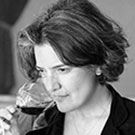

A contrarian, but arch collaborator; irreverent, but a lover of tradition, Dirk van der Niepoort is something of a conundrum. However, the willingness of the 40th recipient of the Decanter Hall of Fame award to flout convention and question authority or perceived wisdom is crystal clear. It has been a pebble, maybe even a boulder, in the pond of the Portuguese wine industry, making waves that have reached far and wide.
Scroll down to see Dirk Niepoort’s five inspirations and influences
Transformative figure
At a time when, says fellow producer Paul Symington, ‘many thought it was mad’, Niepoort successfully diversified his family’s 19th-century Port company, entering the still wine arena and blazing a trail for Douro DOC wine. He has elevated the reputation of Portuguese wine, throwing his creativity and weight behind premium wines of quality and personality, and encouraging and helping others to do the same.
Over three decades, the self-taught winemaker has influenced peers and won legions of loyal fans and official recognition. He was awarded the rank of Grau de Comendador, Ordem do Mérito Empresarial, Classe do Mérito Agrícola by the President of Portugal in 2015.
Looking over the Decanter Hall of Fame roll call, Niepoort remarks: ‘They all did something special for the wine world in a broader way, so it’s an honour to be in their midst.’
The context in which he joined the family business in 1987 highlights the special nature of Niepoort’s own achievements. Following the Carnation Revolution of 1974, Portugal was still recovering from the repressive, authoritarian regime created by António de Oliveira Salazar in 1932. Putting your head above the parapet by doing something very different to your peers was profoundly counter-cultural.
Describing Niepoort as ‘a transformative figure in the Portuguese wine scene’, Symington adds another layer of context: ‘the relatively closed atmosphere’ of the highly competitive Port market in the late 1980s and 1990s. The Decanter Hall of Fame 2012 recipient observes: ‘Despite this, Dirk – especially with the growth of Douro DOC wines – encouraged an atmosphere of collaboration and openness. Pioneering and very refreshing, it changed a lot of the dynamic.’ And, it ‘spread back into the rather traditional Port sector’. Inevitably, it ushered in a changing of the guard at Niepoort.

Dirk Niepoort at a glance
Born 11 March 1964, Porto
Studied Economics, Zurich
Career Intern at Mövenpick Wein, Zurich (1985); cellarhand at Cuvaison Estate, Napa Valley (1986); joins Niepoort (1987); Niepoort managing director (1997-2005); co-founder Douro Boys (2003); co-founder The New Douro (2004); Niepoort president (2005-present); founding member of Baga Friends (2012)
Projectos partners past & present Austria Dorli Muhr; Germany Philipp Kettern; Portugal Barbeito, Alvaro Castro, Anselmo Mendes; Spain Equipo Navazos, Raúl Pérez, Telmo Rodríguez; Chefs Nuno Mendes, Ljubomir Stanisic
Family Two sons, one daughter
Other interests Tea, reading, music, psychology
Single-minded
Comparing Rolf Niepoort to ‘the original négociant dans La Place de Bordeaux’ – the French merchants who, rather than own or even visit vineyards or growers, bought grapes, must or wine for blending and ageing in their cellars in or around the city of Bordeaux – Symington recalls Niepoort’s late father being ‘famous for not much liking the Douro; he bought on sample, waiting for farmers to come down [from the Douro to Vila Nova de Gaia]’. When Dirk wanted to invest in Douro vineyards and winemaking, it was, says Symington, ‘rather against his father’s wishes’. Never released (his father gave away all but one cask), Niepoort’s first Douro red (Robustus 1990) was poorly received by the few Port shippers to whom he showed it.
Conversely, once Niepoort’s Douro wines achieved success, father and son locked horns and, in 1997, the 33-year-old winemaker almost left the company. Throwing down a gauntlet, Dirk requested to run the business for a year his way – ‘I won’t ask your opinion, I’ll wear what I want, I’m not as bad as you think,’ he told his father. The pair agreed to look at the numbers at the end of the year and, if Dirk did better, he would stay on. Under Dirk’s tenure the company flourished, and he has held the reins ever since.

Free thinker
Does he enjoy challenging convention? ‘I just do it – it’s a question of attitude,’ replies Niepoort. It’s an attitude which, ironically, he attributes to Rolf, who did not do things by the book or care about social conventions. Hard-wired from a young age, when Dirk the economics student (whose car had broken down) turned up in dirty clothes asking for double the salary at an internship interview, he learned he had done everything wrong, but would get the job at Mövenpick Wein in Switzerland anyway, precisely because he was different. Thankfully so, because it was here that Niepoort developed his taste for and aspirations about fine wine, pouring flights of Petrus and the like.
Casually dressed and not one to stand on ceremony (‘it is very important for me to treat everyone the same, from a gas station attendant to the President of Portugal,’ he maintains), Niepoort gives the impression of being laid-back, but it would be wrong to underestimate his depth of intellect and strategic vision. Multilingual, he is an extremely good ambassador and salesman, observes Symington: ‘Always in his sleeveless jackets and Crocs, he knows how to stand out and be different. A region needs that… he is one of best wine marketeers I have ever met.’
With 15 country-specific names and storyboard labels, Fabelhaft – the company’s entry-point Douro DOC – is a case in point. Designed, states Niepoort, ‘to create an instinct to touch the bottle’ and launched in 2004, Dirk says it now accounts for about 60% of Niepoort’s total production of 2.4 million litres of Port and wine. When his son Daniel was uncertain about joining the sprawling family empire and leaving Fio (the boutique Mosel project his father co-founded with Philipp Kettern of Weingut Lothar Kettern), Niepoort handed him a glass of Fabelhaft. Says the 30-year-old, who became head winemaker in 2021: ‘I realised it’s easy to make one exceptional barrel, but if you can make more well, then you can make an impact.’
Ahead of the game
Niepoort reads people and situations well. He is watchful, an avid listener and veritable sponge, who invariably answers a question with a question. ‘I live the situation,’ he says. ‘I anticipate problems and already have 10 solutions before they arrive, so I’m very fast at taking solutions, not because I am crazy,’ he insists, ‘but because other people only start thinking about solutions when the problem occurs’.
Being ahead of the game has been a strength, but, admits Niepoort, it has also been a source of huge frustration, ‘because I wanted to achieve a lot more and people don’t let me’. With, he admits, a low boredom threshold, the 59-year-old’s accomplishments already exceed what most might hope to achieve in a lifetime.
The ripple effect

As Niepoort’s portfolio has grown, extending well beyond Port and Douro wine, so has the influence of the company. Niepoort acquired Quinta de Baixo in Bairrada in 2012, and Quinta da Lomba in the Dão in 2014, and also makes wines in Vinho Verde, Alentejo, Madeira, the Azores, Germany and Spain. This, and being part of leading producer groups the The New Douro, Douro Boys and Bairrada’s Baga Friends, sprinkles the stardust far and wide, attracting the attention of the media and trade around the world. It is no exaggeration to say that Niepoort has turbo-charged Portuguese wines’ reputation and profile.
His illustrious collaborators on the Projectos wines over the years speak volumes, too. For Niepoort, it is a two-way street: ‘I didn’t study winemaking from a scientific point of view, so my knowledge comes from drinking and talking about good wine; partnership for me is a learning process,’ he explains. Paying it forward, he is renowned for munificently sharing his knowledge and considerable wine collection with Niepoort’s handpicked crack team, interns, competitors, trade and press.
Small wonder the company is a seedbed of talent when, says Niepoort, ‘I feel obliged to teach interns something and give them something for the road, so talking to them, explaining what we do and opening bottles, blind or not, and bringing winemakers to my cellar to listen to opinions different to mine’. The rising (and risen) stars of Portugal and elsewhere invariably mention Niepoort in warm, thankful tones.
In a country with conservative roots, his relentless boundary-pushing has moved the dial for innovation. Unafraid to court controversy (albeit sometimes stung by it, because, he opines, ‘the more different you are, the more isolated one becomes’), Niepoort has eschewed extract and colour in winemaking in favour of elegance, has stubbornly refused to sell to supermarkets and has reached out to a new generation of consumers and winemakers with his cutting-edge Nat Cool project. It has become an all-embracing umbrella brand – ‘a movement around the world’, says Daniel, for Niepoort’s and other Portuguese and international producers’ lighter, minimal-intervention wines, which are sold in litre bottles with playful labels and the Nat Cool logo.
Celebrated Portuguese chef Nuno Mendes believes glou-glou wines such as Nat Cool have ‘helped wine step out of the shadow of beer’ in Portugal. When Mendes was growing up, no one drank wine, he explains, but Niepoort ‘has helped make wine fun – fresh, super-juicy, light and deliciously fruit-driven, stripping it of the normal setting at the table’. The style is equally at home being drunk at contemporary restaurant-cum-wine bars (like Lisboeta, Mendes’ London outpost) as in the park, hence Niepoort and the chef’s collaborative Park Juice label. ‘It’s democratic,’ says Mendes. ‘Wine does not require a precious setting.’

A patriot
Mendes calls Niepoort ‘an inspiring friend, who continues to evolve, reinvent himself and show the world how amazing Portuguese wine can be and how well it has evolved’. Which is not to say he has thrown the baby out with the bath water. Old vines and heritage techniques are treasured, and Niepoort seeks to elevate Port. A special commemorative 2018 Lalique bottling of Niepoort 1863 Garrafeira comfortably holds the record for most expensive Port sold at auction [HK$992,000 in November 2018, about £98,000 at the time]. But, contends Niepoort: ‘If we only made Port, it would probably be a social disaster; what really matters is the Douro. It’s not Port, it’s not wine, it’s an area that needs not just to survive, but to do well socially and economically.’
As for his country’s standing in the wine world, he found it ‘really, really rewarding’ that, last year, Redoma 1996 Tinto and Branco both came second to red Bordeaux and white Burgundy at two blind tastings of iconic red and white wines. ‘Twenty years ago, French wines were the reference point; our wines always looked poor and stupid next to them, but Portugal is getting very close,’ he says, proudly; ‘I can sit next to a French person and we can talk on the same level.’ But do their wines engage such a diverse audience? Do they make a non-alcoholic beverage from tea that tastes like Riesling (Niepoort’s next project)?
This depth and range of curiosity and ambition is what makes Dirk Niepoort so special.
Five to inspire: Dirk Niepoort’s inspirations and influences
Wilhelm Haag, Mosel
‘The Mosel in Germany is very important to me. I didn’t know it until I met Wilhelm Haag in 1987. I was only interested in heavy-duty stickies – beerenauslese and trockenbeerenauslese. But he forced me to taste the whole collection often, so I got to know his favourites, which had an incredible lightness of being.
‘Wilhelm taught me about the harmony and equilibrium between acidity, sugar and alcohol; and the ageabilty of a wine with just 7.5% alcohol.’
Angelo Gaja, Piedmont
‘We wanted to import each others’ wines. It didn’t work out, but we stayed in touch and, when I visited him in Italy, he always listened and was generous with his time, and I learned a lot.
‘Angelo’s work for Italy really inspired me. My most important mission has been to put Portugal on the map, not just look after the company or the Niepoort name.’
José Nogueira
‘José was the third generation of his family to be Niepoort’s Port wine master blender. He taught me patience which, in many respects, is not in my character. I’m now probably one of the most patient people I know, because I learned from him to think in terms of 20 years, rather than two months like normal people do.’
Bruce Guimaraens
‘Living Port like no one else, Bruce was a big inspiration. Direct, frank – if he preferred Dow’s to Fonseca, he said so. One day we compared Fonseca 1977 and Niepoort 1977 blind. He preferred Niepoort, which was sweeter, with a higher baumé. He wasn’t a chauvinist; his open-mindedness was incredible.’
Rolf Niepoort
‘My father never did things by the book, so I probably inherited that. He liked a glass of wine or beer with humble, normal people, but could also mingle with high society, without being part of it. He didn’t care about social niceties, was badly dressed and didn’t adapt to conventional behaviour, but he knew how to do it.’
Decanter’s Rising Star 2023: Brenna Quigley

Related articles
