
Discover Greece’s flagship grapes
Discover Greece's flagship white and red grape varieties with our expert guide


The current travel restrictions mean that many of us will be pining for Greece this summer. Happily, more and more of its most exciting wines are finding their way into export markets, meaning that even if we can’t be there in person, we can explore and enjoy its native grapes in our own homes.
Of the myriad grape varieties that are grown in Greece, we will focus here on five: Malagousia, Moschofilero and Assyrtiko for white; and, in reds, Xinomavro and Agiorgitiko. Plus a quick look at Muscat of Samos (not an indigenous grape variety but a famous Greek wine style). The best expressions of these grapes are not always cheap, but the wines are invariably food friendly, and display an unmistakable sense of place. No identikit and inspid wines in the selection below!
Malagousia
Klearhos says: ‘I often compare it to Viognier when suggesting it to diners – it’s aromatic, a bit oily and has the same florality, but more fruit. Depending on the ripeness of the grapes, you will find different styles: some are more Sauvignon Blanc-like, others reminiscent of Gewurztraminer. Some producers play with oak to add a bit of complexity; others blend Malagousia with Assyrtiko, with Malagousia giving the fruit and Assyrtiko the acidity and structure. It has less acidity than Moschofilero, and should be drunk relatively young.’
Mary says: ‘It was fairly unknown when we started importing Greek wine nearly 20 years ago, but by 2010 it had become mainstream, largely thanks to Gerovassiliou [a leading producer based near Thessaloniki]. Malagousia’s appeal lies in its approachability – you won’t find the austerity of Assyrtiko here, just lots of stone fruit.’
Suggested food pairings by Klearhos: Seafood, smoked fish, paella with saffron flavouring, chicken salad with olive oil, honey and tangerine vinegar dressing. Serve at 12-14˚C.
Moschofilero
Klearhos says: ‘Another white to drink in its youth, this gastronomic white is often compared to a gentle Gewurztraminer. You find the same lychee, floral notes, but it’s more restrained, and with more peach and lime flavours. It’s the lightest of these white grape varieties, has modest alcohol and crisp acidity. You can age it for two or three years –it becomes more oily and the fruit and floral notes turn to dried versions of the same. It’s usually unoaked, though sometimes producers play with skin contact (it’s pink skinned) and / or lees ageing – this balances out the acidity to make it rounder. It’s found mainly in Greece’s Mantinia region.’
Mary says: ‘It’s like Gewurztraminer, but without the oiliness – aromatic, with rose petal and lychee. Its good acidity and low alcohol make it the perfect lunchtime wine. I love it with Thai and oriental dishes. In the same family you’ll find Mavrofilero, a clone of Moschofilero that has a darker skin.’
Suggested food pairings by Klearhos: sushi, sashimi. Serve at 12˚C.
Assyrtiko
Klearhos says: ‘The Greek white most familiar to wine lovers outside Greece. It’s popular in the UK because the British palate likes mineral, high-acid wines (like Chablis and Sancerre). It’s a grape that has so much to give. In Santorini it has a special character, grown on volcanic soils with very low yields. Outside of Santorini – it’s grown across Greece – you’ll find more fruit (stone fruit, typically), and the minerality and salinity are less marked. I often compare it to premier or grand cru Chablis: mineral, with high acidity and fresh, green apple fruit (or in some versions, more tropical fruit). Some Assyrtiko is vinified in stainless steel with lees ageing; these can be quite closed in their youth, and densely structured – the best window for drinking would be at 4-6 years. Those that have more oak influence can behave like a red, and I would serve these slightly warmer, in a white Burgundy glass; these show at their best after 6-8 years. Producers used to favour vanilla-style oak, but there has been a move away from this.’
Mary says: ‘My favourite grape. Santorini has such a unique terroir that these expressions are incredibly special. Vines are ungrafted, unirrigated and phylloxera-free, and production is limited by low yields. It’s not an immediate crowd-pleaser, but a grape that grows on you, with immense complexity. Santorini Assyrtiko has more minerality, elegance and restraint; examples from the mainland are more fruit-driven.’
Suggested food pairings by Klearhos: Try the stainless steel versions with grilled scallops, sesame paste and pomegranate, or grilled seabass with tomatoes, capers and herbs. Pair more oaky versions with rich seafood (lobster bisque, for instance) or even grilled lamb. Serve at 14˚C (15˚C for oaked versions).
Xinomavro
Klearhos says: ‘Over the last decade Xinomavro has become the most popular Greek red, edging out Agiorgitiko. It’s found in four appellations in Greece, and as well as the usual red wine, you can find sparkling Xinomavro (in Amyndeon), and Kyr Yianni makes a lovely rosé version. I’ve been in many blind tastings where Xinomavro has been mistaken for Nebbiolo – it’s similar in its high acidity, high tannins, palish colour and dried fruit, truffley, earthy flavours.
‘But as I like to point out, it’s often a quarter of the price! You also get notes of tomato and black olives, besides the dark plum and pruney fruit, that you wouldn’t find in Nebbiolo – that can be a good way to distinguish them blind. The best examples can age for decades, with the best window between 6 and 12 years, when you’ll find primary fruit and tertiary notes, but without the tannic grip. I would decant young Xinomavro for half an hour, and serve in a red Burgundy glass.’
Mary says: ‘When we started out, it was almost impossible to sell Xinomavro. The aromas are beautiful, but the dry tannins mean that it is less approachable than Agiorgitiko. Then Apostolos Thymiopoulos came along, tamed the tannins, and pioneered the commercial expression of young Xinomavro. Now it’s well and truly on the map. Uoaked versions have some similarity to Pinot Noir; I like to drink these versions with lamb or cheese. More oak-influenced Xinomavro works well with game.’
Suggested food pairings by Klearhos: Try a young version with the Greek dish giouvetsi (orzo with tomato sauce and spice, gruyere cheese and beef or prawns). A more mature vintage would be perfect with a truffle risotto. Serve at 16-18˚C.
Agiorgitiko
Klearhos says: ‘When offering this to diners, I compare it to a Rioja, or a modern Tuscan red, but it’s often better value – you’ll find the same soft and finely grained, delicate tannins, a medium body and lots of fresh, juicy red fruit. The name translates as St George, and its principal home is Nemea. It’s the perfect grape to introduce you to Greek reds. [Tim Atkin MW wrote on his website last year: ‘If Xinomavro is an eccentric, three-piece suit, Agiorgitiko is a pair of pyjamas.’] And you can drink it in its youth while you’re waiting for your Xinomavro to mature. You wouldn’t want to age Agiorgitiko for longer than 6 or 7 years, as it’s all about seductive fruit and elegant tannins. There’s a lot of stylistic diversity – producers have been experimenting with this grape for 20 years. Some make it like a Bordeaux, others more like a Gamay. Today there seems to be a move away from heavy oaking and a focus on what’s happening in the vineyard. There’s no need to decant, and I’d recommend using a Bordeaux glass.’
Mary says: ‘It was all about Agiorgitiko when we started, as it’s so much more approachable than Xinomavro. If you like, Xinomavro is more masculine, and Agiorgitiko more feminine in profile, with velvety tannins, a medium body and soft morello cherry fruit. There’s an obvious similarity to Rioja.’
Suggested food pairings: Enjoy the fruit-driven, steel-aged versions at 15-16˚C, with canapés or cold cuts. The more concentrated, oak-aged styles would work perfectly at 16-18˚C, with slow-cooked pork shoulder with spices.
Muscat of Samos
Klearhos says: ‘These wines often show more fruit, more concentration and more complexity than Muscats from elsewhere. The lighter versions are fruit driven, while the rancio-style wines (like the Nectar, below) have notes of caramel, chocolate, dried fruit and honey. I’d serve them in a white wine glass rather than the tiny sweet wine glasses that you sometimes find – this will enable you to fully enjoy the incredible aromas.’
Mary says: ‘The sweet wines of Samos have become famous all over the world. They’re made from Muscat à Petit Grains, and some have the fermentation stopped and spirit added, while others are made from sundried grapes with no spirit added. I love to drink the lighter styles with pannacotta or blue cheese, and the wine will keep for two weeks in the fridge after opening.’
Suggested food pairings: Serve the lighter style vins doux at 12-14˚C with a tarte tatin or apricot tart. The rancio versions shouldn’t be served too cold – the Nectar would be delicious at 14˚C, at the end of a meal with cannelés or pétit fours, or with 36-month-old Parmesan served with figs or marmalade on the side.’
Greece’s flagship grapes: Wines to try
See also: Panel tasting – Greek red wines to try
Tetramythos, Malagousia, Achaia, Peloponnese, Greece, 2018
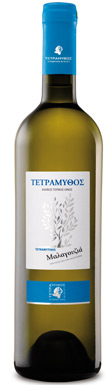

Tetramythos is a small winery that organically farms its north-facing, mountain vineyards. This particular clone of Malagousia, grown here at 700m altitude, gives a leaner,...
2018
Tetramythos

Vourvoukeli Estate, Malagousia, Thrace, Greece, 2018
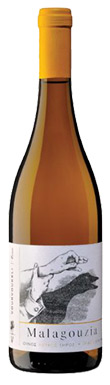
Established in 1999, Vorvoukeli is a family-owned winery with 12ha planted on clay and limestone soils. While unoaked, this is a rich and round style...
2018
Vourvoukeli Estate
Anatolikos Vineyards, Malagousia Wild Ferment, Thrace, Greece, 2018
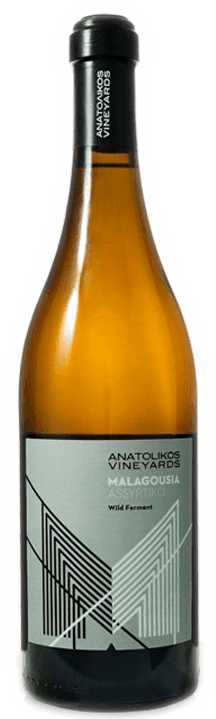
An atypical expression of Malagousia, this natural, unfiltered wine contains a small amount of Assyrtiko. Fermented with wild yeast, it spends five months on the...
2018
Anatolikos Vineyards
Semeli, Mantinia Nassiakos Moschofilero, Mantinia, Peloponnese, Greece, 2019
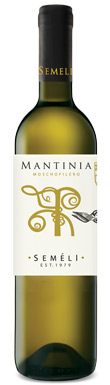
Moschofilero is sometimes compared to Gewurztraminer in style, and you can really see that similarity here – this wine isn't backward in coming forward. The...
2019
Semeli
Semeli, Thea Mantinia Fine Lees Contact, Mantinia, Peloponnese, Greece, 2018
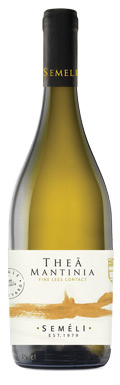
The exoticism of the Moschofilero fruit is tempered here and given added complexity by six months ageing on fine lees, 30% in acacia oak, the...
2018
Semeli
Domaine Skouras, Salto Wild Yeast, Peloponnese, Greece, 2018
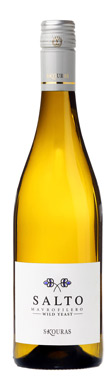
Made from the most aromatic clone of Moschofilero, named Mavrofilero for its dark skins, but super pale in the glass so vinified with zero skin...
2018
Domaine Skouras
Domaine Skouras, Assyrtiko Wild Ferment, Nemea, Peloponnese, Greece, 2019
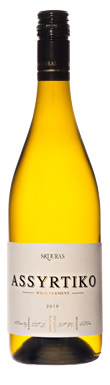
Super pale in the glass, this is fermented in stainless steel for four months on the lees, with no malolactic, or oak treatment. It's a...
2019
Domaine Skouras
Hatzidakis, Santorini Familia Assyrtiko, Santorini, Aegean Islands, Greece, 2018
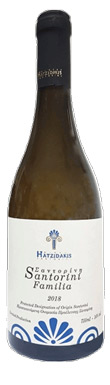
Haridimos Hatzidakis died in 2017, but this 2018 vintage was made very much according to his vision still. Though unoaked, it's did spend 40 days...
2018
Hatzidakis
Hatzidakis, Assyrtiko de Louros Vieilles Vignes, Santorini, Aegean Islands, Greece, 2016
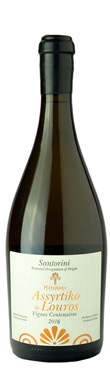
This has a level of richness that you rarely if ever find in Assyrtiko. Made from 100+ year-old vines, barrel fermented and aged on the...
2016
Hatzidakis
Chatzivaritis, miniMus Xinomavro, Goumenissa, Macedonia, Greece, 2018
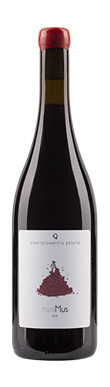
Goumenissa in northern Greece is a small winemaking region, but is home to lots of old vines and talented winemakers. These include Chloe Chatzivariti, who...
2018
Chatzivaritis
Diamantis, Xinomavro, Macedonia, Greece, 2016
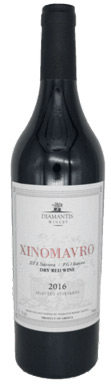
Dimitris Diamantis is working to revive the appellation of Siatista in northern Greece, where his Xinomavro vines grow at altitudes of up to 900m on...
2016
Diamantis
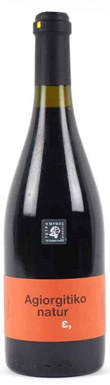
Tetramythos, Agiorgitiko Nature, Achaia, Peloponnese, Greece, 2018
90
The ideal wine to showcase Agiorgitiko's varietal typicity, unadorned by oak. Organically produced from north-facing vineyards at 715m altitude, the wine ages on lees for five months before being bottled unoaked, unfined and unfiltered. The vivid deep cherry colour in the glass gives a clue as to the style – forward, fruity, packed with violet and soft, juicy red cherry fruit. Serve slightly chilled with pizza or pasta.
2018
Tetramythos
Domaine Skouras, Megas Oenos, Peloponnese, Greece, 2012
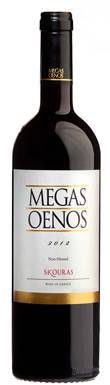
Modestly titled 'Great Wine', this is the red that made Domaine Skouras' reputation, a blend of 80% Agiorgitiko and 20% Cabernet Sauvignon. The wine undergoes...
2012
Domaine Skouras
Union of Winemaking Cooperatives of Samos, Samos Vin Doux, Samos, Aegean Islands, Greece, 2018
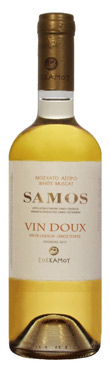
The island of Samos is famous for its sweet wines, which are vins de liqueurs, with the fermentation stopped and spirit added. Made by the...
2018
Union of Winemaking Cooperatives of Samos
Union of Winemaking Cooperatives of Samos, Nectar, Samos, Aegean Islands, Greece, 2011
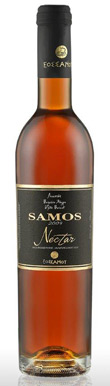
Deep amber in the glass, this incredible sweet wine from Samos is made from sundried grapes and aged in old oak casks for six years....
2011
Union of Winemaking Cooperatives of Samos
