
Discovering the rare and fascinating still wines of Champagne
Simon Field MW reports on the latest developments in the exciting world of Coteaux Champenois


When not occupied ‘tasting the stars’ or mythologising the genesis of what was to become the most famous sparkling wine in the world, Dom Pérignon, our tipsy friend from the monastery of Hautvillers, would probably have enjoyed imbibing the local still wine.
The subsequent evolution of Champagne into the most protected and celebrated fizz in the world is well documented. But what happened to the local plonk? Not much it seems. Champagne’s very raison d’être was built on the premise of defying a marginal climate and adding, whenever possible, carbon dioxide and sugar to the reedy still wine.
Scroll down for Simon Field’s tasting notes and scores for the still wines of Champagne: Coteaux Champenois new releases
Why do it?
Commercially and intellectually there seemed very little point in reawakening a category which was not especially auspicious in any sense – one or two honourable exceptions, such as Bollinger’s Vieilles Vignes Françaises, aside.
The market always craves something new, or in this case something old, however. When one allies this perfectly reasonably nostalgia to the fashion for single-vineyard wines (even in Champagne!) and, of course, to the well-rehearsed phenomenon of climate change, it becomes clear that the time is now ripe (pun intended) to resurrect the region’s still wines.
Modest volumes
Coteaux Champenois may well have ‘earned’ appellation status as far back as 1974, but the volumes produced, varying according to vintage conditions, nonetheless seldom exceed 100,000 bottles per annum, somewhat inconsequential when one considers the typical annual Champagne figure of 300 million bottles.
A gentle reawakening then, but an important one for all that.
I ‘Zoom-chatted’ and tasted with both Cyril Brun at Charles Heidsieck and Jean-Baptiste Lecaillon at Louis Roederer, and it’s immediately clear that their projects have been long in the offing and are viewed very seriously indeed.
Is it possible to have two better ambassadors? No, I would suggest.
Charles Heidsieck: focus on Chardonnay
For Brun, Coteaux Champenois wines are the very opposite of Champagne; a monocultural phenomenon, born of one vineyard, one grape and one variety.
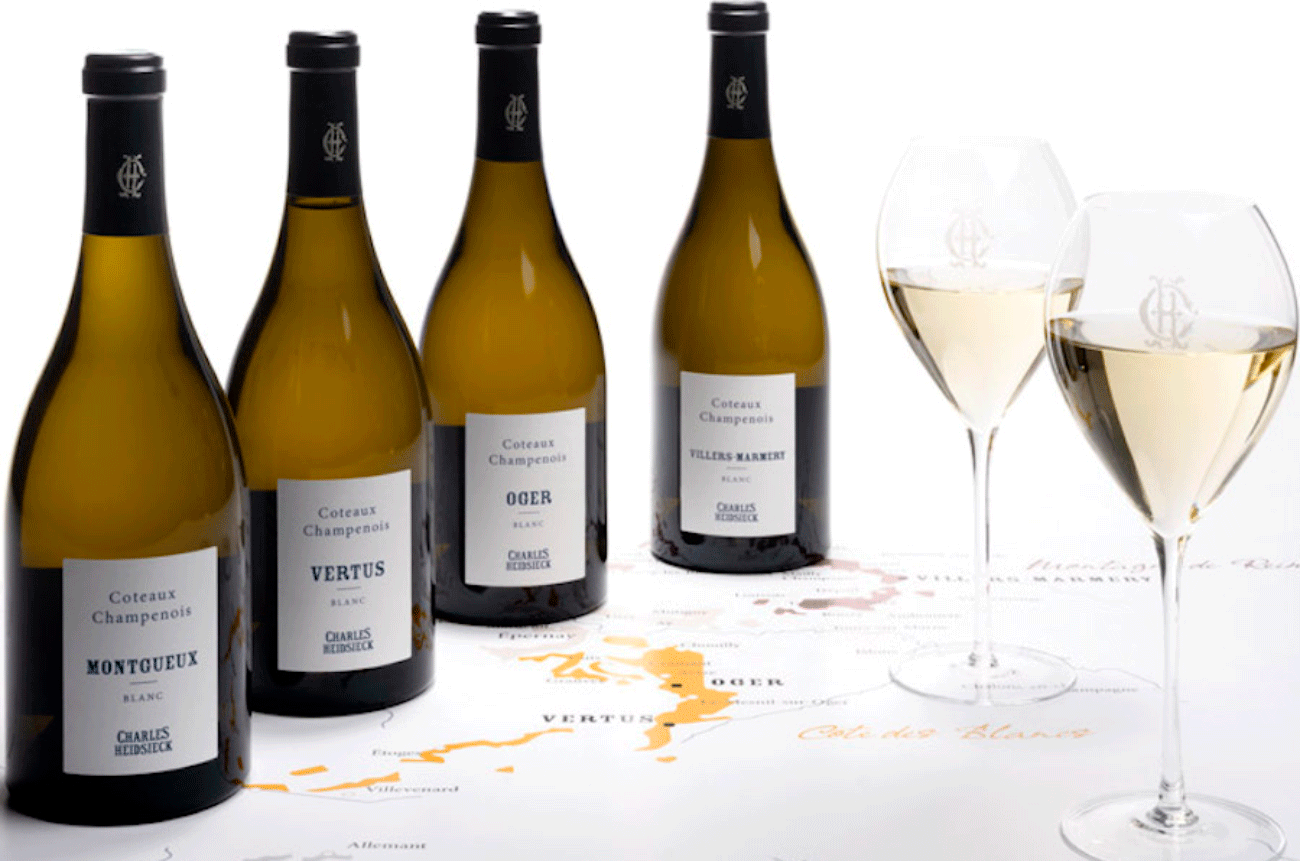
Despite the fact that hitherto the majority of Coteaux Champenois has been made as a red wine, Brun’s project has been initiated with wines from the Chardonnay grape, one barrel of each from the villages of Oger, Vertus, Villers- Marmery and Montgueux (in the Aube) selected for his first release.
Most of the fruit is from 2017, yet he has elected to bottle the wines as NV, maybe because of the somewhat inauspicious reputation of the vintage in question.
His subsequent releases are from 2018 and are labelled thus; they include fruit from the two great Montagne de Reims villages of Ambonnay and Ay – the first red, the second white, both luxuriating in the warmth of the year.
‘My aim,’ he states, ‘is to put down a cultural record of the sites in question’; a cultural record in the sense that these wines really capture the terroir; Champagne, leaving aside its multiplicity of provenance, becomes obscured behind the complexity of its winemaking.
With Coteaux Champenois, on the other hand, there is nowhere to hide. Just as well that the wines are good (getting better I suspect) and each village representative impressively different.
Louis Roederer: Purity of fruit
For Jean-Baptiste Lecaillon, who has been developing the project since the turn of the century, there is a natural corollary between these still wines and his mission to convert his vineyards to organic and ultimately biodynamic viticulture.
Again, the subtext is one of transparency; no pesticides, no herbicides, no dosage; just high-quality fruit. Very exciting indeed. ‘It’s not Champagne,’ he says, and ‘even more important, it’s not Burgundy’.
There is no aspiration to make a simulacrum of white (or red) Burgundy, dining out on the fact that Burgundy is getting hotter and (maybe) starting to lose elegance. This is not a pale imitation game. These wines have ‘higher acidity but more energy’. They are, he adds, ‘starting to smile’.
Learning curve
Smiles apart, Lecaillon is in earnest, but happily admits that he is still acquiring knowledge; there is so much to learn, he says, explaining that he decided, almost at the last minute, to reject his efforts from 2014-2017.
Only with the gloriously warm 2018 was he satisfied, selecting ultimately one plot in Le Mesnil-sur-Oger (lieu-dit Volibarts) for his white and another in Mareuil-sur Aÿ (lieu-dit Charmont) for his red.
The plots are minute, producing only 2,880 and 1,631 bottles respectively. I am honoured to have tasted them.
Jean Baptiste states that the project is rapidly evolving, specifying for example that the oak regime will differ for the 2019s (more oak for the white, less for the red) and he is fully open about the rigours of site selection (early ripening essential), skin contact, yeast strains and everything else which has to be viewed through a different lens. As he says, ‘It’s not Champagne’ and therefore the wheel has to be reinvented.
The movement gains pace
Jean Baptise and Cyril are far too modest to identify themselves as latter-day Dom Pérignons, but there is something very exciting to be ‘in on’ such a rare and fascinating rebirth in the region.
They are not alone, and it was rewarding to taste the wines from the Aube, courtesy of the delightful Drappier family; also the intriguing duo made by Henri Giraud, one of the most impressive growers in the village of Aÿ; and finally a pair made by the ever-likeable René Geoffroy, champion of the village of Cumières.
There are also interesting examples made by Lassaigne, Egly-Ouriet, Tarlant and several others.
All these latter-day Doms will not be tasting the stars; rather they have their feet firmly on the ground and anticipate, over the next few years, a minute and entirely intriguing dissemination of the terroir that can be most faithfully exposed in the region’s still wines.
Tasting the still wines of Champagne: Coteaux Champenois new releases
You may also like:
First taste: Louis Roederer Cristal 2013
How Champagne’s 2020 vintage is shaping up
Louis Roederer, Camille Hommage Blanc, Coteaux Champenois, Champagne, France, 2018

The complexity of upbringing (a 15-month ageing in a combination of sandstone vats, stainless steel and oak barrels) is repaid by the challenges of a...
2018
Louis RoedererCoteaux Champenois

Charles Heidsieck, Ay Blanc, Coteaux Champenois, Champagne, France, 2018
Ancient vines from the slopes just behind Bollinger, picked very ripe at over 12.5% and without chaptalisation. A rich yet almost translucent hue, then a...
2018
Charles HeidsieckCoteaux Champenois
Louis Roederer, Camille Hommage Rouge, Coteaux Champenois, Champagne, France, 2018
From a 0.43ha lieu dit (Charmont) in Mareuil in the balmy vintage of 2018, another very limited edition (only 1,631 bottles this time), aged for...
2018
Louis RoedererCoteaux Champenois
Charles Heidsieck, Oger, Coteaux Champenois, Champagne, France
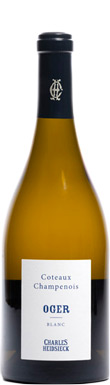
Sometimes overlooked because of its proximity to le Mesnil, Oger is of course an outstanding grand cru village in its own right, rejoicing in...
Charles HeidsieckCoteaux Champenois
Drappier, Blanc de Pinot Noir Pérpétuité, Coteaux Champenois, Champagne, France

As the name suggests, a solera /reserve pérpetulle wine, with no fewer than 14 vintages included, the youngest from 2019 and the most senior from...
DrappierCoteaux Champenois
Drappier, Trop M’en Faut, Coteaux Champenois, Champagne, France, 2015

Its name inspired by Rabelesain word play it seems and a (part) anagram of the varietal Fromonteau, as Pinot Gris is known in the Aube...
2015
DrappierCoteaux Champenois
Henri Giraud, Ay Blanc Cuvée de Croix Courcelles, Coteaux Champenois, Champagne, France, 2014
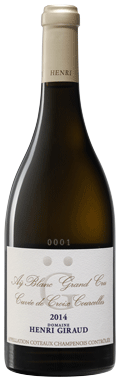
Bottled in October 2015, and all barrel fermented, this is a strictly limited edition, with only 1,955 bottles in existence, each one numbered. Made organically...
2014
Henri GiraudCoteaux Champenois
Charles Heidsieck, Vertus, Coteaux Champenois, Champagne, France
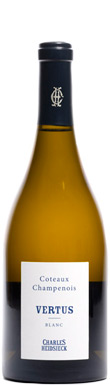
From the southern Vertus vineyards, deeper in colour, aromatics of vanillin and papaya, the oak hitherto in the ascendant; this impression does not let up...
Charles HeidsieckCoteaux Champenois
Charles Heidsieck, Villers-Marmery, Coteaux Champenois, Champagne, France
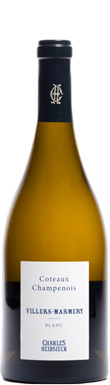
Soft nacreous colour, delicate – almost Chablisien – nose; orchard fruit profile, marked pithy acidity, even (surely not!) a hint of spritz. Villers-Marmery is perceived...
Charles HeidsieckCoteaux Champenois
Charles Heidsieck, Montgueux, Coteaux Champenois, Champagne, France
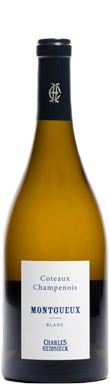
Green gold hue, star bright. The nose recalls the more southerly Burgundian enclaves, Montagny maybe or even St Aubin. Almond, quince and a hint of...
Charles HeidsieckCoteaux Champenois
Henri Giraud, Ay Cuvée des Froides Terres, Coteaux Champenois, Champagne, France, 2016
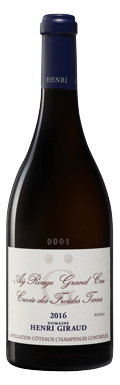
The apparent conspiracy between the (these days unusually) low level of alcohol and the name ‘Froides Terres’ lead one to suspect that the wine will...
2016
Henri GiraudCoteaux Champenois
René Geoffroy, Cumières Blanc Moulin à Vent, Coteaux Champenois, Champagne, France, 2019
<p>A faint sunrise orange behind the dawn pallor; aromatics also recall citric fruit, pithy, with a whisper of sea breeze and slate. The palate is...
2019
René GeoffroyCoteaux Champenois
Drappier, Permission Rouge de Pinot Noir, Coteaux Champenois, Champagne, France, 2018

Urville fruit from a warm vintage; a generous strawberry hue, then aromas of plum bushes, summer meadows and soft spice. Two years of ageing in...
2018
DrappierCoteaux Champenois
René Geoffroy, Cumières Rouge Pinot Noir, Coteaux Champenois, Champagne, France, 2015
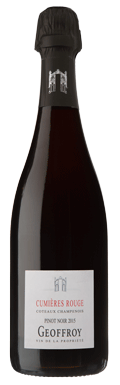
Unfined and unfiltered, maybe a touch cloudy; a ruby jewel in need of a polish. It settles down and accommodates with distinctly spicy notes, thyme...
2015
René GeoffroyCoteaux Champenois
