
Domaine Coche-Dury: producer profile
Charles Curtis MW delves into the history and winemaking of top Burgundy estate Domaine Coche-Dury, speaking to the thoughtful and methodical winemaker behind some of the region's best wines.

Raphaël Coche believes that everyone underestimates Meursault: ‘Toute est sous-classé à Meursault’.
He explains that when the time came to codify the appellations, that the committees in each village were different—an explanation for the fact that there are no grands crus in Meursault.
In a village with many superlative winemakers, such as Dominique Lafon, Jean-Marc Roulot, Arnaud Ente, and others, Coche-Dury undisputedly leads the pack.
Although the majority of the production at the domaine is village-level Meursault, the wines are nothing short of legendary.
Even the current vintage of the Bourgogne Blanc (entry level to the range) sells for more than £350 at retail, and the Corton-Charlemagne will cost thousands, when you can find it.
Scroll down to see tasting notes and scores for 20 Domaine Coche-Dury wines
Coche is a thoughtful, methodical winemaker, and he lacks neither the enthusiasm nor conviction of the young generation.
Like his father Jean-François, he is surprisingly humble, despite being at the head of what is arguably the world’s top white Burgundy domaine for more than a decade.
He takes pains to emphasise the continuity of the estate: ‘My father and I see eye-to-eye on winemaking’.
He also attributes great influence to his grandfather Georges, who he used to visit daily until his passing in 2009. Few would dispute that changes have been made in the last decade, but even fewer would argue the assertion that the wines today are better than they have ever been.
A history of the estate
The Coche dynasty began in 1923, when Léon Coche began to purchase parcels in Meursault, Auxey-Duresses and Monthélie. Léon’s vines were passed to his children Georges, Julien and Marthe.
Julien’s share is known today as Domaine Fabien Coche (ex-Coche Bizouard). Marthe’s share was passed on to her daughter Geneviève, who married Guy Roulot. Georges took over management of his portion in 1964.
Georges passed the baton to his son Jean-François in 1973. The estate first truly came to prominence under the leadership of Jean-François in the 1980s, when American wine critic Robert Parker famously called Jean-François ‘one of the greatest winemakers on planet earth’.
The fame of the estate has continued its meteoric rise since this time, and the domaine has gone from strength to strength.
Over time the estate has slowly grown to nearly 10.5ha. Georges Coche added the holdings in Premier Cru Meursault-Perrières (two parcels, both in Perrières-Dessus), while Jean-François added parcels in Volnay Taillepieds and Clos de Chênes.
By far his most famous acquisition, however, was 0.33ha rented in Corton-Charlemagne in the lieu-dit Le Charlemagne. The metayage agreement was signed in 1985, and the first vintage of the wine was 1986.
Domaine Coche-Dury at a glance:
Date founded: 1923
Owner: the Coche family
Winemaker: Raphaël Coche
Annual production: 50,000 bottles
Area under vine: 10.46ha
Key wines: Corton-Charlemagne, Meursault Perrières Premier Cru, Meursault Genevrières, Meursault
Prices – the sky’s the limit
Corton-Charlemagne was the first wine from Coche that showed the incredible appreciation of value that one now sees across the range.
The inaugural vintage sold for an average of more than £5,500 a bottle this year at auction, a price that represents more than 300% appreciation from 10 years ago, making it more expensive than almost every Montrachet on the market.
The jump in the price of the Meursault Perrières has been, if anything, even more marked: the same vintage averaged roughly £3,200 a bottle last year, while 10 years ago it traded for just over £760 a bottle.
Key wines
These bottlings are the flagships of the domaine. By volume, however, the largest production is the village-level Meursault, which may be labelled simply as Meursault or with the name of the lieu-dit.
In the current vintage, Coche has bottled a Rougeots, a Chevalières, and a Caillerets.
The domaine also owns parcels in Narvaux, Luchets, and Vireuils. In some vintages, these have been labelled as such; in others, they have been blended into the village Meursault.
There is a Bourgogne Blanc and Rouge, a village-level red from Auxey-Duresses, a Monthélie Rouge, a Meursault Rouge, and a Volnay Premier Cru.
Each of these is guaranteed to incite a feeding frenzy among collectors – even the reds, which once lagged in popularity.
Coche-Dury vineyard holdings
Bourgogne Blanc: 1.5ha
Meursault: 3.75ha
Puligny-Montrachet Les Enseignères: 0.8ha
Meursault Les Rougeots: 0.65ha
Meursault Les Chevalières: 0.13ha
Meursault Caillerets: 0.18ha
Meursault Genevrières Premier Cru: 0.2ha
Meursault Perrières Premier Cru: 0.6ha
Corton-Charlemagne Grand Cru: 0.88ha
Bourgogne Rouge: 0.35ha
Auxey-Duresses Rouge: 0.5ha
Meursault Rouge: 0.23ha
Monthélie: 0.3ha
Volnay Premier Cru: 0.39ha

Secrets to success
What is behind the seemingly endless mania for these wines? To begin with, they are incomparably delicious. The secret of their appeal lies in attention to detail.
The vineyards are famous for avoiding the use of clones and employing old vines for massal selection, and the work in the vines is meticulous.
Raphaël notes that the soil is now worked manually; seemingly, every leaf is in its place. The difference between the Coche parcels and their neighbours is marked during the growing season.
When the harvest comes, yields are low, mainly because the vines are old, and not because of green harvesting. Picking is generally early to retain freshness.
The attention to detail continues in the winery. The grapes are lightly crushed, just enough to liberate the juice during pressing. The juice is run into casks for fermentation, and aged for anywhere from 15 months to almost two years according to the vintage.
The finished wines are fined with egg whites and bottled, primarily by hand with an instrument called a chèvre à deux becs (a double spigot). This incredibly labour-intensive system was famously used by Henri Jayer and is still used today by Jean-Yves Bizot and Hubert Lamy.
One can bottle a maximum of eight casks in a day this way, while an automated bottling line can do five times that amount. It is often preferred, however, because of its gentle nature.
According to Jean-François, it allows one to bottle ‘without pushing the wine or working it too much, aerating it, or subjecting it to hot or cold temperature…the wine must be manipulated as little as possible.’
Even the top-quality corks they use are hand-selected and driven into the bottle, with the side showing no blemishes against the wine.
Tradition and consistency
Raphaël largely follows these long family traditions and adheres strictly to the attention to the detail that has made the estate an absolute reference.
However, Raphaël does not slavishly adhere to the past for the sake of tradition. Instead, he has carefully thought through each facet of the production. He began to work alongside his father in 1997, was full-time at the domaine a few years later, and took over fully upon his father’s retirement in 2010.
One of his first initiatives was also among the most consequential for the future of the domaine. The opportunity came up in 2012 for Raphaël to purchase the parcel Jean-François had rented in 1985 in Corton-Charlemagne, along with another one downslope from it, and to expand the mid-slope parcel with an additional metayage agreement.
In total, their holdings went from 0.33ha to 0.88ha. To finance the deal, he sold the 0.34ha owned by the domaine in Pommard Vaumuriens, which Jean-François had been reluctant to do. The die was cast, and the amount of the magical Corton-Charlemagne available to the world more than doubled.
A deft hand in the winery
Raphaël has also shown himself to be a pragmatic, independent thinker in the winery. He has continued in the ways of his father, but has been willing to modify them when the results warrant the change.
One example is at the press. The estate had long been famous for its use of a traditional mechanical press, which Raphaël has now supplemented with a pneumatic press. His primary consideration is how best to obtain the discrete, elegantly bitter notes from the phenolics in the grape skins that compensate for acidity in a warm or concentrated vintage, such as 2015 or 2016. Few would disagree that he has succeeded marvellously well.
Another innovation has been the introduction of automated bottling for some cuvées, although the traditional cheval à deux becs is still used for many.
Raphaël seems less obsessed with searching for a reductive note in the wines than his father had been, and has reduced the proportion of new wood to 20%-25% for most wines. But above all, he adapts the maturation to the needs of the wine.
‘There is no recipe – the élévage depends upon the life the vine has lived during the season’, he says.
In general, the maturation of the wine is still long— over two winters at least. Fermentation is also long, and the malolactic conversion is slow.
For the red wines, Raphaël has introduced 10%-15% whole cluster fermentation after a two- or three-day cold soak. The total vatting time for the reds is relatively short. His philosophy is non-interventionist, although he will cool the harvest in warm weather, and he de-vats quickly, almost while the grapes are still warm.
‘Attuned to today’s thinking’
Overall, under Raphaël the domaine has experienced a subtle evolution more than a revolution. If anything, the wines are more attuned to today’s thinking, with less new wood and less bâtonnage.
He mused that ‘once, we produced wine that said more about Coche-Dury than about the terroirs.’ Now the style is manifestly a return to purity.
The wines still have the trademark Coche freshness, and for my palate lack absolutely nothing in density, elegance, or balance.
Above all, however, the character of the terroir shines through. Domaine Coche-Dury is well-positioned today for the next generation.
Timeline
1923: Founded by Léon Coch
1964: Georges Coche inherits his share of the vineyards
1973: Georges Coche retires
1975: Jean-François Coche marries Odile Dury and renames the domaine
1986: First vintage of Coche-Dury Corton-Charlemagne
1997: Raphaël Coche begins to work at the domaine
2010: Retirement of Jean-François Coche
2012: Expansion of holdings in Corton-Charlemagne
Tasting notes and scores for 20 Domaine Coche-Dury wines:
Related content:
Investing in Burgundy: search on for next stars
Charles Curtis MW: My top 10 Burgundy wines of 2021
Domaine de la Romanée-Conti 2019: in-bottle tasting comparison
Domaine Coche-Dury, Corton-Charlemagne Grand Cru, Burgundy, France, 2019
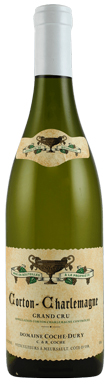

Stunningly good wine. Coche notes that the wine gives a very chalky impression, but that the marl component of the soil gives the fruit more...
2019
Domaine Coche-DuryCorton-Charlemagne Grand Cru

Domaine Coche-Dury, Corton-Charlemagne Grand Cru, Burgundy, France, 2000
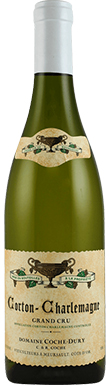
This 2000 Coche-Dury Corton-Charlemagne is a sublime wine, and one of the highlights of a recent trip to France. The wine showed a complex nose...
2000
Domaine Coche-DuryCorton-Charlemagne Grand Cru
Domaine Coche-Dury, Meursault, 1er Cru Perrieres, Burgundy, France, 2019
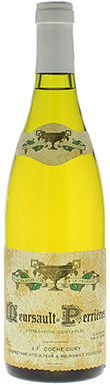
A monumental wine. Perrières is a warm terroir that ripens early, and in 2019 produced an opulent wine that combines notes of passionfruit, lemon peel...
2019
Domaine Coche-DuryMeursault
Domaine Coche-Dury, Les Rougeots, Meursault, Burgundy, France, 1992
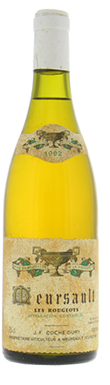
This bottle of 1992 Rougeots was pristine in its beauty and clarity. The wine is still extraordinarily youthful, with no hint of oxidation. It started...
1992
Domaine Coche-DuryMeursault
Domaine Coche-Dury, Meursault, 1er Cru Genevrières, Burgundy, France, 2019
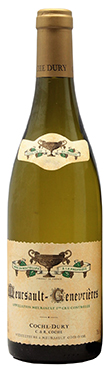
A wine of intense concentration, here there is ripe apple and pear fruit with a pronounced saline minerality, all coloured with hints of flowers and...
2019
Domaine Coche-DuryMeursault
Domaine Coche-Dury, Meursault, 1er Cru Perrieres, Burgundy, France, 2007
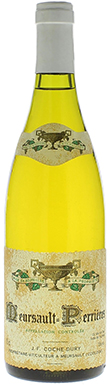
This stupendous wine has kept its youthful allure. The bouquet opens with notes of passionfruit, lemon peel and coconut milk before moving on to toasted...
2007
Domaine Coche-DuryMeursault
Domaine Coche-Dury, Les Rougeots, Meursault, Burgundy, France, 2019
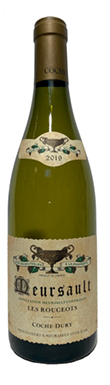
There are usually about two barrels bottled separately, although the Coche holding here is two-thirds of a hectare, downslope from Vireuils. The wine opens with...
2019
Domaine Coche-DuryMeursault
Domaine Coche-Dury, Meursault, 1er Cru Les Caillerets, Burgundy, France, 2019
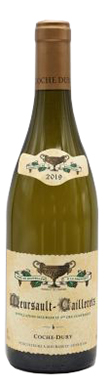
This delivers a lush, ripe, almost tropical aroma with a pronounced edge of butter, fresh cream, and spice. The wine has a hint of reduction...
2019
Domaine Coche-DuryMeursault
Domaine Coche-Dury, Les Chevalières, Meursault, Burgundy, France, 2019
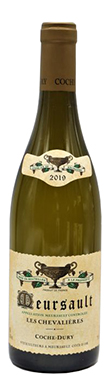
The tiny 0.13ha sliver of Chevalières lies just north of Rougeots, near Meix Chavaux. The wine here is made in the same way as its...
2019
Domaine Coche-DuryMeursault
Domaine Coche-Dury, Les Enseignères, Puligny-Montrachet, Burgundy, France, 2019
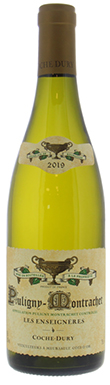
Far too often overlooked, this village-level terroir in Puligny lies just downslope from Bienvenues-Bâtard-Montrachet Grand Cru. Raphael notes the soil is rocky red marl over...
2019
Domaine Coche-DuryPuligny-Montrachet
Domaine Coche-Dury, Meursault, Burgundy, France, 2019
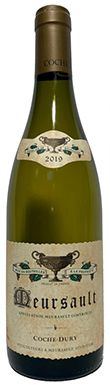
Village Meursault is the largest cuvée from Coche. It is based on two parcels in Narvaux, up the slope from Premier Cru Genevrières. Like its...
2019
Domaine Coche-DuryMeursault
Domaine Coche-Dury, Meursault, Burgundy, France, 2010
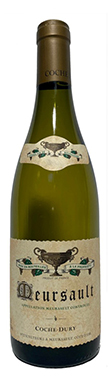
Tasted in 2021, this 2010 Meursault is still showing a bit of wood over the brightly youthful citrus fruit with nuances of hazelnut and creamery...
2010
Domaine Coche-DuryMeursault
Domaine Coche-Dury, Monthélie, Burgundy, France, 2019
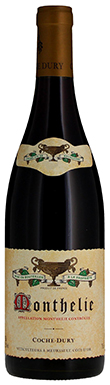
This wine is among the best village-level Monthelies that I can remember. Coche produces it from his 0.3ha of south-facing vines in the village and...
2019
Domaine Coche-DuryMonthélie
Domaine Coche-Dury, Volnay, 1er Cru, Burgundy, France, 2019
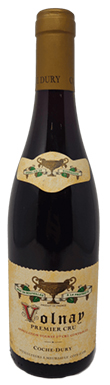
Overlook this delicious wine at your peril. There is a ripe, silky cassis and mulberry fruit, a suggestion of anise, and a bit of mineral...
2019
Domaine Coche-DuryVolnay
Domaine Coche-Dury, Meursault, Burgundy, France, 2019
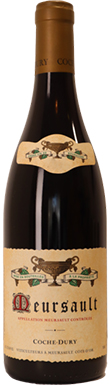
The hauntingly aromatic character of the fruit recalls for Coche the seductive aroma of the cherries that grow nearby. More than a fruit bomb, though,...
2019
Domaine Coche-DuryMeursault
Domaine Coche-Dury, Auxey-Duresses, Burgundy, France, 2019
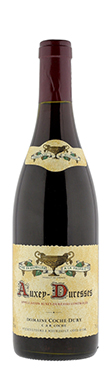
This structured, firm red is produced from two parcels totaling a half-hectare in the lieux-dits of Les Fosses et Les Boutonniers. The vines are planted...
2019
Domaine Coche-DuryAuxey-Duresses
Domaine Coche-Dury, Bourgogne, Burgundy, France, 2020
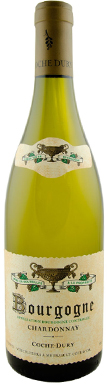
This wine is fermented in cask and given a 15-month maturation without racking. The result is marvellously creamy and rich, yet there is an expressive...
2020
Domaine Coche-DuryBourgogne
Domaine Coche-Dury, Meursault, Burgundy, France, 2014
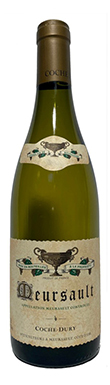
Tasted in 2021, this 2014 Meursault is still infinitely youthful, with notes of ripe apple and acacia flowers, lemon peel, and a hint of hazelnut....
2014
Domaine Coche-DuryMeursault
Domaine Coche-Dury, Bourgogne, Burgundy, France, 2019
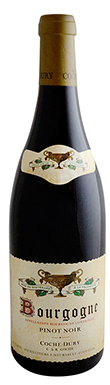
Lovely forward red berry fruit and a supple elegance. On the palate, there is a winningly silky texture. Although the wine is approachable and straightforward,...
2019
Domaine Coche-DuryBourgogne
Domaine Coche-Dury, Bourgogne, Burgundy, France, 2018
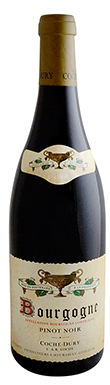
This 2018 Bourgogne Rouge showed the necessity of ageing. The wine was initially a bit closed on the nose and revealed its discreet plummy fruit...
2018
Domaine Coche-DuryBourgogne