
Domaine de la Pousse d’Or: a quest for quality
Georgina Hindle looks at the history of this historic Burgundy estate and reports from a virtual tasting with general manager Benoît Landanger discussing the winemaking philosophy and tasting four wines from the 2018 vintage.

With a rich history spanning several centuries, Domaine de la Pousse d’Or is in the league of elite Burgundy estates with exceptional vineyard holdings across the region.
Based in the village of Volnay where it has majority holdings, nor far from the centre of Beaune, it owns 17 hectares across the Côte de Beaune and north Côte de Nuits comprising five grand crus, 11 premier crus, three monopoles within premier crus and one village designated vineyard.
Scroll down to see the Domaine Pousse d’Or tasting notes and scores
History
Domaine de la Pousse d’Or can trace its existence back to the 1100s and the Dukes of Burgundy who held all the land titles at the time.
In the late 1800s the estate was owned by the Audignac family, whose name is still used for the walled vineyard plot in front of the 17th century house, once known as the Château de Volnay.
By 1855, the estate transferred to Jacques-Marie Duvault-Blochet and formed part of his larger holdings which also included famed properties Domaine de la Romanée-Conti and Clos de Tart.
However, without proper maintenance, and the laws of succession distributing holdings to several family members, the domain fell into disrepair until it was resurrected by Gérard Potel who acquired it through marriage in 1964.
Potel’s untimely death in 1997 led to the estate’s purchase by Patrick Landanger who devoted significant financial and human resources to restore the image of the prestigious domain.
Investments were made in vineyards already owned, as well as new acquisitions in the Côte de Nuits, alongside improvements in the winemaking facilities and cellars.
In 2013, Patrick was joined by his son Benoît on the winemaking and management team with Benoît taking the helm in 2018.

Domaine de la Pousse d’Or at a glance
Annual production bottles: 50,000-75,000
Annual production cases: 5,000 – 6,000
Sales strategy: customer allocation
Grands Crus
- Bonne-Mares
- Clos de la Roche
- Corton le Clos de Roi
- Corton les Bressandes
- Chevalier-Montrachet
1er Cru, Monopoles
- Clos de la Bousse d’or, Volnay 1er Cru
- Clos des 60 Ouvrées, Volnay 1er Cru
- Clos d’Audignac, Volnay 1er Cru
Premiers Crus
- Les Amoureuses, Chambolle-Musigny 1er Cru
- Les Feusselottes Chambolle-Musigny 1er Cru
- Les Charmes Chambolle-Musigny 1er Cru
- Les Groseilles Chambolle-Musigny 1er Cru
- Les Jarollières Pommard 1er Cru
- Les Caillerets Volnay 1er Cru
- Clos de Tavannes Santenay 1er Cru
- Le Cailleret Puligny-Montrachet 1er Cru
Village
- Chambolle-Musigny
See all Domaine de la Pousse d’Or tasting notes and scores
Winemaking
The estate is extremely passionate about the environment and working sustainability. They received biodynamic certification by the Demeter standards body in 2018 – an official recognition despite working organically for twenty years, and biodynamically since 2014, though it’s not written on the bottle.
‘It’s ten times harder to work biodynamically, the team has to be so passionate, it can be crazy working this way but it’s really our main focus’ Benoît Landanger said during a virtual tasting this year.
Grapes are manually sorted in two phases, including using a state-of-the-art computerised optical sorting system, and harvested by hand before being fed by gravity into the tanks. Bunches are destemmed and fermented on indigenous yeasts in temperature-controlled tanks with vinification periods around 21 days depending on the year.
‘We like long fermentations and prefer to let the juice work by itself, not to over control it, especially in a good year,’ Benoît said.
Wines are aged from 12 to 15 months in French oak barrels, with between 20 to 30 percent new wood, depending on the cru. Though the estate likes to test out different barrels, two cooperages are preferred; the local François Frères and Seguin Moreau.
Amphora
There have also been some recent experiments with clay amphorae for the three Volnay 1er cru wines in order to ‘replicate the exact exchange of oxygen you would get with a barrel but without the use of wood’.
‘We want to take exactly what the vine gives us’ and ‘not to add any taste or tannins from the barrel’.
‘The idea is to not add anything that the terroir doesn’t give you,’ Benoît said.
Both a regular and amphora bottle line has been produced since 2015 with around 2,000 bottles made of the latter.
Further comparisons will be made between the two lines over the next five years at which point Benoît is confident they will be able to make a good conclusion as to what exactly the wood brings to the wines.
Little sulphur is added during the winemaking process and all the wines are bottled by the estate’s own bottling line via gravity, unfined and unfiltered following the lunar calendar.
When it comes to ageing and drinkability, Benoît said his father made a guarantee of ‘forty years’ but a recent 1964 ‘was just amazing’. ‘Something changes after six to eight years and sometimes you just want to drink them earlier’.
Our philosophy is that ‘a wine is like a person, like a vineyard, it should last 100 years’.
Benoît credits reduced yields and an uncompromising quest for quality as opposed to quality with the longevity of the Pousse d’Or wines.
‘We don’t make the quantities we could’ he said, ‘for instance the maximum allowance in Volnay 1er Cru is 42hl/ha but the estate makes around 35hl/ha and for grand cru we produce around 27hl/ha against a maximum of 38hl/ha’.

The 2018 vintage
‘I really believe 2018 is for us a very good year, but it was a very stressful year for both the wine and winemakers’.
Difficult conditions with heat and drought, similar to the 2003 vintage, meant grapes had large differences of maturity and the acidity levels were low.
‘Usually we like ripe grapes, and are one of the last to harvest, but in 2018 we were the first’ as Benoît opted to preserve the maximum acidity possible.
‘It was a risk, but now, years later I think it was a good choice’.
Benoît said ‘there is a lot of difference between estates in 2018’ with the domaine starting the harvest uncharacteristically early on the 27th August and finishing 8-10 days later.
‘The grapes were so concentrated that in fact it was very easy in the winery. One of the key things was not to work too much’.
The tasting
Tasting notes and scores below.
Clos de la Bousse d’or, Volnay 1er Cru
From a 2.13ha parcel where grapes were planted at several times; approximately 24% in 1958, 16% in 1967, 4% in 1970, 21% in 1974, 20% 1991 and 15% in 2012.
Corton le Clos de Roi
‘Corton is known for its whites but personally I think it should be more well known for the reds’ says Benoît who believes it will be in the future as production gets better and better.
This comes from a 1.4ha plot, with 50% planted in 1979 and the other 50% in 1987.
Les Groseilles Chambolle-Musigny 1er Cru
A ‘very elegant’ wine with slightly higher acidity coming from this vineyard,’ said Benoît.
It is a tiny 0.3ha plot facing south-east with largely limestone soils. Vines were planted 50% in 1990 and 50% in 1991.
Le Cailleret Puligny-Montrachet 1er Cru
A 0.717ha plot, facing east by south-east with stony limestone. Planted in 1976.
Terroir
When asked to describe the differce in style of Burgundy wines, Benoît referenced the fact that from the middle of the Côte de Beaune to the middle of the Côte de Nuits it’s about 45km which is ‘very small but it’s one week of difference in the harvest which can be huge’.
He said; ‘the terroir in Burgundy is so different – from the soil composition to the soil structure and vineyard exposition as well as the way that we work the soil – it’s really the magic of our world here. It’s so tiny but so complex.’
Looking ahead to the future, and the expansion of the domain’s holdings, Benoît says prices now are ‘not in the in millions but in the billions’ and the plot sizes are tiny, but he is ‘actively looking’ so watch this space.
See the Domaine de la Pousse d’Or tasting notes and scores
You may also like
Burgundy: a complete guide to Clos de VougeotTasting five decades of Louis Latour’s Corton-CharlemagneDomaine de la Romanée-Conti 2019: wines rated and reviewedBurgundy: a complete guide to Corton
Domaine de la Pousse d'Or, Puligny-Montrachet, 1er Cru Le Cailleret, Burgundy, France, 2018
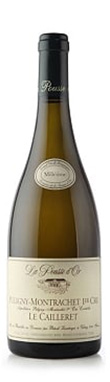

This wine ‘should be a grand cru’ says winemaker Benoit Landanger. It has a wonderfully aromatic nose, elegant and precise with white floral tones underpinned...
2018
Domaine de la Pousse d'OrPuligny-Montrachet

Domaine de la Pousse d'Or, Chambolle-Musigny, 1er Cru Les Groseilles, Burgundy, France, 2018
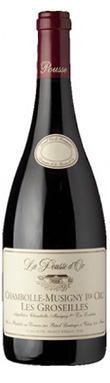
This is so elegant - not from a ‘famous parcel’ as winemaker Benoit Landanger put it but ‘one that makes very good wines’. It’s slightly...
2018
Domaine de la Pousse d'OrChambolle-Musigny
Domaine de la Pousse d'Or, Corton Clos du Roi Grand Cru, Burgundy, France, 2018
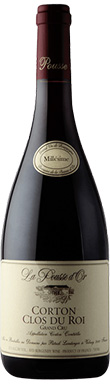
A bold and spicy nose full of black pepper, black cherries and clove which combine to give a soft savoury and fruity expression. Such...
2018
Domaine de la Pousse d'OrCorton Clos du Roi Grand Cru
Domaine de la Pousse d'Or, Volnay, 1er Cru Clos de la Bousse d'Or, Burgundy, France, 2018
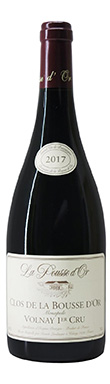
A lovely red and black fruit nose here with bright berry notes. The palate is juicy and vibrant, so fresh and lively with a good...
2018
Domaine de la Pousse d'OrVolnay