
Domaine de la Romanée-Conti 2019: in-bottle tasting comparison
US-based Charles Curtis MW and UK-based Andy Howard MW were given the unique opportunity to taste and rate the newly bottled 2019 wines from Domaine de la Romanée-Conti. Here we explore the similarities and differences in their verdicts.

In February 2022, UK importer Corney & Barrow held a tasting of the 2019 wines from Domaine de la Romanée-Conti in bottle. The US importer, Wilson Daniels, did the same in New York in March. Two Decanter contributors tasted and rated the wines separately.
The results were more striking for their similarities than for their differences, with one salient difference: in most cases, the American palate seemed slightly more enthusiastic. Both tasters agree, however, that the ensemble of wines is a remarkable achievement.
Scroll down to see tasting notes and scores for the Domaine de la Romanée-Conti 2019 in-bottle wines
Comparing the scores:

The US perspective – Charles Curtis MW
Much has changed, much has not. In 2018, the longstanding winemaker of Domaine de la Romanée-Conti, Bernard Noblet, retired and was replaced by Alexandre Bernier. It was also in 2018 that Henry-Frédéric Roch, co-director of the domaine, passed away and was replaced by his cousin Perrine Fenal.
Although still very much in evidence, Aubert de Villaine is said to have officially retired at the end of 2021. His nephew Bertrand de Villaine has taken an increasingly visible role. Despite these outward transitions, the quality and style of Domaine de la Romanée-Conti remain unchanged at the pinnacle of Burgundy wine.
The wines of the 2019 vintage continue to evolve. Once the fermentation is finished, the basic constituents of a wine are fixed, but our way of looking at a vintage will continue to evolve as our experience of it grows.
I tasted the 2019 vintage at Domaine de la Romanée-Conti from barrel in October 2020, and in March 2022 I had the opportunity to taste them in bottle, to see how they had developed.
What had not changed was the fact that these are all, without exception, superb wines. The domaine adapts over time to changing conditions, such as global warming, but the commitment to quality is constant.
‘The thing that 2003 taught us is that we wanted to avoid over-maturity; what we wanted was to keep freshness and acidity,’ said Bertrand de Villaine.
Tasting the 2019s in New York
The departure point in both the US and UK tastings was the red Corton. This wine is something of an underdog in this line-up, yet it has always seemed to me to harbour great potential. The Corton 2019 was particularly engaging out of the barrel, but in bottle seemed to have pulled back. It seemed lighter, less exuberant, and somehow stricter. Wines can often close down a bit after bottling, and with time this should open back up.
The next wine we tasted in New York was the Vosne-Romanée Premier Cru Duvault-Blochet, which was not in the autumn 2020 line-up. It is principally composed of the fruit from the young vines of the grand cru vineyards farmed by the domaine, along with some of the domaine holdings in premier cru parcels. Past vintages included the domaine holding in Vosne Premier Cru Petits Monts, but from 2018 this is being bottled separately and sold to the restaurant trade in France. Since the domaine likes to maintain an average vine age of 50 years, the quantity of grapes for this bottling varies more according to the replanting of the grand cru vineyards than to the yield from the premier cru vineyards. It was perhaps telling that this was tasted after the Corton. To me it seemed more forward and deeper than the Corton, and should age marvellously well.
Next, we moved on to the Echézeaux. It had impressed me in my initial tasting, and continued to do so from bottle. My sense is that DRC’s Echézeaux has improved in the past decade. Bertrand de Villaine chalks this up to a partial replanting of the vineyard that allowed the domaine to take the effects of global warming into account when choosing vines for planting.
This was followed, as usual, by the Grands Echézeaux. Despite the proximity, the wines are quite distinct. There is a slightly earthy, savoury side to the Grands Echézeaux that isn’t there in the Echézeaux. Tasted from barrel it was hidden by the exuberant fruit, but now in bottle this note was more prominent.
The Grands Echézeaux was followed by the Richebourg and then the Romanée-St-Vivant. This represents a reversal from previous tastings, where the Romanée-St-Vivant was considered first. The domaine undertook a replanting of the Romanée-St-Vivant when they purchased it from the heirs of the Marey-Monge family. The 2019, however, does not contain the young vines – only the old vines are used here, giving the wine even more richness and depth. The Richebourg, in contrast, is a wine that shows more freshness, with a crisp, red fruit character that is quite appealing.
La Tâche and Romanée-Conti also seem to be diverging. The former struck me from barrel with its exuberance and forward nature, which is still the wine’s salient feature. The opulence of the Romanée-Conti from barrel, however, was beginning to recede. While the wine remains substantial, it seems to be closing down and showing less fruit and more tannin than it did from barrel, although the extract and length are, if anything, even more obvious.
The tasting continued with two whites. We began with the inaugural vintage of the Corton-Charlemagne, from vines rented from Domaine Bonneau du Martray. According to Bertrand, picking late is the key: ‘especially at the top of the hill. It is risky, but it is the key’, he said.
Domaine Bonneau du Martray began picking on 14 September, while DRC waited until 22 September and did not finish until the red wine harvest had been completed a few days later. In contrast, the picking date for the Montrachet was moved up to 15 September. This is a bit of a change, since the domaine has always been known for late picking. The earlier date was particularly appropriate in 2019, however, since the Côte de Beaune was more advanced than the Côte de Nuits, as the vineyards had been refreshed by rains that the Côte de Nuits did not receive.
The evolution of the wines in just 16 months demonstrates that wine is indeed a living thing. The quality on show here in both the reds and whites proves yet again that Domaine de la Romanée-Conti is a producer of the highest order.
Aubert de Villaine seemed very content: ‘I am very confident in the team we have now. I can take the time to follow some projects.’
The UK perspective – Andy Howard MW
For Burgundy lovers, there is no more evocative and aspirational name than that of Domaine de la Romanée-Conti. This remarkable domaine has been at the peak of the quality pyramid both within Burgundy and around the world for many decades.
It was with great excitement that I attended the launch of the domaine’s recently bottled 2019 vintage at the offices of its exclusive UK importer, Corney & Barrow.
A small number of journalists and regular buyers were invited to join the reverential gathering.
It was an additional privilege to meet with Aubert de Villaine, who had made the trip from France along with new co-directors Bertrand de Villaine and Perrine Fenal, daughter of Lalou Bize-Leroy.

‘Destined for greatness’
Although spectacular, the wines of Domaine de la Romanée-Conti are not at all showy or flashy, but are among the finest expressions of Pinot Noir and Chardonnay from the most hallowed, historical climats within the Côte d’Ôr.
The wines, as expected given the quality of the vintage and the estate’s attention to detail, are highly impressive despite their youth. They are destined for greatness over the long-haul, although many are disarmingly lovely to sip now.
These wines all demand aeration and importantly, contemplation. La Tâche and Romanée-Conti opened up and changed in the glass over a period of just 30 minutes, confirming that these really are wines to savour.
Tasting the wines
Aubert de Villaine tasted the range of wines at speed, moving swiftly from one wine to the next. He explained that he often likes to taste this way because ‘it emphasises the different characters’ between sites.
I found it necessary to spend much longer tasting and contemplating, as the wines developed substantially within the glass. Noticeably, the ripeness and heat of the vintage, although apparent, did not overshadow the specific terroir characters.
Wines of the Côte de Beaune
Corton and, with its first vintage, Corton-Charlemagne are at the pinnacle of what is achievable from these grand cru sites.
This is the 11th vintage of the domaine’s Corton, often considered a poor man’s grand cru, but it is undoubtedly the finest Corton I have tasted. And in the context of Domaine de la Romanée-Conti, it is a relative bargain.
Wines of the Côte de Nuits
A different style shows through in the wines from the northern end of the Côte d’Or: innate power wrapped up in layers of flavour and plushness on the palate, perfectly balanced by an ultra-fine tannic structure and riveting acidity.
I did not notice any oak flavour when tasting, and on mentioning this to de Villaine he smiled, saying that despite each wine seeing 100% new oak, the domaine’s objective is for the wood to be ‘totally invisible in flavour and aroma’.
Echézeaux was tasted first, de Villaine noting that it is ‘always trying to push itself forward amongst the other wines’.
Grands-Echézeaux was a standout wine and de Villaine sees many similarities between Grands-Echézeaux and La Tâche.
Richebourg was a (relative) disappointment, with the weight and regal character a little reserved and with tannins tightly wound.
Romanée-St-Vivant was delightful – floral and finely-woven but with the concentration to last decades.
La Tâche was slightly exotic and extremely pure, yet with the power and concentration expected, before the more subtle, other-worldly experience of tasting Romanée-Conti. Here floral notes evolve and soar from the glass, with a outstanding combination of power and poise.
I could have absorbed myself with how these wines developed in the glass for several hours.
The verdict
The 2019s from DRC are a remarkable set of wines which live up to their billing.
They may be amongst the most expensive wines on earth, but they are magnificent wines which will give huge pleasure to all of those lucky enough to own, or taste, them over the next fifty years.
Tasting the Domaine de la Romanée-Conti 2019 in-bottle wines
Related content
Burgundy 2020 en primeur: Full report and top wines
Domaine de la Romanée-Conti 2019 en primeur: wines rated and reviewed
Investing in Burgundy: Search on for the next stars
Domaine de la Romanée-Conti, Romanée-Conti Grand Cru Monopole, Burgundy, France, 2019
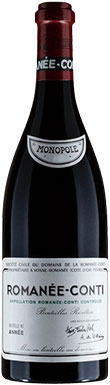

Although picked on the same day, the reserved Romanée-Conti is evolving differently than the explosive La Tâche. Tasted out of barrel, the wine was...
2019
Domaine de la Romanée-ContiRomanée-Conti Grand Cru Monopole

Domaine de la Romanée-Conti, La Tâche Grand Cru Monopole, Burgundy, France, 2019
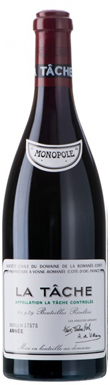
The last few months of maturation in cask have moved the 2019 La Tâche from being a superb wine to be one that is essentially...
2019
Domaine de la Romanée-ContiLa Tâche Grand Cru Monopole
Domaine de la Romanée-Conti, Romanée-St-Vivant Grand Cru, Burgundy, France, 2019
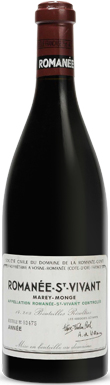
The Romanée-Saint-Vivant was shown after the Richebourg, which was not always the case. The domaine farms 5.29 hectares here, the former holding of the Marey-Monge...
2019
Domaine de la Romanée-ContiRomanée-St-Vivant Grand Cru
Domaine de la Romanée-Conti, Corton-Charlemagne Grand Cru, Burgundy, France, 2019
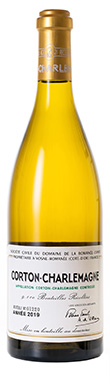
Picked nearly at the end of September, this new entry to the Romanée-Conti roster is done in a style that is true to the domaine...
2019
Domaine de la Romanée-ContiCorton-Charlemagne Grand Cru
Domaine de la Romanée-Conti, Grands-Echézeaux Grand Cru, Burgundy, France, 2019
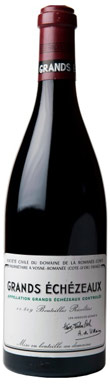
Bertrand de Villaine, co-manager of the domaine, has often evoked the savoury nature of the Grands Echézeaux produced from their 3.53-hectare plot down-slope from their...
2019
Domaine de la Romanée-ContiGrands-Echézeaux Grand Cru
Domaine de la Romanée-Conti, Richebourg Grand Cru, Burgundy, France, 2019
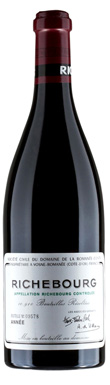
This continues to impress as a supremely elegant wine with finesse, freshness and a lovely expressive fruit character. It is lighter than its fellows, but...
2019
Domaine de la Romanée-ContiRichebourg Grand Cru
Domaine de la Romanée-Conti, Corton Grand Cru, Burgundy, France, 2019
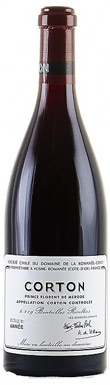
This is the underdog (if there is one), produced from 2.27 hectares of vines from the Domaine Prince Florent de Merode. Picking began here on...
2019
Domaine de la Romanée-ContiCorton Grand Cru
Domaine de la Romanée-Conti, Echézeaux Grand Cru, Burgundy, France, 2019
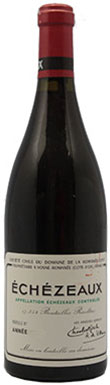
Bertrand de Villaine, co-manager of the domaine, avers that the recent re-planting of part of the DRC Echézeaux will help the vines adapt to global...
2019
Domaine de la Romanée-ContiEchézeaux Grand Cru
Domaine de la Romanée-Conti, Grands-Echézeaux Grand Cru, Burgundy, France, 2009
DRC Grands Echézeaux has a reputation for being among their most long-lived wines. The impressive density and power here take nothing away from the lush,...
2009
Domaine de la Romanée-ContiGrands-Echézeaux Grand Cru
Domaine de la Romanée-Conti, La Tâche Grand Cru Monopole, Burgundy, France, 2013
Among the vineyards that could beat the odds in 2013, La Tâche is near the top of the list. The vintage was cold and wet,...
2013
Domaine de la Romanée-ContiLa Tâche Grand Cru Monopole