
Domaine François Raveneau: Taking the pulse of Chablis’ greatest wine
This Chablis supernova is a must-have for any serious collector, says Charles Curtis MW.

Raveneau is one of Chablis’ most recognisable names and the top wines sell for several times more than their nearest competitor.
The global average retail price for Raveneau’s current vintage of Grand Cru Le Clos is nearly £1,700 per bottle; Valmur and Blanchot are £600-£700; the premiers crus average approximately £350, and even the village-level Chablis is often more than £250.
Scroll down to see tasting notes and scores for five Raveneau wines
History

François Raveneau began to work in the family vineyard in 1948, the year he founded the domaine and married Andrée Dauvissat, the sister of another Chablis legend, René Dauvissat. Just after World War II, wine production in Chablis was at its nadir.
According to Rosemary George’s 2019 book The Wines of Chablis and the Grand Auxerrois, total production for the entire region was just under 11,000hl in 1948.
To make ends meet, the Raveneau family initially grew multiple crops. François did not focus solely on wine production until the 1960s when he began to bottle his wine at the domaine – the first of his family to do so. It is said that François’ father was trying to sell vineyards and that François was the first to add more.
François had two sons. Jean-Marie worked with his father from 1978; his brother Bernard trained further afield but returned to the domaine when his father retired in 1995. Bernard’s daughter, Isabelle, began to work alongside her father in the winery in 2010, and Jean-Marie’s son, Maxime, joined her in 2017.
My first visit to the domaine in 2012 was with Bernard; my first with Isabelle was in 2018. She and her cousin Maxime took over fully from their parents in 2020.
The vineyards are mainly the responsibility of Maxime; he and his team do everything by hand and prune short to keep yields low. Although yields here are modest, elsewhere they have exploded. According to the Burgundy regional body (BIVB), the average yield today is more than 280,000hl.
These increasing yields can partly be attributed to advances in vineyard technology and the warming climate, but also to the tenfold expansion of the plantable area, from just over 500ha after World War II to more than 5,000ha today.
The French regulatory body INAO (national institute of origin and quality) has also increased the number of premiers crus, although the creation of umbrella crus has simplified the situation for consumers. Today there are 17 umbrella crus that cover 40 smaller climats, which are themselves composed of more than 89 lieux-dits, not all of which can be mentioned on the label.
Vineyards
Today, the Raveneau family farms 10ha, split across the right and the left banks of the Serein river that flows through Chablis. Viticulture is of the highest quality, although the domaine is not certified organic.
Grands crus

The Raveneau reputation rests on the power and longevity of its grands crus, and many consider its greatest wine to be Grand Cru Les Clos. The domaine has three parcels of Les Clos totalling 0.5ha; the vines start mid-slope, facing due south, and climb to the top, near the woods. Isabelle relates that 25% of the vines were planted in 1963, 50% in 1976 and the final 25% in 1989.
Les Clos is often the most powerful of the grands crus, and Raveneau’s is no exception. This substantial wine ages very slowly – I have drunk 25-year-old bottles that seemed not to have evolved at all.
The Raveneau vines in Grand Cru Valmur, of which they own 0.75ha, were planted over 50 years ago on the steepest part of the southeast-facing slope (there are two sides to Valmur, one facing southeast and the other southwest). This has a more favourable exposition, known locally as the adroit. The soil is deeper here, and the sun comes later in the day.
The wine has perhaps less power but more delicacy and finesse than Les Clos.
The vines in Grand Cru Blanchot face east. The family owns 0.75ha at the top of the slope in a windy, well-ventilated location exposed to the morning sun. Two-thirds of the vines were planted in 1935, and the balance in 1970.
These vines look across the Vallée de Bréchain towards the premier cru of Montée de Tonnerre. The east-facing exposure and position high on the slope give this wine the most pronounced minerality and liveliest acidity of the domaine’s grands crus.
Premiers crus

Premier Cru Montée de Tonnerre is composed of four different sub-climats. A single-parcel wine can also be labelled with these smaller climats, but if blended, it can take the name of the umbrella climat.
At the top of the slope, there is Pied d’Aloup; at mid-slope, there is the lieu-dit of Montée de Tonnerre itself, and Chapelot (with or without an ‘s’) at the base of the slope, while the Côte de Bréchain is across the Vallée de Bréchain from Blanchot.
Montée de Tonnerre has a reputation for the most weight and power and for being closest to the grands crus in character, and this wine from Raveneau is a peerless example.
Raveneau’s 3.12ha of Montée de Tonnerre represent nearly a third of the domaine’s total property. Ten parcels are spread across Chapelot and Pied d’Aloup, half in each. Of the Chapelot vines, 1.1ha are very old, and in generous years, the domaine will bottle a portion of the wine from these vines separately under the Chapelot label.
In years with lower yields, however, it is all blended together and sold as Montée de Tonnerre.
Just outside the village of Chablis, on the other side of the Serein, lies the umbrella climat of Vaillons, which covers eight sub-climats. Vaillons is very large (more than 120ha), and its identity is less defined than some of the other premiers crus.
In the Raveneau cellar, I have found it to be supple and approachable but not lacking backbone or ageability. Raveneau has 0.5ha split among three parcels: two are in the lieu-dit Vaillons itself, and one is in the lieu-dit Sécher (sometimes spelt Séchet or Séchets). All three were planted in the 1970s.
To the south of Vaillons lies Premier Cru Montmains, which includes the sub-climats of Montmains proper, Butteaux and Forêt. Raveneau bottles all three. Montmains itself is the closest of these to the village, where the vineyard is relatively flat; Raveneau has 0.3ha here.
South of Montmains lies Forêt; the 0.67ha Raveneau parcel is near the base of the slope, sheltered from the wind, and is planted with young vines. Raveneau’s largest holding is 1.5ha in Butteaux; these vines are at the top of the slope, with dense Kimmeridgean clay soils and a cooler climate.
A portion of these vines date to the 1950s, the balance to the 1980s. My general impression is that Montmains can show more ripe pear and apple aromas, Forêt is a bit more concentrated and mineral, and Butteaux has a citrusy edge.
Village wines
In addition to the premiers crus, there are 1.1ha of village-level vines across two parcels. One is on the back side of Montmains (called locally l’envers), between Montmains and Vaillons; the other is at the base of the slope just past Premier Cru Forêt. For many years, Raveneau owned land here but did not bottle the village-level wine; the first vintage was in 2007.
The newest addition to the portfolio is 0.82ha of Petit Chablis, located above Grand Cru Vaudesir in clay soils with decomposed Portlandian pebbles. The first vintage of Petit Chablis was produced in 2014.
Winemaking

The wines are made, for the most part, as they always have been. The grapes are lightly crushed, slowly pressed and settled overnight before alcoholic and malolactic fermentations in tank with a moderate amount of lees. Once the malo is complete, the wines are moved to cask.
According to Isabelle, increasingly the wines are aged in 500-litre casks, a departure from her father’s days. For many years the domaine used the small 110-litre feuillette barrel, traditional to Chablis. This was a necessity of space in the original cellar, as the smaller barrels were more easily stored. Since the new cellar was built in 2013, however, space is less of an issue.
Although cask ageing is traditional at Raveneau, there is a distinct aversion to oaky flavours. Very little new wood is used; according to Isabelle, there are no more than six to 12 new casks in the entire cellar each year.
The combination of meticulous vineyard work, low yields, prime location and careful winemaking consistently delivers results that rank among the greatest white Burgundies. Despite the undisputed acclaim, the family and the domaine remain humble and down-to-earth. On one of my earlier visits (in 2013), my friend and I invited Bernard to lunch at l’Hostellerie des Clos, the hotel/restaurant down the street from the winery.
He joined us and graciously brought a bottle of wine – his 1978 Montée de Tonnerre, among the most fabulous bottles of Chablis I have ever enjoyed. This is one of the best ways to experience the wines of Raveneau – at table, in the region, with the local food.
The domaine’s strict standards means production is limited, and prices can be high. Fortunately, it is still possible to find a bottle of Raveneau’s village Chablis for less than €100 (£85) in a local restaurant, the premiers crus for less than €200 (£170), and the grand crus for less than €500 (£420), prices that are richly warranted to experience one of the masterpieces of Burgundy.
Where to drink Raveneau in Chablis
18 Rue Jules Rathier
89800 Chablis, France
Phone: +33 3 86 42 10 63
18 Rue des Moulins
89800 Chablis, France
Phone: +33 3 86 33 96 39
Rue des Moulins
89800 Chablis, France
Phone: +33 6 72 14 19 39
Charles Curtis MW’s top Raveneau wines
Related articles
- White Burgundy 2022: Three domaines with wines worth waiting for
- Burgundy 2022 en primeur: Full report plus top-scoring wines
- Charles Curtis MW: My top 10 wines of 2023
Domaine François Raveneau, Chablis, 1er Cru Montée de Tonnerre, Burgundy, France, 2020
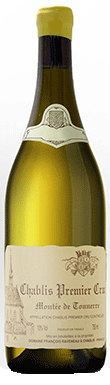

The 2020 Montée de Tonnerre is almost impossibly youthful, with bright, lemony fruit shaded with white blossoms and hints of gunflint and spice. The texture...
2020
Domaine François RaveneauChablis

Domaine François Raveneau, Chablis, 1er Cru Montée de Tonnerre, Burgundy, France, 1997
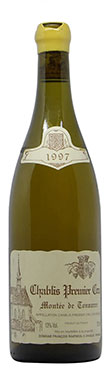
More than 25 years old, the wine still bursts with citrusy grapefruit aromas and hints of coconut water, oyster shell and cream. The texture is...
1997
Domaine François RaveneauChablis
Domaine François Raveneau, Chablis, 1er Cru Forêts, Burgundy, France, 2023
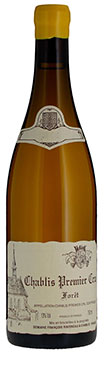
The Forêts seems more substantial than the nearby Butteaux, with solid aromas of ripe pear and quince that still show a trace of the chalky...
2023
Domaine François RaveneauChablis
Domaine François Raveneau, Chablis, Burgundy, France, 2023
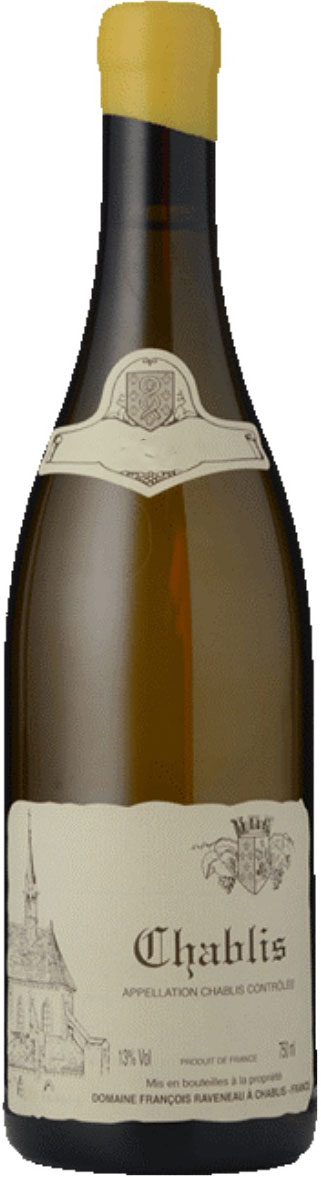
Raveneau's village-level Chablis is a lovely, expressive wine with lemony fruit and a finely wrought mineral edge. The texture is fresh and crisp, but there...
2023
Domaine François RaveneauChablis
Domaine François Raveneau, Chablis, Petit Chablis, Burgundy, France, 2023
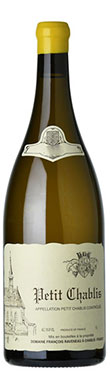
Ripe pear aromas edged with a suggestion of hawthorn flowers and spice enliven the nose of this surprisingly complete Petit Chablis. The texture is silky...
2023
Domaine François RaveneauChablis