
Domaine Jean Sipp: Unlocking Alsace’s potential
With historic roots and a dedication to revealing the extraordinary potential of Alsace's varied terroirs, Georgie Hindle explores the wines of Domaine Jean Sipp...

Situated in one of the oldest Medieval towns in Alsace, Domaine Jean Sipp has roots dating back to the 17th century and has, since the 1950s, been forging a reputation for quality winemaking.
The estate and its holdings lie in and around the commune of Ribeauvillé, the heart of the region’s winelands, in the Haut-Rhin department in Grand Est in north-eastern France.
Scroll down for the Jean Sipp tasting notes and scores
With one of the oldest winemaking co-operatives in the country, Ribeauvillé is located not far from the German border to the east and is almost equidistant between the French city of Strasbourg to the north and Switzerland’s Basel to the south.
Terroir
Vineyards are planted among the foothills of the Vosges mountains, sheltering vines from oceanic influences and western winds and the region famously benefits from a microclimate that has the lowest rainfall in France.
It also has one of the most extreme variations in soil types comprising parcels of granite, clay, limestone, sandstone, marl, volcanic soil, schist and more.
Varying elevations, expositions and micro-terroirs each play their part in creating wines with aromatic complexity and expressive flavour characteristics.

The estate
Domaine Jean Sipp owns 23ha of prime vineyard locations, including 50 separate plots over five communes with three Grand Crus – jewels in the estate’s crown; Kirchberg, Osterberg and Altenberg de Bergheim.
Since 2013, the domaine has been under the helm of Jean-Guillaime Sipp. He took over from his parents, Martine and Jean-Jaques who retired after 40 years in the business, but still remain active for pleasure.
Jean-Guillaume brought knowledge and experience from agricultural studies and training stints at Domaines Zind-Humbrecht in Alsace, Olivier Leflaive in Burgundy, Marcel Guigal the Rhône and Domaine Mont-Redon in Chateauneuf-du-Pape.
Working together with his wife Céline, who studied oenology in Champagne, the estate is run with meticulous precision and with a philosophy of quality not quantity. It is respectful of the environment with Jean-Guillaume preferring to work the soil in order to better exploit terroir characteristics in the resulting wines.
The estate started organic conversion in 2018 with hopes of certification next year.

Domaine Jean Sipp at a glance
Exposure: 80% south-south-east and south-south-west
Soil: Argilo-calcareous, pebbly in certain places at Ribeauvillé and Bergheim. Sandy, resting on a layer of clay-bonded sand at St-Hippolyte.
Aspect: Steep slopes ranging from 10% to over 40%
Grape varieties planted: Sylvaner, Pinot Blanc, Pinot Auxerrois, Riesling, Muscat, Tokay, Pinot Gris, Gewurztraminer and Pinot Noir
Vine planting density: 4,500-5,500 per ha
Yields: 40-50hl/ha for Grand Cru, 60l/ha for younger vine, reserve quality wines
Average vine age: 5-25 for reserve wines, 10-40 years for Grand Cru, over 30 years for Vielles-Vignes with certain parcels that are 50 years old
Annual production: Around 120,000 bottles
Export market: 7%
With eight varieties under vine, the range is large and covers sweet, dry and sparkling styles offering a choice of generic wines through to grand crus and old-vine bottlings.
During harvest, which can last until mid-November, grapes are checked and tasted for full ripeness before being manually picked. In certain vintages, those from grand cru sites or destined for late-harvest bottlings will be sorted twice before being transported in 150kg tubs to the press.
Grapes will be pressed within two hours of picking, then fermented in stainless steel tanks before being aged, some on lees, and then bottled.
Particular focus is dedicated to Riesling, Pinot Gris and Gewurztraminer in various iterations of which the Pinot Gris Réserve 2018, Gewurztraminer Cuvée Particulière 2016, Grand Cru Kirchberg Riesling 2016 and Crémant Brut Blanc de Blanc were tasted for this feature.

In detail
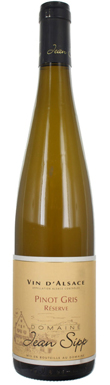
Pinot Gris Réserve, 2018
For this wine, Jean-Guillaume said he looks for the ‘expression of the grape and to bring out the freshness’. Grapes from clay-limestone soils are manually harvested then pressed for 3-4 hours followed by fermentation for two months and four months ageing before being bottled. He said this specific vinification produces a wine ‘with notes of toasted hazelnuts and vanilla and a crunchy mouthfeel.’
On the palate, it’s bursting with character, nuanced and rich with a gourmet structure making it perfect for food pairing. See full tasting notes for all wines below.
2018 vintage conditions
Vintage conditions in 2018 saw a wet first half of the year with Alsace receiving a year’s worth of rain in the first seven months. January was mild followed by snow and temperatures of -13°C at the end of February. March and April were wet but temperatures soon soared with flowering two weeks early in June with a 40°C heat spike in August. The hot and sunny weather continued throughout September and October giving leisurely conditions to the harvest. A generous vintage in both quality and quantity, and particularly successful for Pinot Gris and Pinot Noir as well as the late-harvest wines.
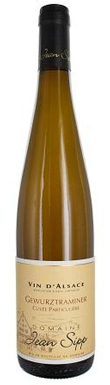
Gewurztraminer Cuvée Particulière, 2016
For Jean-Guillaume, Gewurztraminer is one of his last harvested wines and follows the same manual picking methods as Pinot Gris but experiences a longer pressing of six hours which allows them to extract the grape’s ‘maximum aromatic potential’ with the 2016 offering ‘notes of roses and lychee, typical of this variety’. A two month fermentation and four month ageing period follow before being bottled.
An off-dry style, this wine was extremely expressive with a satisfying texture and balanced acidity.
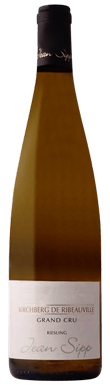
Grand Cru Kirchberg Riesling, 2016
This wine is from clay and limestone soils which Jean-Guillaume believes gives the wine ‘freshness and salinity’ as well as ‘typical notes of citrus and particularly mandarin’.
Kirchberg has historic links, with a citation first recorded in 1328, and is said to cover the best terroirs of the town.
It is a later-harvesting Riesling terroir of 2.5ha and the grapes go through a longer fermentation process often lasting until the end of winter following the harvest.
The wine is complex with crystalline precision and driving freshness.
2016 vintage conditions
A warm start to the year turned cool by spring with an extremely wet July. Weather improved for flowering and summer was warm and dry with no rain until mid-September. Good ripening conditions throughout harvest but little to no botrytis meant that the later-harvested Vendange Tardive Sélection de Grains Nobles suffered in quantity.
Overall yields for the other styles were normal and the vintage returned to producing a more classic and elegant profile of Riesling, Pinot Gris and Gewurztraminer compared to the richer wines from 2015.
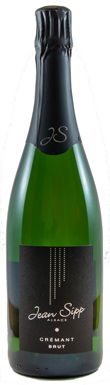
Crémant Brut Blanc de Blanc
The domaine produces four Crémants made in the traditional method including a Rosé, Blanc de Blanc and Blanc de Noirs as well as a new special barrel-aged bottling called L’Evidence.
Each wine is designed to display the personality of the Alsation grapes used and benefit from the specific geological conditions offering a nuanced combination of floral tones and white and red fruit flavours all with a fine effervescence.
The one tasted is a blend of Pinot Blanc and Pinot Auxerrois grapes with a residual sugar level of 6.6g/l and acidity of 4.88g/l.
It is fresh and inviting with finessed bubbles and ideal as an aperitif or celebration wine
UK importer Jeroboams has been working with the estate for 15 years now and, while Alsace remains a small part of the UK market, wine director Peter Mitchell MW believes Domaine Jean Sipp represents ‘outstanding value for the quality they offer’ and highlights the ‘balance and purity of their wines’.
For Mitchell, ‘the star is the Riesling Kirchberg which in every vintage manages the tricky balance of opulent richness, aromatic precision and a startling fresh clarity.
‘Over the years, sales for this have steadily grown as more customers are introduced to it and have recognised the value of great Alsace Riesling compared to many of the world’s other finest wines.’
With excellent approachability now as well as a long ageing potential, particularly the Riesling, these are worth seeking out, and with more than 30 wines in the range there’s plenty to explore.
See the Jean Sipp tasting notes and scores
You may also like
Champagne alternatives: 22 Crémant d’Alsace wines waiting to be discoveredAlsace wine crosswordTime to try Alsace Pinot NoirTop Australian Rieslings to try
Domaine Jean Sipp, Riesling, Kirchberg, Grand Cru, Alsace, France, 2016
93
<p>A complex nose of peach purée, apricot and honeysuckle with tropical touches of freshly cut pineapple. This bursts on the tongue delivering crystalline lemon notes at the back of the mouth alongside crisp red apple and hints of orange zest. A lovely intense wine with layers of flavour and a drive to a lingering and refreshing finish.</p>
2016
Domaine Jean SippKirchberg
Domaine Jean Sipp, Gewurztraminer Cuvée Particulière, Alsace, France, 2016
92
A seriously expressive nose with so many aromas in play; tangerines and grapefruit alongside jasmine, honeysuckle and rose petal. It has a satisfying texture - almost glycerol-like which is nicely balanced by integrated acidity alongside lashings of intense lemon, lime and orange peel on the palate. The finish is off-dry and lends itself as a fine aperitif wine or something elegant with desert.
2016
Domaine Jean Sipp
Domaine Jean Sipp, Pinot Gris Réserve, Alsace, France, 2018
93
This wine is just bursting with fresh, ripe pear flavours both on the nose and palate. It’s soft and smooth, rich and round but not too heavy, with delicate acidity and notes of bruised apple and an off-dry honeyed sweetness. This is a wine for food – it’s not for idly sipping but for savouring and tasting the nuances with something delicious to eat, such game. A wine that delivers more than its price suggests.
2018
Domaine Jean Sipp
Domaine Jean Sipp, Brut Blanc de Blanc, Crémant d’Alsace, Alsace, France
90
A fresh and inviting nose which follows on the palate with mouthwatering lime zest and soft honey notes. This has a lovely texture with finessed bubbles and generous juicy core. Serve cold as an apéritif.
Domaine Jean SippCrémant d’Alsace