
From the archive: Dry Sherry for summer – panel tasting results


Choose one of these dry Sherries to drink with olives, ibérico ham, caramelised nuts or seafood this summer...
Originally published in Decanter magazine's March 2014 issue and now available online in full, with tasting notes exclusively for Premium members
71 wines tasted with seven rated Outstanding
The panel tasters were: Pedro Ballesteros Torres MW, Sarah Jane Evans MW & Nick Room
Depth of flavour (and colour) and the range of styles were undoubted highlights, though the en rama wines, while exciting, were uneven in quality and freshness, says Sarah Jane Evans MW…
The results are excellent news for Jerez. They make clear what Sherry lovers have long known – that among the finos and manzanillas there are exceptional wines.
The first interesting feature of this tasting is depth of flavour. Until recently – and still on far too many wine lists and retail shelves – dry Sherries have been about watery pale colours, and wines that have had life and soul filtered out of them. Yet the top seven scorers in this tasting all have colour and character. Just look at the tasting notes.
The second feature of interest is the range of styles. There’s more to dry Sherry than ageing in a solera under flor. This tasting did include ‘regular’ Sherries, but there were also pasada and amontillado versions, as well as en rama wines.
Scroll down to see the top wines from this panel tasting
The judges clearly preferred the more mature Sherries with their added complexity: hence their votes for Hidalgo-La Gitana’s Napoleon, as against the consumer favourite La Gitana. This much is clear: there is something for everyone in Jerez – floral or pungent, salty or mild, sunshine or tempest, there is a wine to match.
Quick link: View the tasting notes & scores
En rama
The third point relates to en rama. This has undoubtedly been the latest fashion among UK aficionados. However the performance of the en ramas was uneven. They mainly showed bolder flavours and deeper colours but were also more extreme: we marked them up for expression, but frequently down for astringency or bitterness.
It’s worth noting that these en ramas also came from different seasons, so some were definitely fresher than others. Perhaps for this reason en rama did not always come top against its own brand: Valdespino Deliciosa, for instance, did much better than the En Rama Deliciosa.
Were there any surprises? In general most of the top producers figured among the Highly Recommended and Outstanding wines. Any of Equipo Navazos, González Byass, Fernando de Castilla or Emilio Hidalgo could have made the top seven, but just missed out.
Some producers are more famous for oxidatively aged wines, and so did less well overall. Fernando de Castilla is one of these – a regular DWWA award winner, but usually for the non-flor wines.
No Sherry producer wants to be told that their wines are great value or a bargain. They’d like to be in a situation to charge more. But in the meantime, and before the rest of the world wakes up to these pleasures, snap them up!
The scores
71 wines tasted
Entry criteria: Producers and UK importers were invited to submit fino, manzanilla or amontillado Sherries.
Exceptional 0
Outstanding 7
Highly Recommended 12
Recommended 37
Commended 0
Fair 14
Poor 0
Faulty 1
The results
Our judges were impressed by the experimentation and complexity among these finos and manzanillas – particularly with older wines – showing the how far this category of Sherry has come. Tina Gellie reports…
For those who thought fino and manzanilla were only pale in colour, light in body, dry, simple and meant to be drunk young, this panel tasting will make you think again. Our tasters were amazed at the diversity – and consistency – of this Sherry category. ‘I don’t think I’ve ever marked so highly,’ said Nick Room. Pedro Ballesteros Torres MW agreed: ‘Of all the wines, there were only about four that were really poor. This would have been unthinkable 10 years ago.’
Ballesteros Torres said Sherry producers had worked hard to improve the quality of their finos and manzanillas. ‘There has been lots of experimentation: with the lees, with ageing, exposure to oxygen… It’s proof that while producers are trying to preserve the real core of Sherry, they are also adapting to the needs of the consumer.’
Room agreed, but said there was a danger that such a plethora of styles might be confusing unless merchants and sommeliers did more to explain and promote them.
The only experiment not appreciated by our judges was where the Sherries were overwhelmed by oak. ‘I’ve never seen this before with Sherry,’ said Ballesteros Torres. ‘And now I know why.’
The most popular new style is en rama, which is bottled without fining or filtering. ‘It’s an interesting trend,’ said Sarah Jane Evans MW, ‘but at the moment there isn’t a precise definition of it. These wines should be bottled straight out of the barrel, but some may be more processed than others. Some taste like they’re on steroids!’
Evans said it has been remarkable to see the progression in manzanilla. ‘ For 10 years or more we’ve had these very processed wines: a pale, cool drink for summer without much flavour. Now, while some are still producing these anodyne wines, others recognise that there is a demand for more flavour and complexity.’ For example, the manzanilla pasadas (where longer ageing means it becomes more like a nutty amontillado) were ‘absolutely delicious’.
She ‘expected more’ from the finos, which the panel agreed were not as consistent as the manzanillas. Again, quality came down to length of ageing: ‘Fino and manzanilla now can be just two years old – it used to be a minimum of three years in the solera,’ she said. ‘There were some good young wines, but undoubtedly the better ones had four years of age. It’s only that way that you’re going to get the complexity.’
Our experts all remarked on the ‘rainbow’ of colours of these Sherries, from water-white to amber with red highlights, thanks to the different expressions. Equally, the traditional apple, almond and chamomile hallmarks of manzanilla and fino progressed through to bread, oak, sulphur, mushrooms and walnuts, depending on the ageing and solera treatment.
Fino and manzanilla can have alcohols between 15% and 17%, but Ballesteros Torres was impressed with producers’ moves to stay at the lowest end of the scale. ‘The consequence is that now many table wines are higher in alcohol, which make fino and manzanilla much more suitable to go with any food and with any occasion.’ The increase in the number of 500ml and 375ml bottles also benefitted this, he added.
Sherry is ready to drink on release, so none of these wines would benefit from further ageing. ‘You should drink en ramas within three months,’ said Evans, adding that many producers were now adding bottling dates to labels to aid this. Once your bottle of Sherry is open, drink it within a week.
While limited quantities mean some of these Sherries are hard to find, Ballesteros Torres urged readers to persevere. ‘It’s a taste of something great and unique,’ he said. ‘It’s impossible to find wines with this expression anywhere else.’
Our tasters each pick their top 3 wines from the tasting:
Pedro Ballesteros Torres MW
‘First, in these times of increasing standardisation, few wines provide as acute a sense of place as fino and manzanilla. I do not know any other wines that, at astonishingly affordable prices, deliver so much character.
‘Secondly, most classic finos and manzanillas are fortified to 15%, instead of 15.5% as in the past. Because of climate change and other reasons, this is the alcohol content of many table wines. But at 15% these tend to be heavy and alcoholic, with overripe aromas, while fino and manzanilla show lightness and freshness. At table, their restrained aromas, with little primary fruit, exalt the expression of subtle food, such as raw fish and fusion cuisine.
‘Third point: the degree of variation, emulation and experimentation among producers is amazing. The best wines come from the self-confidence of relying on one almacenista or even a single 500-litre butt. Many others rediscover the complexities of pasado and amontillado, the purity of en rama wines (not always evident), and vintage and terroir-specific wines.
‘The sad period of the 1980s is definitely over. Nevertheless, I would not advise to buy blindly. Recognised fino and manzanilla brands and producers deserve much confidence and our selections are sound recommendations.’
Bodegas Hidalgo, Napoleón, Manzanilla Amontillada
One of the few remaining family-owned bodegas, whose grapes come only from its own vineyards, in pagos close to the sea. The wine is a rare example of a true amontillado, keeping the freshness and salinity of the original manzanilla while taking on the weight and dry nuts aromas of non-biological ageing. 96/100
Williams & Humbert, Fino En Rama 2006
This house has a long tradition of setting some butts aside from the solera system, with gorgeous results. But I did not know this en rama style – terrific! One for delicate fish dishes. 96
Equipo Navazos, La Bota No 35 Marcharnudo Alto, Fino
A terroir wine by one of the most creative teams in the world. Each of the wines by Equipo Navazos is a story in itself, something deeply original while firmly classic. Share with friends that know when silence is the best word. 93
Sarah Jane Evans MW
‘The tasting promised to show a number of young, polished, super-light Sherries (the minimum permitted age of fino and manzanilla at bottling has been cut to just two years). They surely would have been indistinguishable. As it turned out there was a deliciously diverse selection – more than 78% scoring Recommended or higher, including seven Outstanding wines.
‘The real excitement was undoubtedly in the increasing category of Sherries aged under flor which are being released at eight, 10, 12 or more years when the protective flor coat is fading fast. Manzanilla amontillada may no longer be a legal category, but goodness it can be delicious.
‘It’s good to see more bodegas following the trend pioneered by Equipo Navazos and Fernando de Castilla of selecting specific barrels. Their bold character is a welcome contrast to the consistently reliable but unsubtle brands. The most recent fashion is en rama, freshly bottled Sherries with little or scant pre-bottling treatment. The ones we tasted all scored highly, and proved that en rama is not just a fashion, but a pleasure, tasting (more or less) as Sherry would if you were in the bodega.’
Bodegas Hidalgo, Napoleón, Manzanilla Amontillada
From the Sanlúcar producer renowned for the super-refined stripling La Gitana and for Pastrana, the most famous Pasada. Yet there are all sorts of more mature pleasures hidden in its cellars. This seductive Napoleon shows age triumphing over youth brilliantly. 96
Bodegas Emilio Hidalgo, La Panesa, Fino
This small producer in Jerez does not seek publicity but is worth tracking down. All the wines are excellent and several exceptional. The complex La Panesa is one for the grown-ups, at the very limit of flor ageing, at an average 15 years old. 95
Equipo Navazos, La Bota No 35 Marcharnudo Alto, Fino
Equipo Navazos’ Sherries are single-cask bottlings from different cellars. No 35 is a single-vineyard wine from the Macharnudo Alto, and comes from Valdespino’s famed Inocente solera. Typically Sherries are blended; by contrast here’s a vividly individual fino. 93
Nick Room
‘I was impressed with the wines shown in this tasting but there were a few that did not hit the spot. Excess sulphur was a remark for a handful, then there was a curious use of oak on a couple; and the perennial problem of oxidation appeared on one or two samples. Now, having dispensed with the negatives, I can enthuse about the remainder.
‘Sherry is a unique product made (in this case) from one solitary and relatively neutral grape variety, but boy can it turn out some gorgeous results. I was struck by the variation in the styles of manzanilla and fino: pale, water-white examples showing moderate character and weight, to amber coloured, deeper, more complex, richer wines that were hugely satisfying. The divergence of styles can be fantastic for the adventurous consumer, or could be utterly confusing for the novice Sherry drinker.
‘For those in the know, the scope here was captivating, and I’d urge those familiar with the excitement Sherry can bring to urge their friends to try a cross-section of the more successful wines in these flights.’
Bodegas Hidalgo, Napoleón, Manzanilla Amontillada
This wine met all my expectations of a true amontillado. It’s the purity that marks this out; delicate yet concentrated, pungent yet very fine. There’s such a lot going on in this glass – truly bone dry, toffee and roasted nuts with underlying saltiness that makes it uniquely manzanilla. 95
Lustau, Papirusa, Manzanilla
Lustau’s position as a premium Sherry producer continues and this manzanilla was a fabulous example. Stylish, perfectly integrated, with wonderful balance; fresh, layered, superbly textured, and very long on the finish with a fine apple and fresh-baked bread flavour. 95
Valdespino, Deliciosa, Manzanilla
It’s often remarked that Grupo Estévez has respected Miguel Valdespino’s style when the latter sold his stock on retirement to this much larger company. So hats off again to Estévez – this wine exemplifies Miguel’s searing style. In my notes I said this wine makes an enthusiastic ‘statement for Sherry’; yes, it does. 95
Sherry: the facts
Production zone 10,000ha
Production (2013) more than 80 million kg
Ageing zone Jerez, El Puerto and Sanlúcar only
Bodegas 64 exporters, plus 30 or so who do not export, including almacenistas (wholesalers)
Top scoring dry Sherry from the panel tasting
You might also like:
Know your Sherry
Jefford on Monday: The coming of Jésus
Bodegas Hidalgo, Napoleon, Manzanilla, Amontillada, Jerez, Spain
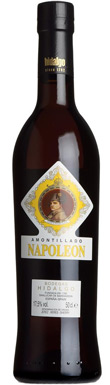

The Hidalgos came from Santander in northern Spain, starting up in 1792. Over two centuries later Hidalgo is the strongest name in manzanilla, thanks to...
Bodegas HidalgoManzanilla

Emilio Lustau, Almacenista Cuevas Jurado, Manzanilla, Pasada, Jerez, Spain
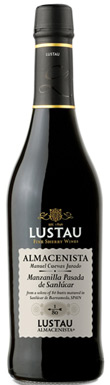
Jerez producer Lustau, owned by El Puerto’s substantial Caballero drinks group, pioneered the bottling of almacenista wines. These small bodegas were legally prevented from selling...
Emilio LustauManzanilla
Williams & Humbert, En Rama, Fino, Jerez, Spain, 2006
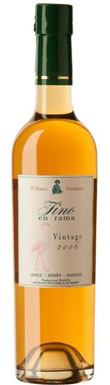
A vivid example of the changes taking place in Jerez. Williams & Humbert made its name with mainstream brands, notably Dry Sack and Canasta Cream....
2006
Williams & HumbertFino
Emilio Lustau, Papirusa, Manzanilla, Jerez, Spain
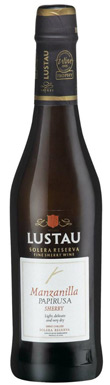
This is a classic five year old: young, lively palate with fennel and mineral notes. Sings of the seaside.
Emilio LustauManzanilla
Sánchez Romate, Bella Luna, Fino, Jerez, Spain
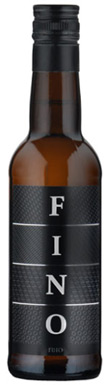
Sanchez Romate is internationally known for its brandy, Cardenal Mendoza Solera Gran Reserva. Yet it has a very long history in Sherry, being founded in...
Sánchez RomateFino
The Wine Society, The Society's Fino, Fino, Jerez, Spain
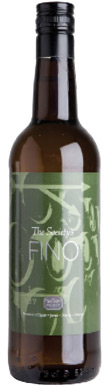
Tony Morrhall, Sherry buyer at The Wine Society, is a Jerez expert of enthusiasm and long standing. His list is one to watch for its...
The Wine SocietyFino
Valdespino, Deliciosa, Manzanilla, Jerez, Spain
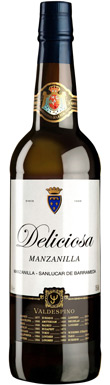
About five to six years old, from La Guita bodega. Bright astringency and vivid intensity, with a long, refreshing finish. Not subtle, or washed out;...
ValdespinoManzanilla
Gonzalez Byass, Viña AB, Amontillado, Jerez, Spain
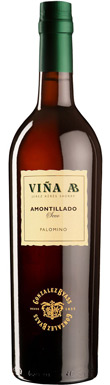
91
Viña AB is a classic that can be too easily overlooked. It’s a stylish Amontillado that ticks all the boxes: it's polished, refreshing and textured; a 12 year old with no sense of age.
Gonzalez ByassAmontillado
Diez Mérito, Bertola, Fino, Jerez, Spain
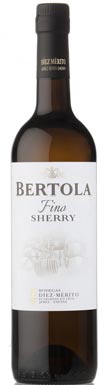
Complex, refined nose with almondy tones. Lovely balance on the palate with the depth of a high-class amontillado and the lightness of fino. Style is...
Diez MéritoFino
Equipo Navazos, La Bota No 35 Macharnudo Alto, Fino, Jerez, Spain
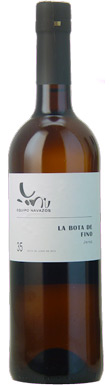
Delicate, intense, expressive and complex, almond nose. In the mouth it’s immediately spicy and intense, underlined by a tight grip of astringency. Long, memorable and...
Equipo NavazosFino
