
East coast Italy: Marche, Abruzzo & Molise
The appeal of the Adriatic coast alone is surely enough to draw us to Italy’s central eastern regions. But once there, you can discover many up-and-coming wine treasures too.


Italy is known in the wine world for its multitudinous grape varieties, stunning scenery and outstanding food. While many wine lovers head straight for the cypress-covered hills of Tuscany, or the foggy heights of Piedmont in the northwest, there are three regions that – in my opinion – are Italy’s best-kept secrets, adjoining north-south down the country’s central Adriatic coast: Marche, Abruzzo and Molise.
Here, where the sea meets the mountains, some of Italy’s finest grapes – white Pecorino and Trebbiano, or red Montepulciano and Tintilia – give their best expression.
Scroll down to see tasting notes and scores for 10 Marche, Abruzzo and Molise wines worth seeking out
Marche
Sandwiched between the perhaps better-known regions of Emilia Romagna in the north and Abruzzo in the south, Marche has approximately 17,000ha under vine, according to the Istituto Marchigiano di Tutela Vini, and more than 12,000 growers. Production here is largely white, with Trebbiano widely planted all over the territory, but Marche is also home to one of the most famous grapes in Italy: Verdicchio.
The region plays host to the vineyards of two main types of Verdicchio: Castelli di Jesi DOC and di Matelica DOC. Verdicchio dei Castelli di Jesi is the better-known and more prestigious appellation and, due to the close proximity of the sea, it can offer a range of styles, from light and fresh to rich, full and complex, largely depending on how and if the wines are aged, and on the level of lees contact during production. Verdicchio di Matelica, being more inland, tends to have a higher-toned and fresher character and can offer great ageing potential.
Verdicchio is a very versatile grape, and it can be found not only in its still form but also in sparkling (both Charmat and traditional method), and even sweet passito wines. The dry wine is best enjoyed with seafood and, thanks to its crisp character, it makes a great aperitif; the more complex and aged wines can be easily matched with chicken and veal, or alternatively monkfish or sea bream.
If you’re looking for great Pecorino and Passerina, the wines from Offida have structure, richness and length. Promoted to DOCG status in 2011, Offida is a small area, just 463ha in 2019, in the far south of the Marche by the border with Abruzzo, reaching inland almost as far as Ascoli Piceno town. Likely the more familiar of the two, Pecorino is incredibly versatile, allegedly named after the local sheep (‘pecora’) and their fondness for the grapes grown locally. The vines prefer cooler areas where the grapes can benefit from breezes, allowing a long ripening season. Pecorino wines can be simple and refreshing if fermented in stainless steel, or rich and complex if aged in oak, offering a wide range of aromas and textures.
Even though the Marche region is famous for the production of white wines, there are also a few red appellations producing notable wines.
Lacrima di Morro d’Alba, produced just up the coast from the city of Ancona, is a very particular and interesting wine; the Lacrima grape has intense, almost perfumed notes of violets, strawberries and lavender, with firm tannins. It can be produced in a passito style as well.
The name Lacrima, literally ‘teardrop’, could relate to the shape of the grape, or the fact that the skins of the ripened grapes can split, causing juice to seep out. Montepulciano in Marche produces deep, juicy reds, sometimes blended with Sangiovese and sometimes international varieties including Cabernet Sauvignon and Merlot. The results are medium- to full-bodied wines that are packed with rustic tannins, layers of red forest fruits and plenty of earthy undertones.
Marche producers are increasingly becoming completely organic, such as third-generation family-run Tenuta De Angelis in the province of Ascoli, who believe that Passerina and Pecorino have a great future, especially when produced in a fresher, lighter style. Alighiero De Angelis produces a unique sparkling Passerina, zingy and citrussy, and a Pecorino aged in oak for 12 months, capturing the great versatility of the grape.
Another key player in the Marche has to be Umani Ronchi, the reference on Verdicchio and Rosso Cònero – DOC reds produced from a minimum 85% Montepulciano. With more than 100ha in the Verdicchio area, Umani Ronchi has been making high-quality wines for more than 40 years. Now run by Michele Bernetti, the estate’s best wine is its Rosso Cònero Campo San Giorgio, a stunning example of pure Montepulciano, aged for two years in small and large oak casks.
Abruzzo
Lying between the Apennine mountains and the Adriatic, Abruzzo is the home of Montepulciano d’Abruzzo DOC red wines, familiar to many, as well as several white varieties including Pecorino, Passerina and Cococciola. The region is blessed with a favourable climate; the vines grow in a sort of amphitheatre, protected by the high mountains and warmed by the sea breezes. In the last few years, Abruzzo has seen a huge increase in small and independent producers going back to their roots, rediscovering traditional grapes and terroirs.
Montepulciano is the most important variety in Abruzzo, grown on some 17,000ha in 2019 and representing more than half of the region’s total plantings (source: Consorzio Vini d’Abruzzo). Being a generous and vigorous variety, Montepulciano has always been seen as a table wine grape, but producers such as Emidio Pepe, Masciarelli and Valentini have produced world-class wines showing that, if planted in the right areas, this is a variety worthy of attention. It can be grown all over the region, but it thrives in the highest vineyards at 300m-400m altitude.
Another wine unique to Abruzzo is Cerasuolo d’Abruzzo, a rosé whose distinctive intensity and depth is given by the richness and intensity of the Montepulciano grape. Valentini’s Cerasuolo has become one of the most important rosés in Italy.
Trebbiano is the queen of the white grapes in Abruzzo, produced all over the provinces of Chieti, L’Aquila, Pescara and Teramo. Known for its racy, crisp, zesty character, Trebbiano d’Abruzzo can be vinified in stainless steel or aged in oak, giving layers of texture and aroma. One of the most planted varieties in Italy, it is often seen as an everyday wine, high in acidity and with little or no personality, but the Abruzzo wines are a different matter – often with huge ageing potential due to the high acidity.
Most of the Trebbiano grown in Abruzzo is actually Trebbiano Toscano. Second-generation winemaker Cristiana Tiberio says that at her family winery they have replanted 5ha of Trebbiano Abruzzese, the native Trebbiano, through a massale selection [taking cuttings from top-quality, established old vines on an existing plot] to preserve the genetic structure of their vine stock.
The variety is prone to rot and burns easily in the summer sun, and this explains why the ‘pergola Abruzzese’ training is the best way to grow this native variety, with the vines trained across an overhead trellis system to provide their own shade. At the Tiberio estate, the Trebbiano is produced without any pressing, using simply the free-run juice of the grapes from 90-year-oldvines. The delicate Trebbiano Abruzzese is then fermented with natural yeast and fermented in stainless steel. With age, the wine gains almost waxy and honeyed notes.
When talking about Trebbiano, you cannot forget Emidio Pepe’s creations. Starting out in the 1960s, at the northern edge of Abruzzo, Pepe established a reputation as a pioneer for extensively ageing his wines in his cellars. He created a unique style that nobody even comes close to replicating; released slowly, and only when ready, the wines have stunning complexity, richness and depth. They are aged in concrete, and it’s here that the Trebbiano gives its greatest performance – released late, the wines are best enjoyed after 15-20 years.
Molise
Tucked in between Abruzzo to the north and Puglia to the south, Molise is the second smallest region in Italy, after only Val d’Aosta in the far northwest. Molise is not the typical Italian tourist spot, even though it is rich in history, with breathtaking mountains and hills and more than 200 castles. The region is one of Italy’s best-kept secrets – it was never promoted as much as other wine regions such as Tuscany or Campania.
When it comes to wine, the best expression is from the Tintilia grape, an indigenous variety with only about 70ha to its name in its Tintilia del Molise DOC stronghold, according to the local consorzio, and small amounts grown elsewhere in the wider region. Tintilia yields are very low.
To qualify as DOC, vines must be grown above 200m, with cool night temperatures providing the freshness required to make balanced wines. The sandy soils and sea influence of the Campomarino area north of the Gargano promontory (the ‘spur’ of Italy’s boot) provide the perfect combination of conditions for Tintilia (as well as Montepulciano).
Tintilia is, for producer Claudio Cipressi, not only a passion but also a true expression of a native grape from Molise. Situated in San Felice del Molise at nearly 600m, Cipressi has some 12ha of Tintilia. He produces several versions, usually aged in oak, but he also has a rosé, Collequinto, and a sparkling cuvée – Tintilia can produce metodo classico sparkling wines, since the grape has high natural acidity and plenty of freshness.
The most famous appellation in Molise is Biferno DOC. The white is a blend of Trebbiano and Bombino Bianco that gives wines with plenty of citrus notes, fresh and zingy, while the red is a blend of Montepulciano and Aglianico, usually medium- to full-bodied with plenty of structure.
One producer of Biferno, Di Majo Norante, is a top producer in the Molise region – its history dates back to 1800, and it now makes wines from a wide range of grapes in a very traditional way, respecting and valuing the terroir of Molise.
Falanghina, the white variety that has established a name for itself in the neighbouring southern region of Campania, is also grown in Molise. Thanks to the soils, rich in limestone and sand, the variety here produces wines with more freshness and higher salinity.
From light, crisp whites to rich, complex reds, Marche, Abruzzo and Molise offer the consumer a wide spectrum of wines and styles to explore and enjoy.
This eastern coastal slice of Italy will surprise you, not only for its memorably rugged and rustic scenery, but for its incredible wines that hitherto have largely flown under the radar.
Briccarello’s pick of Marche, Abruzzo and Molise wines:
Related content
Exploring Monferrato plus six wines worth seeking out
Buyer’s guide to Romagna Sangiovese
de Angelis, Pecorino, Offida, Le Marche, Italy, 2020
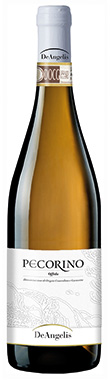

Straw yellow, with some golden hints, this Pecorino displays a mixture of flowers, white stone fruits, nectarines, apricots and citrus. Medium bodied, it has great...
2020
de AngelisOffida

Sartarelli, Verdicchio dei Castelli di Jesi, Classico, Le Marche, Italy, 2020
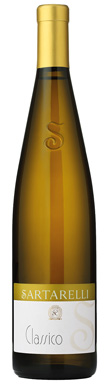
Straw-gold with a green hue, this displays plenty of peach, nectarine and grassy notes. Fresh, vibrant and crisp, it's well balanced with plenty of apples...
2020
SartarelliVerdicchio dei Castelli di Jesi
Umani Ronchi, Campo san Giorgio Riserva, Conero, Le Marche, Italy, 2016
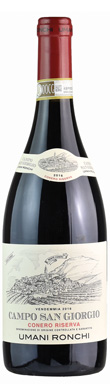
Deep ruby in colour with complex and spicy notes shining through the glass with splashes of Morello cherries and ripe dark plums. It's meaty and...
2016
Umani RonchiConero
de Angelis, Rosso Piceno, Superiore, Le Marche, Italy, 2018
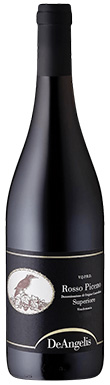
A blend of Montepulciano with Sangiovese, this Rosso Piceno has a vibrant ruby colour and plenty of wild berry notes. There are loads of crunchy...
2018
de AngelisRosso Piceno
Tiberio, Fonte Canale, Trebbiano d’Abruzzo, Abruzzo, Italy, 2018
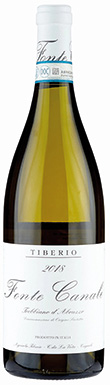
Elegant notes of green apples and flowers with hints of citrus and flint lead to a dry palate, harmonious and flinty, with plenty of refreshing...
2018
TiberioTrebbiano d’Abruzzo
Emidio Pepe, Trebbiano d’Abruzzo, Abruzzo, Italy, 2016
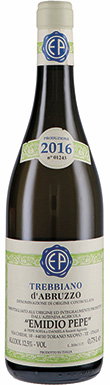
Golden hued, rich and complex confit lemon, white spices, generous salinity and plenty of white flowers are accompanied by an almost balsamic character. Dry and...
2016
Emidio PepeTrebbiano d’Abruzzo
Valentini, Cerasuolo d'Abruzzo, Abruzzo, Italy, 2018
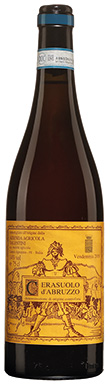
Very deep, almost red in colour - hence the name Cerasuolo ('cherry red') - this is voluptuous and complex with notes of ripe cherries and...
2018
ValentiniCerasuolo d'Abruzzo
Masciarelli, Villa Gemma Riserva, Montepulciano d’Abruzzo, Abruzzo, Italy, 2015
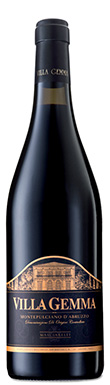
Deep and intense, with dark and meaty notes followed in the mouth by red forest fruits and a spicy undertone with plenty of luscious jammy...
2015
MasciarelliMontepulciano d’Abruzzo
Claudio Cipressi, Macchiarossa, Tintilia del Molise, Molise, Italy, 2015
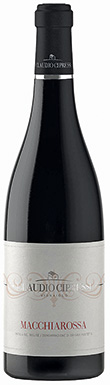
Generous amounts of forest fruits, balsamic touches and plenty of ripe Marasca cherries lead to a harmonious, round, soft and juicy palate showcasing ripe plums...
2015
Claudio CipressiTintilia del Molise
Cantine Belisario, Lacrima di Morro d'Alba, Molise, Italy, 2020
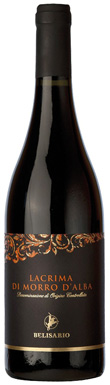
This has layers of violets, blackberries, blueberries and ripe cherries. Medium bodied, it has a soft and juicy core making for an elegant and easy...
2020
Cantine BelisarioLacrima di Morro d'Alba
