
Exclusive review of the new Priorat classification plus 12 wines worth seeking out
A new pyramid-style classification system has identified Priorat’s top vineyard sites. What will be the impact of the new rankings on the region, in Spain and beyond?


Spain’s DOQ Priorat is the Burgundy of Iberia. Audacious? Not in the least.
Like Burgundy, it’s a wine region founded by monks, holds centuries of history, and has long been ‘vineyard driven’ in terms of winemaking that focuses on singular wines as opposed to far-reaching brands. While its heritage may be shorter, those who manage to craft wines from this unforgiving land have been quick to make up for lost time.
Scroll down to see 12 Priorat wines worth seeking out
As a result, the Priorat regulatory council has broken down almost 18,000ha of land into smaller zones called paratges (‘pa-RAH-jas’), from which they have built a pyramidal vineyard classification.
The list was formally released in spring 2019 and now, two years later, the first wines classified at the various levels have been announced, including three from the top gran vinya classificada category.
Building a better pyramid
Work on this new zoning started more than 15 years ago when the vi de vila village classification was formalised, which operates in the same way as village appellations in France.
From there, it took years to officially delineate the paratges of historical zones within the villages. No small feat, given that it required surveying as well as poring over cartographic maps and American Air Force photos from the 1940s. As it happened, these photos also helped to establish the new ‘velles vinyes’ classification for vineyards with vines at least 75 years old.
Eventually, borders came to form the paratges that now function in the same manner as lieux-dits in Burgundy, except that the resulting wines are called vi de paratge (VdP) at this level of the pyramid.
From there, a premier-cru level was created called vinya classificada (VC), and then what amounts to the grand cru level: gran vinya classificada (GVC). If starting from zero, a winery needs to commence at the VdP level, then arrive at VC and finally GVC – a process of 10 years.
Also, to reach these two top-tiers, the vines must be of a minimum age and the composition of the vineyard needs to be majority Grenache and/or Carignan for the red wines, arriving at 90% of the total with GVC.
The first three GVC wines received classifications earlier because the producers could prove a history of meeting the requirements and, while the first vintage allowed for certification was 2017, most are starting with 2019 or 2020.
DOQ Priorat: defining the classification
Vi de DOQ Priorat (DOQ Priorat regional wine)
• Wines produced from permitted grapes
• Harvest yields: reds 6,000kg/ha, whites 8,000kg/ha
Vi de Vila (village wine)
• Grapes must come from within one of 12 delimited villages
• Harvest yields: reds 5,000kg/ha, whites 7,000kg/ha
• At least 90% of vines at least 10 years old, remaining 10% at least five years old
• Minimum 60% of Grenache and/or Carignan in blend
Vi de Paratge (paratge wine)
• Grapes must come from within one of 459 delimited paratge zones
• Harvest yields: reds 4,000kg/ha, whites 6,000kg/ha
• At least 90% of vines at least 15 years old, remaining 10% at least five years old
• Minimum 60% Grenache and/or Carignan in red wines, no requirement for white wines
Vinya Classificada (classified vineyard)
• Grapes must come from within one of 459 delimited paratge zones and comprise a single, contiguous vineyard
• Harvest yields: reds 4,000kg/ha, whites 6,000kg/ha
• At least 80% of vines at least 20 years old, remaining 20% at least five years old
• Minimum 60% Grenache and/or Carignan in red wines, no requirement for white wines
• Minimum five years of traceability and notability*
Gran Vinya Classificada (grand classified vineyard)
• Grapes must come from within one of 459 delimited paratge zones and comprise a single, contiguous vineyard
• Harvest yields: reds 3,000kg/ha, whites 4,000kg/ha
• At least 80% of vines at least 35 years old, remaining can be up to 10% at least 20 years old and 10% at least 10 years old
• Minimum 90% Grenache and/or Carignan in red wines, no requirement for white wines
• Minimum five additional years beyond VC of traceability and notability*
*Notability’ implies recognition of high quality, both nationally and internationally, by known critics and publications
Pros and cons
As soon as the new classification system was announced, some in the wine trade called it an added layer of complication. In truth, it was very much needed – not only in Priorat but throughout Spain.
As Alvaro Palacios told me: ‘When I was growing up in Alfaro [Rioja], everyone knew very well which villages had better grapes and which vineyards made the better wines. The problem was that no one had the ability to project that, to sell it to an outside market, and so great amounts of excellent wines were sold off in bulk, often to France to be bottled there.’
It’s no mystery to anyone locally that the vineyards now certified as GVC are indeed some of the best in Priorat. For these to have been replanted after phylloxera and then continually cultivated through 90 dark years of Spanish history (World War I, the Spanish Civil War, and then large-scale depopulation of rural areas), speaks to their ability to produce quality grapes.
One problem that might confuse with the new system is that within each paratge there are three classification levels: VdP, VC and GVC. Whatever the level, they all have the same name. Even at this early stage there are two wines with the same paratge name of Mas de la Rosa (one by Vall Llach being a GVC, one by Torres which is a VdP). The only difference is that at the GVC top level, it must be a single vineyard with much older vines and have at least five years of VC classification followed by another five to reach GVC.
The trailblazers
For decades, Spain was noted for good-value wines more than anything else. The concept of a single wine costing €50 (£42) let alone €250 (£211) in the case of Mas de la Rosa or €1,000 (£847) in the case of L’Ermita raises more than a few eyebrows.
So, how do you prepare a wine-drinking public for what’s being created in Priorat?
If you are Palacios, your whole winemaking career has led to this moment. So, it’s no surprise that he has been a strong proponent of bringing in this classification. He has long been the embodiment of winemaking passion and charm, as well as a dynamic changemaker in Spain. It’s no wonder he was the recipient of the Decanter Hall of Fame award for 2015.
Palacios has long positioned his L’Ermita as one of the grandest crus in Spain – and rightfully so. There was little question that this vineyard would achieve the top GVC level, since its resulting wine is one that has been lauded by critics for decades.
By contrast, the path for Vall Llach’s Mas de la Rosa as well as Mas Doix’s 1902 Tossal d’en Bou has been rather different. These were both used in blends for their producers’ earlier flagship wines. Year after year, it was clear that these old vineyards (Mas de la Rosa was planted in 1906 and Tossal d’en Bou in 1903) were producing an exceedingly high level of finesse that needed bottling on their own; this happened in 2009-2010.
How have both wineries been preparing their customers for this change? For Valentí Llagostera of Mas Doix, it’s largely been about following the lead of Palacios: ‘He forged this path and he’s planted the seed, so we look a great deal to what he’s doing. His work has helped to ready people for this.’
Albert Costa of Vall Llach adds: ‘We have work to do. I mean, vi de vila was introduced in 2009 and it’s still not fully understood abroad, so we have our work cut out. But gran vinya classificada can be easily described as “grand cru” and hopefully that will make communication easier to have a clearly defined model.’
Excellence needs company
With three wines in the top GVC tier, there has understandably been plenty of momentum for others to enter. As seen in the corresponding scores, these are some of the top wines not just in Priorat, but in all of Spain. So how do producers maintain this level of excellence?
I know of at least five other producers who want their vineyards to enter the GVC level. Once they have all the requirements, the DOQ council is proposing a tasting panel for final admittance with the potential for a regular certification process on all classified vineyards of VC and GVC.
Recent issues in France – with Châteaux Cheval Blanc and Ausone walking away from their top-tiered ranking in the St-Emilion classification – might make one wonder how practical a regular tasting panel will be, given that it’s failed in most regions that try to implement it. Clearly, there must be a regulatory method for accepting new vineyards as the system is being built from scratch.
While there is rightly much focus on the GVC level of Priorat, it will be interesting to see if the VC will behave more like a premier cru in the future, in terms of finding high-quality wines at a lower price (as is shown beautifully in a region such as Chablis). Or will it just be a stepping stone to GVC?
While there are only three now, there will soon be more wines arriving to VC level, including Mas Doix’s ‘1903’ wine that will be renamed after the paratge of Comadecases.
Currently, oenophiles should pay most attention to VdP. More than 30 wines will be coming to market shortly, and while they can be a blend of any vineyards within the paratge at this certification level, producers have mostly made single-vineyard wines. Many wineries are happy to make use of this as it’s more tightly defined than the vi de vila classification.
With its jagged, undulating hills and terrifyingly abrupt landscape, Priorat exudes vineyard singularity in the same way as Burgundy, except on a sun-drenched, Iberian scale. It’s clear why the region has led the way in Spain when it comes to building the first version of a Spanish classification pyramid. Classifying and recognising the best vineyard sites now creates an institutional pinnacle, allowing winemakers to further build upon the wines they’ve managed to squeeze from these stones.
Hudin’s pick of Priorat wines: 12 to try
Wines are listed in score order by classification
You may also like
Priorat reds: Panel tasting results
Building a Priorat legacy: Interview with Scala Dei’s Ricard Rofes
Priorat in-depth and great reds to try
Alvaro Palacios, L'Ermita, Priorat Gran Vinya Classificada, Catalonia, Spain, 2019
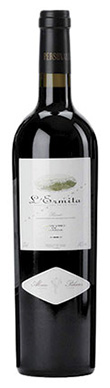

Nervy dark fruits, notes of cherry with a hint of ripe boysenberry, dried orange peel, light sage, potpourri floral notes, light green peppercorn, with red...
2019
Alvaro PalaciosPriorat Gran Vinya Classificada

Sara i René Viticultors, Partida Bellvisos Negre, Priorat Vi de Paratge, Catalonia, Spain, 2014
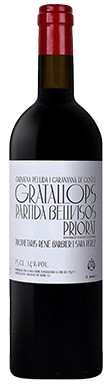
The next release, 2017, will shift to the Vi de Paratge Bellvisos classification. Red and dark fruit in the nose, light touches of red cherry,...
2014
Sara i René ViticultorsPriorat Vi de Paratge
Clos Pachem, Planassos, Priorat Vi de Paratge, Catalonia, Spain, 2019

Very light, delicate red raspberry and underlying young plum skin, dried orange blossoms, nutmeg, and light notes of white pepper – a subtle aromatic profile,...
2019
Clos PachemPriorat Vi de Paratge
Família Nin-Ortiz, Nit de Nin – Coma d’en Romeu, Priorat Vi de Paratge, Catalonia, Spain, 2017
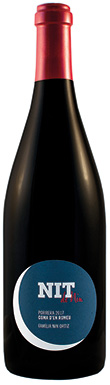
Dark cherry with a dried fig note, molasses, dried blackberry, sage, black peppercorns, crystallised molasses and developing hints of dried herbs with a light touch...
2017
Família Nin-OrtizPriorat Vi de Paratge
Clos Mogador, Manyetes, Priorat Vi de Paratge, Catalonia, Spain, 2018
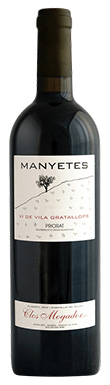
Dark fruits with hints of boysenberry and plum, lovely violet floral notes, orange peel, nutmeg, fruit leather, and a light hit of orange blossoms. Rich...
2018
Clos MogadorPriorat Vi de Paratge
Miguel Torres, Mas de la Rosa, Priorat Vi de Paratge, Catalonia, Spain, 2018

Chewy young plum and a hint of mixed forest fruit, powdery cocoa notes, red peppercorn and liquorice as well as damp rose petals. Structured on...
2018
Miguel TorresPriorat Vi de Paratge
Mas d'en Gil, Coma Blanca, Priorat Vinya Classificada, Catalonia, Spain, 2016
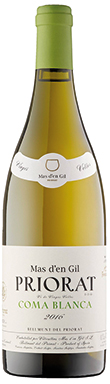
Green apple and lemon zest with a light note of nuttiness to the top, pressed flowers, light notes of old wood and nutmeg spice. A...
2016
Mas d'en GilPriorat Vinya Classificada
Clos Mogador, Clos Mogador, Priorat Vinya Classificada, Catalonia, Spain, 2018
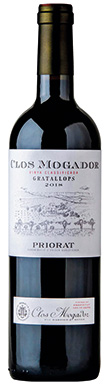
Subtle dark cherry notes with a touch of fig, porcini, minor earthy notes, ginger spice and black pepper, delicate floral notes at the fringes. Well...
2018
Clos MogadorPriorat Vinya Classificada
Mas d'en Gil, Clos Fontà, Priorat Vinya Classificada, Catalonia, Spain, 2016
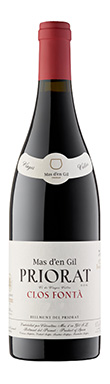
Ripe dark cherry with dried blackberry, light plum, fresh rosemary and cumin along with very light hints of toffee and an underlying aspect of dried...
2016
Mas d'en GilPriorat Vinya Classificada
Alvaro Palacios, La Baixada, Priorat Vi de Paratge, Catalonia, Spain, 2019
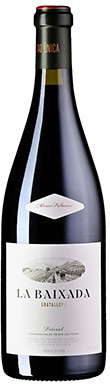
Very delicate red fruit, dried cherries and raspberry, notes of cumin, very light broken dark chocolate, minor nutmeg, rosemary and camomile, with a very light,...
2019
Alvaro PalaciosPriorat Vi de Paratge
Mas Doix, 1902 - Tossal d'en Bou, Priorat Gran Vinya Classificada, Catalonia, Spain, 2019
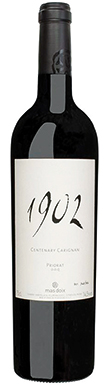
A blend of red and dark fruits, caramel, vanilla, black liquorice, light plum notes, fresh mix of potpourri and violet floral aromas, along with nutmeg...
2019
Mas DoixPriorat Gran Vinya Classificada
Vall Llach, Mas de la Rosa, Priorat Gran Vinya Classificada, Catalonia, Spain, 2019
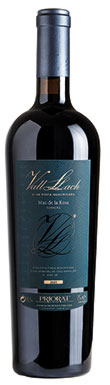
Ripe dark fruits, notes of cherry, dried fig and boysenberry along with sage, black liquorice, potpourri, light rose petal and violet floral notes. Very fine...
2019
Vall LlachPriorat Gran Vinya Classificada
