
Exclusive tasting of Jurançon’s cult Clos Joliette
Decanter's contributing editor Stephen Brook was among a selected few to taste nine legendary bottlings of Clos Joliette, to commemorate the first time in the estate's 92-year history that their wines will be available to buy on the market.


Have you heard of this cult wine? No, neither had I, despite 35 years of writing about wine. Joliette is a tiny vineyard of 1.5 hectares in Chapelle de Rousse, in the northeastern part of Jurançon, that bucolic region in the Pyrenees foothills.
Scroll down for Stephen Brook’s Clos Joliette tasting notes and scores
The region is home to a few local varieties, Gros Manseng being used primarily for dry wines, and Petit Manseng for the sweet wines. Unlike the great sweet wines of the Loire or Sauternes, no botrytis is required, and concentration is achieved by allowing the bunches to dry on the vine. This increases the sugar content, and as Petit Manseng is always high in acidity, there is little risk of the finished wine being cloying. The climate often allows the harvest to be protracted even into December, and some top producers release cuvées picked at various times during the autumn, the latest bottling being the sweetest and most expensive. Joliette ignores the distinction between dry and sweet, making wines in a wide range of styles.
The peculiarity of the wine is that for about 90 years it has never been sold commercially, although a tiny number of top restaurants, such as Taillevent in Paris, were supplied with a few bottles. They must have given the sommeliers sleepless nights, as until the cork was pulled there was no way for them to know whether the wine was dry or sweet. Nonetheless, this scarce wine soon gained an underground reputation, and when the estate was put on the market in 1989, applicants for its purchase included the likes of French actor Gerard Dépardieu.
However, the new owner was Michel Renaud, a wine merchant from Paris who already owned a small property in Armagnac. He continued to produce the wine – and continued not to sell it. No visits were allowed, no samples were submitted to press or trade tastings. No doubt its scarcity added to its allure. Renaud died in 2015 and while his widow and children were deliberating about Joliette’s future, they gave a lease to the negociant Lionel Osmin, a specialist in the wines of southwest France, and allowed him to put some of the wine on the market.
There was a further difficulty; the grapes, 100% Petit Manseng, were picked selectively, some picked early and vinified as dry wines, while others were late-harvested to produce the very sweet wines for which Jurançon is renowned. Each day’s crop was pressed in a vertical press, and the juice transferred to a barrique (usually sourced from Château de Fargues in Sauternes), where it fermented and then remained untouched for between four and six years before being bottled. Consequently, if there were seven different picking dates, the result was seven different wines. If harvesting records were kept, they had vanished by the time Osmin arrived. Joliette was never a DOC wine, so regulations were irrelevant. So Osmin, and selected French wine experts, tasted each lot from each vintage to determine its style and quality. This also gave them the opportunity to discard any wines that were not up to the usual standard or that were flawed.
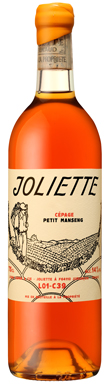
Osmin then assembled a total of 220 6-bottle cases of wines in different styles. Each case consisted of wines from the same vintage. Each of the 19 vintages selected yielded no more than 2000 bottles, so although much stock remained, it was no easy task to assemble these different cases. Coloured capsules have been used to indicate whether the wine is dry (up to 10 grams per litre of residual sugar), off-dry (10-30), or sweet (30 and above). The label also uses the letter ‘C’ to indicate which lot the bottle is drawn from: in effect, which barrel it was aged in. The wines are now coming on the market, so Osmin saw no reason why a handful of journalists should not be invited to taste some of these legendary bottles.
By definition they are inconsistent, although bottles within each lot should be more or less identical. The oldest vintage is 1993, but the bottles were kept in ideal humid conditions inside the Joliette cellars. They are undoubtedly wines of great personality, praised to the skies by the likes of Jean-Claude Berrouet, formerly of Pétrus, and anyone fortunate enough to be given the opportunity to taste a bottle should not hesitate – price permitting.
The Osmin team have made a few modifications to the winemaking for future vintages; they will no longer use a vertical press, and any wines aged in new oak will rest in 600-litre barrels to reduce overt oakiness.
The wines were tasted, and are listed, in ascending order of residual sugar.
According to French wine retailer Clos des Millésimes prices for Clos Joliette wines start at €228.00 a per bottle.
See Stephen Brook’s Clos Joliette tasting notes and scores
You may also like
Going green in Languedoc-Roussillon – Organics and BiodynamicsCorbières: 10 names to know plus top wines to tryPanel tasting: How good is rising star Terrasses du Larzac?From Burgundy to Languedoc: Anne Gros in Minervois
Clos Joliette, C90, Vin de France, Jurançon, Southwest France, France, 1993
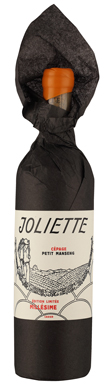

A bright gold colour here, the nose is stern but ripe, with aromas of Seville oranges. The attack is very austere but shows great intensity,...
1993
Clos JolietteVin de France

Clos Joliette, C53, Vin de France, Jurançon, Southwest France, France, 1994
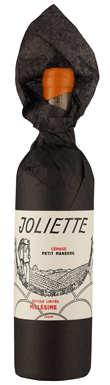
The nose is still dense, with aromas of Seville oranges and marzipan, but it does have a lightly oxidative tone. Rich and broad, this is...
1994
Clos JolietteVin de France
Clos Joliette, C26, Vin de France, Jurançon, Southwest France, France, 2000
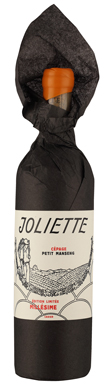
Medium gold in colour, the nose is a fruit cocktail, with aromas of oranges, stone fruits, and mango, as well as traces of Barley Sugar....
2000
Clos JolietteVin de France
Clos Joliette, C3, Vin de France, Jurançon, Southwest France, France, 1998
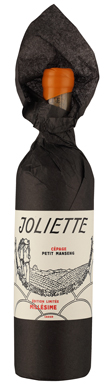
Coppery gold, the nose is packed with fruit, with aromas of caramelised oranges and peach compote, and some heady Barley Sugar notes too. The attack...
1998
Clos JolietteVin de France
Clos Joliette, C82, Vin de France, Jurançon, Southwest France, France, 1996
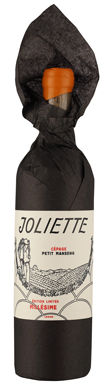
<p>Medium gold in colour, there's more opulence on the nose here, with sumptuous aromas of peaches and oranges, and a honeyed tone too. It's rich,...
1996
Clos JolietteVin de France
Clos Joliette, C29, Vin de France, Jurançon, Southwest France, France, 2000
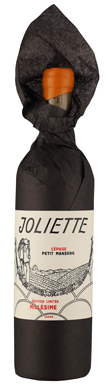
Coppery gold, sumptuous on the nose, with lavish and heady aromas of stewed oranges and tropical fruit. But the palate is strange with some CO2...
2000
Clos JolietteVin de France
Clos Joliette, C78, Vin de France, Jurançon, Southwest France, France, 2007
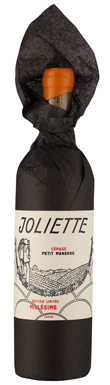
Gold in colour, the nose is spry and lightly toasty, with seductive aromas of mandarins, apricots, and a dash of honey. The attack is lightly...
2007
Clos JolietteVin de France
Clos Joliette, C24, Vin de France, Jurançon, Southwest France, France, 2005
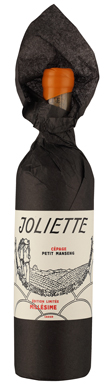
Medium gold, the nose is rich and opulent, lush and powerful with aromas of marmalade and stewed fruit without being too cooked. Indeed, there is...
2005
Clos JolietteVin de France
Clos Joliette, C39, Vin de France, Jurançon, Southwest France, France, 2001
Bronze-gold, voluptuous on the nose, with lavish fruit and aromas of peach compote, tropical fruits and honey. Although the attack is distinctly sweet, there is...
2001
Clos JolietteVin de France
