
Expert’s Choice: Koshu
Attentions are increasingly turning to lower-alcohol options, so the time may have arrived for these delicate, clean-fruited dry whites from Japan – summer’s the ideal time to try.


Koshu (‘甲州’) is a white grape variety, with a name originating from the ancient name of Yamanashi prefecture in the central south of Honshu island.
It is the most-produced wine grape in Japan, and 96% of Koshu wines are produced in the Yamanashi prefecture, where plantings are estimated at about 450ha.
Production in 2018 reached almost 3,300 tonnes in Yamanashi, according to Japan’s national tax agency (though not all used for wine production), followed by 78t in Shimane and 27t in Yamagata.
Scroll down for Hayato Kojima’s pick of 18 Koshu wines to try
The story of the origin of the Koshu grape has two versions. One is that in the early 8th century, a well-respected Buddhist monk Gyoki brought this grape to Yamanashi from Nara (the nation’s capital at that time) and planted the first Koshu vines. Another explanation is that in the late 12th century, local resident Amemiya Kageyu found some wild grapes on the way home and planted the seeds.
A recent DNA study revealed the truth of its origin; Koshu sits within the family of Vitis vinifera. Its European parent was first brought to China via the Silk Road and naturally crossed with a native Asian species now known as Vitis davidii. It is possible that the Japanese official missions (or ‘Kentoshi’) to the Chinese Tang dynasty (AD618-907) brought back this European grape.
Flavour profiles
Koshu was consumed only as a table grape in Japan for a long time until the late 1800s when people started to use it for winemaking. The grape has pinkish grey-coloured berry clusters and thick skins. The wine tends to have a pale colour, featuring delicate citrus, Nashi pear and white peach aromas with minerality. Low to medium in alcohol, it usually has racy acidity on the palate with a crisp finish.
For years, Koshu was considered a lightly textured wine best shown in an unoaked, fresh and fruity style. However, in recent years, thanks to the efforts of ambitious local winemakers, consumers have begun to find sparkling Koshu or oaked, medium- to full-bodied Koshu, or even orange Koshu in the wine shops.
The Koshu essentials
Located about 100km west of Tokyo on the northern foothills of Mount Fuji, most of Yamanashi’s vineyards are on the bottom and the hillside of the fertile Kofu Basin. White varieties account for 62% of grape plantings in Yamanashi – unsurprisingly, Koshu (85% of the whites) ranks at the top, followed by Delaware (10.3%) and Chardonnay (1.8%).
Yamanashi – Japan’s first GI for wine, granted in 2013 – is a warm region, with annual heat summation levels similar to Tuscany in central Italy and Portugal’s Douro valley. Heavy rainfalls are seen in the flowering season (June) and during harvest in September, making it hard to produce concentrated, healthy crops.
Traditionally vine-growers adopt tall trellising to cope with the humidity, with the most popular pruning system being referred to as ‘X-line’, due to the pattern it forms in the overhead pergola. Nowadays, they also adopt straight-line spur pruning for lower yields, while in some top wineries, the ‘vertical shoot positioning’ system (VSP, in which fruit hangs in clusters beneath a narrow ‘curtain’ of upward-grown vine shoots) is gaining popularity, with improved grape quality and limited yields.
In terms of food pairing possibilities, the delicate, restrained characters of Koshu pair well with the classic ‘dashi’ flavour in Japanese home-made dishes featuring an umami-rich, savoury tone extracted from seafood and konbu (sea kelp). A wide variety of sushi, plain Japanese noodles and ramen with salt-based broth (shio ramen) are ideal pairing partners, too.
As for more Western foods, try Koshu with carpaccio, salade niçoise, light seafood meals such as ceviche, a fruits de mer platter or seafood paella. All the wines that follow are from the Yamanashi prefecture…
Hayato Kojima’s selection of Koshu wines to try
The wines are sorted by score in style order; sparkling, white and orange.
Related articles
- Japanese Koshu: History and top wines worth seeking out
- How to taste Sake – a Decanter guide
- Sake: A beginner’s guide & top recommendations
Lumiére, Koshu Sparkling, Yamanashi, Japan, 2020
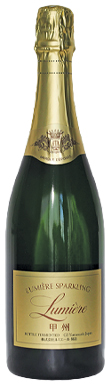

The base wine was fermented and aged in stainless steel tanks, with a second fermentation in bottle followed by 20 months of ageing on lees....
2020
Lumiére

Grace, Koshu Kayagatake, Yamanashi, Japan, 2022
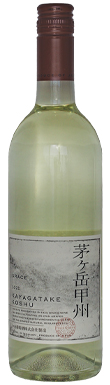
Fermented and aged in stainless steel tanks with no lees contact, the 2022 is ripe, richly perfumed with fresh green apple, white peach, Nashi pear...
2022
Grace
Château Mercian, Iwade Koshu Ortum, Yamanashi, Japan, 2021
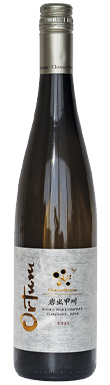
Iwade is one of Château Mercian’s best vineyards in Yamanashi and Ortum means ‘ascent’ in Latin. Fermented and aged in stainless steel tanks, this features aromas of...
2021
Château Mercian
Grace, Gris de Koshu, Yamanashi, Japan, 2021
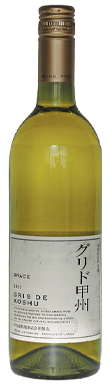
This wine’s 2012 vintage won a groundbreaking Gold medal for Japanese wines in the 2013 Decanter Asia Wine Awards. Fermented in stainless steel tanks with no...
2021
Grace
Château Mercian, Koshu, Yamanashi, Japan, 2021
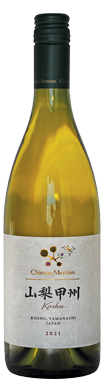
From one of Japan’s leading major wineries, the Yamanashi Koshu was fermented and aged in stainless steel tanks for five months. Banana, green apple and Japanese...
2021
Château Mercian
Lumiére, Koshu Hikari, Yamanashi, Japan, 2021
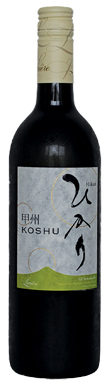
Founded in 1885, Lumière is one of the oldest producers in the region. Fermented in stainless steel tank and aged on lees for four to six...
2021
Lumiére
Shirayuri, L'Orient Katsunuma Koshu, Yamanashi, Japan, 2021
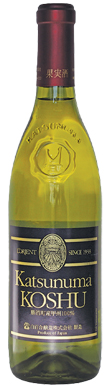
The flagship Koshu wine in Shirayuri (‘white lily’) Winery’s portfolio, this was fermented in concrete tanks and aged for six months without malolactic fermentation. No...
2021
Shirayuri
Katsunuma Jyozo, Aruga Branca Issehara Koshu, Yamanashi, Japan, 2021
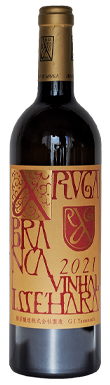
The Issehara vineyard lies on the upper stream of Kanekawa river in Yamanashi, with gravel soil and good water drainage. Grapes are destemmed before fermenting...
2021
Katsunuma Jyozo
Suntory, Tomi no Oka Koshu, Yamanashi, Japan, 2020
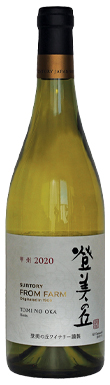
One of Japan’s major wineries, Tomi no Oka is located on the northern slope of the Kofu Basin, surrounded by its own vineyards. Grapes for...
2020
Suntory
Château Mercian, Iwasaki Koshu, Yamanashi, Japan, 2020
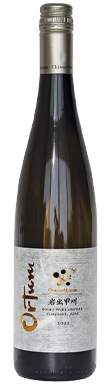
Fermented in oak for 14 days and aged in the same old oak for six months, this wine showcases delicate aromas of Japanese citrus, linden...
2020
Château Mercian
Soryu, Curious Type N Koshu, Yamanashi, Japan, 2021
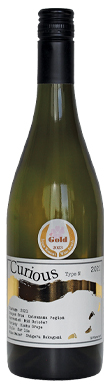
The owner family of Soryu is related to the first two Japanese pioneers sent to France n the mid-19th century to study winemaking. This wine...
2021
Soryu
Fujiclair, Koshu Sur Lie, Yamanashi, Japan, 2021
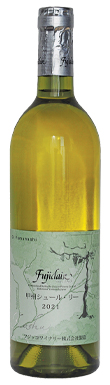
Fermented in stainless steel tanks with six months of lees contact. Very delicate and elegant, it offers white Nashi pear fruit on the nose and...
2021
Fujiclair
Kuranbon, Sol Lucet Koshu, Yamanashi, Japan, 2021
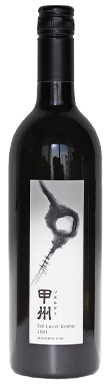
This wine is produced exclusively for the export market. It is fermented in stainless steel tanks without any lees contact to preserve the purity of...
2021
Kuranbon
Shirayuri, L'Orient Cellar Master Koshu, Yamanashi, Japan, 2019
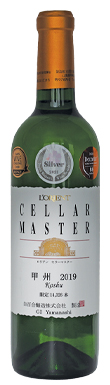
Produced in almost the same process as the estate’s L’Orient Katsunuma Koshu, but aged for a bit longer (eight months) in tank. Refreshing citrus and Nashi...
2019
Shirayuri
Soryu, Curious Type OR Koshu, Yamanashi, Japan, 2021
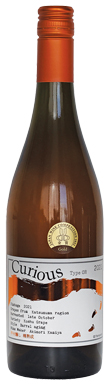
This orange wine was macerated in stainless steel tanks for five days at low temperature prior to fermentation, and aged in old French oak for three...
2021
Soryu
Château Mercian, Fuefuki Koshu Gris de Gris, Yamanashi, Japan, 2021
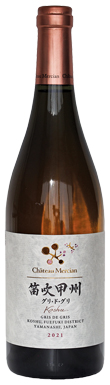
Orange wine macerated for three weeks on its skins, then fermented and aged in stainless steel and oak before eight months’ ageing in 62% old...
2021
Château Mercian
Lumiére, Prestige Class Orange Koshu, Yamanashi, Japan, 2021
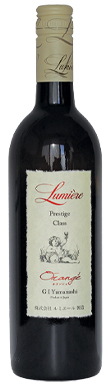
Made using whole bunches, the orange colour was extracted during two to three weeks on skins, seeds and stems. Fermented in stainless steel tanks and barrel...
2021
Lumiére
Manns, Koshu Kamoshi, Yamanashi, Japan, 2022
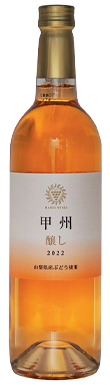
Manns is part of the globally known Kikkoman company. Kamoshi means ‘maceration’ in Japanese. Grapes are destemmed and gently crushed for skin contact for six...
2022
Manns
