
Exploring Montrachet and the surrounding grands crus
It's hallowed ground for the wine trade, and anyone else fortunate enough to get a taste. Charles Curtis MW explores the details behind what makes the wines from this Burgundy grand cru, as well as the four esteemed appellations surrounding it, so great.

Montrachet is among the most seductive and voluptuous white wines on the planet. The eminent Burgundy expert Dr Jules Lavalle wrote in 1855 that Montrachet produced wines that ‘merit so incontestably the first rank among the white wines of the Côte d’Or, and probably among all of the white wines of the world’. Few would contradict him, then or now.
It would be an error to think that every bottle with the word ‘Montrachet’ on the label is equivalent in quality. However, a little knowledge about the vineyard, and the others that surround it, can help you track down one of the world’s most extraordinary white wines, as well as several exciting satellite appellations that richly merit their reflected glory.
Scroll down to see scores and tasting notes for 12 Montrachet Grand Cru wines
This article includes:
- An overview of Montrachet’s history and of the distinctive aspects of the Puligny and Chassagne sides
- A closer look at the neighbouring grand cru vineyards of Chevalier-Montrachet, Bâtard-Montrachet, Bienvenues-Bâtard-Montrachet and Criots-Bâtard-Montrachet
- Charles Curtis MW’s scores and tasting notes for 12 mighty Montrachet wines
Le Montrachet – an ideal location
Montrachet is a vineyard of eight hectares divided almost equally between neighbouring Chassagne and Puligny, according to cartographer and winemaker Sylvain Pitiot. The two villages have long feuded, but this vineyard, their crown jewel, belongs to them both. In 1878, both villages took the step of officially appending the name of the vineyard to their own.
This vineyard produces great wine because many factors align perfectly to create an ideal location for growing Chardonnay. According to wine author Jacky Rigaux, this is due in good measure to its location at the middle of the slope, with a very gentle incline between 255m-270m. The thin brown soil sits atop a layer of calcium- rich marl, over a bedrock of Bathonian limestone from the Jurassic period.
The northern portion of Montrachet faces east-southeast. At the border between the village territories, the slope begins to turn into the valley that leads to St-Aubin, a little to the west. At this point, the vines face directly south, making Montrachet from the Puligny side very different to that of Chassagne, where the name of the wine takes the definitive article (Le Montrachet). However, this distinction of name is not noted by every producer of the wine.
The largest owner of Montrachet is the Marquis de Laguiche, who has just over 2ha (more than a quarter of the entire appellation), all located on the Puligny side at the northern end of the appellation. Perhaps because of its relative abundance, in the stratospheric realm of Montrachet pricing – the range runs from US$500-$5,000 (about £400-£4,000) on release – Marquis de Laguiche is what counts as ‘good value’, yet the quality is consistently superb.

It lacks nothing in density and richness, yet its most salient character is an approachable, fresh aroma of white flowers and ripe apples. The parcel next to Marquis de Laguiche is owned by Domaine Boillereault de Chauvigny, but they do not farm it directly. The vines are leased to Louis Latour, who bottle some under their label and sell some barrels to other négociants. The wines from Louis Latour emphasise richness and density, with super-ripe fruit and abundant oak.
To the south of the vines of Boillereault de Chauvigny is a parcel of a little more than a quarter-hectare that belongs to Domaine Ramonet. Blogger Steen Ohman relates how this superb parcel was purchased by Pierre Ramonet in 1978 from the Milan and Mathey-Blanches families and replanted in the 1980s. The Ramonet wines are perhaps the ultimate expression of the Montrachet of the Puligny side, often incisive and chiselled, with the flinty minerality typical of the village, and a bright lemony fruit with a richness undiminished by its fresh, lively style.
At the southern end of Puligny, Bouchard Père et Fils owns a magnificent 0.89ha parcel, ideally situated at the centre of the vineyard. This major producer uses a very light hand with the new casks for this cuvée (between 15%-20% of the barrels are new), and the result shows a beautiful purity of fruit. The style combines the tension of the Ramonet approach and the richness of the Marquis de Laguiche.
The first vines on the Chassagne side of Montrachet belong to the Domaine de la Romanée-Conti. The domaine purchased this parcel in 1963. Later in the decade, it added two more at the southern end of the appellation near the vines of Comte Lafon, making DRC the fifth-largest owner of Montrachet. The Lafon and Romanée-Conti wines seem to typify the south-facing Chassagne side. Both have less of the mineral and citrus so characteristic of the Ramonet and Bouchard offerings, and often show an almost honeyed character consistent with their location. They are rich, dense and lush.
Other owners on the southern side include Baron Thénard, based in Givry, whose wines were long produced and sold by Remoissenet. However, today Baron Thénard is bottling an increasing proportion of its own wine. Domaine Jacques Prieur is also an owner here, including land at the top of the slope added to the Montrachet appellation from the Chassagne- Montrachet lieu-dit Dent de Chien in a 1921 court decision. Other owners here include Marc Colin, Guy Amiot, and Domaine Lamy-Pillot. These parcels (and those down the slope from here) are planted with vine rows in a north-south orientation, parallel to the slope, whereas the rest of Montrachet is planted with the vine rows running down the slope from west to east.
Chevalier-Montrachet
Just up the slope from the Puligny portion of Montrachet, Chevalier-Montrachet is a vineyard of 7.59ha. There are similarities between the two vineyards, but there are also significant differences. It is higher in altitude, making it slightly cooler, and the wines thus less rich and slightly sharper. The vineyard is also steeper in elevation. In 2021 this meant an increased vulnerability to frost – growers in Chevalier lost nearly all their grapes, while damage in Montrachet itself was not as significant.
The soils higher up on the hill are also thinner, giving wines with greater structure and acidity. This difference, however, is a question of extent. Bouchard Père et Fils has extensive holdings in Chevalier. Appearing to flow up the slope without interruption from the vines of its Montrachet parcel, La Cabotte is a Bouchard monopole that lies at the bottom of Chevalier- Montrachet. The wine is distinguished from (and more expensive than) the main Chevalier- Montrachet bottling in its range. In aerial photographs of the vineyard, the soils of La Cabotte are reddish and noticeably similar to those of Montrachet. However, at the top of the slope, the soils are thinner white marls that can give a more angular wine.

Bâtard-Montrachet
Immediately down-slope from Montrachet lies Bâtard-Montrachet; as with its illustrious namesake, the vines are split between Puligny (6.02ha) and Chassagne (5.85ha). There is a small road (the D113) separating the two. The vineyard slopes gently from 250m-240m, with deeper soils than one finds in Montrachet. There are more limestone pebbles at the top and more gravel and clay at the bottom. The greater quantity of topsoil here gives a wine with more density and weight, which can be heavier and richer than Montrachet.
As with Montrachet, the vines face east and slightly south. The largest proprietor by far, with 1.91ha, is Domaine Leflaive. It owns four parcels, two in Puligny and two in Chassagne. These each run from the top of the vineyard to the bottom and the largest single parcel (on the Puligny side) was planted in the 1960s. The blend of the four produces a wine that is a balance of both sides. The result is buttery and rich, perhaps the most decadent wine in the portfolio.
The next-largest chunk of Bâtard belongs to Domaine Ramonet, which purchased two parcels here for a total of 0.86ha (alongside 0.45ha of Bienvenues-Bâtard-Montrachet) in the 1950s. In general, however, the plots in Bâtard-Montrachet are small, and there are more than 30 owners here, so it is not as easy to generalise about style.
Bienvenues-Bâtard-Montrachet
The northeast corner of Bâtard-Montrachet is set aside as the appellation Bienvenues-Bâtard-Montrachet (often called ‘BBM’ for short). It can be tricky to tell the two apart, although the distinction has long been noted. In the 1921 court case referred to above, the judge remarked: ‘The wines of the defendants have been called either Chevalier-Montrachet, or Bâtard-Montrachet, or Bienvenues, or Pucelles, or otherwise, but never just Montrachet.’
Bienvenues and Criots-Bâtard-Montrachet (below) received their status as grands crus two weeks apart in 1939. The former is located entirely within Puligny-Montrachet, while the latter is situated in Chassagne-Montrachet. Several (Chassagne-based) growers have told me that the magistrates had decided to elevate Criots to grand cru and were compelled by irate growers from Puligny to discern another grand cru for their village as well.
Although the differences between Bienvenues and its neighbours are not pronounced, wines are superbly elegant – in general a bit softer and more floral, less rich than Bâtard, less concentrated than Montrachet, and less lively than Chevalier.
Criots-Bâtard-Montrachet
Criots is the smallest of the grands crus in the sector, at just 1.57ha. It is essentially a southern continuation of Bâtard-Montrachet, and yet there are fundamental differences in the soil. According to Jacky Rigaux, there is a clay content of 30%, but this is lightened by the inclusion of a
high proportion of large limestone gravel. This gravel helps to produce wines with a good balance between the richness of Bâtard and the steely freshness of higher up the slope.
The largest owner in Criots is Domaine Roger Belland, based in Santenay. Domaine Gagnard-Delagrange also had significant holdings, which are today divided through inheritance between descendants Fontaine-Gagnard (which has a third of a hectare) and Blain-Gagnard (owning a quarter-hectare); the other admirable holdings of this legendary estate, including in Montrachet and Bâtard-Montrachet, were also divided among the aforementioned heirs.
Knowledge is king
In the opinion of many wine lovers, these four grands crus produce the ultimate expression of white Burgundy. In general, they are richer and more seductive in character than the other grand cru appellations in the Côte de Beaune that come from the hill of Corton. Corton-Charlemagne can be more reserved aromatically, if more substantial on the palate. This difference comes down often to the direction the vineyards face: broadly southwest on the hill of Corton and southeast in Puligny and Chassagne.
Understanding the various altitudes and soil types within these five esteemed appellations gives the wine lover the knowledge to choose between these wines of ‘the first rank’ among the white wines of the world.
12 Montrachet Grand Cru wines tasted:
Wines are ordered alphabetically by score. Wines from the 2020 vintage may not have completed maturation at the time they were tasted.
Related content
Ramonet: behind the acclaimed Burgundy estate plus 30 wines tasted
Back roads of Burgundy, part 1: the Côte de Beaune
Domaine Fontaine-Gagnard, Montrachet Grand Cru, Burgundy, France, 2019
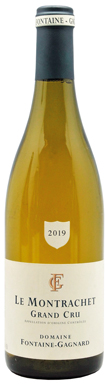

Fontaine-Gagnard's 0.8ha plot of Montrachet is on the Chassagne side, down-slope from Baron Thenard. This location gives ripe, generous grapes that are admirably handled by...
2019
Domaine Fontaine-GagnardMontrachet Grand Cru

Pierre-Yves Colin-Morey, Chevalier-Montrachet Grand Cru, Burgundy, France, 2020
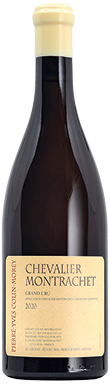
This beautifully delineated wine has a lush nose of peach pit, apricot, ripe apple and and touches of quince. Still, all of this ripe yellow...
2020
Pierre-Yves Colin-MoreyChevalier-Montrachet Grand Cru
Domaine Blain-Gagnard, Montrachet Grand Cru, Burgundy, France, 2020
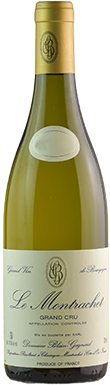
The 0.08-hectare parcel of Montrachet belonging to Blain-Gagnard is located (as with all of their holdings) in Chassagne, where Jean-Marc Blain describes the soil as...
2020
Domaine Blain-GagnardMontrachet Grand Cru
Domaine Leflaive, Bâtard-Montrachet Grand Cru, Burgundy, France, 2019
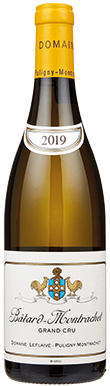
Balance is always the hallmark of the Bâtard from Leflaive as the fresh minerality of the Puligny side plays against the luxurious ripe, almost tropical...
2019
Domaine LeflaiveBâtard-Montrachet Grand Cru
Domaine Leflaive, Bienvenues-Bâtard-Montrachet Grand Cru, Burgundy, France, 2019
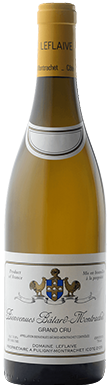
Leflaive owns four contiguous parcels in the center of BBM that total 1.15 hectares, nearly half of the appellation. The vines lie just down the...
2019
Domaine LeflaiveBienvenues-Bâtard-Montrachet Grand Cru
Domaine Jacques Prieur, Montrachet Grand Cru, Burgundy, France, 2017
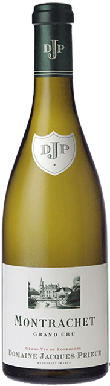
Domaine Jacques Prieur owns 0.58 hectares of Montrachet on the Chassagne side in two parcels. At the top of the vineyard, one was reclassified in...
2017
Domaine Jacques PrieurMontrachet Grand Cru
Domaine Jean-Claude Bachelet, Bienvenues-Bâtard-Montrachet Grand Cru, Burgundy, France, 2015
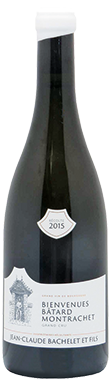
Produced from a tiny parcel of 0.09 hectares that produced two casks; in 2015 both were new, but today they are using one 450-litre barrel....
2015
Domaine Jean-Claude BacheletBienvenues-Bâtard-Montrachet Grand Cru
Domaine Jean-Noël Gagnard, Bâtard-Montrachet Grand Cru, Burgundy, France, 2020
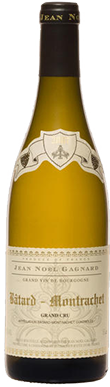
An exquisite wine, the nose is almost delicate, with ripe apple and floral notes, and the texture of the wine is astonishingly crisp and fine....
2020
Domaine Jean-Noël GagnardBâtard-Montrachet Grand Cru
Domaine Blain-Gagnard, Criots-Bâtard-Montrachet Grand Cru, Burgundy, France, 2020
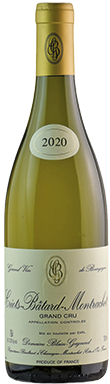
This is marvellous. Blain crushes the grapes lightly and avoids sulphur until after malo. His way of working produces this subtle, elegant wine with notes...
2020
Domaine Blain-GagnardCriots-Bâtard-Montrachet Grand Cru
Domaine Bruno Colin, Chevalier-Montrachet Grand Cru, Burgundy, France, 2020
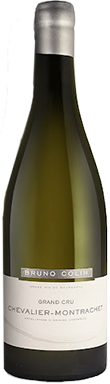
The 0.03-hectare holding of Domaine Bruno Colin in Chevalier-Montrachet comes from his father, Michel Colin-Deleger, whose vines were split with his brother Philippe. In 2019,...
2020
Domaine Bruno ColinChevalier-Montrachet Grand Cru
Domaine Jean Chartron, Clos des Chevaliers, Chevalier-Montrachet Grand Cru, Burgundy, France, 2020
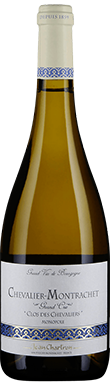
Charton has a magnificent holding of 12 ouvrées (0.47 hectares) at the northern end of Chevalier-Montrachet called the Clos des Chevaliers, entirely enclosed by walls....
2020
Domaine Jean ChartronChevalier-Montrachet Grand Cru
Domaine Ramonet, Bâtard-Montrachet Grand Cru, Burgundy, France, 1990
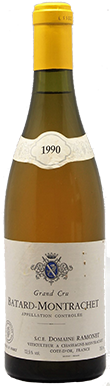
Incredibly youthful more than twenty years after the vintage, with a zippy, fresh, lemony scent that slowly revealed hints of mineral, butter, fresh coconut juice,...
1990
Domaine RamonetBâtard-Montrachet Grand Cru