
Exploring Rioja Alavesa
The smallest sub-zone in Rioja has plenty to shout about: it’s a birthplace for new ideas and styles that have been shaping the wider region’s identity since the 1900s, and the home of some of Spain’s most creative winemakers.

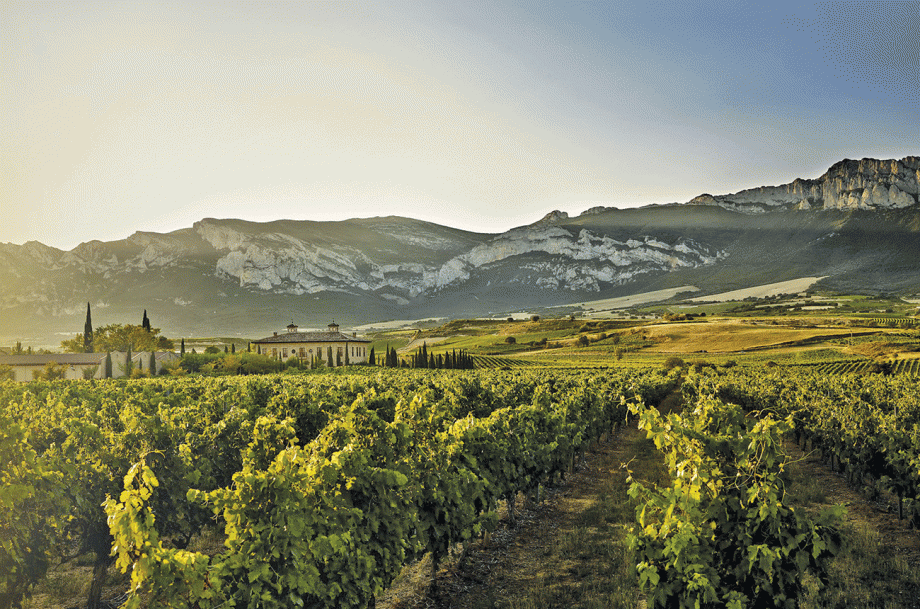
Of Rioja’s three sub-zones, Rioja Alavesa is the flyweight. With a total vineyard area of just over 13,000 hectares, it is by far the smallest, around half the size of heavyweights Rioja Alta and Rioja Oriental.
And yet, when it comes to influence, creativity, dynamism and share of Rioja’s – and Spain’s – best bottles, this sub-region punches way above its weight. This has been the case throughout its history. Take, for example, the story of how Rioja first caught global attention as a fine-wine region in the second half of the 19th century.
Scroll down to see notes and scores for 10 exciting wines from Rioja Alavesa
A new style
This was a period when Rioja effectively became a surrogate for one of the biggest names in French wine, when vignerons and châteaux owners from Bordeaux, having seen their own vineyards destroyed by phylloxera, took to Rioja as the perfect place to set up shop and replenish their chais and service thirsty drinkers back home.
The Bordelais brought with them expertise and a particular way of doing things: a winemaking recipe that included careful management of the vineyards, clean fermentation tanks, separating stems and skins for fermentation, and, most famously, ageing in 225-litre oak barriques.
That recipe is, of course, the basis of what we think of today as traditional Rioja – a style of sweetly oaked wine that is strongly associated with a particular corner of the region around the town of Haro in the Rioja Alta sub-region.
This is where a cluster of Rioja’s grandest names – its first growths, if you like – were first established in the years after the railway arrived in Haro in 1863: CVNE, La Rioja Alta, R López de Heredia.
But if Haro’s Barrio de la Estación became the epicentre of what was then the new – now the traditional – style, it was, in fact, an Alavesa producer that first showed how well the Bordeaux style could work in Rioja’s very different terroir and conditions.
Even before phylloxera had forced the Bordelais south, the Bordeaux-based Alava native Don Guillermo Hurtado de Amézaga, the Marqués de Riscal, had been asked by the local Alava government to persuade local growers to incorporate Bordeaux methods in their vineyards.
Amézaga sought out the expertise of Jean Pineau, winemaker at Haut-Médoc estate Château Lanessan, first to run a project sponsored by the Alava government, and then, as Pineau struggled to overcome local resistance to his methods, for Amézaga’s own estate in the Alava village of Elciego.
Within a few years of the Marqués de Riscal’s first bottling in 1862, the estate’s Bordeaux-inspired wines were picking up acclaim far beyond the region; by the end of the century, Marqués de Riscal had become the first non-French winery to be awarded the Diplôme d’Honneur at the Bordeaux Exhibition.
Switch in focus
Alavesa’s role as Rioja’s incubator of new ideas has taken on several forms since then. Riscal, again, was the first estate to encase its bottles in the distinctive golden wire mesh, or ‘malla’, as a means of counteracting counterfeiters in the early 1900s.
Then, in the 1980s, Alavesa wineries – among them Remírez de Ganuza, Luis Cañas, Ostatu, Artadi and the CVNE single-estate side project, Contino – played a key role in developing what became known as the ‘modernist’ style.
A conscious attempt to break away from what its practitioners saw as a dogmatic association between quality and greater time in oak, the modernist recipe involved, somewhat ironically, a return to one of the ‘traditions’ established in the late 1800s: the modernists preferred shorter sojourns in French oak, rather than the American oak that had been the predominant material for barrels in the region since the early 20th century.
While some of the wines were undoubtedly guilty of pushing towards a ponderous, thickly concentrated style based on super- or overripe fruit and over-extraction in the winery, the best of the modernists were responsible for forcing a significant switch in focus in Rioja. They believed that the quality of the fruit was every bit as important as what happened to it in the winery.
Rioja Alavesa at a glance
Total vineyard area: 13,178ha (20% of Rioja total vineyard area)
Total production: (2022 vintage) 80,644,931 kg(73,665,032 kg red; 6,979,899kg white)
Average vineyard plot size: 0.52ha
Number of registered wineries: 262
Grape varieties: Tempranillo, Garnacha, Mazuelo, Graciano (red); Malvasia, Tempranillo Blanco, Viura (white)
Key villages: Baños de Ebro, Cripán, Elciego, Elvillar, Labastida, Laguardia, Lanciego, Lapuebla de Labarca, Leza, Moreda de Alava, Navaridas, Oyón, Samaniego, Villabuena de Alava, Yécora
Source: Consejo Regulador DOCA Riojs
Back to terroir
It’s a back-to-the-land idea that more recent generations of Alavesa producers have taken still further, with influential names such as Abel Mendoza, Artuke, Bodegas Bhilar and Telmo Rodríguez looking back beyond the modernist and the traditional to what they think of as ‘ancestral’ Rioja – a time of small grower-producers or viñateros and much greater varietal diversity.
It’s a move that’s very much in keeping with trends elsewhere in the wine world, a terroiriste turn that is inspired by Burgundy rather than Bordeaux, and for which Rioja Alavesa, with its patchwork of smaller plots of, in many cases, very old (many have vines of 50 to 100+ years old) vineyards spread across 23 villages, is ideally suited.
This small-producer spirit is part of what makes a visit to Rioja Alavesa wine country feel distinctly different to the rest of Rioja. But the geography is different, too. Most of the best vineyards are planted in terraces on iron-rich clay and limestone soils, and, like many of Spain’s most exciting wine regions, altitude plays a defining role in shaping the character of the wines.
Vineyards follow the slopes into the jagged peaks of the Sierra Cantabria, with vineyards stretching from 400m to 1,200m above sea level. There’s a rugged beauty here, and also a distinctly cooler, Atlantic-influenced climate, which helps give Alavesa wines their trademark definition and nerve, whether the wines are white (easily the best in the region), ageworthy reds, or the local speciality: a carbonically macerated, youthful, fresh style of red that has been given a pulsatingly vivid new lease of life in recent years.
Basque breakaway
Alavesa’s small and often family-owned producers set themselves apart from the bigger bodegas in Rioja. These large companies dominate the region’s regulatory council and have rather different priorities when it comes to setting local winemaking regulations and designing marketing campaigns.
It is worth noting that a number of these bigger Rioja bodegas – located outside Rioja Alavesa – are busy buying vineyards in Alavesa, drawn by the high elevations, the old vine material, and the quality of the fruit.
These differences in winemaking philosophy have been exacerbated by questions of cultural and regional identity and governance. The management of Spanish DOPs falls under the remit of regional governments, except when a DOP extends across more than one region – in which case it is controlled at national level.
This is the case for Rioja, which extends across four regions. Most of Alavesa is part of the Basque country and for a long time the autonomous Basque regional government has been requesting control over those vineyards. A relevant number of Alavesa producers support this request.
The situation is heating up. The Asociación de Bodegas de Rioja Alavesa (ABRA) convened last December for a discussion about whether to take its 100 member wineries out of the official Rioja DOCa, but no vote was held on the issue.
Earlier, in September 2023, the Asociación de Bodegas Familiares de Rioja, which represents around 50 bodegas, resigned from the appellation’s governing body, in protest at what they saw as a failure to promote Rioja as a premium fine wine region while continuing to push a pile-it-oakily-sweetly-and-cheaply-high image.
They also appealed to Spain’s government to be exempt from contributing to generic Spanish wine promotion activities. But it’s important to remember that Alava is the most ancient part of Rioja. Many producers there remain loyal to the Rioja DOCa and some of the most famous bodegas are not in favour of leaving.
Rioja Alavesa: Seven names to know
Abel Mendoza
Early adopters of the now-fashionable viñatero (grower-producer) model in Rioja, Abel Mendoza and his wife Maite Fernández work their 37 plots over 18ha on the left bank of the Ebro around San Vicente de la Sonsierra, Abalos and Labastida.
Organically farmed, those vineyards are unusually diverse in terms of grape variety, with Viura, Malvasía, Garnacha Blanca, Torrontés and Tempranillo Blanco for whites, and Graciano treated as seriously as Tempranillo in wines of precision and silky-textured class.
Artuke
Brothers Arturo and Kike de Miguel have combined their names (Artu + Ke) and their expertise to make Artuke one of the stars of new-wave Rioja from their base in the village of Baños de Ebro.
Their wines – whether the outstanding small-production, single-plot, old-vine, high-altitude numbers such as El Esolladero and La Condenada, or their supremely succulent, sappy, carbonically macerated estate bottling – are unfailingly fresh, compulsively drinkable and intriguing.
Bodegas Bhilar
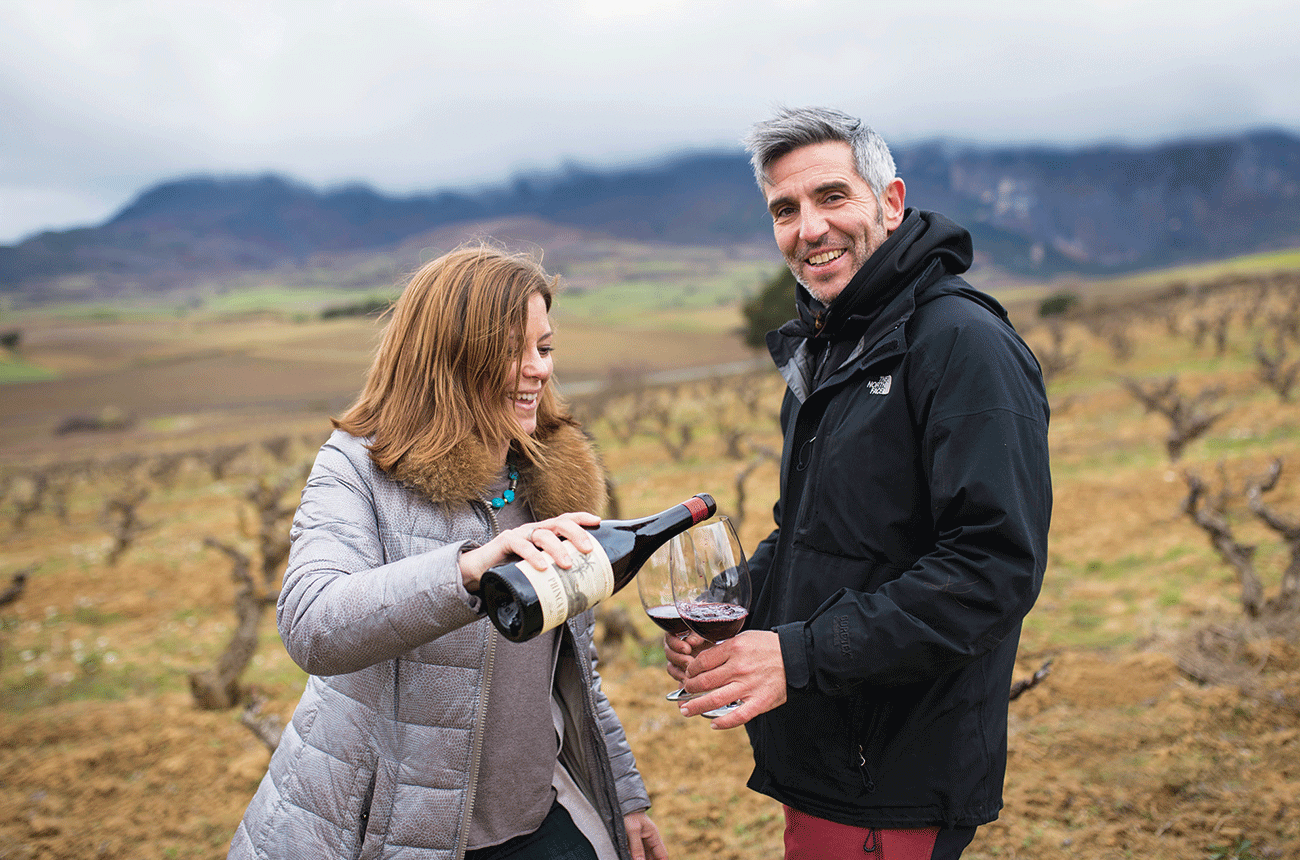
Run by winemaker David Sampedro and his American wife Melanie Hickman, Bodegas Bhilar is the epitome of the kind of small, terroir-focused Alavesa winery that makes this sub-region so exciting.
Based near the village of Elvillar in the foothills of the Sierra Cantabria, Sampedro and Hickman work the (up to 100-year-old) vines biodynamically for a gorgeously individualistic, expressive range of village, village estate and single-vineyard wines.
Luis Cañas/Amaren
Value is a watchword at this always-reliable, family-run bodega, not least in its crianza and reserva bottlings, which, like all the Cañas wines, have a fresh, ripe fruit-driven style that’s nicely seasoned by new oak and based on impeccable fruit sourced from the family’s 350ha vineyard holdings.
Look out, too, for the small-production Amaren range made by Luis’ grandson, Jon Cañas, from some of the family’s best plots.
Marqués de Riscal
One of the great, grand old names of Rioja, Marqués de Riscal bottled its first wines in 1862 and, perhaps uniquely, its cellars house wines from every vintage of its 162-year existence.
But if history and tradition are important, they are not constraining here: winemaking for the classic and very long-lived reservas and gran reservas has evolved, and Riscal has kept with the times with impressive village and single-plot wines, not to mention building a first-class hotel and museum in a strikingly modern Frank Gehry-designed building in the early 2000s.
Sierra de Tolono
A Rioja native, Sandra Bravo has captured attention and acclaim for her sensitive, gently experimental winemaking approach since starting her Sierra de Toloño label in 2012. Small plots of old vines (up to 80 years old) at high altitudes (up to 700m) are at the heart of Bravo’s artisanal recipe, as are neutral oak, amphorae and concrete, in a range that includes expressive Garnacha and Tempranillo and a luminous field-blend white.
Telmo Rodriguez
One of the most influential Spanish winemakers of the past 30 years, the restless Telmo Rodríguez has interests and fine wines dotted all over the country, but his work back home in Rioja is some of his most accomplished.
He has two projects: Bodegas Lanzaga is based on restored parcels of vines in the villages of Lanciego and Labastida; Remelluri is the family estate founded by his father in the late 1960s. Both showcase the high-definition, terroir-driven Rodríguez style; both are Alavesa essentials.
Williams’ selection of top wines from Rioja Alavesa
Related articles
- Tim Atkin MW: ‘Rías Baixas’ reds are some of the most exciting in Spain right now’
- Rioja Viñedos Singulares: Panel tasting results
- Aragón: Exploring Spain’s wild frontier plus the wines to seek out
Abel Mendoza, Viura, Rioja, Alavesa, Northern Spain, Spain, 2022

Very much a pioneer of Rioja’s small producer-led turn to terroir, Abel Mendoza continues to impress with whites as much as red wines, not least...
2022
Abel MendozaRioja

Amaren, Barrel Fermented Blanco, Rioja, Alavesa, Northern Spain, Spain, 2019
Jon Cañas, grandson of Luis Cañas, makes wines with his family’s best plots of old vines for the Amaren project. A blend of Viura, Malvasía...
2019
AmarenRioja
Remelluri, Lindes de Remelluri Viñedos de Labastida, Rioja, Alavesa, Northern Spain, Spain, 2019
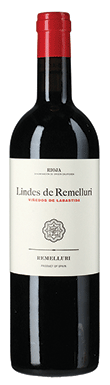
From Telmo Rodríguez’s family estate, the Lindes de Remelluri label features two wines based on fruit from growers in two surrounding villages. Both the San...
2019
RemelluriRioja
Bodegas Bhilar, Plots Tinto, Rioja, Alavesa, Northern Spain, Spain, 2020
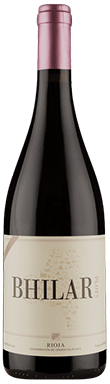
David Sampedro and Melanie Hickman’s small-production wines from Elvillar are defined by a moreishly compelling sense of wildness and freshness, and their village wine, a...
2020
Bodegas BhilarRioja
Marqués de Riscal, Rioja, Alavesa, Northern Spain, Spain, 2019
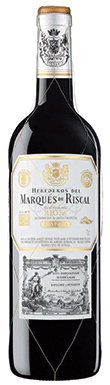
One of the most famous wines in Spain,’ says Riscal’s website, and it’s true: you’ll find it in almost any wine store in the country,...
2019
Marqués de RiscalRioja
Sierra de Toloño, Tinto, Rioja, Alavesa, Northern Spain, Spain, 2020
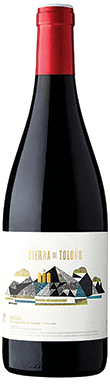
Sandra Bravo’s estate red is a glorious introduction to her graceful, lucid style of winemaking. A blend of grapes sourced from her high-altitude old-vine plots...
2020
Sierra de ToloñoRioja
Bideona, Mayela, Rioja, Alavesa, Northern Spain, Spain, 2021
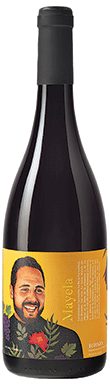
Bideona has only been going for six years, but the bodega has already made a big impression with a set of unforced wines based on...
2021
BideonaRioja
Artuke, Rioja, Alavesa, Northern Spain, Spain, 2022
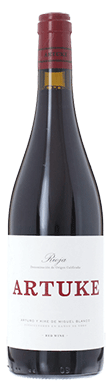
Fans of ‘traditional’ Rioja might be surprised if not disappointed when they broach a bottle of Artuke’s entry-level red. And sure, if you’re used to...
2022
ArtukeRioja
Eguren Ugarte, Tinto, Rioja, Alavesa, Northern Spain, Spain, 2022
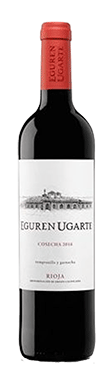
Another of Rioja Alavesa’s historic names, the family-owned Eguren Ugarte works from its surrounding 130ha of vineyards. The range is extensive, but this is a...
2022
Eguren UgarteRioja
