
Exploring the nine towns of Chianti Classico


Getting to know Chianti Classico is all in the detail. Monty Waldin traverses Tuscany’s hillsides discovering its slopes, soils and Sangiovese styles...
Tuscany’s Renaissance artists depicted every nuance of Chianti Classico’s landscape – the subtle changes in light and shade across its vineyards, olive groves and towns. They would be stunned that Chianti Classico bottles are so randomly ordered on contemporary wine merchants’ shelves.
Scroll down for Monty Waldin’s top wine from each village in Chianti Classico
Unlike Burgundy, for example, Chianti Classico wine labels cannot display the name of their towns of origin. Imagine Leonardo da Vinci asking Michaelangelo if he had painted a particular Tuscan townscape and Michaelangelo replying: ‘yeah, I did. But regrettably the law forbids me from telling you exactly which town it was.’
There are nine towns in the Chianti Classico area and in 2015, wine-growers in one of those towns – Panzano – challenged the status quo by adding the name ‘Panzano’ to the front label of their wines. This move has encouraged other communes, leading to discussions at the consorzio level. In anticipation of all Chianti Classico producers being able to mention their commune on the bottle label in the not too distant future, here’s what to look for, town by town.
Poggibonsi
The town of Poggibonsi on the western edge of Chianti Classico is easily ignored. It is an architecturally anonymous midpoint on the rail or motorway journey between the renaissance jewels of Florence and Siena, and is home to the merest sliver (0.5%) of Chianti Classico vineyards. But its few vines sit on a ridge of usefully stony clay, producing satisfyingly proportioned Chianti Classico that benefits from a little time in oak. It is worth looking out also for Fattoria di Cinciano (pictured top).
Castelnuovo Berardenga
Chianti Classico’s third-biggest and southernmost village is Castelnuovo Berardenga. Its proximity to Montalcino of Brunello fame, which lies to the south, means parallels are drawn between the power of their respective Sangiovese-based reds. The wine estates of Villa di Geggiano, Carpineta Fontalpino and Fèlsina along Castelnuovo’s southern border provide the most mouthfilling Montalcino-like examples.
From the air, Castelnuovo Berardenga resembles a butterfly whose east and west wings are divided by a thick sliver of Gaiole in Chianti.
The key area in Castelnuovo Berardenga’s higher, generally cooler, east wing is around San Gusmè (located at around 500m). Look out for Castell’In Villa’s meticulously layered red berry style; Tenuta di Arceno’s brasher, blackberry and vanilla style; the traditionalist Podere Le Boncie (no Bordeaux or Rhône grapes, nor new oak here, thanks); the equally unshouty Villa a Sesta; and San Felice’s well-executed single-site Poggio Rosso.
Castelnuovo Berardenga’s slightly lower, warmer west wing is centred around the village of Vagliagli (at 400m). Here, Dievole is boldly renascent with its overtly ethereal style; Bindi Sergardi offers a deeper, cherry-chocolate expression; the Lenzi family’s Fattoria di Petroio provides classical silkiness; and Terra di Seta’s old-school riservas will please traditionalists. New oak lovers are likely to prefer Tolaini. Finally, Scheggiola’s unashamedly exuberant style results from Castelnuovo’s warmest, extreme southwest.
Tavarnelle Val di Pesa
In west-central Chianti Classico, Tavarnelle is the DOCG’s seventh-biggest vineyard township in terms of vineyard size, with just 3% of Chianti Classico’s vineyard area.
The river Pesa cuts the area in two. The big hitter north of the river is the Antinori family. Its rolling Badia a Passignano estate encircles a beautiful abbey of the same name and its vineyards represent one-quarter of Tavarnelle’s entire viticultural area. Its stony clay soils produce a robust, full-bodied Chianti Classico style that benefits from decanting.
Estates in Tavernelle’s southern half include Alessandra Pacini’s Il Poggiolino and the Rossini family’s Podere La Capella. Both estates lie around the hamlet of San Donato in Poggio near the northern border with Castellina in Chianti. The modest altitude (300m above sea level), temperate climate and cool limestone soils make for deep, but rarely overripe wines.
Radda in Chianti
Radda is Chianti Classico’s highest point. Its steep, often rocky, arid slopes push vines to the limit. Around the village, sandstone soils give Sangiovese an easygoing juiciness, exemplified by Castello di Volpaia’s Coltassala.
Angela Fronti’s winery, Istine, is a jigsaw of isolated plots, each managed individually, akin to a prized allotment. Her Radda bottling, named Casanova, has firm, dark, tense fruit reflecting the site’s dense marl soils.
At nearby Castello di Albola, the Zonin family has been perfecting its canopy management, adjusting the direct sunlight to achieve perfect ripeness. This fine-tuning is producing clearer and more intense wines.
A combination of hot days and cool nights due to Radda’s elevation – made even colder by surrounding forests – creates a ‘daily stop-start stress situation’ for vines, according to Piero Lanza Ginori of Poggerino. The extremes mean he doesn’t trim his vines, ‘otherwise they waste energy growing new leaves instead of ripening grape flavours and tannins.’
San Casciano in Val di Pesa
San Casciano in Val di Pesa is Chianti Classico’s fourth-biggest commune. Its northwest location provides strong warming influences from the Mediterranean.
San Casciano’s warmest area is low-lying Romola (150-200m) in its northwest tip. Niccola Bernabei’s 100% Sangiovese Chianti Classico from his estate La Querce Seconda is a solid, typically rich example. In an effort to add backbone to Romola’s natural exuberance, however, Silvio Messana of Montesecondo blends Sangiovese from Romola with Sangiovese vines situated at higher altitude.
Two San Casciano estates with historic links to Machiavelli are found on the rising, often forested, hillsides around the hamlet of Mercatale Val di Pesa. Fattoria Ispoli is the area’s organic pioneer with wines to match, while Principe Corsini-Villa Le Corti (owned by the same family since 1427) is markedly bolder, but not overbearing.
Gaiole in Chianti
Gaiole forms a wedge, slicing Castelnuovo Berardenga in two. The stony tufa soils of southern Gaiole and the panoramic village of Monti in Chianti warm quickly, giving deeply coloured, richly fruited wines from the likes of Fattoria San Giusto a Rentenanno, Castello di Cacchiano, Rocca di Montegrossi, Badia a Coltibuono and Castello di Brolio.
This area has played a significant role in the shaping of Chianti Classico: in the mid-19th century, Castello di Brolio’s owners, the Ricasoli family, defined Chianti Classico as a Sangiovese-dominated (minimum 80%) red wine, and that regulation remains in place 150 years later.
Around the town of Gaiole, altitude and limestone soils combine to produce luminous, mouthwatering Sangiovese with long drinking windows. Look for Riecine’s dark-fruited styles and the wines of Tenuta Perano, the Frescobaldi family’s first, but sure-footed foray into Chianti Classico, resurrecting this once-moribund estate.
Gaiole’s western side edges up to Radda, creating a chessboard of different coloured soils. Paula Papini Cook of Le Miccine ferments grapes from white limestone separately from those on browner sands and clays, then combines them in a beautifully layered whole.
Greve in Chianti
This is Chianti Classico’s second-largest wine town, home to 18% of the region’s vineyards, but it is arguably the most diverse township in terms of wine styles. It takes its name from the river Greve, which splits the town in two.
Lamole, on the east bank, is the area’s most distinctive sub-zone. Lofty terraces on sandy soils make for pale, perfumed, cranberry-crisp wines. No wonder Filetta di Lamole, Fattoria di Lamole and Lamole di Lamole include the magic word in their estate name – and in Susanna Grassi of I Fabbri’s case, on the label of her beautifully made Terra di Lamole.
On the opposite bank is Panzano, a rocky ridge whose clay-schist soils give dark, deeply fruited wines for the long haul. This area’s distinctiveness is one reason why Panzano’s growers have pre-emptively added its name to their labels. It is also worth noting that Panzano’s vineyard area is 80% organic, representing 95% of producers, compared to 35% across Chianti Classico as a whole.
There’s even more to love south of Panzano, where the Conca d’Oro (‘golden bowl’) is an amphitheatre basking in the hot afternoon sun. It adds serious power to wines from La Massa, Candialle, Vignamaggio and Fontodi.
Just 2km west of Greve in Chianti is the village of Montefioralle, where Villa Calcinaia specialises in single-terroir wines, whose natural depth provides a striking counterpoint to those of Lamole.
Barberino Val d’Elsa
In west Chianti Classico, Barberino Val d’Elsa surrounds Poggibonsi and despite having only 3% of the DOCG’s vineyard, it possesses some of the area’s most influential wineries.
The Bianchi family of Castello di Monsanto, for example, started a revolution in 1968, by making Chianti Classico’s first 100% single-vineyard wine. Called Il Poggio (‘the hillock’), it ignored the winemaking rule of the time, which stipulated the inclusion of some white grapes in Chianti Classico, instead opting for predominantly Sangiovese with small amounts of Canaiolo and Colorino.
Casa Sola still uses some white grapes in its red blends, but not for its Chianti Classicos. The estate produces engaging, old-fashioned bruisers and their generous ripeness reflects the stony soils that are warmed by temperate breezes from the Tyrrhenian Sea.
Isole e Olena is perhaps the most famous estate here, producing consistently good wines thanks to thoughtful viticulture and sensitive winemaking.
Castellina in Chianti
In southwest Chianti Classico, Castellina in Chianti is home to one-fifth of Chianti Classico’s vineyards, and is the DOCG’s largest commune, producing a range of styles from Buondonno’s svelte Casavecchia alla Piazza to Nittardi’s stockier, darker-fruited expressions.
This commune has historic importance: a member of the Mazzei family, which has owned Castello di Fonterutoli for some 24 generations, first documented Chianti in 1398. Today the family makes one of Chianti Classico’s more coherent gran selezione wines.
Heading southwest, wines acquire a ripe quality and tingling texture, reflecting the warm Tyrrhenian Sea air, that contrasts with the cool, pale sub-soils. Look out for Tenuta di Lilliano, Casina di Cornia, Villa Pomona and San Fabiano Calcinaia. Further west, where the Chianti Classico zone ends, the pick is Villa Trasqua’s Nerento, a spicy Sangiovese from redder soils.
Monty Waldin is a widely published wine writer, author and DWWA Regional Chair for Tuscany
See Monty Waldin’s top wine from each village in Chianti Classico
You may also like
How the Tuscany 2018 vintage is shaping upTop winery hotels near FlorenceWhat is Chianti Rufina? Ask DecanterTen of the best Italian vineyards & terroirs
Fattoria Le Fonti, Chianti Classico, Tuscany, Italy, 2015
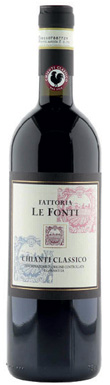

A well-managed organic estate that uses seaweed sprays to keep its Sangiovese vines strong. This 100% Sangiovese shows clear, well-defined fruit and insistent, well-honed tannins,...
2015
Fattoria Le FontiChianti Classico

San Felice, Poggio Rosso, Chianti Classico, Tuscany, Italy, 2014
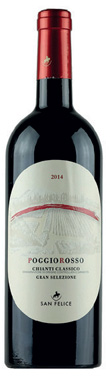
This single-site Sangiovese is nurtured on warm soils at altitude. Fermented slowly and sensitively, producing a suave, deeply satisfying wine infused with bright, smooth red...
2014
San FeliceChianti Classico
Podere La Cappella, Querciolo, Chianti Classico, Tuscany, Italy, 2014
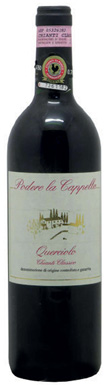
There are few outstanding riservas from the cool and humid 2014 growing season, but this organically certified 100% Sangiovese is lithe, offering well-weighted, clear and...
2014
Podere La CappellaChianti Classico
Val delle Corti, Chianti Classico, Tuscany, Italy, 2015
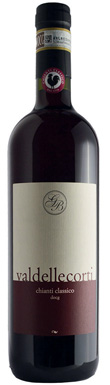
Val delle Corti’s organically certified vines are grown on a stony, high-altitude site (450-500m) facing eastwards. Pinpoint accuracy when it comes to picking dates, alongside...
2015
Val delle CortiChianti Classico
Montesecondo, Chianti Classico, Tuscany, Italy, 2016
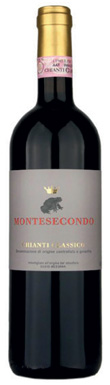
Biodynamically farmed and fermented in concrete tanks before maturing in 500-litre tonneau, this is a velvet fist in a velvet glove. Layers of clear fruit...
2016
MontesecondoChianti Classico
Badia a Coltibuono, Chianti Classico, Tuscany, Italy, 2016
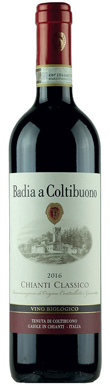
This is a wonderfully approachable week-night wine. A blend of 80% Sangiovese with Canaiolo, Mammolo and Colorino making up the numbers. Give its flavours and...
2016
Badia a ColtibuonoChianti Classico
Monte Bernardi, Retromarcia, Chianti Classico, Tuscany, Italy, 2016
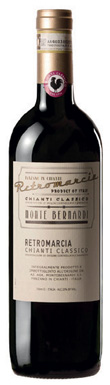
This biodynamically farmed Sangiovese is designed to be an everyday, unheavy, pure Chianti Classico like the old-timers used to make. It is oak aged but...
2016
Monte BernardiChianti Classico
Isole e Olena, Chianti Classico, Tuscany, Italy, 2015
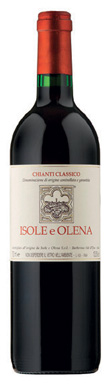
This is a benchmark Chianti Classico, despite the eclectic inclusion of 5% Syrah. A rich, ripe and classy mouthful.
2015
Isole e OlenaChianti Classico
Casina di Cornia, Chianti Classico, Tuscany, Italy, 2015
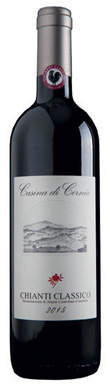
An intriguing 100% Sangiovese that is fermented and matured in concrete tanks. It has a mouthwatering core of exuberant fruit. Firm without rough edges, and...
2015
Casina di CorniaChianti Classico
