
Exploring white Burgundy in three steps
Its slopes and villages inspire respect, adoration, awe and sometimes frustration. But what’s unarguable is that Burgundy is seen as the world’s greatest territory for Chardonnay, if not white wine as a whole. Discovering its complex geography, its myriad styles and subtle expressions is likely to involve a lifetime’s passionate dedication – so where to begin such a fascinating journey?

White Burgundy can be many things to many people: exhilarating, exasperating, and mystifying by turns. It is likely that few of us will ever truly understand the complex topic of white Burgundy, but those who try will undoubtedly enjoy the effort.
Armed with a bit of information and advice, we can begin to explore this extensive category and find great wines at every price while avoiding disappointment.

Scroll down to see 12 top Burgundy whites at three different price levels
1. Where to start
There are several possible entry points to the universe of white Burgundy. Regional-level Bourgogne is one of the familiar places to start. This category is the base of the quality pyramid in Burgundy (see below), and more than half of all wine produced in Burgundy bears a regional label of one type or another.

Regional wines are often produced from vines that lie outside the limits of a village appellation. In the Côte d’Or, they are often made with grapes grown to the east of the D974 road, which traces the line of the Via Agrippa constructed by the Romans along a fault line in the Côte. The soil is deeper and much more fertile east of the fault and thinner and rockier to the west. The former favours growing grains, while the latter is better suited to vines.
Most of the larger négociant traders blend their Bourgognes from various sources, and the wines, frankly, can be a bit anodyne. Occasionally, however, interesting examples are made, from better areas and given careful treatment – seek out, for example, Albert Bichot’s Secret de Famille Bourgogne (2018 Chardonnay or Pinot Noir, £23 Honest Grapes).
When top growers produce their Bourgogne from vines in their villages that lie west of the D974, the quality can be exhilarating, but typically it is not mentioned on the label. For instance, Jean-Marc Roulot’s delicious (albeit pricey) Bourgogne Blanc (2016, £180 Nemo Wine Cellars) is from vines east of Meursault and Volnay. This type of wine can be labelled with the recently created appellation Bourgogne Côte d’Or, but the term is seldom used.
Caroline Lestimé at the Chassagne Domaine Jean-Noël Gagnard takes another tack: she bottles a very good value white Burgundy under the Bourgogne Hautes Côtes de Beaune appellation. She even mentions the name of the parcel where the grapes are grown: Sous Eguisons (2020, £37.95 Wine Republic). As with Bourgogne Côte d’Or, this is an example of a regional Bourgogne with a geographic indication.
Another marvellous example is produced in Bouzeron at A&P de Villaine – the estate-owned by Aubert de Villaine of Domaine de la Romanée-Conti – whose Bourgogne Blanc is bottled as a Bourgogne Côte Chalonnaise (Les Clous Aimé Blanc: the 2020 is selling at about €30 in France).
The Côte Châlonnaise region produces its share of Bourgogne Blanc, but there are also excellent wines at the village and premier cru level here, bottled under the Rully, Mercurey, Givry and Montagny appellations (the latter of which only produces white wine).
Another place to look for bargain-priced white Bourgogne is in the Mâconnais region. This southernmost section of Burgundy produces ripe, sunny wines with an exuberant fruit profile and softer acidity than one sees in the Côte d’Or.
The most highly reputed wine in the Mâconnais is Pouilly-Fuissé, and well-known regional appellations include Mâcon and Mâcon-Villages, as well as Mâcon with the name of a village attached, such as Mâcon-Milly-Lamartine or Mâcon-Fuissé. Each of these has a distinct character: Milly-Lamartine and Fuissé are generally warm terroirs that produce very ripe grapes, while Mâcon-Davayé and Mâcon-Vergisson are at higher elevations and can face east-northeast, making them cooler. Despite its renown, these can also represent outstanding value, particularly as compared to the Côte d’Or.
Village-level ‘crus’ complement the regional appellations in the Mâconnais. Pouilly-Fuissé is the best-known, and there are village-level wines in nearby Pouilly-Loché and Pouilly-Vinzelles. Other cru-level wines include Viré-Clessé (in the northern Mâconnais) and St-Véran (in the south, just before Beaujolais).
Four wines to look out for in this category:
- Château de Beauregard, En Faux, St-Véran 2018
- Domaine Jean & Gilles Lafouge, Auxey-Duresses Les Boutonniers 2020
- Domaine Robert-Denogent, Les Sardines, Mâcon-Villages 2020
- Domaine Clos Salomon, Givry 1er Cru Blanc La Grand Berge 2020
2. The villages

One seldom sees white wine from Burgundy’s northerly Côte de Nuits region, although interesting whites can be found in Fixin, Marsannay and Morey-St-Denis, where Dujac and Bruno Clair make fine examples. The bulk of the village-level wine is produced in the Côte de Beaune, which begins, heading south, with the hill of Corton and its three villages of Pernand-Vergelesses, Aloxe-Corton and Ladoix-Serrigny. These wines can be structured, intense and mineral, particularly those in Pernand and nearby Savigny-lès-Beaune.
Vines also carpet the majestic slopes behind the town of Beaune itself. Chardonnay and Pinot both grow here, but white wine accounts for only 15% of production in the confines of the town of Beaune, according to noted Burgundy authority and best-selling author Sylvain Pitiot. Many of these vineyards are owned by large négociant houses, and the best wines have a near-perfect balance of density and freshness. Think of the famous cuvée from Joseph Drouhin, Beaune 1er Cru Clos des Mouches (2018, £119 GP Brands), where the ‘mouches’ in question refers to bees, not flies, because of the luxurious, honeyed nature of the white wine.
Two villages just south of Beaune, Pommard and Volnay, produce exclusively red wine. The main route south out of Beaune is the D974/973 through these two, to arrive at three villages that are mostly known today for their white wines. The first of these is Meursault, which has no grand cru vineyards but several very fine premiers crus. The wines are rich and somewhat lush; it is most common to speak of aromas of apple, hazelnut and butter when describing Meursault.
Behind the village lie the sweeping hills of Mont Milan. The road through the valley to the north leads past Monthélie and Auxey-Duresses to St-Romain. These off-the-beaten-track villages produce white (and red) wines with lively freshness and bright lemony fruit. St-Romain, in particular, is at a high elevation, ascending to 500m. The landscape is rugged here, and falcons niche in the sheer limestone cliffs that surround the village. The wines were once rugged too, but they show increasingly polished sophistication today.
The hamlet of Blagny perches on the slopes above Meursault to the south. The road through the valley south of Meursault leads to the Hautes-Côtes past St-Aubin, a superb source for top-quality wines at a moderate price.
The vineyards of Puligny-Montrachet lie south of Blagny at the base of these lower slopes. Here the wines tend to show more citrus than apple aromas, with a hint of stony, flinty minerality that can be pronounced. The Bois de Chassagne lies south of Puligny and St-Aubin at the top of the steep slopes of the Grande Montagne, with Chassagne-Montrachet lying at its base.
More than a century ago, Chassagne mainly produced red wine, but production today is only 27% red, according to Pitiot. The whites here can be broader and richer than those of Puligny, with more of a floral note than the saline minerality of Puligny or buttered richness of Meursault. There are vines high on the slope of the Grande Montagne, however, that produce lively wine with bracing, lemony acidity.
Continue on south of Chassagne, and the hills turn to face south. Here one finds Santenay, the last of the villages of the Côte d’Or, where good value red and white wines are both produced. The vines do not stop at the administrative border of the Côte d’Or, but continue into the northern reaches of the Saône-et-Loire department to Maranges, customarily included in the Côte d’Or. Santenay and Maranges make wines a bit riper and fuller-bodied than those from further north. The whites have more ripe apricot and quince aromas than citrus or orchard fruit, and they can represent enormous value.
Four wines to look out for in this category:
- Domaine Henri & Gilles Buisson, Sous la Velle, St-Romain 2020
- Domaine Buisson-Charles, Meursault 1er Cru La Goutte d’Or 2018
- Domaine Coffinet-Duvernay, Chassagne-Montrachet 1er Cru Les Blanchots Dessus 2020
- Domaine Génot-Boulanger, Meursault 1er Cru Bouchères 2019

White Burgundy: the facts
• 60% of Burgundy’s wine production is still white wine, while 29% is red wine and 11% is sparkling (which can be either white or rosé).
• Chardonnay accounts for 51% of the vineyard surface; 39.5% is Pinot Noir, 6% is the increasingly in-vogue white Aligoté grape, and a mix of less well-known varieties accounts for 3.5% of the vineyards.
• White Burgundy is produced in 10 of Burgundy’s 33 grand cru appellations, which together account for just 1% of Burgundy’s production (in only two, Corton and Musigny, are both white and red wines permitted).
• White Burgundy is produced in 34 of Burgundy’s 44 village-level appellations. There are 662 climats classified as premier cru, accounting for 10% of production, while village-level appellations account for 37% of production.
• Seven broad regional appellations account for 52% of production, and white wines may be produced in all but Bourgogne Passetoutgrain.
Source: BIVB 2015-2019
3. The world’s greatest white wine?
There are three pockets of grand cru vineyards to the south of Chablis that produce what many wine lovers feel are the finest white wines on the planet (we leave the wines of Chablis for another article). One of these is Musigny. Musigny Blanc is produced only by Domaine Comte Georges de Vogüé, and production is microscopic even in a good year (2015, £1,100 in bond at Corney & Barrow).
Beyond Musigny, all of the white grands crus are in the Côte de Beaune, the first group of which are on the hill of Corton. Vines wrap nearly all the way around this free-standing hill. Corton is the only place in Burgundy with grand cru slopes that face west – a potential advantage in the time of global warming. Raphaël Coche is already making wine here the equal of anything in the world in quality and price. His Corton-Charlemagne comes from south/southwest-facing vines in the lieu-dit of Le Charlemagne on the Aloxe side near the border with Pernand.
Growers in some other climats in Aloxe have the rarely exercised the right to sell the wine as Corton Blanc. One lovely example is the Domaine Chanson, Corton-Vergennes Grand Cru (2016, £136 Frazier’s).
Arguably the most celebrated white wine in the world comes from the vineyard of Montrachet. It is just less than 8ha and sits astride both Puligny and Chassagne. The wine has an incomparably dense, unctuous texture that sets it apart. Still, there is enough structure to ensure that the wine remains balanced. Balance can seem an accomplishment given the substantial body and the rich aromas of ripe apple, marzipan, beeswax and mineral, often smartly accented with lashings of baking spice and cream from oak ageing and maturation. The best among these wines succeed impressively.
Up the slope on the Puligny side lies the 7.59ha appellation of Chevalier-Montrachet. It is similar to Montrachet but often has more citrus and more flinty minerality in the bouquet. Down the slope (again overlapping the two villages) is Bâtard-Montrachet (11.87ha), with wines distinctively richer than those of its neighbours. There will often be notes of tropical fruit in Bâtard, and the buttery/nutty sensation is stronger.
See also: Exploring Montrachet and the surrounding grands crus and Exploring the premiers crus surrounding Montrachet
Located entirely within Puligny is Bienvenues-Bâtard-Montrachet (3.69ha), where Domaine Leflaive is the largest landowner. At the same level of the slope but to the south and on the Chassagne side lies the tiny grand cru Criots-Bâtard-Montrachet at just 1.57ha. The story is that Criots was created when landowners of Chassagne, jealous of the addition of Bienvenues in Puligny, insisted on another grand cru of their own. Both of these are certainly capable of producing grand cru-quality grapes, although they lack some of the distinctiveness of Montrachet, Chevalier and Bâtard.
However, one thing is certain – from Bourgogne Blanc to Montrachet itself, there is an incredibly diverse range of wines produced under the overall umbrella of white Burgundy, and there is surely something to suit every palate and every purse.
Four wines to look out for in this category:
- Domaine Leflaive, Chevalier-Montrachet Grand Cru 2019
- Domaine Fontaine-Gagnard, Le Montrachet Grand Cru 2019
- Domaine Hubert Lamy, St-Aubin 1er Cru En Remilly 2019
- Domaine Jean-Noël Gagnard, Chassagne-Montrachet 1er Cru Les Caillerets 2019
White Burgundy in three steps: 12 wines at different price points
Related articles
- Mature Burgundy: best from the 1960s, ’70s and ’80s
- Investing in Burgundy: Elite names in high demand
- Best value white Burgundy 2020 en primeur to buy
Domaine Fontaine-Gagnard, Montrachet Grand Cru, Burgundy, France, 2019
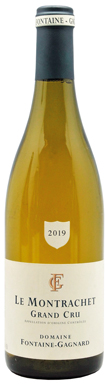

Fontaine-Gagnard's 0.8ha plot of Montrachet is on the Chassagne side, down-slope from Baron Thenard. This location gives ripe, generous grapes that are admirably handled by...
2019
Domaine Fontaine-GagnardMontrachet Grand Cru

Domaine Leflaive, Chevalier-Montrachet Grand Cru, Burgundy, France, 2019
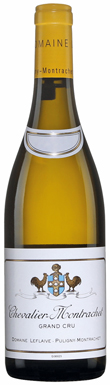
This is produced from Leflaive's three parcels of Chevalier that total more than 1.8ha in the centre of the appellation. Most of the vines run...
2019
Domaine LeflaiveChevalier-Montrachet Grand Cru
Domaine Hubert Lamy, St-Aubin, 1er Cru En Remilly, Burgundy, France, 2019
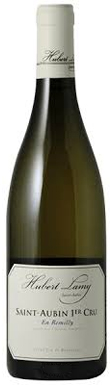
Just beginning to open up with complex aromas of quince, beeswax, woodsmoke and butter. The texture is rich and powerful but still dynamic and light....
2019
Domaine Hubert LamySt-Aubin
Domaine Henri & Gilles Buisson, Sous la Velle, St-Romain, Burgundy, France, 2020
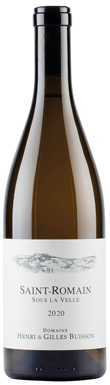
The Buissons farm nearly 2ha of 60-year-old vines at 370m in the Sous la Velle lieu-dit. The site has more clay in the soil than...
2020
Domaine Henri & Gilles BuissonSt-Romain
Domaine Buisson-Charles, Meursault, 1er Cru Les Gouttes d'Or, Burgundy, France, 2018
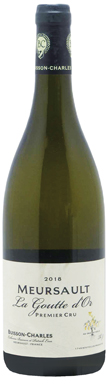
Creamy, rich, and classic, this fine premier cru is produced from one third of a hectare sandwiched between the vines of Lafon and Leroy. The...
2018
Domaine Buisson-CharlesMeursault
Domaine Coffinet-Duvernay, Chassagne-Montrachet, 1er Cru Blanchots Dessus, Burgundy, France, 2020
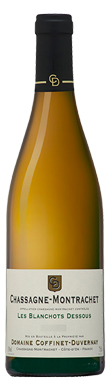
Coffinet-Duvernay has a tiny slice of this superb premier cru, which continues south from Montrachet. The ripe apple and quince aromas are underscored by cream...
2020
Domaine Coffinet-DuvernayChassagne-Montrachet
Domaine Génot-Boulanger, Meursault, 1er Cru Bouchères, Burgundy, France, 2019
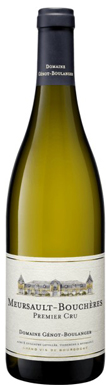
The domaine owns a 0.61ha plot on the steep slopes of Bouchères that provides one of the most decadent wines in the portfolio. The grapes...
2019
Domaine Génot-BoulangerMeursault
Domaine Jean-Noël Gagnard, Chassagne-Montrachet, 1er Cru Caillerets, Burgundy, France, 2019
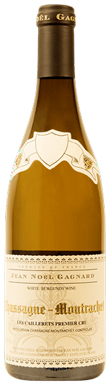
Caroline Lestime farms more than a hectare of Caillerets in the lieux-dits of En Cailleret and Les Combards, both near the top of the slope....
2019
Domaine Jean-Noël GagnardChassagne-Montrachet
Château de Beauregard, En Faux, St-Véran, Burgundy, France, 2018
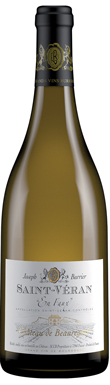
Joseph Burrier is a reference in Pouilly-Fuisse, and this wine is produced from grapes on the south-facing side of Mont de Pouilly, in the St-Véran...
2018
Château de BeauregardSt-Véran
Domaine Jean & Gilles Lafouge, Auxey-Duresses, Les Boutonniers, Burgundy, France, 2020
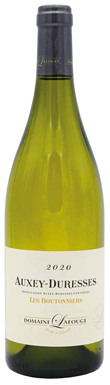
This lovely wine flies entirely under the radar: few know Domaine Lafouge since it is based in Auxey. Even in Auxey, however, Boutonniers is not...
2020
Domaine Jean & Gilles LafougeAuxey-Duresses
Domaine Robert-Denogent, Les Sardines, Mâconnais, Mâcon-Villages, Burgundy, France, 2020
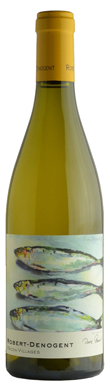
This is by far the largest holding (5ha) for this certified biodynamic grower that everyone should know. The grapes are gently pressed and fermented on...
2020
Domaine Robert-DenogentMâconnais
Domaine Clos Salomon, Givry, 1er Cru Blanc La Grand Berge, Burgundy, France, 2020
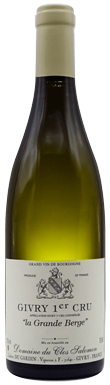
The new vintage of Chardonnay from this 0.4ha plot budded over from Pinot Noir has given us a wine with a pleasantly forward apple fruit...
2020
Domaine Clos SalomonGivry