
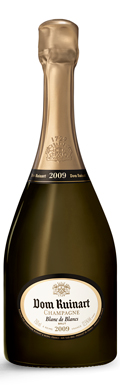
First taste: Dom Ruinart Blanc de Blancs 2009
The new vintage of Ruinart's prestige cuvée, tasted and rated by Simon Field MW.


The 2009 vintage in Champagne is often described as a warm, sunny year. ‘Solaire’ or so they say, but Frédéric Panaïotis is keen to set the record straight.
Over the last 20 years or so, there have been more and more Champagne harvests in August, yet in 2009 the harvest began on 12 September; the potential alcohol recorded at the time was reasonably high for sure (10.1 % by volume) but not that much higher than the 10-year average (9.8%) and the acidity noted in the grapes was also very close to the average, recorded as 7.5 grams per litre.
A classic and dry year for all that, and a very good one too! A ‘Golden Year’, according to Ruinart, and who are we are to argue? Fréd has been so impressed with the vintage that he has decided to declare it in preference to 2008, a much-admired year in Champagne….
Scroll down for Simon Field MW’s Dom Ruinart 2009 tasting note and score
This is the 26th release of Dom Ruinart, the all-Chardonnay celebration of the good works of Dom Ruinart, a visionary monk who had the misfortune of being born half a century later than that other visionary monk, Dom Pérignon.
Both eponymous houses now make up part of the LVMH empire, with Dom Pérignon clearly the market leader, in terms of sales at least, when it comes to deluxe Champagne. Don’t forget Dom Ruinart, however!
The House of Ruinart was established in 1729 and, ever since, has cultivated an enviable reputation for elegance and finesse, the reliance on Chardonnay for its top wines a distinctive calling-card.
Chalk-driven personality
The Dom 2009 is made up of fruit from grand cru Chardonnay only, mostly from the famous southerly villages of the Côte des Blancs (Avize, le Mesnil-sur-Oger and Chouilly principally, but also Cramant) but also from the northerly village in Montagne de Reims, Sillery, which favours flinty, mineral-driven Chardonnay, and which serves to underwrite a style which is both generous and fruity, but at the same time cerebral and deeply complex.
Further complexity has resulted from longer time than usual on cork after the March 2018 disgorgement. Fréderic suggests that the Covid epidemic has slightly delayed the commercial release of the wine….but no one is complaining!
A most impressive wine then, treated to a full malolactic fermentation to soften the edges and then matured for nine years in the famous chalk cellars. A UNESCO World Heritage Site in Reims, the Ruinart cellars are worth visiting above all others.
When you are there, you really understand the historical backdrop and the stylistic nuances, informed as they are by the eight years (more in some vintages) slowly maturing underground.
On re-emergence into the light, Frédéric only adds a modest 4 grams of sugar, happy, as are we all, to allow the wine to express its natural complexity and wonderfully eloquent, chalk-driven personality.
I finish with a somewhat iconoclastic comment; the wine was very good indeed when opened, yet, a day later, having been refrigerated under a firm stopper, it seemed even better. Better than very good…. that must translate as excellent in anyone’s book!
The wine
In the UK, Dom Ruinart Blanc de Blancs 2009 is available to order from fine wine merchants including Clos 19, Jeroboams and Millésima.
See Simon Field MW’s Dom Ruinart 2009 tasting note and score
You may also like:
How to store Champagne at home
Louis Roederer reveals new still wines from Champagne
Best Champagnes of 2020, tasted by our experts
Ruinart, Dom Ruinart Blanc de Blancs, Champagne, France, 2009

It was monk Dom Thierry Ruinart who, three centuries ago, inspired his nephew Nicolas to create what is widely held to be the oldest Champagne...
2009
Ruinart

