
First taste: New vintages of Cirsion and Roda
Exclusive reviews of the latest releases and older Riojas from Bodegas Roda.


Bodegas Roda has been one of the pioneers of new-wave Rioja since the company was established in 1987, its hallmarks are a laser focus on expressing the character of vineyard and vintage, as well as a restrained approach to winemaking.
Founded by wine merchants Mario Rotllant and Carmen Daurella – each contributing the first two letters of their surnames to create the Roda name – the winery made its first vintage in 1992, and launched its inaugural wines four years later.
Scroll down to see tasting notes and scores for seven new vintages of Cirsion and Roda
A key moment in Roda’s development came when Agustín Santolaya and Isidro Palacios were brought on board as consultants. ‘The first thing that they said to the family was that the 40ha of vineyards that they had put together were no good – they had to get rid of them,’ says Victor Charcán, Roda’s global sales director.
Instead, the company started acquiring small plots of vineyards with a precise brief linked to the traditions of Rioja: sandstone soils, bush vines, dry farming. ‘What we want to capture in a bottle is landscape, typicity, sense of origin, terroir if you like, and vintage,’ says Charcán. ‘That’s our notion, that’s how we interpret Rioja.’
History and evolution
Back in the 1990s, they were nicknamed ‘the modern guys’ thanks to innovations (for Rioja at the time) such as sorting tables, a predilection for French over American oak and the eschewing of long macerations. ‘We don’t make any gran reserva,’ says Charcán. ‘Overripe, over-extracted, over-oaked – we try to avoid all those things. I guess everyone says that these days, but not everyone said that back in the 1990s.’
With Santolaya now on board as managing director and winemaker, and working from a recently modernised winery in Haro’s fabled Barrio de la Estación (Station District), Roda works with 120ha of vineyards, 75ha of them owned. The company reinvests up to 7% of annual turnover in research and development, and has identified more than 400 different clones of Tempranillo in Rioja alone.
The initial results of these labours were two wines – Roda I and Roda II – with different flavour profiles. The former focused on Tempranillo’s black fruit expression, the latter (after 2001 simply known as ‘Roda’) aiming to capture the variety’s red fruit character. Both wines are classified as reservas. Last year, the venture’s first white wine, Roda I Blanco 2019, was released.
Tempranillo is the star of the Roda reds, but Garnacha and Graciano both play supporting roles. Graciano in particular has become prized for its relatively high acidity, contributing freshness to the blend – a boon particularly in hot, Mediterranean vintages.
Vintage review
However, the latest release – Roda I 2018 – comes from a wetter, ‘Atlantic’ year. ‘It was by far the rainiest year since 1992,’ recalls Charcán. ‘In Rioja, we usually have about 400-600mm of rainfall a year, but in 2018 it was 668mm.’
Some vineyards suffered outbreaks of downy mildew in the spring, but a drying northwest wind provided a much-needed healing effect. The blend for Roda I 2018 is 92% Tempranillo, plus 6% Graciano and 2% Garnacha, with the wine spending 16 months in a 50/50 mix of new and second-use French oak barriques.
‘That darker fruit character is harder to get in an Atlantic vintage – it’s easier to make Roda I in a Mediterranean year,’ admits Charcán. ‘But if you’re selective with the fruit, sometimes Atlantic vintages can give you wonderful ageing potential, and I think that’s the case with the 2018.’

Cirsion: born in the vineyard
Bodegas Roda’s third – and by far its most expensive – release came in 1998 with the first vintage of Cirsion. It’s named after the teasel plant featured on the label. ‘It’s a cover crop and not very flashy, and we love the notion of discreet elegance in the wine,’ says Charcán. This is a wine that was truly born in the vineyard.
In 1996, Santolaya and Palacios were tasting grapes in a very old vineyard in the Obarenes mountains when they noticed that certain vines ripened differently to others, maturing earlier and with ‘very silky’ tannins right from the beginning. They marked the vines and repeated the tasting the following year, creating an experimental batch of a couple of barriques.
Cirsion’s character requires a different maturation protocol, with the wine spending only eight months in entirely new French oak barriques. ‘Barrique ageing is supposed to polymerise tannins,’ explains Charcán. ‘It makes grape tannins a little bit silkier. But for us with Cirsion, it was like having barriques in the vineyard.’
This shorter ageing period means that Cirsion is always released well ahead of Roda I, with the latest release coming from the 2020 vintage. There are similarities here to 2018 – another rainy, Atlantic year, with 635mm of rainfall in Haro. There was downy mildew in the vineyards in June, but after a cool start to July, the temperature rose and ripening conditions were excellent.
Again, Tempranillo is dominant in the blend but, since the very dry year of 2012, Graciano has also been used (typically 10%-plus of the blend; 12% in 2020). The variety’s acidity and deep colour are prized by Roda for bringing extra elements of freshness, precision and a little spice to the wine.
Cirsion and Roda tasting notes: New releases and older vintages
Related articles
- Rioja 2000 – 2021: Drink now or keep?
- Bordeaux 1980s: Vintage guides plus the wines to seek out
- Built to last: The wonders of Rioja’s old wines with tasting notes from 1890
Roda, Roda I Riserva, Rioja, Northern Spain, Spain, 2018
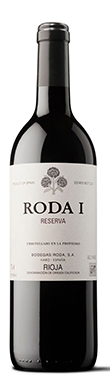

Favouring vineyard and vintage expression over extraction and oak, Bodegas Roda’s Roda I Reserva traditionally aims for a black fruit character of Tempranillo. In a...
2018
RodaRioja

Roda, Cirsion, Rioja, Northern Spain, Spain, 2020
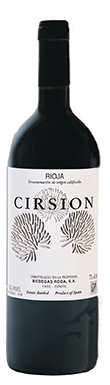
Cirsion is the result of a painstaking selection process of bunches of grapes from old vines that exhibit particular characteristics – chiefly, silky, integrated tannins...
2020
RodaRioja
Roda, Cirsion, Rioja, Northern Spain, Spain, 2019
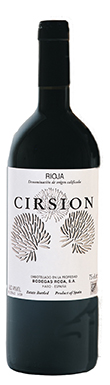
Unusually, Bodegas Roda gives its top wine, Cirsion, less time in barrique – typically eight months, albeit in brand-new French oak. From a year hailed...
2019
RodaRioja
Roda, Cirsion, Rioja, Northern Spain, Spain, 2018
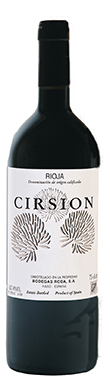
The addition of Graciano into the Cirsion blend from 2012 has brought extra layers of freshness and precision to an already impressive new-wave Rioja. In...
2018
RodaRioja
Roda, Cirsion, Rioja, Northern Spain, Spain, 2017
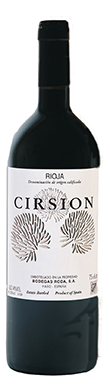
In Rioja – as in other regions – 2017 is known as ‘the year of the frost’, with some vineyards losing up to 80% of...
2017
RodaRioja
Roda, Cirsion, Rioja, Northern Spain, Spain, 2016
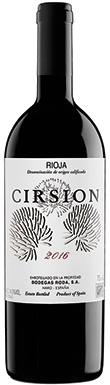
Modern and glossy, a statement wine, from a bodega that has spent years researching Tempranillo. Unlike many of its peers, it has only eight months...
2016
RodaRioja
Roda, Cirsion, Rioja, Northern Spain, Spain, 2010
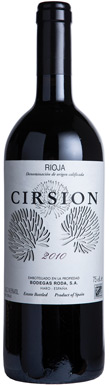
Full-bodied, powerful and spicy, with dark fruit partnering notes of cedar and black pepper. Stylish, succulent and harmonious.
2010
RodaRioja
