
First taste: Perrier-Joüet, Belle Epoque 2013
The new vintage of Perrier-Joüet's prestige cuvée, Belle Epoque 2013, tasted and rated by Yohan Castaing.


An important chapter in the history of the Perrier-Jouët Champagne house ended in November 2020, and a new exciting chapter began.
After 37 years of service for the house so well-known for its stylish art deco label, cellar master Hervé Deschamps retired, thus opening the door for Séverine Frerson to become only the eighth cellar master since the creation of the house in 1811.
Frerson had joined the team at Perrier-Jouët in October 2018, so was able to work alongside Deschamps for two years before her promotion.
Scroll down for Yohan Castaing’s Belle Epoque 2013 tasting note and score
The 2013 vintage Belle-Époque is thus the first vintage to be presented by the new cellar master on her own.
It is a cuvée from a vintage that Frerson describes as ‘atypical, because it is the last vintage of recent years for which the harvest took place at the end of September or ‘beginning of October.
Freezing winter, late harvest
The winter was cold, with freezing temperatures in March. On 16 March, the mercury dropped to -16.5°C in Mailly-Champagne.
However, ‘the spring was wet with mild temperatures, which delayed flowering until early July. When it finally came, the flowering was rapid during a lull in the rain.’ Then, as noted by Frerson, ‘the summer was dry and sunny’.
In contrast to 2020 – when the region experienced, on 17 August, the earliest start for the harvest in the history of Champagne production – 2013 was the latest harvest in recent times.
Picking for the 2013 Belle Epoque began on 30 September for the Chardonnays and ended on 1 October with the Pinot Noirs and Pinot Meuniers.
Joint effort
From the start, after her arrival in 2018, Séverine Frerson participated in the blending process with Hervé Deschamps.

‘This is a vintage Champagne crafted by four hands. 2013 is the transition vintage in which Hervé did the blending while we worked together on the disgorging liqueur.’
The 2013 is composed of 50% Chardonnay, 45% Pinot Noir, ‘especially from the Montagne de Reims sector including the villages of Mailly-Champagne, Verzenay, and Ambonnay’ and 5% Pinot Meunier.
Frerson affirms that this vintage Champagne has ‘benefited from lovely, fruit-driven Chardonnay that provided structure and textural richness,’ while the Pinot Noir was ‘less full-bodied and big-shouldered than it can sometimes be,’ but imparted a certain dimension that she likens to verticality.
The dosage is 8g/litre with a liqueur made from reserve wines kept in stainless steel vats. Ageing took place entirely in stainless steel
The wine
In the UK, Perrier Joüet Belle Epoque 2013 is available to order from fine wine merchants including Harvey Nichols, Fortnum & Mason, The Master of Malt and The Champagne Company. The recommended retail price is £160.
See Yohan Castaing’s Belle Epoque 2013 tasting note and score
You may also like:
How Champagne’s 2020 vintage is shaping up
Louis Roederer reveals new still wines from Champagne
Expert guide to Pinot Meunier Champagnes
Perrier-Jouët, Belle Epoque, Champagne, France, 2013
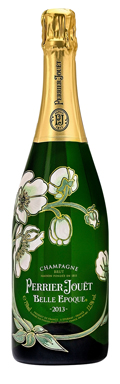

Fresh nose of green apple tart and peel, lime juice and hints of dry herbs and brioche. Pleasing in the mouth.
2013
Perrier-Jouët

