
Fontodi’s Flaccianello della Pieve: Ten vintages compared


Michaela Morris sees how this 100% Sangiovese wine has evolved in style over 10 vintages...
Fontodi Factfile:
Hectares under vine 90ha
Total annual production 350,000 bottles
Annual production of Flaccianello 60,000 bottles
First vintage 1981
In the heart of Chianti Classico, near the town of Panzano, Fontodi’s south-facing vineyards are located in the renowned Conca d’Oro.
Giovanni Manetti took over his family’s property in 1979 and couldn’t have even been 20 when he produced the first vintage of Flaccianello, created with the help of oenologist Franco Bernabei, who still consults for Fontodi today. ‘Flaccianello and I grew up together,’ declares Manetti.
Scroll down to see Michaela’s tasting notes & scores for 10 vintages of Flaccianello
Flaccianello was conceived in 1981. At the time, Chianti regulations required a proportion of white grapes to be used, and prohibited 100% Sangiovese wines.‘To make the wine we wanted, we had to label it as table wine,’ says Manetti.
Today, Flaccianello is identified as IGT Colli della Toscana Centrale. Under Chianti Classico’s present current regulations, Flaccianello could technically be labelled as a Gran Selezione.
‘Perhaps when I can put Panzano on the label,’ maintains Manetti.
Source
Originally a single-vineyard bottling, in 2001 Flaccianello became a selection of the best grapes from the best parcels (with the exception of the Vigna del Sorbo vineyard).
It typically hails from Fontodi’s highest plots of Pecille, Il Poggio and La Cappellina, which reach an altitude of 500m, where ‘the intensity of light is stronger and the soil is leaner and stonier,’ according to Manetti.
Maturation
While Flaccianello has always been aged in French barriques, Manetti slowly increased the time in wood from 12 to 24 months and the percentage of new oak to 100%.
However, over the last five years he has started taking the wine out of the barriques earlier and finishing maturation in 25hl casks. The percentage of new wood has also decreased to 70-80%.
Flagbearers
Standing among an elite handful of wines, Flaccianello’s closest peers are Montevertine’s Le Pergole Torte, Isole e Olena’s Cepparello, Fèlsina’s Fontalloro and San Giusto a Rentennano’s Percarlo.
All originating from the same era, these are 100% Sangiovese wines from the hills of Chianti Classico that persist with an IGT designation.
Yet each in their own way, they are flagbearers of the zone’s diverse villages. Flaccianello holds up the Panzano banner. Polished without being too polite, it’s a complete wine that deftly allies elegance and power.
Manetti’s recent appointment as president of the Chianti Classico Consorz io seems to suggest that the denomination is getting closer to some sort of sub-zonation.
‘Identifying the village on the label would give greater value to the territory and wines of Chianti Classico,’ Manetti says. He assures me that a task force is currently working on a viability study, but the results remain to be seen.
The tasting
While he was busy with the 2018 harvest and his duties as president of the consorzio, a vertical of Flaccianello from 2001 to 2015 was arranged by Fontodi’s importer in Vancouver, Canada, which I hosted for a group of local sommeliers. The wines were all shipped directly from the estate.
Tasting the wines from oldest to youngest, the subtle tweaks in winemaking were perceived by the slightly lighter hand in the younger wines.
Even more palpable was the excellent study in vintage; Flaccianello is beautifully shaped to demonstrate their differences.
Depending on the vintage, this wine is best between 10-25 years’ old, while the outstanding 2006 could go three decades. I also loved the sheer grace of 2013.
Ten vintages of Flaccianello compared:
You might also like:
Super Tuscan evolution: Comparing Tignanello and Solaia
Le Pergole Torte: One of Italy’s most consistent wines
Ten of the best Italian vineyards & terroirs
Fontodi, Flaccianello della Pieve, Colli della Toscana Centrale, Tuscany, Italy, 2006
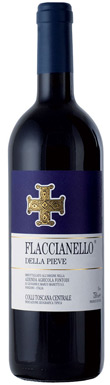

2006 was a hot year but one with significant thermal amplitude. It fluctuated between 30°C in the day and 10°C at night from late August...
2006
FontodiColli della Toscana Centrale

Fontodi, Flaccianello della Pieve, Colli della Toscana Centrale, Tuscany, Italy, 2012
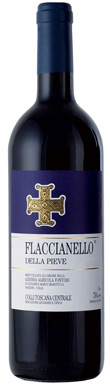
Manetti calls 2012 'the vintage of two faces': summer was very hot until mid-August, when some rain brought cooler temperatures which slowed down ripening. In...
2012
FontodiColli della Toscana Centrale
Fontodi, Flaccianello della Pieve, Colli della Toscana Centrale, Tuscany, Italy, 2013
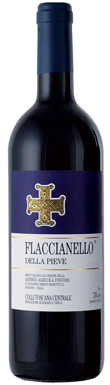
Powerful meaty scents joined by roasted coffee and mint. Lovey, savoury, grippy tannins. This is generously extracted and not shy on wood, but all comes...
2013
FontodiColli della Toscana Centrale
Fontodi, Flaccianello della Pieve, Colli della Toscana Centrale, Tuscany, Italy, 2015
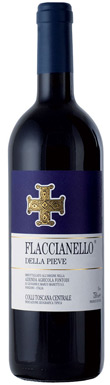
2015 was a relief after 2014. Manetti describes it as an almost perfect vintage: the summer was warmer than usual with lots of sunshine, but...
2015
FontodiColli della Toscana Centrale
Fontodi, Flaccianello della Pieve, Colli della Toscana Centrale, Tuscany, Italy, 2010
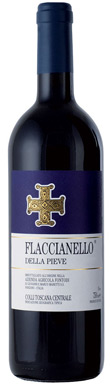
After a chilly, wet start, the weather finally became dry and hot in July. Following mid-August showers, the temperatures cooled down, particularly at night. These...
2010
FontodiColli della Toscana Centrale
Fontodi, Flaccianello della Pieve, Colli della Toscana Centrale, Tuscany, Italy, 2014
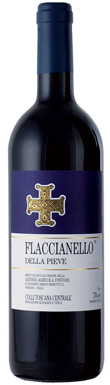
2014 was a notoriously challenging vintage characterised by an atypically cool, rainy summer. Fortunately September dried up, leading to a harvest well into October. Manetti...
2014
FontodiColli della Toscana Centrale
Fontodi, Flaccianello della Pieve, Colli della Toscana Centrale, Tuscany, Italy, 2001
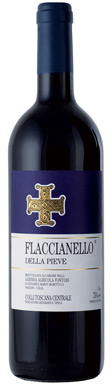
In 2001, Flaccianello morphed from single-vineyard to parcel selection. At the time, Fontodi was still in organic conversion and Flaccianello was aged for 24 months...
2001
FontodiColli della Toscana Centrale
Fontodi, Flaccianello della Pieve, Colli della Toscana Centrale, Tuscany, Italy, 2009
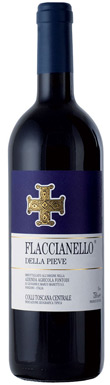
As 2009 was a relatively abundant year, Manetti had to do a fair amount of green harvesting to ensure concentration. The summer was hot and...
2009
FontodiColli della Toscana Centrale
Fontodi, Flaccianello della Pieve, Colli della Toscana Centrale, Tuscany, Italy, 2011
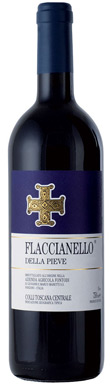
A precocious year from bud break all the way through to harvest in mid-September. Towards the end of August, a heat spike caused some shrivelling...
2011
FontodiColli della Toscana Centrale
Fontodi, Flaccianello della Pieve, Colli della Toscana Centrale, Tuscany, Italy, 2007
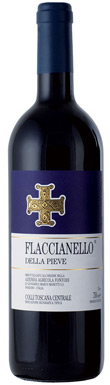
2007 was hotter than 2006, with higher maximum temperatures. Nevertheless, there was sufficient rainfall throughout to ensure that the vines weren't stressed. Harvest started around...
2007
FontodiColli della Toscana Centrale
