Get our daily fine wine reviews, latest wine ratings, news and travel guides delivered straight to your inbox.
You are now subscribed
Your newsletter sign-up was successful
An account already exists for this email address, please log in.
French influence in Argentina plus 12 wines to seek out
From the 1850s until today, a host of innovative, risk-taking French winemakers and entrepreneurs have crossed the Atlantic to make their mark on Argentinian wine.
Antoine de Tounens was a grand cru nutcase, a real-life Don Quixote who travelled to South America in search of adventure after reading an epic poem by the 16th-century Spanish writer Alonso de Ercilla. The French lawyer landed in the Chilean port of Coquimbo in 1858; two years later, citing the support of indigenous Mapuche tribes, he declared himself King Orélie-Antoine I of Araucanía and Patagonia, publishing a constitution and claiming dominion over a vast territory that stretched from the Pacific to the Atlantic.
Scroll down to see Tim Atkin MW’s examples of French influence in Argentina
De Tounens’ ‘reign’ lasted for 18 years. During that time, he was expelled, in 1862, after being declared insane by a Chilean court, but tried to return – mostly unsuccessfully – to his ‘kingdom’ on three further occasions. He died a pauper’s death in France in 1878 with no descendants. But to this day, there are still pretenders to his imaginary throne. They are known in French as ‘monarques et souverains de la fantaisie’ (monarchs and sovereigns of fantasy).
King Orélie-Antoine I was not the first Frenchman or woman to visit South America, of course. France had established a colony on the Falkland Islands in 1764, for instance. But, long after his demise, his story resonates down the centuries. It takes a degree of eccentricity and courage to move to the other side of the world and create a new life. And, as we shall learn, some of the French winemakers and entrepreneurs who have made their mark in Argentina over the past 150 years were considered crazy and ill-advised too.
The arrival of Malbec
The fact is not always recognised, partly because they are vastly outnumbered by immigrants of Spanish and Italian descent, but the French have played a crucial role in the history and development of the Argentinian wine industry. Let’s start with arguably the most important Frenchman to visit the country, Michel Aimé Pouget, who arrived in the 1850s. Among the varieties the ampelographer brought with him from Chile was Malbec, much more widely planted in pre-phylloxera Bordeaux than it is today. Without Pouget, what has become Argentina’s signature grape might never have got there.
Pouget also established the Quinta Normal de Mendoza, a viticultural school and research centre modelled on the one he’d run on the other side of the Andes in Santiago. It was there that he planted those first cuttings of Malbec. The anniversary of the date of the Quinta’s foundation – 17 April 1853 – is still celebrated on World Malbec Day. ‘Pouget,’ according to Roberto de la Mota of Mendel, ‘not only imported Malbec and set up an important academic institution, but was also the person who initiated good-quality viticulture in Argentina. Before him, it didn’t exist.’ In wine terms, Pouget is the start of our tale.
The next influential Frenchman was the engineer Jules Baffolet, who created the so-called Colonia Francesa in San Rafael in 1870. Long before the boom that followed the opening of the railway line between nearby Mendoza and the capital Buenos Aires in 1886, fellow Gallic pioneers – Jean Brun, Rodolphe Iselin and Raphaël Violet – were buying land, planting vineyards and building wineries alongside Baffolet.
Unlike Pouget, they invested their own money in Argentina. When Louis Ravaz, professor of viticulture at Montpellier University, visited San Rafael after World War I, he described it as ‘almost a French town’ inhabited by many of his ex-pupils. ‘The French have created and colonised it,’ he added. They were the first of many to feel the pull of Argentina.
Decanter newsletter
Get our daily fine wine reviews, latest wine ratings, news and travel guides delivered straight to your inbox.
Outposts in Mendoza
The next important date was 1956, when Robert Jean de Vogüé and Frédéric Chandon of Moët & Chandon decided to export Champagne know-how to Argentina, choosing it as the company’s first base outside France, and asking Baron Bertrand de Ladoucette to find a suitable spot. He eventually picked Luján de Cuyo because he couldn’t persuade any winemakers to relocate to his first choice, Patagonia. Two experimental harvests in 1957 and 1958 were processed in Perdriel at what is now Terrazas de los Andes’ bodega (which, like Chandon, is owned by French luxury goods group LVMH). Moët & Chandon then went on to build its own winery nearby in the town of Agrelo, officially establishing Chandon Argentina in 1959.
In the same decade, André Lurton established another French outpost, Maison Calvet, in Mendoza. Two of his seven children, Jacques and François, as well as his nephew Pierre Lurton, will also feature in our story.
Alejandro Sejanovich.
(Image credit: Tim Atkin MW)
In addition to Pouget and Ravaz, various other French academics made their way to Argentina, among them Charles Delaballe, Pierre Denis, Aaron Pavlovsky and Jean Ribéreau-Gayon. But none was as influential as the father of modern oenology, Emile Peynaud, in the 1960s. Peynaud got to know Don Raúl de la Mota, who was to become one of the great figures of Argentinian wine at Cavas de Weinert, and they spent many hours discussing oenology together. Peynaud influenced de la Mota, and de la Mota changed Argentina.
In time, Don Rául’s son Roberto, now the winemaker at Mendel as well as a consultant for various other projects, would go on to study at Montpellier University. He, in turn, was followed by Alejandro Sejanovich, one of the key names in the modern Argentinian wine revolution, running wineries in Patagonia, Salta and the Uco Valley.
Brave investment
The vinous relationship between the two countries cooled during the 1980s, partly because Argentinian wine was not enjoying its most glorious epoch. But it was rekindled by the arrival of Michel Rolland in 1988. ‘Mr Merlot’ was initially invited to visit Salta by Arnaldo Etchart and promptly fell in love with what has become his second home (he still makes a wine in the north called Yacochuya). Rolland consulted to Etchart as well as Norton, Trapiche and Salentein before deciding to create his own project. In 1998, he and his friend Jean-Michel Arcaute, who was the owner and winemaker at Alta Vista, found 850ha of bare land close to the town of Vista Flores and saw its potential at a time when the Uco Valley was almost unknown outside Argentina. The only problem was the price.
Investing in Argentina, with its perennial high inflation, political corruption and yo-yoing currency, is always something of a risk, but this was an especially brave, even foolhardy decision. The peso was pegged one-to-one to the US dollar at the time and the exchange rate was terrible.
‘It was a bit crazy, to be honest,’ remembers Rolland’s wife and long-time collaborator Dany. ‘But the parcel was the same size as the whole of Pomerol, so we thought that was a good sign. Maybe we should have put a church in the middle.’
Back in Bordeaux, the Rollands made some calls and persuaded other people ‘who would accept the challenge’ to join them. The ones who said yes were Bertrand and Jean-Guy Cuvelier of Château Léoville-Poyferré; Catherine Péré-Vergé of Château Le Gay; Laurent Dassault of Château Dassault; Benjamin de Rothschild, one of the shareholders of Château Lafite Rothschild; and Hélène Garcin and Patrice Lévêque of Château Clos L’Eglise. Alongside the Rolland and d’Aulan families, who had invested in Alta Vista, they were an Argentinian magnificent seven, hence the name of their joint venture: Clos de los Siete.
All of a sudden, money was less of a problem. Things proceeded quickly and on a scale worthy of Cecil B DeMille. The Bordelais cleared and planted 110ha in the month of November 1999, employing an army of 250 people. Today, Clos de los Siete makes a very good, widely exported joint brand under the same name and also houses the individual projects of Bodega Rolland, Cuvelier Los Andes, DiamAndes and Monteviejo.
The investors have changed a bit over the subsequent decades – the Dassaults, Rothschilds and Garcins left the group, while Alfred and Michele Bonnie of Château Malartic-Lagravière in Pessac-Léognan joined in 2005 – but it’s hard to overstate how significant the creation of Clos de los Siete was for Argentina. ‘It opened a lot of doors,’ says Dany Rolland. ‘It showed people that things were possible here.’
The Rolland influence
Michel Rolland himself is an equally important, if controversial figure in Argentina. With his global fame and contacts book, he did an enormous amount to promote the country in the 1990s. In Argentina and elsewhere, his winemaking style, known as una semana más (‘another week’), was to pick later, discourage what he saw as ‘green’ flavours and produce fleshy, often oaky, full-bodied wines that found favour with US critic Robert Parker among others.
By and large, he still favours that style, as do many of the bodegas for which he consults. Some regard it as formulaic. Indeed, many of the new-wave Argentinian producers make wines that are much fresher and medium-bodied, almost anti-Rolland in a sense. But there’s no denying the man’s influence. ‘Michel showed us what quality was,’ says Daniel Pi of Bemberg Estate. ‘He taught us a lot about wine and he talked about Argentina all around the world.’ Would French multinational Pernod Ricard have bought Bodegas Etchart in Salta in 1996 without the involvement of Michel Rolland? It’s an intriguing question.
Several more key French players arrived in the early 1990s. The first of these was Hervé Birnie-Scott at Terrazas de los Andes, which harvested its first grapes in 1992 and released its initial wines four years later. Terrazas and its sister winery Bodegas Chandon are known for the quality of their wines, of course, but they deserve special mention for being the first to plant Chardonnay in Gualtallary, at the northern end of the Uco Valley, in 1994, using what was then the relatively new technique of drip irrigation.
Until then, the overwhelming majority of Mendoza’s vineyards were on the valley floor rather than on slopes, and used flood irrigation.
‘We sent our viticulturist Mario Sonzogni to a kibbutz in Israel to learn about it,’ remembers Birnie-Scott. ‘We planted just 10ha at Caicayén to see if they froze and, when we saw that they didn’t, we added the rest.’
A calculated risk
Another Hervé – Hervé Joyaux Fabre of Bodegas Fabre and now Alta-Yarí – was the next Frenchman to make a splash in Argentina. After looking in Chile, and deciding he didn’t want to invest there, he went to Mendoza in 1992 and fell in love with Malbec, which was in the doldrums after the vine-pull schemes of the 1970s and 1980s. ‘No one was interested in Malbec. They called me the crazy Frenchman.’ Even more so, as it happens, when he paid four times the going rate for a farm planted with low-yielding, 85-year-old vines in Vistalba.
Hervé Joyaux Fabre.
(Image credit: Tim Atkin MW)
This was already considered a prime residential area close to the city of Mendoza, so everyone else was buying on the other, cheaper side of the Mendoza river. What’s more, they were planting anything but Malbec: Cabernet Sauvignon, Merlot, Syrah and Chardonnay. In 1997, Joyaux Fabre took another calculated risk by buying vineyards and a winery in the Patagonian province of Río Negro. Once again, he was in the vanguard of change.
Another Bordelais, Jacques Lurton, arrived in the same year as Joyaux Fabre, albeit as a flying winemaker for JFL, a contract production company, rather than as a potential purchaser of vineyards. Lurton was looking for a place to produce one of a series of 11 commercial ‘International Winemaker’ labels for Tesco and, through his friendship with American consultant Paul Hobbs, who had just started working for Nicolás Catena, ended up at the latter’s Bodegas Esmeralda in downtown Mendoza. There’s an amusing story in Ian Mount’s book The Vineyard at the End of the World, about Lurton’s time there. He didn’t pay for the space in the winery, but soon found that he was an unofficial consultant to his Argentinian colleagues, keen to learn from or spy on someone with so much global experience. According to Mount: ‘Catena’s winemakers learned how to cold-ferment white wine to create tropical fruit flavours, and how to economically create an oaky flavour by using wood chips instead of oak barrels.’ There are no free lunches.
In 1998, the relationship came to an amicable end, by which time Jacques and his brother François Lurton had created Bodega J&F Lurton by acquiring 200ha of bare land in what would subsequently become the Uco Valley sub-region of Los Chacayes, planting their first vines four years before Clos de los Siete. Owned and run by François since 2006 – Jacques is back in Bordeaux as president of Vignobles André Lurton – it has been a pioneer of Cabernet Sauvignon, French Cot and a white Bordeaux style called Gran Lurton Corte Friulano.
Winning partnerships
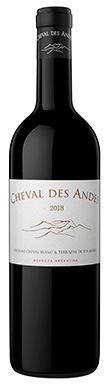
Joint ventures have been another, arguably less risky way for prestigious Bordeaux châteaux to take a stake in Argentina. Two projects that have conferred considerable prestige on the country are Bodegas Caro and Cheval des Andes. The first is a partnership between Domaines Barons de Rothschild (Lafite) and Nicolás Catena, the second between Château Cheval Blanc and Terrazas de los Andes. They made their first wines in 2000 and 1999, respectively, and their reds are now among the most sought-after and highly praised in South America.
Philippe Rolet at Caro and Gérald Gabillet at Cheval des Andes are both brilliant winemakers. Incidentally, it was the legendary Pierre Lurton, cousin of Jacques and François, who created Cheval des Andes with Roberto de la Mota, then at Terrazas. That French connection again.
Philippe Rolet, Bodegas Caro.
(Image credit: Tim Atkin MW)
Other talented French winemakers working in Argentina include Didier Debono (at the French-owned Alta Vista), Thibaut Delmotte (at Colomé in the remote Salta village of Molinos as well as at Altura Máxima, the second-highest vineyard in the world), Thibault Lepoutre (Piedra Negra alongside François Lurton, and his own project Mundo Revès) and Jean-Claude Berrouet, formerly of Petrus in Pomerol, now consulting for Fincas Patagónicas, where he’s responsible, among other things, for a remarkable Bordeaux- style blend called Las Notas de Jean-Claude.
Is there a French style that’s common to all of these projects? I’m not convinced that there is, although the best of them share a focus on that most French of things: terroir. But the personalities involved are so different, as are their vineyard sources, that they are bound to be unique, and enjoyably so. Mendoza, let alone Salta or Río Negro, have little or nothing in common with Bordeaux, the region that has had the biggest influence on Argentina. Its wines are South American, not European.
One thing that does unite them all perhaps is a desire to take risks, to innovate far from home, free of the constraints of history, tradition and rigid AP laws. It is, if you like, something of the spirit that drove Antoine de Tounens to cross the Atlantic and live among the Mapuche. Talking of whom, Hervé Joyaux Fabre tells me that he’s registered the name of the Rey de Araucanía y Patagonia as a wine brand. Will he use it? ‘I haven’t dared,’ he says. ‘But I might one day.’
Roberto de la Mota of Mendel, formerly consultant to Cheval des Andes.
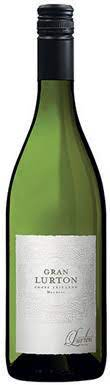
Bodega Piedra Negra, Gran Lurton Corte Friulano, Los Chacayes, Uco Valley, Mendoza, Argentina 2020
My wines
Year in, year out, Corte Friulano is one of Argentina's best whites, with proven ageing potential to boot. Made from Friulano (Sauvignon Vert) and 10%...
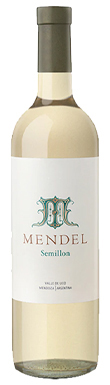
Mendel, Semillon, Paraje Altamira, Uco Valley, Mendoza, Argentina 2020
My wines
This brilliant, ageworthy white was almost single-handedly responsible for re-establishing the Semillón category in Argentina. Made with fruit from two parcels, planted in 1957, it's...
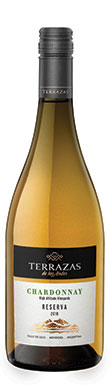
Terrazas de los Andes, Chardonnay Reserva, Uco Valley, Mendoza, Argentina 2020
My wines
Showing a little bit of the heat of the 2020 growing season, despite containing fruit from very high-altitude El Espinillo, this is smoky, leesy and...
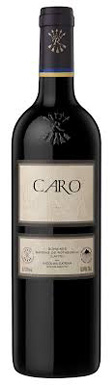
Bodegas Caro, Caro, Altamira, Uco Valley, Mendoza, Argentina 2018
My wines
Subtle, graceful and perfumed, this carries its structure and concentration lightly, with graphite, cassis and blueberry fruit, fresh acidity and harmonious, caressing tannins. Superb stuff....
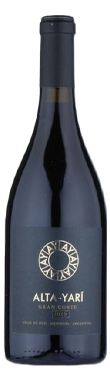
Bodegas Fabre, Alta-Yarí Gran Corte, Gualtallary, Tupungato, Uco Valley, Mendoza, Argentina 2019
My wines
Sourced from Hervé Joyaux Fabre's high-altitude vineyards in Gualtallary, the Alta-Yari Gran Corte is a leafy, scented, savoury assemblage of Cabernet Franc with 35% Malbec...
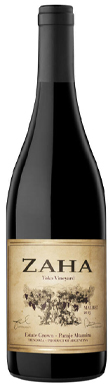
Partnering 70% Malbec and 30% Cabernet Sauvignon from Las Compuertas and Paraje Altamira, this has less tannin, density and acidity than the 2017 release, but...
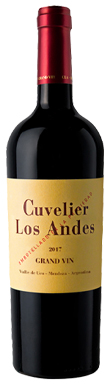
Cuvelier Los Andes, Grand Vin, Uco Valley, Mendoza, Argentina 2017
My wines
Dense, serious and structured, this has stylishly integrated 50% new wood, fine tannins, racy, herbal, red berry fruit, notes of dried herbs and impressive palate...
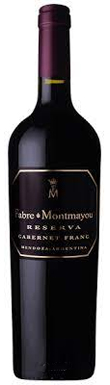
Bodegas Fabre, Fabre Montmayou Reserva Cabernet Franc, Agrelo, Luján de Cuyo, Mendoza, Argentina 2019
My wines
Leafy, floral and intense, with good texture and weight, graphite and basil undertones alongside racy black-fruit freshness complemented by oak. This superb Cabernet Franc comes...
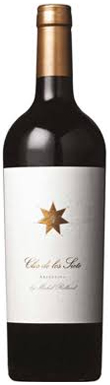
Clos de los Siete, Vista Flores, Uco Valley, Mendoza, Argentina 2018
My wines
Polished, smooth and perfumed, with plum, blackberry and orange zest flavours next to stylish mocha oak, fine tannins and impressive acidity for a wine from...
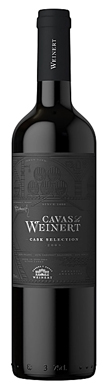
Weinert, Cavas de Weinert Cask Selection, Luján de Cuyo, Mendoza, Argentina 2011
My wines
Combining Malbec with 40% Cabernet Sauvignon and 20% Merlot, this is a wild, earthy, savoury red with spicy tannins, sweet Christmas cake, umami flavours and...
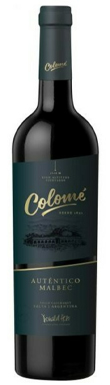
Bodega Colomé, Auténtico Malbec, Calchaquí Valley, Salta, Argentina 2020
My wines
Dense, sappy and appealingly wild with impressive concentration, dark fruit intensity and top notes of mountain herbs. Called Auténtico because it sees no oak at...
Tim Atkin is an award-winning wine journalist, author, broadcaster, competition judge and photographer. He joined Decanter as a contributing editor in 2018, specialising in Burgundy.
Aside from Decanter, he writes for an array of publications, including Harpers, The Drinks Business and Imbibe, plus his own website, TimAtkin.com.
Alongside Oz Clarke and Olly Smith, he is one of the Three Wine Men, who organise wine tasting events across the UK.
He has won over 30 awards for his work in journalism and photography. Notably, in 2018 he won his sixth Roederer Award as Online Communicator of the Year.