
Friuli’s skin-contact whites plus six top bottles to seek out
The colour of Friuli’s white wines is changing, as producers in the region go back to their roots to combine some old-school winemaking methods with very modern flavours.


It started with a small handful of friends, who set out to rediscover the art of skin-contact white wine in the heart of Friuli. But the popularity of these characterful wines has seen this grow to a real movement, comprising dozens of strong-minded producers.
Thanks to pioneers such as Joško Gravner and the late Stanko Radikon, there is now a core of educated winemakers spread all around Italy, each making macerated whites with a distinct history and regional typicity.
Scroll down to see tasting notes and scores for Magnani’s six Friuli skin-contact wines to try
The Friuli Venezia Giulia region in Italy’s far northeast is the homeland of the country’s skin-contact white wines, and their proud producers are strongly attached to the local history and traditions. In these historically war-torn corners along the Italian-Slovenia border, in wine areas such as Collio, Carso and Colli Orientali, the technique of macerating white wines has been practised since at least the 19th century. But a century later, this traditional method of making whites, for private consumption or for selling to local restaurants, was no longer popular.
Between the 1960s and ’70s, certain Friulian estates such as Mario Schiopetto began using new technology to produce fresh, clean, aromatic wines, very different from the ‘old’ skin-contact style. Then, a decade later, Gravner and Radikon – two ambitious winemakers from Oslavia in the Collio – initiated a new era for the region’s traditional skin-contact wines.

Skin-contact wine: how is it made?
In the past, families macerated white grapes on their skins in order to help preserve the wine for longer periods, as tannins and other useful compounds leach into the juice. But today, the concept of making skin-contact whites has evolved. There’s a common consciousness that there are multiple aspects to producing macerated white wines which are effectively the same as if they were red: periods of harvest, grape varieties, duration of maceration, viticultural practices and winemaking.
Depending on the producer, the juice is left to ferment in contact with the skins for an extended time, with the ‘cap’ [mass of grape solids floating on top of the fermenting wine] being regularly punched down. During this period of maceration, the skins release tannins, flavours and pigments that deliver different tinges of colour, from golden yellow to deep amber. At the end of the process, the wines are aged for months or even years before bottling, according to the philosophy of the winery.
Old and new
Gravner, after a period following modern winemaking techniques to produce young, lively white wines fermented in steel tanks, decided that he wanted to achieve a more complex result. He began ageing his wine in French oak barriques – as in Burgundy, for instance – but then suddenly he switched back to his roots. His aim was to return to the authentic manner in which his father and grandfather had made wine.
In 1997, he vinified wines in large oak vats with 12 days’ maceration on the skins. A few years later he visited Georgia, where wine has been made with long skin maceration in conical-shaped clay amphorae (qvevri) for 5,000 years. Gravner in turn gradually introduced qvevri into his cellar.
In 2005, he released Italy’s first macerated white wines vinified in amphora: Ribolla Gialla 2001 and Breg 2001, a blend of Sauvignon, Pinot Grigio, Chardonnay and Riesling Italico (last vintage 2012). Both wines spent about six months on the skins in amphorae buried underground, then aged in large oak barrels for several years before bottling without filtration.
Radikon also managed to increase sales in the late 1980s and early 1990s through wines made using a modern approach, before converting to a low-intervention methodology, opting to leave his thick, neutral Ribolla Gialla in contact with the skins for some days, just as his ancestors did.
In 1997, Radikon’s first Ribolla, macerated for one week on its skins, was bottled and sold. This wine was the precursor of the current long skin-contact Blu range, which undergoes up to three months of maceration. In 2011, Stanko’s son Saša Radikon decided to introduce a younger generation to the world of skin-contact wines, launching the new S line. Easier to approach and fresh – such as Slatnik, a blend of Chardonnay and Friulano – the wines in this range have shorter maceration combined with wood ageing.
It was by chance that Joško Gravner and Stanko Radikon rediscovered their tradition at around the same time, and with a measure of stubborn determination they put their wines on sale. After a period when they were considered as merely a disruption, the wines began to gain acceptance. Surprisingly, they first made waves in Japan, where the wines were perfectly suited to the delicate cuisine which is based on natural, healthy and pure ingredients such as rice, fish and vegetables. Then, gradually, also in the USA and UK, where sommeliers began including them on the wine lists of fine dining restaurants. Eventually, Gravner and Radikon helped the region’s skin-contact history become a globally recognised force.
Oslavia
In Oslavia, following Gravner and Radikon, other family estates with strong-minded visions of low intervention have focused on the old native Ribolla Gialla. The 10ha La Castellada estate, run by the Bensa family, still today makes 5,000 bottles of Ribolla. The wine macerates in oak fermenters for two months, then ages for 24 months in big wooden vats and refines in a stainless steel tank for a year without filtration. At Primosic winery, a significant production is based on macerated Ribolla Gialla, fermented in contact with the skins in open-top wooden vats for one month, followed by 24 months of ageing in big vats. Other local varieties such as Friulano and Malvasia Istriana, together with Chardonnay, Sauvignon Blanc and Pinot Grigio, are spread over the hills of Collio, where the soil is mainly a marl-clay called ponca. Around the villages of San Floriano and Cormons, passionate estates such as Podversic, Miklus, Terpin, Paraschos and Renato Keber have become devoted to macerated wines, based on a mix of the above varieties and often using organic or biodynamic viticulture with low-to-zero added sulphites.
Carso
Towards the south, on the limestone plateau of the Italian Carso near Trieste, Benjamin Zidarich and Paolo Vodopivec, following their families’ traditions, accomplished long skin maceration in their own way with Vitovska and other blended varieties. Today, Zidarich practises organic farming on his 9ha of vineyards. He makes the classical skin-contact Vitovska, and 1,000 bottles of Kamen Vitovska – Kamen means ‘stone’ – which ferments and ages in limestone vats for two years and shows a lovely spicy, mineral character.

Friuli winemaker Peter RadovičOther young estates have also begun to build a following, including the two wineries: Sandi Skerk and Matej Skerlj. The latter owns 3ha of organically farmed vines, including 1ha of high pergola-trained vines from which Skerlj made his first macerated Vitovska. Since 2018, Skerlj also macerates his Riserva 67, which spends one year in stone vats and one year in wooden casks. The latest arrival is Peter Radovič, who farms 1ha of mixed indigenous varieties. His wine Marmor is a 1,000-bottle production of Vitovska, and Malavizija is a similar quantity of Malvasia Istriana. Both are vinified with shorter macerations of approximately two weeks.
Colli Orientali
The varied world of skin-contact whites in Friuli is well represented in the hills of Colli Orientali. In this tiny enclave, noteworthy wine gems are Ronco Severo and Le Due Terre – both united in terms of organic farming but with different approaches in the cellar.
The fresh and complex Sacrisassi Bianco (70% Friulano, 30% Ribolla Gialla) from Le Due Terre shows a golden-yellow hue due to its two weeks of maceration in stainless steel tanks followed by ageing in barriques for 24 months.
The spicy and robust amber-hued Pinot Grigio from Ronco Severo ferments on its skins for one month, then stays on the skins in big vats for an additional 24 months.
In recent years, the skin-contact movement has seen a resurgence, not just in Friuli and surrounding areas such as Slovenia, but in other Italian regions, as well as in Georgia – the cradle of skin-contact white wines. Further afield, other countries are also absorbing such fascinating whites into their existing wine cultures.
Friuli skin-contact new wave: Magnani’s six to try
Related articles
- Expert’s choice: Friuli-Venezia Giulia’s native whites
- Premium white blends of Friuli and Alto Adige
- Great orange wines for autumn: 12 to try
Gravner, Ribolla, Venezia Giulia, Friuli-Venezia Giulia, Italy, 2015
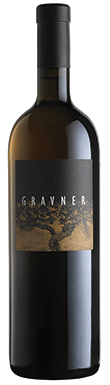

Gravner’s legendary wine – the most sought-after skin-contact wine of Italy – is released seven years after the vintage. It's the result of the scrupulous, unconventional work...
2015
GravnerVenezia Giulia

Primosic, Ribolla Gialla Riserva, Collio, Friuli-Venezia Giulia, Italy, 2019
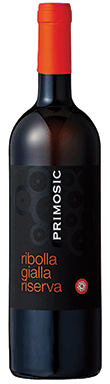
Primosic's charming Ribolla Oslavia Riserva represents the original spirit of the estate, which adopts the extended maceration ideas more guardedly. The juice remains in contact...
2019
PrimosicCollio
Le Due Terre, Sacrisassi Bianco, Friuli, Colli Orientali, Friuli-Venezia Giulia, Italy, 2020
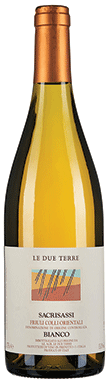
Le Due Terre refers to the clay and marl soils of the estate. Flavio, Silvana and their daughter, Cora have taken an organic approach with...
2020
Le Due TerreFriuli
Radikon, S Slatnik, Venezia Giulia, Friuli-Venezia Giulia, Italy, 2021
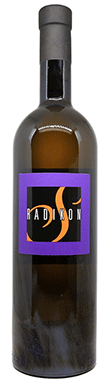
Slatnik is named after a specific hill very close to Radikon’s winery, with a particular type of compressed clay/marl soil known as ‘ponca’. The wine...
2021
RadikonVenezia Giulia
Zidarich, Kamen Vitoska, Venezia Giulia, Fruili-Venezia Giulia, Italy, 2020
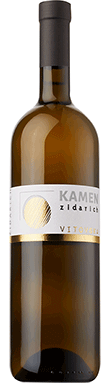
Zidarich’s vineyards are situated on a layer of eroded red limestone rock covering deep soils. Kamen is a wine which has been vinified in karst...
2020
ZidarichVenezia Giulia
Radovic, Marmor, Carso, Friuli-Venezia Giulia, Italy, 2021
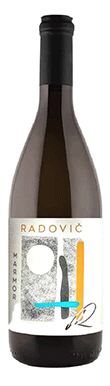
Passionate young man, Peter Radovic made his first harvest in 2018 from the 1.4-hectare family property. The 1,022 numbered bottles of pure Vitoska all come...
2021
RadovicCarso
