
German Grosses Gewächs 2021 releases: the top wines
Caro Maurer MW attended the annual release tasting of more than 400 Grosse Gewächs wines, comprising whites from the 2020 vintage and reds from 2019. Read the in-depth analysis and see the top-scoring wines.


This is a yearly ritual which has survived all the pandemic’s lockdowns. During the last weekend in August, wine experts met again in the city of Wiesbaden at the invitation of the VDP. These three letters stand for Verband Deutscher Prädikatsweingüter, an association which comprises around 200 of Germany’s best wineries.
The release tasting of the Grosse Gewächs (GG) offers the opportunity to get an impression of the new vintages from the top level, which consists of the best dry wines from the top classified sites.
Scroll down to see the top German Grosse Gewächs 2021 wines
To give an initial, brief overview of their performance: although 2020 was again a warm, very dry year, the third in a row, the whites demonstrate an appealing lightness and delicacy because the wines profited from a change in the weather in August, which brought cooler temperatures and some rain before harvest began in most German wine regions.
The 2019 reds reflect the density of a first-rate year combined with liveliness due to cooler conditions at harvest time.
2020 whites: precision work
2018, 2019, 2020 – three warm, dry vintages, however resulting in different wine styles, with the details causing this diversity.
While 2018 was the warmest vintage, depleting all the soil’s water reserves from winter rains, thus resulting in high yields, 2019 was not quite as hot and temperatures were lower at harvest time, enabling satisfying levels of acidity to be preserved.
The weather patterns seemed to be replicated in the first months of 2020, with insufficient winter rain to replenish the groundwater reservoirs, and a sudden change to warm weather in March causing early budding and hence early flowering. This was followed by a warm summer which only lasted until late August, early September when rain began to fall in most wine regions.
According to Thomas Haag of the Schloss Lieser winery in the Mosel, ‘this rain gave the vines the necessary energy to achieve physiological ripeness at low sugar levels’. Hence, all his Riesling GGs only reached 12.5% ABV combined with fruit precision and fine acidity.
Warm days in September followed by cool nights furnished the ideal conditions to ripen healthy fruit, with berries developing the desirable golden hues at Wilhelm Weil’s winery in the Rheingau. The ideal harvest window seems to be shrinking every year. At Weil, harvest started on 21 September and had already finished in the first half of October for the dry wines. It is only lovers of noble sweet wines who won’t be satisfied with 2020, as the noble version of botrytis arrived very late in the vineyards at Weil, resulting in a tiny quantity of Prädikat wines such as Beerenauslese or Trockenbeerenauslese.
On the other hand, the outcome of the colder end to 2020 was the first ice wine since 2016. Rebecca Crusius of Weingut Crusius was able to harvest healthy frozen berries on Monday 30 November – perfect timing for bright but concentrated Riesling fruit.
2019 reds: in the shadow
Rainer Schnaitmann from Württemberg quotes an old saying: ‘You have to get cold fingers during harvest.’ In contrast to 2020, his fingers stayed warm during the black grape harvest in 2019, and he had to chill the fruit to preserve their freshness before maceration and fermentation. However, their acidity level was higher than in 2018, ensuring natural balance in the wines. Hence, 2019 is a promising, sound vintage but might well remain in the shadows of the spectacular 2018 and the fruit-driven 2020.
Klaus-Peter Keller and his son Felix harvested their Pinot Noir earlier than usual in 2019 to ensure a fresh fruit profile and allowed it a briefer maceration and fermentation time, a maximum of 17 days. They also opted for whole berry instead of whole bunch fermentation to maximise the fruit potential for their top selection from the Morstein vineyard. Therefore, they manually removed the thick middle stems from every bunch, which might have absorbed too much colour and acidity, hence causing a drop in pH.
The results
2020 is a year of delicate Rieslings, especially from the Mosel, where the wines demonstrate fewer phenolic compounds than in the previous two years. The Nahe continues its high-quality performance, whereas the huge Rheinhessen region only submitted a small selection of GGs, as wineries tend to delay the release of their GGs by a further year to give them greater time to develop.
Pfalz showed a broad spectrum of Riesling with a wide midfield and few stars. However, Pfalz remains unrivalled for its Pinot Blanc, presenting some stunning wines, mainly from the 2019 vintage.
Silvaner is still Franken’s unique feature, while Baden as usual shines with its reds made from Pinot Noir.
Lemberger from Württemberg is also a source of wonderful discoveries.
GGs are not cheap but are bargains in terms of quality in a worldwide context.
Prices range from thirty to several hundred Euros for wines from renowned, established estates. At the lower end, the 2020 Riesling Heerkretz from Bischel, a new VDP member, is one of the best buys of the current vintage. Moreover, varieties in the shadow of Riesling and Spätburgunder are also good deals, for example the Lämmler Grauburgunder from Rainer Schnaitmann.
Top German Grosse Gewächs 2021 wines
You may also like
German Grosses Gewächs 2020 releases: the top wines
The revival of Sekt, Germany’s signature sparkling wine
Top buys from the German VDP wine tasting: 2018 whites & 2017 reds
Schloss Lieser, Juffer Sohnenuhr, Mosel, Germany, 2020
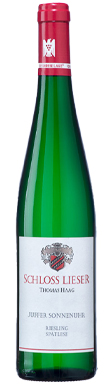

This wine balances precision, finesse and delicacy. Citrus fruit, a hint of cool mint tea and verbena all contribute to an etherealness which seems to...
2020
Schloss Lieser

Dönnhoff, Brücke, Nahe, Germany, 2020
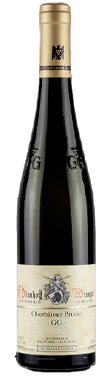
Again, a wine which will only be sold at auction – to the trade as well as private customers. The Brücke is a monopoly site...
2020
Dönnhoff
Weingut Keller, Abts E, Rheinhessen, Germany, 2020
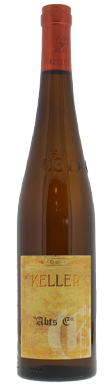
It depends on the year whether Morstein, Hubacker or Kirchspiel will shine among Klaus-Peter Keller’s array of Grands Crus. Although this year, it is Abts...
2020
Weingut Keller
Zehnthof Luckert, Maustal, Franken, Germany, 2020
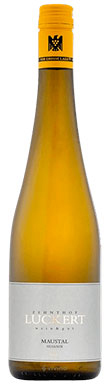
Silvaner is an often-overlooked variety, but this wine demonstrates its great potential. In this case, it is not actually all about Silvaner but rather the...
2020
Zehnthof Luckert
Ökonomierat Rebholz, Im Sonnenschein, Pfalz, Germany, 2020
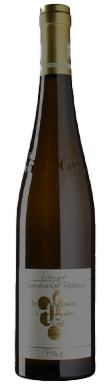
Pinot Blanc has become Germany’s second great white variety. The best examples come from the Pfalz, where Rebholz makes benchmark wines. Im Sonnenschein, literally 'in...
2020
Ökonomierat Rebholz
Salwey, Steingrubenberg, Baden, Germany, 2018
Baden is Pinot land, and the Steingrubenberg, a parcel in the Henkenberg, provides just the right amount of sun for Pinot Blanc to bask in,...
2018
Salwey
Bernhard Huber, Bienenberg, Baden, Germany, 2019
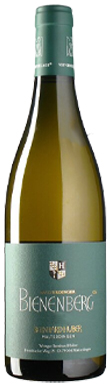
Yes, Chardonnay from Germany. It is stunning yet still young and difficult to read. The subtle layers of yellow fruit and oak spice are still...
2019
Bernhard Huber
Clemens Busch, Marienburg Fahrlay-Terrassen, Mosel, Germany, 2020
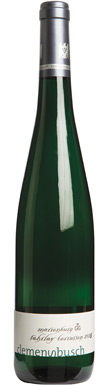
Made with fruit from 100-year-old vines, grown on blue slate, facing the Mosel. Clemens Busch works biodynamically, aiming to reflect his wines’ terroir, with the...
2020
Clemens Busch
Fritz Haag, Brauneburg Juffer-Sonnenuhr, Mosel, Germany, 2020
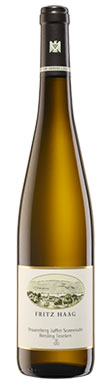
Versteigerung means auction, hence this wine is a special selection, which lets the wine market set its price. Oliver Haag has chosen a classic style,...
2020
Fritz Haag
Van Volxem, Scharzhofberger Pergentsknopp, Mosel, Germany, 2020
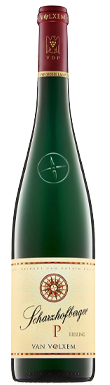
This famous site in the Saar Valley has had a huge advantage during the last three warm, dry years: veins of water providing enough water...
2020
Van Volxem
Emrich-Schönleber, Frühlingsplätzchen, Nahe, Germany, 2020
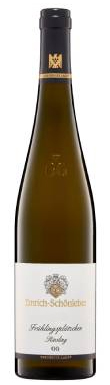
The Frühlingsplätzchen is in the cooler western part of the Nahe region, which has endowed this Riesling with tightly wound acidity. The wine is produced...
2020
Emrich-Schönleber
Dönnhoff, Dellchen, Nahe, Germany, 2020
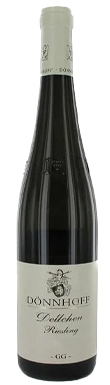
Cornelius Dönnhoff harnesses the potential of this beautiful site and its volcanic soil every year to produce a textbook Nahe Riesling. It boasts crystal clear,...
2020
Dönnhoff
Gut Hermannsberg, Bastei, Nahe, Germany, 2019
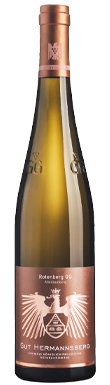
2019 vintage! Gut Hermannsberg aims to release its wines five years after harvest to give them enough time to develop. However, even after just two...
2019
Gut Hermannsberg
Wittmann, Morstein, Rheinhessen, Germany, 2020
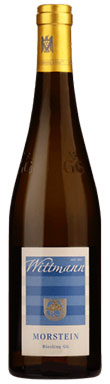
A hedonistic interpretation of Morstein. As usual, Philipp Wittmann has used both the potential of the site with its clay marl and limestone soil as...
2020
Wittmann
Schnaitmann, Lämmler, Württemberg, Germany, 2019
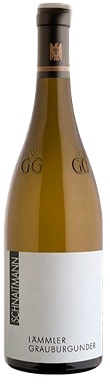
Germany’s best 2019 Grauburgunder comes from Württemberg - not Baden. This is the variety at its best: dense, taut and persistent. Yellow apple and banana...
2019
Schnaitmann
Bischel, Heerkretz, Rheinhessen, Germany, 2020
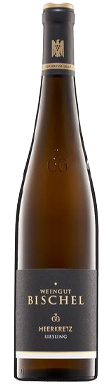
<p>Some wines don’t need a manual to be understood. They are simply stunning, without any explanation. The two Runkel brothers are the new kids on...
2020
Bischel
Dr Bürklin-Wolf, Reiterpfad in der Hohl, Rheinhessen, Germany, 2020
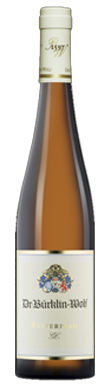
A site does not need to be spectacular to be the source of great wines. The Reiterpfad in der Hohl parcel is somewhat flat but...
2020
Dr Bürklin-Wolf
Rings, Felsenberg, Pfalz, Germany, 2019
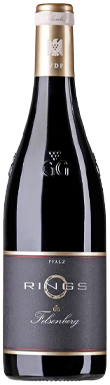
This wine is all about precision, with its individual elements all evident, but melding harmoniously. Juicy, expressive black cherry fruit mingles with juniper, coffee and...
2019
Rings
Bernhard Huber, Bienenberg Wildenstein, Baden, Germany, 2019
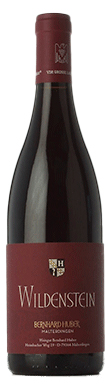
Located so close to Bienenberg yet different. The limestone soil has red hues thanks to some iron components, meaning its wines are always a little...
2019
Bernhard Huber
Weingut Keller, Bürgel, Rheinhessen, Germany, 2019
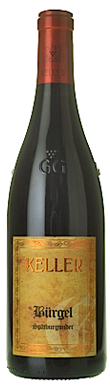
If any comparison were to be made, it would be with Musigny, whose similar limestone soil results in a comparable style: an iron fist of...
2019
Weingut Keller
Rings, Saumagen, Pfalz, Germany, 2019
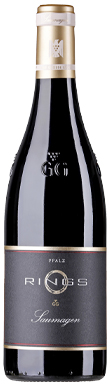
A potpourri of impressions bursts from the glass: the spiciness of cardamom, hibiscus, dark chocolate and coffee, followed by ripe dark berry fruit. The site’s...
2019
Rings
Bernhard Huber, Bienenberg, Baden, Germany, 2019
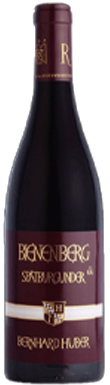
This Spätburgunder is so shiny, pure, clear and precise – shaped by Bienenberg’s limestone soil. Every single element fits together perfectly, with pronounced, well-defined cherry...
2019
Bernhard Huber
Salwey, Eichberg, Baden, Germany, 2019
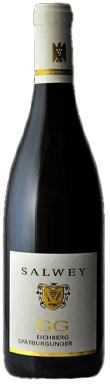
The dark volcanic soils of Eichberg absorb the heat of the day, with this warmth seemingly translated into an expressive, savoury, cordial personality. A powerful...
2019
Salwey
Graf Neipperg, Schlossberg, Württemberg, Germany, 2019
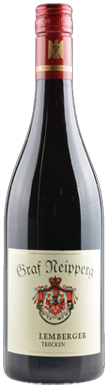
Recent vintages of Graf Neipperg have been surprisingly strong, with this one continuing this well-established winery’s comeback. It is a classic style, which relies on...
2019
Graf Neipperg
Aldinger, Lämmler, Württemberg, Germany, 2019
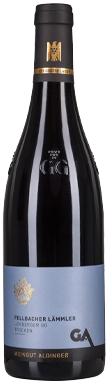
Aldinger is the leading producer in Württemberg, and this wine makes another strong statement. It does not reveal its beauty immediately, needing some aeration before...
2019
Aldinger
Schnaitmann, Lämmler, Württemberg, Germany, 2019
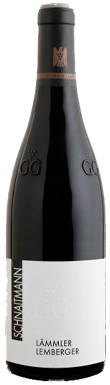
There is no single way, just the way of each individual vintage, which Rainer Schnaitmann decides from one year to the next. His 2019 Lemberger...
2019
Schnaitmann
Karl Haidle, Berge, Württemberg, Germany, 2019
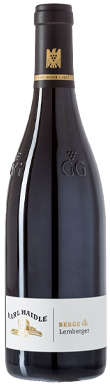
No risk, no fun! Moritz Haidle seems to love testing Lemberger’s boundaries. Berge is his warmest site, and this wine boasts a bowl of ripe...
2019
Karl Haidle
Meyer-Näkel, Kräuterberg, Ahr, Germany, 2019
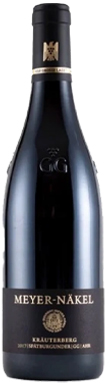
A beauty with precise cherry and red berry fruit which ripened on this scarily steep, south-facing site. Notes of mellow toast and coffee spice from...
2019
Meyer-Näkel
JJ Adeneuer, Alte Lay, Ahr, Germany, 2019
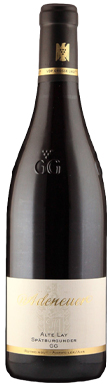
Alte Lay is a site with old terraces built on thin, rocky slate soil. Lay literally means rock. Since Adeneuer is now using less and...
2019
JJ Adeneuer
Rudolf Fürst, Centrafenberg, Franken, Germany, 2019
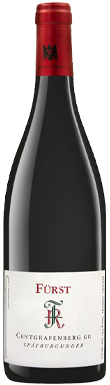
Paul and Sebastian Fürst, father and son, seem to have Pinot Noir in their DNA. The wine boasts a classic composition, with the ripe, elegant...
2019
Rudolf Fürst
