German Grosses Gewächs 2020 releases: the top wines
Which are the top wines from the more than 470 Grosse Gewächses released this autumn? Anne Krebiehl MW reports from the social-distanced VDP Weinbörse 2020.
Get our daily fine wine reviews, latest wine ratings, news and travel guides delivered straight to your inbox.
You are now subscribed
Your newsletter sign-up was successful
Social distancing was ensured, masks were de rigueur, temperatures were taken and tasters were spaced on individual tables over three large rooms at the Kurhaus in Wiesbaden for this year’s VDP GG Release tasting.
477 Grosse Gewächse, or grands crus, could be tasted: most of them are whites from the 2019 vintage and reds from 2018. Since the annual VDP Weinbörse event, usually taking place in April, had been cancelled, this was the first opportunity to properly assess the 2019 vintage via the top-end, dry wines from single, classified sites.
This release tasting was also perhaps the first proper international wine event to take place since lockdown. It was a joy to be able to taste and the organisation, as every year, was flawless. Spaces were strictly limited but attendance was high, even if tasters from the US and Asia were missing. Europe was there in full force. The verdict: the wines are spectacular. 2019 whites benefited from a cooler harvest and have firm, ripe freshness, the 2018 reds show uncommon elegance and defy the heat of the vintage.
Scroll down to see the top 20 Grosses Gewächs recommendations
See the top 40 wines tasted here
2019 whites: The test of resilience
It is fair to say that Germany has not had such climatic conditions since the Medieval Warm Period. The heat and dryness of 2018 as well as the heat and heterogenous weather events of 2019 posed challenges all of their own.
Dry stress and sunburn foremost among them – it is clear that those estates that learned how to deal with the changing climate in their vineyards have made more complete wines than ever before.
‘2019 is a great, precise vintage,’ said Robert Haller of Bürgerspital in Franken.
‘The only downside was the low yield. Ripeness was optimal and we learned quite some time ago to go on freshness rather than alcoholic strength. There are super Silvaners and it was another fine year for Riesling – so harmonious with a very long life ahead of it.’
Get our daily fine wine reviews, latest wine ratings, news and travel guides delivered straight to your inbox.
Dr Carl von Schubert of Maximin Grünhaus in the Ruwer Valley agreed and cited 2019 as ‘a year with much roundness. There are few vintages that are as much fun in their youth as this one. The wines have a silky consistency and beautiful acidity.’
He also noted a ‘real sense of joy, length, depth and fruity presence.’
Late spring frosts in some regions, several days of temperatures above 40°C in July and rainy days during harvest in September and October had all taken their toll on the yields.
But von Schubert – who has seen every kind of vintage since he took over in 1981 – praised Riesling as ‘the most ingenious grape variety and the most ingenious weed in the world, which brings great results even under difficult circumstances.’
Mark Barth of Weingut Barth in the Rheingau credited the lower temperatures at harvest with the freshness of the Rieslings, ‘The acid is precise and aligned to good volume. The GGs are a rather fine composition of body, acid and fruit.’
After the heatwave in 2018 that used up groundwater reserves, everyone said that 2019 would depend on water levels being replenished over winter. This did not happen, so the resilience of the vines was tested.
Old vines with deep roots coped surprisingly well, regardless of soils, even though they did make a difference. Haller noted that his limestone soils with their capacity for water retention were easier to deal with than well-drained sandstone soils, for instance. But he noted that soil management and humus content mattered more than ever – as well as climate-adapted viticulture.
2018 reds: Managing the heat
Regarding the 2018 reds, Rainer Schnaitmann from Württemberg said: ‘We learned in 2003 already that heat had to be handled. We really paid attention to freshness which may even be too much for some. But we captured great elegance despite the power – you sense the warmth of the vintage without fatness or plumpness. The 2018 reds will be great.’
Schnaitmann, as many of his more progressive colleagues across Germany, uses whole-bunch fermentation to lend backbone and firmness, rather than extraction or oak. With the super-healthy fruit of 2018 this produced gorgeously expressive wines of real purity.
‘Paying attention to pH levels was key,’ added Franz Wehrheim of Weingut Dr Wehrheim in the Pfalz.
The result
The result is that 2019 Mosel Riesling shines with utter fruit, Saar and Nahe are deliciously hair-raising and exacting, Rheinhessen is on a special path, especially along the Red Slope.
Rieslings from Franken, Württemberg and Baden are new hunting grounds for exceptional styles and quality. The Rheingau has its handful of world stars but also some complacent estates.
Where Spätburgunder is concerned, there no longer is any doubt that Germany’s Pinot Noirs are world class – across different soils and sites. Today they show more personality and finesse than ever.
Elegant Pinot Blancs, savoury Silvaners and spicy Lembergers are the sleepers the international wine world still needs to wake up to.
While the GGs are not cheap, they probably represent the greatest value in wine today – especially considering the steepness of the slopes and the back-breaking work these precipitous, stony vineyards demand.
Riesling, Silvaner, Pinot Blanc & Blaufränkisch: Anne’s 20 top Grosses Gewächs picks
See also:
Understanding Grosses Gewächs Riesling and wines to look for
The revival of Sekt, Germany’s signature sparkling wine
Rudolf May, Thüngersheimer Rothlauf Silvaner, Grosses Gewächs, Franken, Germany, 2019
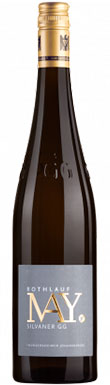
Wet stone and chalk are framed in a floral, fresh aura from the first whiff onwards, reflecting the stony poor soils which here are a mix of both red sandstone and fossil limestone - while the immediate clarity and freshness reflect the altitude of up to 300m. The Silvaner savouriness is on full display on the mid-palate, tender, delicate but pervasive. There are hints of yarrow and salt, crushed thyme and a gloriously fresh hint of fern. A concentrated core has tautness, structure, verve and ripe freshness. An exemplary wine of its kind.
2019
FrankenGermany
Rudolf MayGrosses Gewächs
Clemens Busch, Pündericher Marienburg "Rothenpfad", Grosses Gewächs, Mosel, Germany, 2019
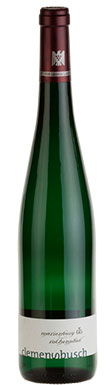
This opens with a gorgeous sense of herbal savouriness that blends into the savoury stoniness. Crushed yarrow and potentilla not only play on the nose but also seem to give savour to the salty, concentrated palate. That saltiness is utterly mouth-watering and appetizing, flowing, smooth but oh so stony and herbal. Over the years, bio-pioneer Busch really has forged his very own style from this rhyolite site. The fact that it gets more morning than afternoon sun preserves those gorgeous aromatics in warm vintages like these. A glorious wine.
2019
MoselGermany
Clemens BuschGrosses Gewächs
Peter Lauer, Ayler Kupp, Grosses Gewächs, Mosel, Germany, 2019
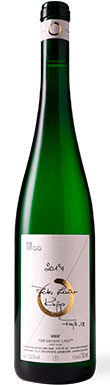
A glorious touch of orange and mandarin peel tinges the lemon notes of this vivid Riesling from an iconic Saar site of Devonian slate. Zestiness pervades the juicy palate and the stony depth seems buffered by layers of citrus. The concentration becomes apparent gradually, as does the real ripeness which is countered and enriched by that bright, aromatic, alluring zestiness. In a year like 2019 and in the hands of Florian Lauer, the ripeness of the grapes is turned into absolute purity of fruit and stony precision.
2019
MoselGermany
Peter LauerGrosses Gewächs
Bürgerspital zum Heiligen Geist, Würzburger Stein-Hagemann, Grosses Gewächs, Franken, Germany, 2019
Exquisitely pure, ripe, lifted Amalfi lemon glints in the glass. On the palate, lovely, stony purity is anchored in limestone coolness and delivers a full, energetic sweep of ripe freshness. There is gorgeous balance and harmony and an astonishing readiness. Hagemann is one of the steepest parcels of the Würzburger Stein with a gradient of 75% and a longstanding Riesling spot within this emblematic Silvaner vineyard. The vines are old and evidently coped with 2019's intense sunshine well. A real joy.
2019
FrankenGermany
Bürgerspital zum Heiligen GeistGrosses Gewächs
Joh. Bapt. Schäfer, Dorsheimer Goldloch, Grosses Gewächs, Nahe, Germany, 2019
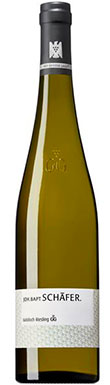
Incredible citrus zest ripeness makes for an intensely aromatic nose that combines notes of mandarin, orange and tangerine peel. That same, gloriously ripe zestiness is alive on the palate, tangy and mouthwatering with incredible aromatic allure. There is texture and pithiness, concentration and an uncommon intensity. The Goldloch, a south-facing site of loam-covered quartzite, has excellent water availability and this, of course, stood it in good stead in 2019, enabling the grapes to ripen fully without stress, reaching their full, beguiling aromatic potential.
2019
NaheGermany
Joh. Bapt. SchäferGrosses Gewächs
Dönnhoff, Bad Kreuznacher Krötenpfuhl, Grosses Gewächs, Nahe, Germany, 2019
From a pebbly site whose name translates rather uncharmingly into 'toad pit', this needs quite a bit of air to come alive on the nose. Once it opens up, a world of citrus notions unfolds. On the palate the zestiness is even more intense: ripe but spine-tingling lemon notions swirl with heady, delirious intensity, emanating from an energetic core of zesty concentration that makes the mouth water with its eternal juiciness. The finish is long and lemon-scented.
2019
NaheGermany
DönnhoffGrosses Gewächs
Gut Hermannsberg, Altenbamberger Rotenberg, Grosses Gewächs, Nahe, Germany, 2019
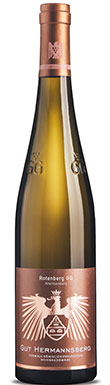
A rather subtle nose speaks of lemon and gentle stone fruit. The palate, however, comes in with crystalline citrus concentration and heightened, intense freshness. This is on a thrilling tightrope, teetering between mouth-watering zestiness and unyielding stone. There are no concessions to charm here - this is zest and stone. This high-altitude, iron-rich site of rhyolite and shale in the Glan valley reaches 350m and was pre-destined for Riesling. Karsten Peter has done it justice. The tingling citrus length is a joy.
2019
NaheGermany
Gut HermannsbergGrosses Gewächs
Schäfer-Fröhlich, Schloßböckelheimer Kupfergrube, Grosses Gewächs, Nahe, Germany, 2019
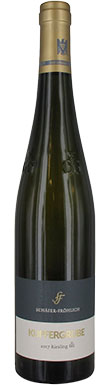
The nose is shy and under a cloud of yeasty funk for now. The palate has immense concentration and is anchored in deep, uncompromising stoniness. The texture reverberates with citrus but is rich with ripest stone fruit. There is something elixir-like about this concentrated stone juice that will disarm lovers of fine, pure Riesling. Knowing this steep, stony site that was blasted into volcanic rock it could not be otherwise. That such fruit should spring from such hard stone is Riesling's secret and vindication.
2019
NaheGermany
Schäfer-FröhlichGrosses Gewächs
Schäfer-Fröhlich, Bockenauer Felseneck, Grosses Gewächs, Nahe, Germany, 2019
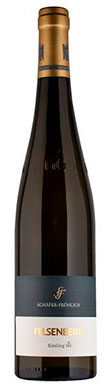
From an elevated, steep site of Devonian slate and quartzite, this opens with the customary, funky reduction we all associate with this estate - but we also know that this only bodes well for the future. Once again this is Riesling for adults only: uncompromising in its purity and rapier-like in its slate stoniness. All this solidity swims in the glorious stone fruit of the 2019 vintage that is laced with ripe lemon acidity. Fruit drips off the stone, luscious yet taut, generous yet disciplined. Those contrasts make for wonderful drama.
2019
NaheGermany
Schäfer-FröhlichGrosses Gewächs
Kühling-Gillot, Niersteiner Pettenthal, Grosses Gewächs, Rheinhessen, Germany, 2019
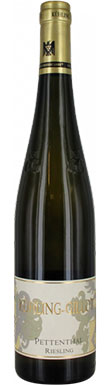
The still slightly flinty whiff of reduction blends beautifully into the savory potentilla notes that are so typical of the rhyolite Rieslings from Pettenthal on the Red Slope, Rheinhessen's east-facing escarpment on the Rhine. This is followed by a sense of utter concentration and emollience. On the palate there is a bundled force of lemony brightness, seamless, luminous and brilliant. The radiance and energy is wonderful - especially since there is not one ounce of fat on this energetic dynamo. An elixir of stone and life.
2019
RheinhessenGermany
Kühling-GillotGrosses Gewächs
Schätzel, Nierstein Ölberg, Grosses Gewächs, Rheinhessen, Germany, 2019
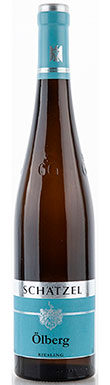
Yeasty funk still hangs on the nose, giving a sense of liveliness and energy. The wine underneath is vivid, super-slender in its freshness, agile somehow, vivid and perfumed with fresh, apple-like juiciness. The texture hits you on the finish and makes the wine: utter, creamy, concentrated slenderness with the gentlest kiss of oak. Kai Schaetzel is now one of the leading lights on the Red Slope and this wine proves it.
2019
RheinhessenGermany
SchätzelGrosses Gewächs
Wagner Stempel, Siefersheimer Heerkretz, Grosses Gewächs, Rheinhessen, Germany, 2019
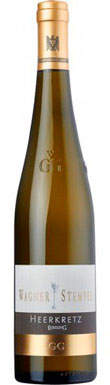
Funky, flinty, smoky reduction is full of promise on the nose. The palate holds pepper and grapefruit zestiness. The concentration has a lovely, pithy edge and tingles with vivid citrus brightness. There is a cool, profound core of freshness. Daniel Wagner time and again crafts compelling, salty Rieslings in his remote but geologically fascinating corner of Rheinhessen. The south-facing Heerkretz site is of rhyolite and the wine has all the spice to prove it.
2019
RheinhessenGermany
Wagner StempelGrosses Gewächs
Dr Bürklin-Wolf, Forster Pechstein, Grosses Gewächs, Pfalz, Germany, 2019
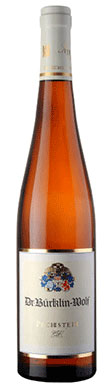
Funky, reductive yeast still dominates the nose but underneath it the stony, dark depth of the Pechstein opens up. Biodynamic pioneers Bürklin-Wolf have managed to harvest a Riesling with that golden Pfalz cut of harmonious proportions: fruit and boldness, freshness and firmness, crunch and ripeness. Nuances of pepper, pear peel and citrus pith show how much more there is to come. Spirit this wine away for a few years and prepare to meet a marvel. It is a gorgeous, bone-dry and vivid wine.
2019
PfalzGermany
Dr Bürklin-WolfGrosses Gewächs
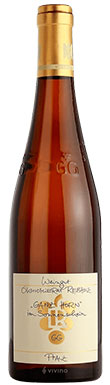
Ökonomierat Rebholz, Siebeldinger "GANZ HORN" im Sonnenschein, Grosses Gewächs, Pfalz, Germany, 2019

Cool, subtle notes of lemon dominate the nose. There is an uncommon transparency here. Just like juice expressed from chalky stone, there is a chalky texture and intense lemon - lovely depth but also a bone-dry, almost austere nature that unashamedly focuses on stone and soil rather than fruit. But that does not stop the lemon oil intensity and essential, soothing, calming coolness of this subtle yet intense wine.
2019
PfalzGermany
Ökonomierat RebholzGrosses Gewächs
Rudolf Fürst, Klingenberger Schlossberg Spätburgunder, Grosses Gewächs, Franken, Germany, 2018
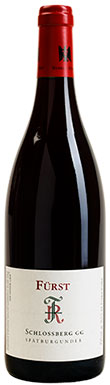
Promising, flinty reduction for now fills the nose, but underneath it the perfumes of crushed redcurrant and heady violet begin to work their scented magic. On the palate the fruit and perfume of Pinot Noir unfurl like a bale of shiny silk. Yet there is a firm, stony anchor while the inherent elegance of the Triassic red sandstone frames the generosity of 2018 perfectly. This steep, stony, terraced site demands back-breaking work and single-minded dedication. Sebastian and Paul Fürst lavish both - and they know how to use whole bunches to maximum effect. A glorious wine.
2018
FrankenGermany
Rudolf FürstGrosses Gewächs
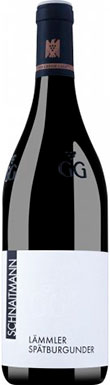
Rainer Schnaitmann, Fellbacher Lämmler Lemberger, Grosses Gewächs, Württemberg, Germany, 2018

Vivid pepperiness is the hallmark of this wine - speaking of whole-bunch-ferments, of captured freshness and firmness. The palate is agile, energetic, reverberating with liveliness, hardly managing to pin down the generous fruit of the year. This needs to calm down but will be a wonderful tonic once it has found its centre. If you love verve, insistence and untold depth, this is for you. Unconventional, yes, original, yes, delicious, absolutely.
2018
WürttembergGermany
Rainer SchnaitmannGrosses Gewächs
Weingut Am Stein, Stettener Stein Silvaner, Grosses Gewächs, Franken, Germany, 2019
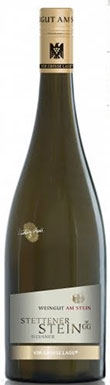
Fragrant, ripe lemon and notions of crushed fern and chervil make for a heady, herbal, scented opening. The lemony concentration becomes especially apparent on the mid-palate where it is buffered in emollient limestone creaminess and freshness. There is limestone depth, herbal savour and that unlikely combination of concentrated, energising force and fine-boned elegance. Think of a thoroughbred chomping at the bit.
2019
FrankenGermany
Weingut Am SteinGrosses Gewächs
Franz Keller, Oberrotweiler Eichberg Spätburgunder, Grosses Gewächs, Baden, Germany, 2018
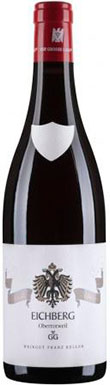
The first whiff of flinty reduction gives way to an emollient yet fresh creaminess that holds aromatic notions of peony and smoky cherry. The palate is bright, fresh and crunchy - in a distinct rejection of what the Kaiserstuhl used to stand for. This is the new Baden: taut, precise, stony and fresh. The Eichberg with its mix of basaltic volcanic formations underneath a thin loess topsoil seems to give a racy energy to this and Friedrich Keller made sure to capture the fruit at a point of vivid freshness. The elderberry finish is lovely, lasting and aromatic.
2018
BadenGermany
Franz KellerGrosses Gewächs
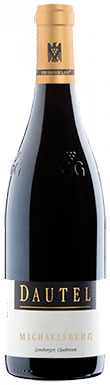
Dautel, Cleebronner Michaelsberg Lemberger, Grosses Gewächs, Württemberg, Germany, 2018

Crushed blackberry notions come with a smoky hint of tar and speak of ripeness and generosity on the nose. The palate, however, introduces fine freshness and a taut structure. It is the warm 2018 vintage that turned the usual silk into sumptuous velvet. The mid-palate is dense and creamy, dark-fruited and redolent of small, intensely aromatic elderberries. Lemberger's wonderful pepperiness is present in full force, helped along by at least 330m of altitude. What we have is the winning combination of breezy height, rich marl soils and a warm year - and the hand of talented Christian Dautel.
2018
WürttembergGermany
DautelGrosses Gewächs
Salwey, Oberrotweiler Kirchberg Weissburgunder, Grosses Gewächs, Baden, Germany, 2017
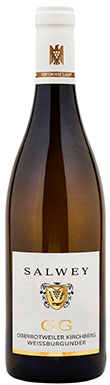
A subtle hint of toast and white, fresh field mushroom turns the attention away from fruit and onto texture. The svelte palate is rich with yeast and bolsters its inherent slenderness with gorgeous depth. A wellspring of lemony freshness energises the core. Konrad Salwey knows exactly how to capture the cool side of this warm, volcanic site and has done well to release this GG with some age. Lovers of fine-boned Chardonnay will be smitten with this slender Weissburgunder aka Pinot Blanc.
2017
BadenGermany
SalweyGrosses Gewächs