Going green in Languedoc-Roussillon – Organics and Biodynamics
With the climate of southern France ideally suited to organics and biodynamics, it’s no surprise that producers here are embracing environmentally conscious viticulture. James Lawther MW finds out more and picks wines to try…
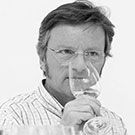

‘If you can’t do it here, you can’t do it anywhere,’ exclaims Jon Bowen of Domaine Ste Croix in the Corbières. The 11ha property has been organically cultivated since 2004 (with official certification received in 2008) and Bowen is one of a growing number of producers who are convinced that given the climatic advantages of Languedoc-Roussillon, it’s the only way to go.
Scroll down for Lawther’s picks: top organic Languedoc-Roussillon wines
Organic wine production as a whole is on the increase in France, with the number of hectares of organically certified vineyards and those under conversion rising by 11% year on year in 2017, to 78,502ha. This accounts for about 10% of the country’s net total and puts France in third position behind Spain and Italy in a world ranking of organically run vineyards. The three combined account for 74% of the world’s organic production.Conjointly, the number of organic growers in France has also increased, a total of 5,835 producers registered in 2017, up 16% on 2016. Leading the way is the Languedoc’s Hérault department with 543 producers, just ahead of the Gironde (Bordeaux) with 532 and the Vaucluse (Provence) with 502.

In terms of surface area, the Vaucluse comes out top with 9,494ha (the Hérault fourth with 8,227ha), but overall the greater region of what is now called Occitanie, formerly Languedoc-Roussillon and Midi- Pyrénées, has become the principal organic zone in France. It alone covers 28,642ha (certified and land under conversion), accounting for about one-third of France’s organic vineyards, and in 2018 produced more than 100 million bottles of organic wine.
Natural advantage
Along with the southern Rhône and Provence, Languedoc-Roussillon has a number of advantages when it comes to organic cultivation. These include an enviable biodiversity, wider planting in the vineyards and, of course, a hotter, drier climate, which is also assisted by the wind. ‘When a spot of downy mildew is seen on the vine but the northwesterly Tramontane is blowing, there’s less of a risk in not spraying than in a region like Bordeaux,’ says Cyril Bourgne of Domaine La Madura in St-Chinian, previously the winemaker at Château de Fieuzal in Pessac-Léognan.
For those like Bowen, organic cultivation has been an obvious path from the beginning, but for other converts an added push has been required. ‘Climate change, environmental protection and water conservation have forced growers to change practices and organics has provided one of the answers,’ explains Jean-Benoît Cavalier, president of AP Languedoc and owner of organically and biodynamically certified Château de Lascaux in Pic St-Loup.
The organic wine market has yielded yet another incentive with average annual growth measured at 16.8% in volume between 2012 and 2017. Consumer demand is there, and despite the increase in surface area and number of producers, the Languedoc- Roussillon region is still struggling to keep pace with orders.
Humidity and high temperatures leading to an aggressive outbreak of downy mildew in June 2018 also put a brake on potential conversions and volume.
Fully committed
In the upsurge in organic production in Languedoc-Roussillon, both individual producers and certain appellations have come to the fore. The influx of new growers, many from outside the region, has certainly been important. Take go-ahead Terrasses du Larzac – an appellation validated in 2014 with presently 600ha under production to the northwest of Montpellier. In the last six years, 25 new domaines have been created here, most organically inclined. All told, 85% of Terrasses du Larzac’s independent growers are now organically certified or under conversion and 80% of their vineyard area. ‘If your goal is terroir-driven wines, organics is a logical step,’ declares Vincent Goumard of Mas Cal Demoura, himself a néo-vigneron in 2004.
Faugères, in the foothills of the Cévennes, is another appellation that’s making a concerted drive to become fully organic. Of the domaines in the 1,850ha appellation, 80% are already engaged in some sort of environmental action with 58% organically certified or under conversion and, likewise, 40% of the surface area. Again, relative newcomers such as Brigitte Chevalier at Domaine de Cébène (2007) and Julien Seydoux at Château des Estanilles (2010) have been helping the push. The ambitious objective in Faugères is to have 75% of the wineries organically certified within 10 years and 100% of the new arrivals. In the same space of time it is hoped that the local cooperative will be cultivating 50% of its land organically.
On an individual basis there are plenty of competent organic producers throughout Languedoc-Roussillon today, but the most influential has to be Gérard Bertrand. The former rugby player turned vigneron started dabbling with biodynamics at his property Cigalus in IGP Aude-Hauterive in 2002, having read the teachings of Rudolf Steiner. By 2010 he had the whole estate certified. Better still, he now owns a total of 15 different properties and 920ha in various Languedoc appellations (La Clape, Corbières Boutenac, Limoux, Minervois La Livinière), of which about 80% are being cultivated biodynamically or under conversion. It’s the largest group of biodynamic estates in the world and sends out a powerful and well-disseminated message about the region and the direction being taken.

Organic growth
Another growing body of conscientious producers in France and Languedoc-Roussillon are those with Haute Valeur Environnementale (HVE) certification. They are not considered organic (and do not figure in organic statistics) as there is a controlled tolerance of synthetic chemicals, but preservation of the environment and biodiversity are given greater importance, and cultivation adapted to limit or eradicate the use of chemicals and preserve water sources. ‘In the end the best and most ecological way of treating is not to treat at all,’ says Bourgne, whose Domaine La Madura has had HVE certification since 2015. Overall, the message from Languedoc- Roussillon is that organics are on the increase and that the quality level of those practising is higher than ever before. As Jon Bowen declares: ‘The organic scene has changed tremendously, the wines produced no longer the dusty bottles abandoned on the bottom shelf of a wine store.’
Eight organic producers to watch
Château Maris, Minervois La Livinière
Robert Eden and his partner Kevin Parker bought Château Maris, now 32ha, in 1997 and started the organic conversion almost instantly. Organic certification was acquired in 2002 and biodynamic in 2004. ‘I wasn’t a visionary – we just needed to regenerate life in the soils and that took us down the organic road,’ says Eden. The environmental path continued with the building of a carbon-neutral hemp brick cellar and more recently B Corps certification (2016) which accredits the social and environmental performance of companies.
Clos du Gravillas, Minervois
Local lady Nicole and her American husband John Bojanowski planned to make wines organically from the start. ‘The idea was to make better wine, not save the world,’ says John. The first hectare was acquired in 1999 and tentative organic steps taken, but they realised they needed help. Environmental association Terra Vitis provided this, with organic certification following. The domaine has grown to 8ha with certain biodynamic methods also used. Local grape varieties (Carignan, Terret Gris, Maccabeu etc) are the focus.
Domaine Bertrand-Bergé, Fitou
The 36ha domaine has been in the same family for six generations, with Jérôme Bertrand currently at the helm. Synthetic chemicals were introduced in the 1980s for financial reasons and used for a time. ‘They helped provide profitability, but we didn’t realise the consequences,’ says Bertrand. Hence an about-turn from 2000 with a reduction of their use followed by organic cultivation from 2011, leading to certification in 2013. Biodiversity has also been improved with the planting of oak, almond, fig and olive trees. This is now a model estate with an exemplary range of wines.
Domaine d’Aupilhac, Languedoc Montpeyroux
Sylvain Fadat started at the domaine in 1989 with a parcel of vines inherited from his father. Over the years he has gradually expanded and now has 24ha at two sites, lieu-dit Aupilhac and Les Cocalières at 350m altitude. Pesticides were rejected from the beginning and an organic culture gradually put in place followed by biodynamics, with certification now obtained for both. The authenticity of the vineyards is respected in the cellar, where natural yeasts are used and the wines bottled unfiltered. These are wines of character and expression and among the best you can find in the Languedoc.
Domaine de Cébène, Faugères
Having studied oenology in Bordeaux and worked for Jean-Luc Thunevin in St-Emilion, Brigitte Chevalier’s aim was to find a region where she could make fresh, food-oriented wines. In 2007 she found what she was looking for on the pure schist slopes of Faugères. Organic cultivation was automatic, but she had to go slowly as the vines were old (70-100 years) and had previously been worked in a conventional manner. Organic certification was obtained in 2011, her four red cuvées a just expression of the appellation.

Domaine Le Roc des Anges, Côtes du Roussillon-Villages
Marjorie and Stéphane Gallet met studying viticulture and oenology in Montpellier. She’s originally from Grenoble and he from Normandy. A joint passion for horse riding led them to discover the vineyards of Roussillon. In 2001 Marjorie launched Le Roc des Anges, with old-vine Carignan found near the village of Montner, to be joined by Stéphane in 2008. They realised that biodynamics was the natural course for them, leading to certification in 2014. ‘There’s a fresher and more sensitive expression,’ says Stéphane. The wines are finely etched and pure.
Mas Amiel, Maury Sec

Created in the early 19th century, this massive property (145ha) was bought by Olivier Decelle in 1999. Its original reputation was for fortified vins doux naturels, but there has been a steady shift to the production of dry red, white and rosé. In 2011, the cuvée Légende was the first wine launched under the newly created Maury Sec appellation. Organic practices have been in place since the purchase, but certification was obtained in 2018. Biodynamic certification is on the way.
Mas Cal Demoura, Terrasses du Larzac

Vincent Goumard and his wife Isabelle swapped a business career in Paris for a vineyard in Terrasses du Larzac in 2004. Mas Cal Demoura already produced reputable wines, but having learned the ropes the duo have helped to progress quality further. Organic cultivation has been used since 2010, with certification in 2013. Biodynamic cultivation started in 2015. ‘This is more of a personal project, but if you are looking for energy, balance and the expression of terroir it’s the way to go,’ explains Vincent.
See Lawther’s picks: top organic Languedoc-Roussillon wines
You may also likeLanguedoc-Roussillon’s premium reds – Blind TastingPanel tasting: How good is rising star Terrasses du Larzac?Corbières: 10 names to know plus top wines to tryWhere to go in Carcassonne: A wine lover’s guide
Domaine Sainte-Croix, Carignan, Vin de France, Languedoc-Roussillon, France, 2016
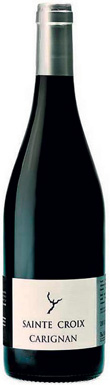

100-year-old-plus Carignan planted on mainly limestone soils in the Corbières. Dark and spicy with lovely lift and freshness. Tight and intense but tannins are refined....
2016
Domaine Sainte-CroixVin de France

Mas des Chimères, Caminarèm, Terrasses du Larzac, Languedoc-Roussillon, France, 2017
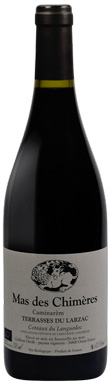
A blend of Carignan, Cinsault, Grenache, Syrah and Mourvèdre. Expressive of the terroir with spice and garrigue notes but fine and complex as well. Well-handled...
2017
Mas des ChimèresTerrasses du Larzac
Domaine d’Aupilhac, Cuvée Aupilhac, Montpeyroux, Languedoc-Roussillon, France, 2016
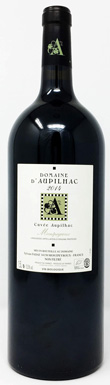
Mainly Mourvèdre and Carignan with a little Syrah, Grenache and Cinsault. Complex dark fruit, olive and lanolin notes, the mineral and garrigue present. Textured palate...
2016
Domaine d’AupilhacMontpeyroux
Mas Amiel, Alt.433m, Maury Sec, Languedoc-Roussillon, France, 2017
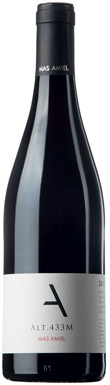
Grenache and Lledoner Pelut. Airy and approachable, with floral notes and a surprisingly intense palate. Almost Pinot-like, the acidity providing lift and structure.
2017
Mas AmielMaury Sec
Château de Lascaux, Les Nobles Pierres, Pic St-Loup, Languedoc-Roussillon, France, 2016
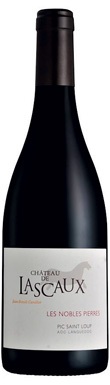
80% Syrah, 20% Grenache. Complex, fine and expressive with cassis, black olive and spice notes. Juicy and generous but balanced.
2016
Château de LascauxPic St-Loup
Domaine de Cébène, Belle Lurette, Faugères, Languedoc-Roussillon, France, 2016
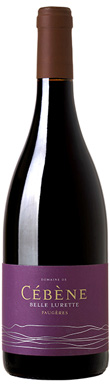
Old-vine Carignan with a little Grenache and Mourvèdre. Fine rather than powerful. Dark fruit, herbal notes. Tangy freshness with refined texture and a saline finish.
2016
Domaine de CébèneFaugères
Domaine Le Roc des Anges, Segna de Cor, Côtes du Roussillon Villages, Languedoc-Roussillon, France, 2017
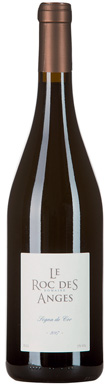
Grenache, Carignan and Syrah grown on schist soils. Streamlined and pure. Silky tannins with a stony freshness behind. Red fruit and spice notes. Instant pleasure.
2017
Domaine Le Roc des AngesCôtes du Roussillon Villages
Château Maris, La Touge, Minervois, La Livinière, Languedoc-Roussillon, France, 2016
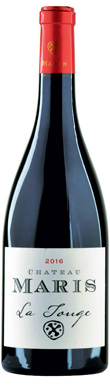
Syrah and Grenache. Juicy and generous with sweet, ripe fruit but freshness too. Dark fruit and black olive notes. Likeable and fun.
2016
Château MarisMinervois
Clos du Gravillas, Rendez-Vous Sur La Lune, Minervois, Languedoc-Roussillon, France, 2017
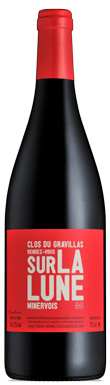
Mainly Syrah and Carignan with a touch of Grenache. Has energy and freshness with a lightness of touch. Red fruit and spice aromas. Round and...
2017
Clos du GravillasMinervois
Domaine Bertrand-Bergé, Ancestrale, Fitou, Languedoc-Roussillon, France, 2016
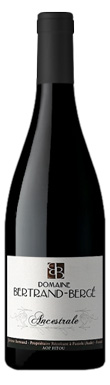
30% each of Syrah, Grenache, Carignan with 10% Mourvèdre. Full and rounded with a certain reticent power. Plenty of dark fruit flavour with a menthol-garrigue...
2016
Domaine Bertrand-BergéFitou
Mas Cal Demoura, Terre de Jonquières, Terrasses du Larzac, Languedoc-Roussillon, France, 2017
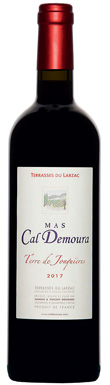
A blend of the five Languedoc varieties. Restrained red and dark fruit aromas. Finely etched tannins. A little tight but will open. Fresh and balanced...
2017
Mas Cal DemouraTerrasses du Larzac
Borie La Vitarèle, Les Terres Blanches, St-Chinian, Languedoc-Roussillon, France, 2017
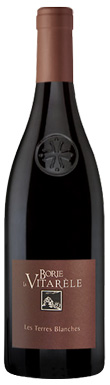
Grenache, Syrah and Mourvèdre. Open and expressive, with a breath of garrigue thyme, mint and spice. Fine tannins and texture.
2017
Borie La VitarèleSt-Chinian
