
Grant Burge Wines: producer profile
There have naturally been changes since new ownership five years ago, but the chief winemaker of this popular Barossa brand tells David Sly that the wine style remains the same – only better.


Five years have passed since Grant Burge sold his Barossa winery and brand, yet the current release of elite wines that carry his name has never looked stronger.
The crucial link in this continuing story is chief winemaker Craig Stansborough, who joined Grant Burge Wines in 1993 and has remained the driver of its wine style since 2006. His passion for the brand, and respect for the fruit-forward style that has made it globally popular, is unwavering.
Scroll down for David Sly’s tasting notes and scores on the latest releases from Grant Burge Wines
While the brand is now part of the vast Accolade Wines stable (whose global business includes other recognisable Australian brands like Hardy’s, Banrock Station and St Hallett) Stansborough has been trusted to keep producing wines that have come to define the southern Barossa region.

His reservoir of vineyard and vintage knowledge is why the brand’s story and popularity has not been disrupted since the winery sale introduced a new ownership and management structure.
The initial transition wasn’t easy. Ownership handover occurred at the start of the 2015 vintage; Stansborough was tasked with splitting up a loyal team. He had to remove the viticulture, marketing and sales departments that were now duplicated within the larger Accolade corporate structure.
These redundancies still don’t sit easily with Stansborough, though he says it highlighted to the remaining staff that they carried the legacy of this formidable 32-year-old wine label.
‘We realised it was up to us, and we took more ownership of the brand than ever before,’ says Stansborough. ‘I’d worked too hard and for too long on this brand to see it all disappear. I knew then I wasn’t just a winemaker working for a company but a custodian. It’s my job to respect this brand’s history and pass it on.’
Maintaining consistency
Stansborough insists the winery’s transition to new owners hasn’t been too difficult, mainly because he has retained familiar vineyards to work with. As part of the company sale conditions, Grant Burge remains the owner of many crucial vineyard sources, but is contracted for at least a decade to continue selling fruit to Accolade for Grant Burge Wines.
To bolster this resource, Accolade has also bought several Barossa properties to amass 130ha of its own vineyards and sourced new blocks from established Barossa grapegrowers. This provides Stansborough with fruit that is mostly clustered in the southern Barossa region, around the town of Lyndoch, but also from some high-elevation vineyards in Eden Valley.
‘Our fruit supply has remained consistent,’ says Stansborough. ‘Accolade was specifically interested in having a Barossa winery with a premium focus, and it didn’t want to interfere with a brand and a style that has established a very strong, supportive audience.’

It still came as a surprise when Grant Burge sold his winery, having shown grit and determination to build it from scratch in 1988. Using resources from the 1986 sale of Krondorf winery (which Burge co-owned with Ian Wilson) to Mildara Blass, Burge steadily grew his production to become one of Australia’s largest mid-sized wineries, selling up to 400,000 cases annually around the world.
However, this placed him in a difficult bind, needing to compete with multinationals on price and volume for market share. Margins squeezed tighter as growth continued, yet several times Burge vehemently announced via the media that his business was not for sale – most notably in 2004, after drinks giant Allied Domecq had failed to buy Peter Lehmann Wines and was sniffing around for another Barossa opportunity.
Vineyard assets
Burge’s great asset was more than 350ha of prime Barossa vineyards, making him the region’s largest private vineyard owner at that time, and those vineyards came to define a wine style that made Grant Burge Wines distinctive among the Barossa output.
When the sale occurred – a sign that operating costs for a winery of this size had proved overwhelming for a sole owner – it was the vineyards that became a primary consideration.
Accolade had made a strategic decision to acquire a Barossa brand, but it needed the right vineyards to maintain the integrity and personality of Grant Burge Wines. A deal was struck to appease both Burge and Accolade, and the effort to capture southern Barossa vineyard expression remains central to what Grant Burge Wines realises in the glass.

Reading these vineyards accurately has been instrumental in steady improvement of the wines, says Stansborough. This is aided by the introduction of Accolade’s larger vineyard management team led by viticulturist Rodney Birchmore. Ensuring better soil health, vine health and different pruning and canopy management regimes have all had a bearing on an elevated quality of fruit that arrives in the winery.
‘In this southern area, the climate isn’t as harsh as other parts of the Barossa,’ explains Stansborough. ‘It has higher rainfall, resulting in less stressed vines and more balanced canopies. The soils are generally deep red clay and loam, rich in nutrients, with ideal water-holding capacity. From this, we get bright red berry fruit instead of big plummy ripe characters. That’s the essence of what these wines need to capture.’
Trials and adjustments
Recent vintage releases have also shown that significant adjustments are being made in the winery, stemming from Stansborough’s modest but relentless pursuit of trials to experiment with his countless ideas – including many things that don’t end up becoming part of Grant Burge Wine releases.
Whole-bunch and wild-yeast ferments, adding stalks, oxidative handling, extended carbonic maceration and lees stirring – Stansborough is experimenting with the whole range of tricks currently being employed by more artisanal winemakers. Yet within his myriad trial batches, a surprising amount of radical ideas still find their way into Grant Burge Wines.
He points to notable small-batch releases, like The Natural 2010, using whole-bunch ferments and Shiraz from the famous Filsell vineyard. Most of these 1,000-litre trials never get released, but many have exerted an influence on modifying the Grant Burge house style through incremental change.
‘We’ve got more scope to do this than small wineries, we just don’t shout about it,’ says Stansborough. ‘We just get on with analysing the test results and then making our adjustments. It may only be 0.25% added to the blend, but it makes a difference to the wines’ structure.
‘It all helps us make a better wine without abandoning everything that has come before it,’ he adds. ‘Consumers have loved Grant Burge Wines through a long 30-year journey, and I can’t ignore that. Consumers don’t lie. They tell us what they want through what they buy.’
Heritage and legacy
The resulting portfolio remains true to Grant Burge Wines’ own heritage rather than chasing contemporary fashion. These approachable wines are plush and built around rich fruit and soft tannins; broad-framed and certainly generous in flavour, but always in balance.
Stansborough says recent vintages look especially strong, identifying the 2016 and 2018 reds as some of the best he’s produced.
He adds that careful development and improvement is a process that won’t stop. ‘We learn something every year, especially with soil health and vine health. The wine styles never stand absolutely still.’
Stansborough’s other long-term task is to develop a succession plan for who will eventually follow him as chief winemaker. He wants to ensure that the history and legacy of Grant Burge Wines is respected and maintained. ‘The next stage of my winemaking journey is identifying who the right people are to embrace this important historical role.’
A significant part of the legacy is continuing to fly a flag for the idiosyncratic style of southern Barossa wines. ‘A lot of big wine companies shout about the merits of northern Barossa, because that’s where they are based. But we believe the southern Barossa has a story worth telling – and we’ll keep telling it. It’s in this company’s DNA.’
Grant Burge Wines: a timeline
1865 Meshach Burge makes his first wines in the Barossa. His father, John Burge, emigrated with his family to South Australia from Wiltshire, England, in 1855
1951 Grant Burge, fifth-generation Barossa winemaker, is born
1977 26-year-old Grant Burge creates the successful Krondorf Winery with Ian Wilson. The wine brand is sold to Mildara Blass in 1986, but Burge buys many of the best Krondorf vineyards
1988 Grant Burge Wines is launched in the Barossa and immediately establishes international export markets
1993 The first super-premium wine, the 1988 Meshach Barossa Shiraz, launches after five years’ maturation in American oak barrels
1999 Grant Burge Wines buys back Krondorf Winery, refurbishing and rebranding it as Meshach Cellar, the Barossa tasting room
1999 Grant Burge buys 160ha former sheep station Corryton Park, in the southern Eden Valley. He plants 45ha to produce cool-climate Shiraz, Cabernet Sauvignon, Merlot and Petit Verdot
2006 Craig Stansborough is promoted to chief winemaker, having initially joined the company as cellar door manager in 1993
2015 Grant Burge Wines is purchased by Accolade Wines
Grant Burge Wines: the facts
Founded 1988
Owner Accolade Wines, purchased from founding proprietor Grant Burge in February 2015
Chief winemaker Craig Stansborough, since 2006
Annual production 400,000 cases
Vineyards 130ha, including access to 33ha of old vines planted between 1886 and the early 1900s. Fruit is sourced from mostly southern Barossa vineyards, centralised around Lyndoch: Corryton Park, Summers, Lily Farm, Grocke Farm, Colin Burge, Haese, The Holy Trinity, Daly Road, Wilsford, Hillcot, Filsell, Cameron Vale, Ashlyn, Miamba, The Chaff Mill, Berghofer and Wohlstadt
Grant Burge Wines: David Sly tastes the latest releases
You might also like…
September releases from Australia
Penfolds Collection 2020
Henschke releases 2015 Hill of Grace
Grant Burge, Shadrach Cabernet Sauvignon, Barossa, South Australia, Australia, 2016
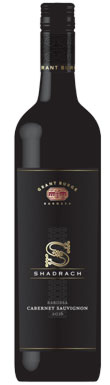

In good vintages, Cabernet Sauvignon from the Barossa Valley is an unexpected star performer – and this is a true beauty. The first Shadrach to...
2016
Grant BurgeBarossa

Grant Burge, Nebu Cabernet-Shiraz, Barossa, South Australia, Australia, 2017
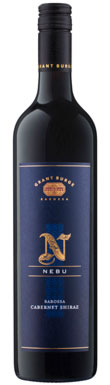
Choosing Cabernet to drive this top-tier blend (short for Nebuchadnezzar) brings lovely grace and lusciousness to the palate, and showing off the character of the...
2017
Grant BurgeBarossa
Grant Burge, Meshach Shiraz, Barossa, South Australia, Australia, 2016
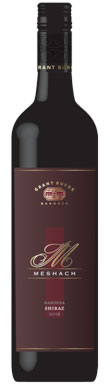
The next step in the evolution of Grant Burge's flagship wine shows less oak influence and more powerful fruit doing the bossy talking. The nose...
2016
Grant BurgeBarossa
Grant Burge, The Holy Trinity Grenache-Shiraz-Mourvèdre, Barossa, South Australia, Australia, 2018
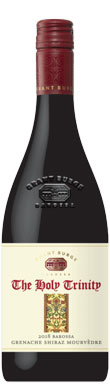
This is Grenache in serious mode, showing complexity and gravitas while also exhibiting lovely freshness and vitality. There’s generous red-fruited sweetness on entry, but then...
2018
Grant BurgeBarossa
Grant Burge, Abednego Shiraz-Grenache-Mourvèdre, Barossa, South Australia, Australia, 2017
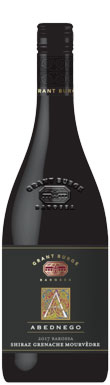
With Shiraz driving this blend, there’s savoury grip to the fleshy red-fruited mid-palate and a tickle of pepper in the tail. Good natural acidity ensures...
2017
Grant BurgeBarossa
Grant Burge, Filsell Old Vine Shiraz, Barossa, South Australia, Australia, 2018
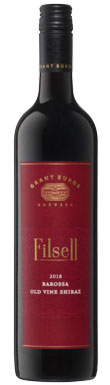
<p>A slightly cooler vintage in the southern Barossa, where Filsell grapes are sourced, has seen powerful black fruits fill the palate – stronger and richer...
2018
Grant BurgeBarossa
Grant Burge, Corryton Park Cabernet Sauvignon, Barossa, South Australia, Australia, 2018
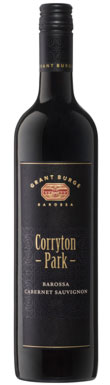
From an elevated 440m high vineyard near Williamstown in the southern Barossa, this is distinctly different Cabernet. Lots of familiar varietal notes – choc-mint, cassis...
2018
Grant BurgeBarossa
Grant Burge, Balthasar Shiraz, Eden Valley, South Australia, Australia, 2018
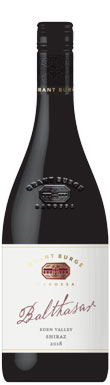
Plump and jolly, this is surprisingly sweet, uncomplicated Shiraz from a pair of Eden Valley vineyards. With a fulsome nose of violets over bright redcurrant...
2018
Grant BurgeEden Valley
Grant Burge, 20-year-old Tawny, Barossa, South Australia, Australia
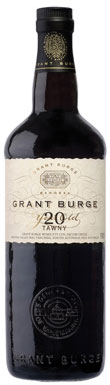
Serious ongoing commitment to maintain annual fortified production guarantees this tawny, with an average of 20-year-old components from its 15,000-litre solera, has freshness and vitality...
Grant BurgeBarossa
