Greywacke: Ten years on


You can't mention Greywacke without mentioning Cloudy Bay...
And mentioning Cloudy Bay brings history – the weight of New Zealand’s fate once seemingly hung on its shoulders.
Of course, brands such as Brancott and Villa Maria have more than played their parts in the high-volume arena, but Cloudy Bay was at the forefront of the country’s transformation into an international power in the ‘fine wine’ sphere, particularly in the case of its Sauvignon Blanc.
Now that its reputation is firmly in the bag – wine exports have been increasing every year for the last two decades and more, and New Zealand claims one of the highest average bottle prices of all wine-producing countries – certain winemakers have begun to explore alternative expressions of the styles the country’s success has been built on.
Enter Kevin Judd. The man who spent 25 years making Cloudy Bay – and therefore a key player in New Zealand’s formative years – established his own label, Greywacke, in 2009. He doesn’t own his own winery, instead making use of the facilities at Dog Point Winery in the lower Brancott Valley.
His label is named after the sedimentary greywacke pebbles which are evident in the main Rapaura vineyard but, as Kevin was keen to point out at a tasting earlier this week, ‘Greywacke isn’t about a bit of earth’. Asked how he selects his grapes, Kevin sums up the whole spirit of Greywacke in one sentence: ‘I do select, but there’s no recipe’. A winemaker who sits back and lets the wine do the talking.
And the results are intriguing. His winemaking may be seen as a brave step too far by some; if it ain’t broke, why try and fix it? However, his time at Cloudy Bay has clearly given him the freedom to experiment, and this is what he brings to Greywacke. The range of seven wines is a foray into a world of barrel-aged Rieslings, natural fermentations and just a bit of luck.
Kevin was in the UK to celebrate the 10th anniversary of Greywacke, and to mark the occasion we were treated to two examples of each of the seven wines – the first vintage of each wine, and the most recent. It was interesting to see not only how well they can age, but also how he has refined the winemaking processes for each after years of trial and error.
Greywacke: Then and now
You might also like:
Ata Rangi McCrone Vineyard: Tasting the difference
Beyond Sauvignon: Top New Zealand white wines – Panel tasting results
Cloudy Bay: Producer profile and latest releases
Greywacke, Sauvignon Blanc, Marlborough, New Zealand, 2018
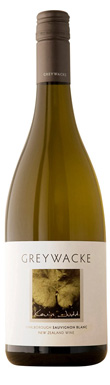

The warmest vintage on record in Marlborough, 2018 also saw plenty of rain, including three inches during harvest. This Sauvignon is perhaps the most 'typical' wine in the range, using mostly cultured yeasts and stainless steel for a fresh, zesty Sauvignon with lime and nettle scents. The subtly textured palate is crisp and full of guava, blackcurrant leaf and a touch of passion fruit. There's a nice stony quality on the finish, with good length.
2018
Greywacke

Greywacke, Sauvignon Blanc, Marlborough, New Zealand, 2009
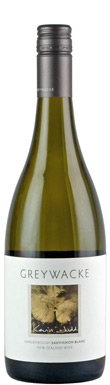
This first vintage of Greywacke Sauvignon is now displaying mulchy notes with some undergrowth and toffee scents, plus a touch of peach fuzz. In the mouth it's round and soft but with intense, saline acidity and flavours of herbs, passion fruit, more undergrowth, and some green fruits. It has held up well and is still fresh.
2009
Greywacke
Greywacke, Wild Sauvignon Blanc, Marlborough, New Zealand, 2016
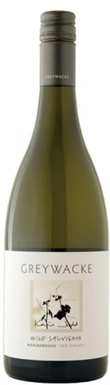
Greywacke (pronounced ‘Greywacky’) is the Marlborough label of Kevin Judd, one of the region’s pioneer winemakers after having directed the first 25 vintages at Cloudy Bay as their founding winemaker. Judd established Greywacke in 2009, named after the greywacke river stones found in the vineyards of much of the Wairau Valley, from which his fruit is sourced. This wine is made via a spontaneous indigenous yeast fermentation in mostly old French oak barrels, with occasional lees stirring. It was transferred out of oak just prior to the following harvest and then left on the lees for a further six months. Rebecca Gibb MW: A highly floral expression on the nose, exuding talc and rose petals, with a more delicate expression on the palate, remaining fine and focused throughout. Very pretty indeed. Roger Jones: A bright, zesty nose welcomes an elegant, seamless palate with restrained fruit, while at the same time offering complex notes of wet stone and guava. Gentle, yet tastes expensive. Phil Tuck MW: Lifted and concentrated with impressive depth, showing a delightful balance between a grassy varietal purity and a subtle oaky complexity. Really well done.
2016
Greywacke
Greywacke, Wild Sauvignon Blanc, Marlborough, New Zealand, 2010
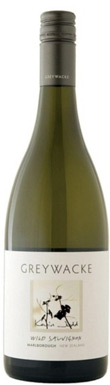
There's a touch of developed Sauvignon mulch character here, but much less than the 2009 Sauvignon Blanc. It's not as bright, but makes up for it with complexity: smooth aromas of toffee and rich candied citrus, with some nettle and herb lift, followed by flavours of zesty citrus and elderflower backed by tingly spice from yeast and barrel. Guava, nettle, mineral and subtle stone fruit flavours appear on the mid-palate, rounding out the body. An intriguing wine that still has life and could be a great food wine.
2010
Greywacke
Greywacke, Chardonnay, Marlborough, New Zealand, 2015
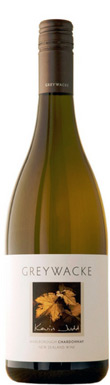
From two Chardonnay clones: 'Mendoza', which has great concentration, low yields but very high acidity, and 'Clone 95', which brings balance. This wine is fermented with wild yeasts in French oak barriques, 20% new, with a high proportion of solids. It underwent full malo to counteract the high acidity, giving a lovely creaminess to the palate. It's packed full of flavour, with intense bacon fat, spice and subtle tropical fruit. It sounds big on paper, but it's an elegant style that should age well.
2015
Greywacke
Greywacke, Chardonnay, Marlborough, New Zealand, 2011
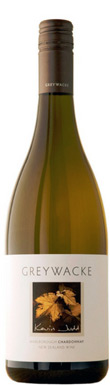
The 2011 is in a lovely place now. It has a hint of reduced, struck-match aroma along with some herbaceousness, toffee and spice. There's a sweet note on the attack, followed up by saline acidity, buttery richness, a touch of nut and spicy black and white pepper. The long, mouthwatering finish develops delicious citrus and grapefruit complexity.
2011
Greywacke
Greywacke, Riesling, Marlborough, New Zealand, 2017
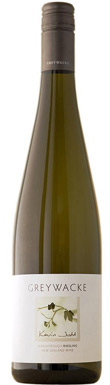
It's not often you see an oak-aged Riesling, but we are lucky to see this wine at all - bad weather meant that the ripeness was marginal, and it was only thanks to Kevin's wife, Kimberley, that it was picked; albeit just one tonne. It's from a single block of vines over 20 years old, all hand-picked. The bad luck just kept coming, and an accident meant that 80% of the juice was unusable, meaning that only 50 cases of the 2017 Riesling exist. It's a unique wine, marked by the vintage. The closed nose develops rich honey notes after a few minutes in the glass, leading to a delicious palate of green apple skin, lime zest, vinyl and some juicy satsuma. The texture is fairly soft thanks to the 16g/l of residual sugar, but the acidity makes itself apparent with a pH of 2.99. If you can find any, buy it!
2017
Greywacke
Greywacke, Riesling, Marlborough, New Zealand, 2014
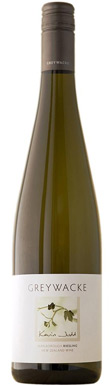
A rough 50/50 split between cultured yeast in stainless steel and wild yeast in barrel, the wine was subsequently transferred to a stainless steel tank where the fermentation was stopped with 20g/l residual sugar remaining. It then spent six months on its lees in old barrels before bottling. The result is a more 'typical' Riesling than the calamitous 2017. It carries the sugar well, seeming a touch drier at first, offering up elegant flavours of apple, tangy lime and lanolin. A lovely wine which straddles the line between lean steeliness and rich oakiness perfectly.
2014
Greywacke
Greywacke, Pinot Gris, Marlborough, New Zealand, 2016
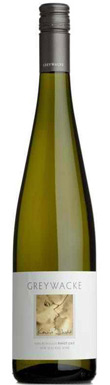
This expression of Pinot Gris is fermented with a combination of cultured yeast in stainless steel and wild yeast in barrel, then matured for around seven months in barrel. It has a gentle, relaxed aroma of rosewater and just a hint of apricot. The soft, round palate carries 10g/l of residual sugar, characterised by its languorous acidity, grippy oak texture and rich pineapple and apricot flavours. Full and round, with great balance - this comes across as being drier than it really is.
2016
Greywacke
Greywacke, Pinot Gris, Marlborough, New Zealand, 2013
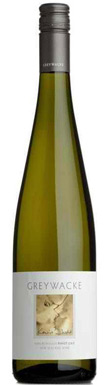
Compared the the 2016, Greywacke's first vintage of Pinot Gris is more buttery and creamy, softer on the palate with rose, mulchy herbs and woody, stone fruit aromas.
2013
Greywacke
Greywacke, Pinot Noir, Marlborough, New Zealand, 2015
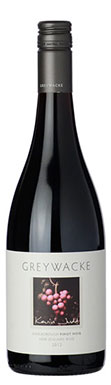
From several different plots, all of different Pinot clones, the fruit was kept separate and partially whole-bunch fermented with wild yeast, then aged separately in medium-toast French oak, 40% new, for 18 months. It was then blended, fined and bottled. It has a lovely bright cherry nose, followed on the palate by some tarry oak, dark chocolate and fresh red fruits. The oak is dominant at the moment, with a fuller, richer, woodier character than the 2012, but it should settle down to reveal the purity of the fruit beneath.
2015
Greywacke
Greywacke, Pinot Noir, Marlborough, New Zealand, 2012
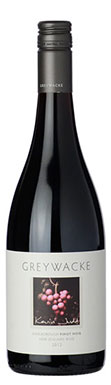
This is brighter and lighter on its feet than the 2015, showing deliciously tangy, juicy cherry and cranberry fruit with raspberry acidity. It has a gentle texture, some barrel woodiness and spice, and an elegant, mouthwatering finish.
2012
Greywacke
Greywacke, Botrytis Pinot Gris, Marlborough, New Zealand, 2015
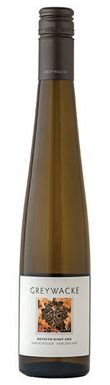
Luscious apricot and black fig with exotic spice and dried orange peel. Tastes sweeter than the 105g/L residual sugar suggests, but in harmony with its acidity.
2015
Greywacke
Greywacke, Late Harvest Gewurztraminer, Marlborough, New Zealand, 2009
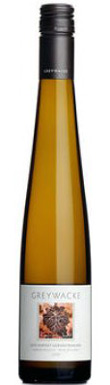
Kevin sourced these grapes from Cloudy Bay, spotting the botrytised fruit still hanging on the vine after harvest. He decided to purchase them and make them into a wine rather than let them go to waste. It has the classic Gewurz scent of rosewater and some sweet spice, accompanied by some apricot lushness and floral lift in the mouth. The palate is rich thanks to the 90g/l of residual sugar, but it's balanced well by a very fine, focussed vein of acidity. Beautiful.
2009
Greywacke
