
Guide to Pinot Meunier Champagne
Charles Curtis MW introduces the unsung grape variety that makes up Champagne's holy trinity, highlighting 12 producers to know and picking 20 great buys worth seeking out.

‘Meunier is the most “Champenois” of grapes’, according to Benoît Déhu of La Rue de Noyers.
Of course, he is right. This grape variety is planted over one-third of the vineyard area in Champagne, and yet enjoys a far lower profile than the other Champagne varieties, Chardonnay and Pinot Noir.
Some of their work is nothing short of spectacular.
Scroll down to see Charles Curtis MW’s 100% Pinot Meunier Champagne tasting notes and scores
The grape’s full name is Pinot Meunier, and it is a mutation of Pinot Noir. It received its name because the leaves appear to have been sprinkled with flour, and Meunier means ‘miller’ in French.
Although closely related to Pinot Noir, many producers in the region refer to it simply as ‘Meunier’ full stop in order to emphasise the grape’s unique identity.
The first reason that it is so widely planted was very evident this year when frost swept through Champagne on the nights of 6-7 April: Chardonnay suffered frost damage, while Meunier, which had not yet budded out, did not.
The growing season is shorter on both ends than Pinot Noir, budding later and ripening earlier. As such, it was often relegated to the bottom of the slope where frost damage can be an issue and to cooler north-facing sites that can sometimes ripen fruit with difficulty.
The newest wave of Meunier enthusiasts, however, can be found throughout the region.
Sales, too, are skyrocketing. Tastemakers such as Aline Serva, owner of Au Bon Manger in Reims are smitten, and its popularity grows weekly. According to Déhu, ‘A week does not go by that I don’t receive an inquiry about Meunier Champagnes’.
The secret of its success is simple: there is an easy, fresh appeal at first and, contrary to received wisdom, Meunier Champagne can age quite well. Despite the ever-higher prices, it is hard to keep the best of them in stock.
Meunier in the glass
Although Champagne made entirely from Meunier is by definition a blanc de noirs, this type of Champagne lacks the vinous nature of many blanc de noirs.
The most salient character of Meunier is a soft, gentle fruitiness – not a bad character in a Champagne.
Aromas tend toward ripe pear, white blossoms, and chamomile.
The grape has slightly lower acidity than Pinot Noir or Chardonnay. Winemakers counter this by blocking malolactic fermentation and by omitting dosage. This keeps the wine fresh, yet Meunier Champagnes are easier to approach in their youth than those based on Pinot Noir or Chardonnay.
A dozen names to know
Tarlant
One of the most innovative domaines in the region, and an excellent place to begin the discovery of 100% Meunier Champagnes. Among the diverse wines they produce, winemaker Benoît Tarlant crafts a wine from vines planted in 1947 by his grandfather in the lieu-dit La Pierre de Bellevue on north-facing slopes overlooking the Marne.
Meunier can lack structure, so Tarlant does not encourage malolactic and adds no dosage, ensuring that the result remains lively and fresh, even after ageing 10 years on the lees.
Dehours
Jérôme Dehours greets visitors to his winery in Mareuil-le-Port in a starkly modern tasting room overlooking the vineyards, with rock and roll playing in the background.
Despite the trendy surroundings, however, these are serious wines. Dehours was one of the first to bottle a single-vineyard wine from Meunier in 1999, Les Genevraux.
The roster of Meunier-only wines has expanded over time and now there are no fewer than seven: three single vineyards, three blends and a rosé. The single-vineyard wines are all fermented on cask on their own selected yeasts and aged in barrel until the summer before tirage.
Christophe Mignon
His vineyards are farmed using organic and biodynamic techniques, although they are not certified. He produces a 100% Meunier blended from grapes from Le Breuil and Festigny in non-vintage, vintage, rosé, and rosé de saignée versions.
Benoit Déhu
Studious and somewhat shy, Déhu makes the wines for the family house of Déhu Père et Fils, but his true passion is his own 1.7ha single vineyard, La Rue des Noyers. This organic-certified vineyard produces four Meunier-only wines: a blanc and a rosé Champagne, and a white and red still wine that bear the appellation Coteaux Champenois.
The Champagnes are fermented and aged in casks made of wood from the local forest, while the Coteaux are destemmed and fermented in stainless steel. These are powerful, vinous wines with plenty of structure that can age for years.
Déhu believes that the secret to making vinous, sinewy wines from Meunier lies in four techniques: biodynamic methods in the vineyard, keeping yields low, cask fermentation, and ageing the base wines in cask on the lees for an extended period.
Bourgeois-Diaz
Jérôme Bourgeois-Diazalso farms biodynamically and is certified by Demeter. His seven-hectare estate is planted to a mix of grapes. Still, he focuses exclusively on Meunier for his Cuvée BD’M is fermented in a combination of stainless steel tanks, casks, concrete vats, concrete and sandstone eggs, and amphora and finished without dosage.
Laherte Frères
Les Vignes d’Autrefois is a selection of the oldest vines, all planted between 1947 and 1953, vinified in cask to give a wine of concentration and intensity. There is also a brightly coloured rosé de saignée called Les Beaudiers, from old-vine Meunier macerated on the skins for 12–14 hours before fermentation in cask.
Geoffroy
Based in the premier cru of Cumières, seventh-generation winemaker Jean-Baptiste Geoffroy crafts a single-vineyard 100% Meunier cuvée from the lieu-dit Les Tiersades. The vineyard lies behind the village in a prime mid-slope location with vines nearly 50 years of age are planted in sandy soils over chalk.
Augustin
Further along the Grande Vallée, on the way to the Montagne de Reims lies the premier cru village of Avenay Val d’Or. Here Marc Augustin employs biodynamic methods to produce his Demeter-certified cuvées along the principles of feng shui. His Cuvée Cœur Saphyr is 100% Meunier vinified in amphora and enamelled steel tanks.
Juillet-Lallement
As one follows the D26 around the Montagne de Reims from Avenay Val d’Or past Bouzy and Ambonnay to Trépail, Verzy and Verzenay, there is remarkably little Meunier, and Pinot Noir has been given pride of place in nearly all the vineyards.
Meunier begins to appear again in Sillery, a north-facing grand cru village. Here, Jean Lallement crafts his innovative cuvée Belle de Juillet Pinot Meunier Grand Cru from the single-vineyard site Les Buissons des Vignes. (Even Moët et Chandon recognised the possibilities of Meunier in Sillery. This iconic house was among the first to release Meunier from a single vineyard site in Sillery in 2001, Les Champs de Romont.)
La Closerie
The Prévost family owns a parcel in the lieu-dit Les Béguines, in the Petite Montagne. This was a tidal zone, with layers of sand mixed with clay, and the sand makes for a warmer terroir, ripening grapes well. Despite this ripeness, technique is important to draw the best out of Meunier.
According to Jérôme Prévost, ‘What I like about Meunier is that it is a bit shy, reserved: for it to have something to say, you have to go in search of it, but you cannot force it.’ Vines propagated via massale selection, picking very ripe fruit and a modest dosage are all essential in his view, but among the most important factors is time. ‘I have noticed that it takes an average of six years after harvest for optimal expression of the vintage.’
The ‘shy’ Meunier of Prévost produces a wine of exquisite finesse and elegance. He produces several cuvées from this plot, including a delicious (but very rare) rosé called Fac-Simile.
Emmanuel Brochet
From the 2008 vintage, Brochet has isolated a 0.4-hectare plot planted in 1962 to produce a barrel-fermented cuvée in particularly good years. The old vines give the Champagne intensity, yet it is supremely elegant as well, with a freshness that comes from blocking malolactic and finishing the wine as brut nature without dosage.
Nicolas Maillart
A parcel of Meunier planted in 1972 is the source for his Mont Martin wine, which he barrel ferments and ages for eight months on the lees before bottling for the second fermentation. Recent vintages have been bottled without dosage, and the result is delightful – intense, expressive and elegant.
See 20 top Pinot Meunier Champagne tasting notes and scores
You may also like
Has the Champagne price bubble burst?
Champagne: the art of blending
Oysters and Champagne: a match made in heaven
How to store Champagne at home
Tarlant, La Vigne d’Or, Champagne, Champagne, France, 2004
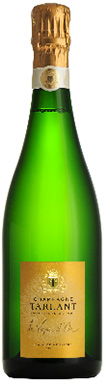

A superb champagne. This wine is produced from vines planted in clay soils in 1947 in the single vineyard called Pierre de Bellevue, located in...
2004
TarlantChampagne

Benoît Déhu, La Rue des Noyers, Champagne, Champagne, France
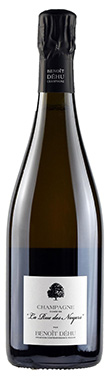
From his 1.7-hectare parcel in the farthest western reaches of the Marne Valley, Déhu produces four separate wines of uncanny concentration and vinosity. The...
Benoît DéhuChampagne
Chartogne-Taillet, Les Barres, Champagne, Champagne, France, 2013
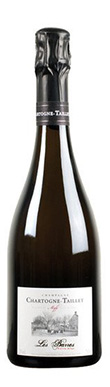
Ungrafted vines planted in 1952 in the lieu-dit of Les Barres on the Massif de Saint-Thierry furnish the grapes for this intensely flavoured wine. ...
2013
Chartogne-TailletChampagne
Dehours & Fils, Les Genevraux, Champagne, Champagne, France, 2005
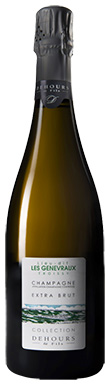
Scant-yielding old vines from north-facing hillside slopes provide the grapes for this single-vineyard wine. Nearly ten years after the vintage, the wine revealed a...
2005
Dehours & FilsChampagne
Emmanuel Brochet, Les Hauts Meuniers, Champagne, Champagne, France, 2012
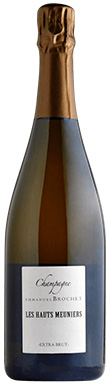
Produced from a selection of the Meunier vines from Le Mont Benoît planted in 1962 at the top of the hill, this is fermented in...
2012
Emmanuel BrochetChampagne
Jérôme Prévost, La Closerie Fac-Simile Extra Brut Rosé, Champagne, Champagne, France
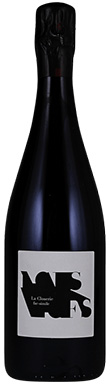
Jérôme Prévost is one of the most celebrated vignerons of the young generation, and his very light rosé is a wine of exceptional purity and...
Jérôme PrévostChampagne
Juillet-Lallement, La Belle de Juillet Grand Cru, Champagne, Champagne, France, 2015
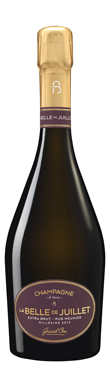
This is a spectacular wine, produced from a tiny north-facing plot in the grand cru Sillery lieu-dit Les Buissons des Vignes. The wines are...
2015
Juillet-LallementChampagne
Chevreux-Bournazel, La Parcelle Cuvée La Capella, Champagne, Champagne, France, 2016
This ferociously trendy boutique Champagne house run by Stéphanie Chevreux and Julien Bournazel in the village of Connigis along the banks of the Surmelin river...
2016
Chevreux-BournazelChampagne
Bérêche & Fils, Rive Gauche, Champagne, Champagne, France, 2012
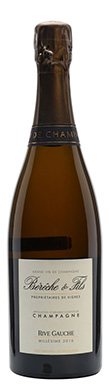
Produced from nearly a half-hectare of 45-year-old Meunier vines in Mareuil-le-Port planted in deep clay soils in the lieux-dits of Maisoncelle and Côte aux Châtaigniers....
2012
Bérêche & FilsChampagne
Laherte Frères, Vignes d’Autrefois, Champagne, Champagne, France, 2014
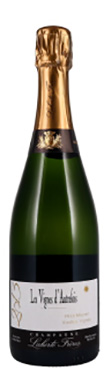
The oldest Meunier of the estate goes into Vignes d'Autrefois, planted between 1947 – 1953 in a selection of sites throughout the Coteaux Sud d'Epernay....
2014
Laherte FrèresChampagne
Leclerc Briant, Cuvée Blanc de Meunier, Champagne, Champagne, France, 2015
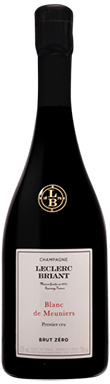
This silky, polished champagne is produced from certified organic grapes grown in the premier cru village Chamery (Petite Montagne), fermented in cask and aged ten...
2015
Leclerc BriantChampagne
Nicolas Maillart, Mont Martin, Champagne, Champagne, France, 2015
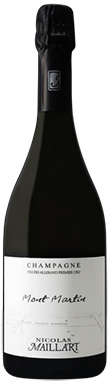
This is lovely, expressive champagne produced from a 1.8-hectare parcel in Villers-Allerand on west-facing slopes of limestone-rich marl and clay soils. The grapes...
2015
Nicolas MaillartChampagne
Billecart-Salmon, Les Rendez-Vous de Billecart-Salmon No.1, Champagne, Champagne, France
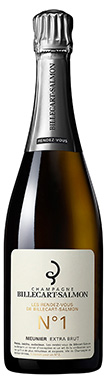
This is a reassuringly grande marque-style Meunier, with a silken richness and texture on the palate that is truly lovely. Although Billecart is based...
Billecart-SalmonChampagne
Bourgeois-Diaz, BD'M, Champagne, Champagne, France
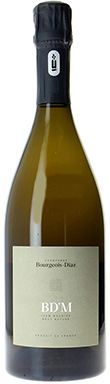
In the far reaches of the western Marne, this strikingly accomplished cuvée is assembled from three parcels of Demeter-certified biodynamic vines in the 2017 harvest....
Bourgeois-DiazChampagne
Christophe Mignon, Pur Meunier, Champagne, Champagne, France, 2013
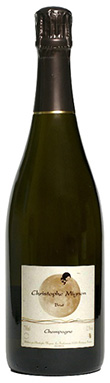
Mignon ferments his wine in tank and blocks the malolactic fermentation to maintain freshness. The wine is aged for three years on the lees,...
2013
Christophe MignonChampagne
Jean-Marc Sélèque, Soliste Meunier, Champagne, Champagne, France, 2012
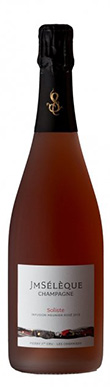
Vines planted 70 years ago in the premier cru Pierry lieu-dit Les Gouttes d'Or produced the grapes that are fermented half in cask, half in...
2012
Jean-Marc SélèqueChampagne
Moussé Fils, Special Club, Champagne, Champagne, France, 2013
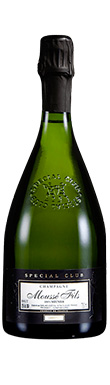
Four parcels in the steep south-east facing lieu-dit of Les Forts Terres in premier cru Cuisles on the right bank of the Marne provide the...
2013
Moussé FilsChampagne
Dehours & Fils, Terre de Meunier, Champagne, Champagne, France
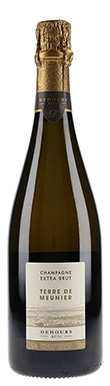
A blend of cask-fermented Meunier from the 2014 harvest from two parcels with a small addition of reserve wines, this was aged for two years...
Dehours & FilsChampagne
Geoffroy, Les Tiersaudes, Champagne, Champagne, France, 2013
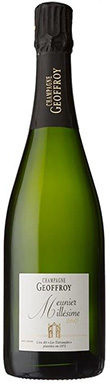
Grapes from a prime mid-slope parcel in Cumières planted to 46-year-old vines in sand and clay soils over marl deliver a wine of subtlety and...
2013
GeoffroyChampagne
Champagne Augustin, Cuvée Cœur Saphyr, Champagne, Champagne, France
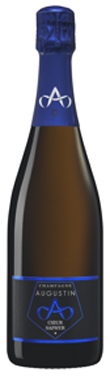
For amateurs of natural wine, this tiny cuvée (950 bottles) was produced in the Grande Vallée village of Avenay Val d'Or from Demeter-certified biodynamic grapes...
Champagne AugustinChampagne