Heitz Cellar: Producer profile
Matthew Luczy investigates the history of Heitz Cellar to understand the style of its present-day wines...


The wine world is a difficult one in which to hold your ground. Constantly shifting and being altered by context, public opinion and Mother Nature, there are few wineries that deserve to be thought of as mainstays. Napa Valley’s Heitz Cellar is one of them. Since its founding in 1961, Heitz has drawn its own ideological line in the sand and consistently delivered wines of authenticity, poise and complexity.
Considering the style of many modern Napa Cabernets, Heitz feels almost rebellious in its disregard for external factors. This is a direct result of the spirit of Joe Heitz himself. ‘You have to understand Joe Heitz’s experience as a winemaker to understand the Heitz style,’ says Master Sommelier Carlton McCoy, Heitz Cellar president and CEO.
‘He was unapologetically American, a very “steak and potatoes” kind of guy. He took an enormous amount of pride in what America, and in a more specific sense the Napa Valley, produced. He hated the perspective and attitude that Europe showed towards Americans during his time – as if they were just a bunch of backcountry Californians trying to make quality wine.’
Background story
Joe Heitz was born in 1919 in Princeton, Illinois. Initially wanting to become a veterinarian, the outbreak of World War II drove him to enlist in the US Air Force, where he would end up servicing aircraft in Hawthorne, California.
While looking for an additional source of income to supplement his military wages, he found a night job working at Italian Swiss Winery near the airbase. It was here that his interest for wine would spark, being taken under the wing of winemaker Dale Mills. After his discharge from the Air Force once the war was over, he enrolled in the viticulture and oenology programs at California’s UC Davis, graduating with his bachelor’s degree in 1948 and his master’s degree three years later.
There were very few operational wineries in Napa during this time, but the undoubted centerpiece was Beaulieu Vineyard. BV, as it is still known today, was under the direction of André Tchelistcheff, arguably the single-most influential winemaking figure of America’s post-Prohibition era. Tchelistcheff was headhunted from France in 1938 by owner Georges de Latour, and brought with him myriad European winemaking techniques such as the use of colder ferments and French oak barrels.
In 1951, after stints at a few wineries including Gallo, Joe Heitz joined BV and became Tchelistcheff’s assistant winemaker. Heitz had no qualms in disagreeing with his new mentor. For example, Tchelistcheff was an ardent proponent of malolactic fermentation, but Heitz felt this practice was being forced upon him; he was steadfast in his ‘just because it’s European doesn’t mean it’s better’ mindset.
Heitz Cellar’s blockage of malolactic fermentation continues to this day. ‘The Napa Valley is a warm region,’ says McCoy. ‘We don’t need to “soften” anything.’
Heitz Cellar: the facts
Founders Joe and Alice Heitz, in 1961
Current owner Gaylon Lawerence Jr
Location St Helena, Napa Valley
Production 25,000 cases annually
Vineyards 40ha of estate vineyards throughout the Napa Valley, 13.8ha of purchased fruit from Martha’s Vineyard in Oakville AVA
Wines Grignolino Rosé, Sauvignon Blanc, Chardonnay, Quartz Creek Chardonnay, Cabernet Sauvignon, Trailside Vineyard Cabernet Sauvignon, Martha’s Vineyard Cabernet Sauvignon, Linda Falls Vineyard Cabernet Sauvignon
Beaulieu Vineyard to Martha’s Vineyard
In 1958, Heitz would leave Beaulieu Vineyard, initially working with Fresno State University to develop its oenology curriculum. He would officially establish Heitz Cellar with his wife Alice in 1961 by purchasing the property of Leon Brendel. Brendel was a well-respected Alsatian winemaker whom Mexican President Francisco I Madero hired to make his Casa Madero wines in Coahuila.
When Prohibition was repealed, Brendel moved north to the Napa Valley, eventually becoming cellarmaster at Freemark Abbey. He owned a small ranch south of St Helena where he had planted Grignolino, and it is this site that Joe and Alice Heitz would purchase. A handshake deal was made that these nostalgic Grignolino vines would remain, explaining the seemingly-out-of-place varietal in the winery’s portfolio.
At first, Heitz Cellar was set up as mainly a négociant business, with Joe purchasing wines already in barrel from Hanzell Vineyards in Sonoma, bottling and releasing them under the Heitz label. The operation would continue in this way until 1964, when Joe and Alice purchased what is still the current Spring Valley winery outside St Helena, a building dating back to 1898.
In another handshake deal, this time with Tom and Martha May in 1965, Joe started to purchase grapes from their Martha’s Vineyard in Oakville. After just one vintage of blending their fruit into his own Napa Valley Cabernet, Joe Heitz made the decision to bottle the Martha’s Vineyard Cabernet Sauvignon on its own, making it one of California’s first vineyard-designate wines – Ridge’s Monte Bello was the first, the year prior in 1965. Time has proven Martha’s Vineyard to be one of the world’s great, long-lived Cabernet Sauvignons.
While Martha’s Vineyard is the pinnacle of the Heitz portfolio, the Trailside Vineyard Cabernet is every bit its equal in terms of complexity and expressiveness, making it an impressive bargain. First produced in 1989, it is planted in alluvial gravel on the eastern bench of the Rutherford AVA, and is softer and dustier than the powerfully tannic but brilliantly showy Martha’s Vineyard Cabernet.
The single-vineyard Cabernet lineup is rounded out by the 2013 introduction of the Linda Falls Vineyard from the Howell Mountain AVA. Heitz bought this 16.2ha property next to the Linda Waterfall and planted 2.8ha of Cabernet Sauvignon in 2002. The rest of the land was returned to the Napa Valley Land Trust. This is the most hard-edged and gritty of the three single-vineyard wines; its mountain origins rugged against the softness and svelte texture of the valley floor Cabs.
Heitz Cellar: a timeline
1948 Joe Heitz graduates from California’s UC Davis
1951 Heitz is hired as assistant winemaker at Beaulieu Vineyard under André Tchelistcheff
1958 Heitz leaves Beaulieu Vineyard to develop Fresno State University’s oenology curriculum
1961 Joe and wife Alice buy 3.2ha south of St Helena and establish Heitz Cellar
1966 Heitz bottles a Martha’s Vineyard Cabernet Sauvignon, creating one of the first vineyard-designate wines in California
1974 Joe’s son David Heitz begins to take over as winemaker, producing the legendary 1974 Martha’s Vineyard Cabernet
1976 The 1970 vintage of Martha’s Vineyard Cabernet appears in the Judgment of Paris
1984 Heitz adopts organic practices. Trailside Vineyard is introduced
2000 Joe Heitz dies
2018 Heitz Cellar is purchased by Gaylon Lawrence Jr. Carlton McCoy is brought in as president/CEO
2019 Heitz begins work to convert all vineyards to biodynamic farming
Cellar practices
Much of Joe Heitz’s cellar practises survive today under current director of winemaking Brittany Sherwood. Pre-fermentation maceration is where a lot of Napa Cabernets start to veer off a balanced and lifted course. Heitz, however, takes a mellow, pump-over-only approach at this stage, eschewing punch downs to achieve a light ‘infusion’ of skins and juice. McCoy explains: ‘An “extraction” is something you squeeze out, an “infusion” is something you gently do. It really sets the tone for understanding how we make wine.’
The grapes are fermented at relatively low temperatures of 20°C-22°C degrees, retaining a greater level of freshness and energy than the warmer, more common 28°C-38°C found in more extracted styles of Cabernet. The wines are pressed off their skins before fermentation has finished completely, leaving about 2.5g/L of residual sugar when the juice is transferred to the 60-year-old, 20,000L American oak vats. They will finish fermentation here and stay in these vessels for one year before being transferred to French barriques for up to three years for the Trailside and Martha’s bottlings. The wines will then see more ageing in bottle: two years for the single vineyards, and one year for the Napa Valley blend. Even with a global perspective, this extreme commitment to pre-release ageing and conditioning truly sets Heitz apart.
The Chardonnays follow the old-school Napa style pioneered by Stony Hill Vineyard: the grapes are whole-cluster pressed, fermented in stainless steel and, staying true to Joe Heitz’s distaste for the process, do not undergo malolactic fermentation. For the 18-month maturation, the whites are treated with ‘the Roulot method’, as McCoy calls it: one year in oxidative vessels (rarely more than 10% new oak is used) then six months in stainless steel to ‘tighten the wine up’. The result with both the Napa Valley and the Quartz Creek single-vineyard bottlings is a clean and focussed style of Chardonnay that is all but extinct in Napa today.
Going forward
In 2018, the Heitz family decided it was time to hand over the legacy of this historic establishment, and Heitz Cellar was purchased by agricultural businessmen Gaylon Lawerence Jr. Whenever a seminal winery like this changes hands there is cause for concern as to what route the new owners will take going forward. But tasting the new vintage releases, it seems that Heitz is in good hands, continuing to take inspiration from the balanced and terroir-driven wines of the past.
‘The future of Napa is site-specific and lot-specific,’ says McCoy, whose team is focussed on bringing freshness and a sense of place back to the valley.
Heitz Cellar: Tasting the range
You may also like:
Arnot-Roberts: producer profile
Jolie-Laide: Producer profile
Petaluma Gap AVA anniversary tasting
Heitz Cellar, Chardonnay, Napa Valley, California, USA, 2017
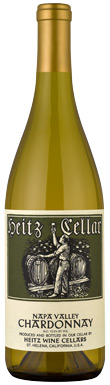

This is one of the last bastions of Napa Chardonnay that retains the ethos of winemaking from the 1970s and '80s. A blend of mainly Rutherford and Oak Knoll fruit, it undergoes no malolactic fermentation and is aged for 12 months in French oak barrels. Aromas of lemon meringue, key limes and orchard fruit blossoms lead to an angular, focussed and pure palate. An authentic example of a past time.
2017
Heitz CellarNapa Valley

Heitz Cellar, Quartz Creek Chardonnay, Napa Valley, Oak Knoll, California, USA, 2018
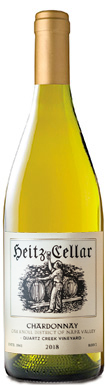
Quartz Creek in the Oak Knoll AVA is one of Heitz Cellars' single vineyards. The wine was aged for 14 months in barrel and saw no malolactic fermentation. A small amount of new oak (10%) contributes to a level-up in complexity from the Napa Valley bottling. Subtle nutty and creamy notes are harnessed by a core of acidity that comes off as effortless. A standard bearer for modern Napa Valley Chardonnay.
2018
Heitz CellarNapa Valley
Heitz Cellar, Cabernet Sauvignon, Napa Valley, California, USA, 1998
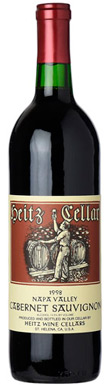
The Napa Valley Cabernet Sauvignon is a mainstay of the Heitz lineup – the only bottling that has been in continuous production since the winery’s 1961 inception. This 1998 vintage is in a wonderful second phase of its life, with aromas of mint, anise and oiled leather. Rounded and mature flavours of dried figs and plums lead to a plush, lifted finish. Heitz's consistency in challenging vintages is perfectly represented here, and this has at least another decade of life left.
1998
Heitz CellarNapa Valley
Heitz Cellar, Cabernet Sauvignon, Napa Valley, California, USA, 2015
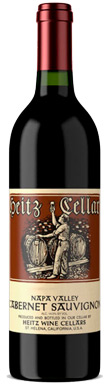
Heitz Cellars' Napa Cabernet is always one of the region's best-value buys, thanks in part to the winery's dedication to a pre-release ageing regimen. It spends eight months in neutral tank, two years in 50% new French oak, and then 18 months in bottle before release. Notes of aged leather, toffee and brick dust on a refined and velvety-textured palate. An honest Napa Cab.
2015
Heitz CellarNapa Valley
Heitz Cellar, Linda Falls Vineyard Cabernet Sauvignon, Napa Valley, Howell Mountain, California, USA, 2014
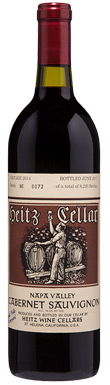
Much deliberation goes into introducing vineyard designates at Heitz, and the 2014 Linda Falls Cabernet is only the second release from this site, planted in 2002. It aged for one year in large American oak vessels before being transferred into French oak barrels for two more years. It is classic Howell Mountain: gritty, burly and driving, with dark, drying, rustic tones running through the finish. It is fascinating to taste a mountain-grown Cabernet from this predominantly valley floor-oriented producer.
2014
Heitz CellarNapa Valley
Heitz Cellar, Lot C-91 Cabernet Sauvignon, Napa Valley, California, USA, 2017
In 1969, Heitz produced a one-off cuvée called Lot C-91. It was thought of as an elevated version of the Napa Valley Cabernet – a 'best of the best' blend from sites throughout Napa. After a bottle of the '69 turned up and turned heads at a Heitz wine dinner, the winemaking team decided to produce a modern iteration. It's comprised of vineyards in four AVAs: Rutherford (34%), Oakville (34%), Howell Mountain (17%) and St Helena (15%). The dazzling nose instantly shows off the component from Martha's Vineyard and on the palate it walks the line between succulent, powerful, herbal and floral, showing none of the heat of the 2017 vintage. As of June 2020, this was still a barrel sample, while many Napa 2017s are already on the market.
2017
Heitz CellarNapa Valley
Heitz Cellar, Martha's Vineyard Cabernet Sauvignon, Napa Valley, Oakville, California, USA, 2014
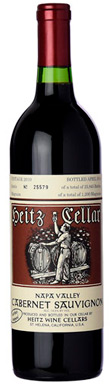
Martha’s Vineyard is one of the most famous vineyards in the US, and the 2014 vintage from this hallowed site is as good as it gets for Napa Valley Cabernet. At every turn it exudes class, structure and a definitive air. Aromatically it commands you to pay attention; the palate will give you no choice. A thunderous wine in every dimension, giving off its classic mint and eucalyptus notes with perfectly harnessed power. The finish is a showstopper in its length and persistence. Tasted across five days, it was constantly on the ascent for the first two and a half, and perfectly enjoyable on the fourth. A true work of art.
2014
Heitz CellarNapa Valley
Heitz Cellar, Trailside Vineyard Cabernet Sauvignon, Napa Valley, Rutherford, California, USA, 2001
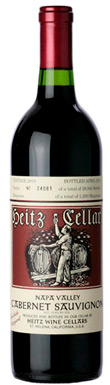
This Rutherford vineyard is a sleeper in the Heitz lineup, often caught in the shadow of the legendary Martha’s Vineyard in Oakville, but offering serious value by comparison. This 2001 vintage shows smoky, herbal and iron-driven aromas leading to graphite and pepperoncini flavours. Drinking beautifully at the moment and should continue to evolve for another two decades.
2001
Heitz CellarNapa Valley
Heitz Cellar, Trailside Vineyard Cabernet Sauvignon, Napa Valley, Rutherford, California, USA, 2014
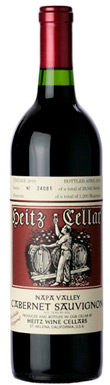
Trailside Vineyard has been a Rutherford estate site for Heitz Cellar since 1984, and produces one of the most undersung Cabernets in the Napa Valley. Martha’s Vineyard may garner more attention, but the Trailside bottling is every bit its equal in terms of complexity. Softer and more nuanced than the rustic Martha's, the nose and texture here are dictionary definitions for Rutherford: dusty, plush and long. The finish is astounding in its power and relative weightlessness. A superb wine!
2014
Heitz CellarNapa Valley
