
Hubert Brochard: Change in store for the Bollinger-owned Sancerre estate
Serious investment in a classic family domaine makes this a Sancerre estate to watch. Having followed the domaine for many years, Andy Howard MW charts its history and checks in on recent projects.


The central region of the Loire valley has long been the source of some of the finest expressions of Sauvignon Blanc anywhere in the world.
While the wines of Quincy, Reuilly, Menetou-Salon and Pouilly-Fumé can all deliver the focused energy that Sauvignon achieves in this cooler wine-producing zone, it is still the wines of Sancerre that lead the pack.
Producers here range from family domaines of various sizes, to a few larger négociants and important (and high-quality) co-operatives.
Hubert Brochard is one of the key family domaines, with a history dating back to 1900.
Scroll down for tasting notes and scores for nine Brochard wines
Bollinger acquisition
In 2022, Hubert Brochard was acquired by the Bollinger group, adding another string to the bow of Bollinger’s Loire operations, which include the sparkling wines of Maison Langlois (purchased in 1973) and Château de Thauvenay in Sancerre (2016).
Both Bollinger and the Brochard family are keen to emphasise the joint benefits of the acquisition, with signs that the domaine is undergoing an exciting period of change.
The dynamic new team at Brochard is headed up by Chilean winemaker, Rodrigo Zamorano (previously at Errazuriz).
‘I’m amazed at the terroir diversity in Sancerre,’ says Zamorano.
He says that the new cellar (due to be in operation in 2025) will ‘push further into gravitational operations, with many small vats to enable an even greater focus on our parcel approach.’

These initiatives are already being supported by snazzy new branding.
I dealt with the Brochard family for many years when I was a wine buyer for Marks & Spencer. It was always clear to me that the family were committed to producing high-quality Sancerre and had a detailed understanding of each of the estate’s individual vineyards.
Bollinger’s new team appears set on raising the bar even higher. I have little doubt that Hubert Brochard will continue to be a benchmark producer of white, red and rosé Sancerre for many years to come.
Four generations
Hubert Brochard really began when Aimée Brochard inherited her father’s vines in the early 1900s, focusing – together with husband Hubert – on grape growing and the production of the classic goat’s cheese from the area, Crottin de Chavignol.
Their only son, Henri, took over with his wife Thérèse, becoming one of the first producers to purchase a tractor – a significant innovation at the time.
Daniel (the son of Henri and Thérèse) represented the next generation of the Brochard dynasty, with his wife Christiane joining him in the business in 1982. They were subsequently joined by their daughters, Caroline and Anne-Sophie, the latter continuing to work as winemaker following the Bollinger purchase.
The domaine

Hubert Brochard is one of the largest landowners in Sancerre, with 60ha: 45ha planted to Sauvignon Blanc, 15ha to Pinot Noir. Vine age ranges between 30-50 years.
As well as Sancerre, Brochard produces an excellent, highly typical Pouilly-Fumé from a vineyard located in Bois Gibault in the Nièvre department, on the right bank of the Loire. The estate also produces an easy-drinking IGP Val de Loire which delivers more tree-ripened and tropical fruit characters – although perhaps less appealing to Sancerre classicists.
Three distinctive terroirs
The domaine’s strength is its wealth of vineyards across the region’s three key soil types: caillottes, terres blanches and silex.
The limestone caillottes and terres blanches have strong Kimmeridgian connections and tend to be found around Sancerre village and further to the south and west. The flinty silex soils are more prevalent to the east of Sancerre and on the right bank of the river in Pouilly-Fumé.
These three distinctive terroirs are showcased through Brochard’s range of wines.

Château de Fontaine-Audon Terre de Silex is an impressive Sancerre with dominant white pepper notes and struck-match character, combining elegance and power. Zamorano says ‘the different colours of silex, from different origins, lead to varied styles of Sauvignon. The tension that silex brings to the wines is outstanding.’
Château de Thauvenay Terres Blanches showcases some of the highest slopes on 70% chalk and 30% clay, producing a Sancerre which seems to be fatter and richer. This has more of a New World feel to it, with plenty of palate weight, despite a relatively modest 12.5% alcohol. It is not as refined as some of the domaine’s other cuvées.
In contrast, Les Trois Coteaux Terres de Caillottes shows a distinct Kimmeridgian character, reminding the drinker that – although this is a completely different grape variety to Chardonnay – certain Sancerres bear a striking resemblance to Premier Cru Chablis. Sea-shell freshness on the nose combines with an energetic and focused palate, presenting a fine Sancerre with ageing potential.
The single-vineyard wines
At the top of the Brochard tree are the two single-vineyard wines: La Côtes de Monts Damnés and Le Cul de Beaujeau.
Brochard owns a significant 1.12ha in La Côtes de Monts Damnés, with a smaller 0.5ha plot in the rarer, but equally fine, Cul de Beaujeu.
These wines compare favourably in both quality and price to grand cru Burgundy, from Chablis as well as the Côte d’Ôr.
Both have strong Kimmeridgian origins with the southeast orientation of Le Cul de Beaujeu giving more solar exposure and exhibiting a more forward, fruity character. The imposing slope of Monts Damnés (the ‘Hills of the Damned’) faces south, resulting in wines which are tightly wound and mineral. Both are stunning examples of fine, top-quality Sancerre.
An exciting future
Bollinger’s acquisition of Brochard looks promising. It is building on the domaine’s varied terroirs with an enthusiastic, dynamic winemaking team and serious investment in both the winery and in a new tourism centre, set to open in 2026. This is certainly a Sancerre estate to follow.
Nine Brochard wines to try
Related articles
- Exploring Les Monts Damnés: the unofficial ‘cru’ of Sancerre
- Clos de la Roche: A Burgundian grand cru for those in the know
- Domaine Belargus: Les Treilles, exceptional single-vineyard Chenin
Hubert Brochard, La Cote des Monts Damnés, Sancerre, Loire, France, 2022
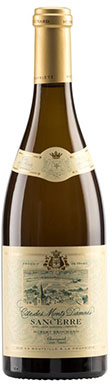

Brochard owns 1.12ha on the imposing, fully south-facing Monts Damnés, with individual plots in the upper, lower and 'premium' middle sectors of the steep slope,...
2022
Hubert BrochardSancerre

Hubert Brochard, Le Cul de Beaujeu, Sancerre, Loire, France, 2022
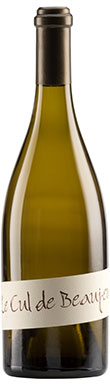
Le Cul de Beaujeu lies in front of the Monts Damnés, facing east. The soil is Kimmeridgian with small fossil seashells, on slopes up to...
2022
Hubert BrochardSancerre
Hubert Brochard, Les Trois Coteaux Terres de Caillottes, Sancerre, Loire, France, 2023
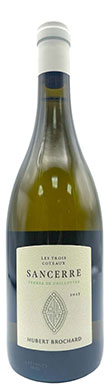
I was expecting the Terres Blanches to be more Chablis-esque than the Caillottes, however, this has the edge on power and style. From vineyard parcels...
2023
Hubert BrochardSancerre
Hubert Brochard, Château de Thauvenay Terres Blanches, Sancerre, Loire, France, 2023
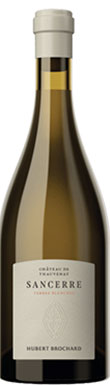
Brochard's Terres Blanches Sancerre comes from hand-harvested vines on clay-limestone soils, aged on lees for over four months with 100% maturation in stainless-steel tanks. Annual...
2023
Hubert BrochardSancerre
Hubert Brochard, Château de Fontaine-Audon Terres de Silex, Sancerre, Loire, France, 2023
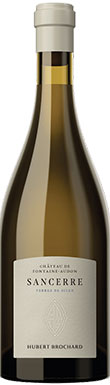
Hand-harvested fruit from black, grey, pink and white flint soils and a thin layer of marl. Annual production is usually around 90,000 bottles. Brochard's Terre...
2023
Hubert BrochardSancerre
Hubert Brochard, Rosé, Sancerre, Loire, France, 2023
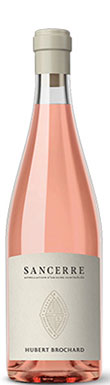
Produced with Pinot Noir from Chavignol, facing the imposing Monts Damnés. The free-run juice is separated from press wine, with only the finest selected. Aged...
2023
Hubert BrochardSancerre
Hubert Brochard, Pouilly-Fumé, Loire, France, 2023
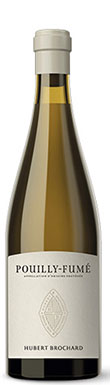
A classic, benchmark example of what distinguishes Pouilly-Fumé from Sancerre. From sand, clay and limestone-silex soils with the presence of flint, this balances richness with...
2023
Hubert BrochardPouilly-Fumé
Hubert Brochard, Sauvignon, Val de Loire, Loire, France, 2023
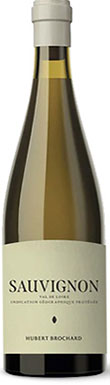
From a combination of clay-limestone (Argilo-calcaires) and clay-flint (Argilo-silex) soils, aged on lees. A weighty, ripe and forward Sauvignon with distinctive aroma of tropical fruit...
2023
Hubert BrochardVal de Loire
