
‘I tasted over 100 Vin Santo wines, here are the ones to buy’
Richard Baudains stands up for the historic Vin Santo of Tuscany.


Vin Santo is the least written about, least reviewed and at the end of the day the least consumed of all the wines of Tuscany.
In part, this is because there is very little of it, and in part because modern drinking habits do not leave a lot of space for sweet wines. Despite all this, Vin Santo remains a real presence in the region.
This is hearteningly good news, because Vin Santo is capable of incredible intensity, depth and complexity, belonging to a world with a fascination all its own.
Vin Santo is made from partially dried grapes, and the most cited explanation of its name links it to a similar style of wine from Greece. It seems that, at a meeting of Bishops of the Catholic and Greek Orthodox churches in Florence in 1439, a Tuscan passito wine was offered to the Greek participants, one of whom exclaimed ‘It’s Xantos!’. ‘Xantos’ became ‘Santo’ and the name stuck.
Making Vin Santo
There are four DOCs for the category: Carmignano, Chianti (including its eight sub zones), Chianti Classico and Montepulciano. For the sake of completeness, there is also a Vin Santo in what in effect is the single-estate DOC Pomino.
With minor variations, the ‘Disciplinari di Produzione’ of the four denominations lay down the same basic regulations. Trebbiano and Malvasia Bianca di Toscana, either alone or together, form the base of the blend, complemented in the case of Montepulciano by Grechetto (known locally by the colourful name, ‘Pulcinculo’), and often in the case of Carmignano by San Colombano. The Occhio di Pernice version of Vin Santo must be made with at least 50% Sangiovese.
The grapes cannot be pressed before 1 December of the year of the harvest, and must age for a minimum 36 months in barrels of a maximum capacity of 300 litres. The yield in the finished wine cannot exceed 35% of the weight of the fresh grapes. Alcohol levels range from as low as 9% abv to as high as 16%.
Within this basic profile, there are a number of variables, in part determined by producer choices, and in part by the nature of the production method itself.
Rocca di Montegrossi, for instance, uses 100% Malvasia (‘Trebbiano is not suitable’), while Avignonesi primarily uses Trebbiano (‘Malvasia is less suitable’).
Vin Santo is technically sweet, but sweetness ranges greatly, according to house styles and vintages. Isole e Olena make one of the drier styles, with typical residual sugar levels below 200g/l, while San Giusto a Rentenanna are at the sweet end of the scale with 300-400 g/l. Rocca di Montegrossi’s 2005 had a whopping 500g/l!
Policies on ageing differ greatly. In July and August this year, I tasted current vintages ranging from 2020 to 1992, as well as a number of older wines which are still available from specialist merchants. Historic estates like Tenuta di Capezzana, San Giusto a Rentennana or Fattoria dei Barbi at Montalcino can show vintages which go back 40 years – Vin Santo has an almost infinite ability to age.
There are two approaches to the production of Vin Santo; one faithful to traditional methods, the other informed by more conventional oenological principles.
The traditional philosophy was expressed by Count Ugo Contini Bonacossi of Tenuta di Capezzana, who wrote in 2014: ‘When we talk of Vin Santo…we have to begin with tradition, because Vin Santo is a wine based solely on tradition. Red winemaking techniques evolve with every generation but in the case of Vin Santo, the changes are minimal and tradition prevails. Vin Santo, made authentically according to the ancient canons has…a perfection that it would not be wise to modify’. – Fortini, Il Carmignano (Comune di Carmignano, 2014)

To madre or not to madre?
Simona Ruggeri Fabroni is a staunch upholder of the ancient canons. Her family have been making wine at the Villa S. Anna estate for five generations and the ‘madre’ – the yeast starter used in the fermentation of the Vin Santo – has been handed down from generation to generation for much of that time. She puts its age at 230 years.
The field blend from the one-hectare vineyard dedicated to Vin Santo consists of 50% Malvasia, 40% Grechetto and 10% Trebbiano. Selected bunches picked in late September are laid out to dry on rush mats arranged in tiers, a bit like bunk beds, in a loft with windows on two sides. Humidity is controlled by opening and closing the windows according to the outside weather conditions.
The drying process lasts on average five months, after which the grapes are pressed by hand in a vertical basket press and the must, together with the madre, goes into the typical Vin Santo barrels, known as ‘caratelli’. At Villa S.Anna, they are 60- and 70-year-old chestnut wood casks with a maximum capacity of 65 litres. The barrels, never completely filled, are sealed with wax and left to age in a loft where they are subject to the natural temperature extremes of the four seasons.
After a minimum of ten years, the barrels are opened and any dubious ones discarded. The remaining wine is siphoned off, clarified by straining through muslin sacks, and blended. The madre is removed from the barrels, cleaned by separating it from the lees, and then replaced in the caratelli, which immediately receive the wine of the new vintage.
In many respects, these ultra-traditional methods fly in the face of modern winemaking practice. Their most often quoted critic is the late Giacomo Tachis, long-time winemaker at Antinori and Tenuta San Guido, and one of the most highly respected figures in Italian wine. Tachis dedicated a full-length book to the study of Vin Santo, in which he concluded: ‘There is no serious, scientific production technology for Vin Santo today.’
As for tradition, he wrote, in diametrical contrast, to Count Ugo Bonacossi: ‘We cannot always accept as good that which was done in the past and handed down through the generations.’ – Giacomo Tachis, Il Libro del Vin Santo (EB Bonechi, 1988)
The main points of divergence between traditional vinification and a more contemporary approach revolve around fermentation. In the traditional approach, once the caratelli are sealed, the transformation of must into wine takes its own course. No two barrels turn out exactly the same.
Unpredictable variations in the degree of oxidation and volatility, and in levels of fixed acidity, sugar content and alcohol – not to mention aromatic compounds – are the result of natural processes which are largely uncontrollable.
They can produce wines of pure perfection, with glorious bouquets and an almost magical balance…but everything can also go horribly wrong.
‘Traditionalists may swear by their madre but there is a question mark over the real effectiveness of the semi-liquid blob at the bottom of the barrel.’
One way of having more control is to omit the madre. Beppe Rigoli makes Vin Santo at two estates, Gracciano della Seta in Montepulciano, and Ambra in Carmignano. At both estates he ferments without a culture from previous vintages, agreeing with Tachis’ opinion that the madre probably does more harm than good – but conceding that the lees in the madre may help to preserve a wine from oxidation.
Marco Ricasoli Firidolfi at Rocca di Montegrossi takes the same view. Using a madre is ‘much too risky’, he says. The risks are real. At Isole e Olena, oenologist Emanuele Rèolon uses the estate’s madre but says that typically five or six caratelli of the 30 he makes every year do not ferment.
Traditionalists may swear by their madre but there is a question mark over the real effectiveness of the semi-liquid blob at the bottom of the barrel. At Avignonesi, oenologist Matteo Giustiniani uses their madre but he says it is impossible to demonstrate that it is actually responsible for the fermentation. The jury is still out on this one.

To seal or not to seal
Another contentious issue is the exposure to temperature extremes during ageing. The stop-start fermentation induced by storing small barrels under the roof at the mercy of the elements may continue for years, with unpredictable results. Barrels in an underground cellar with stable, controlled temperatures ferment sooner and more reliably.
Sealing caratelli for ten years or more creates a powerful oxidative effect and results in great concentration, but also high risk of volatility and undesirable smells. Producers who prefer to play safe keep their barrels permanently topped up.
Modifications to the traditional approach produce wines with less of the classic ‘rancio’ character, instead achieving a more fruit-driven style which has much in common with the passiti of Northern Italy, such as Recioto di Soave and Torcolato in the Veneto – wines which are perhaps more immediately accessible.
However, the traditional, ‘unscientific’ practices which exasperated Tachis are still very much alive today, and for all of Tachis’ reservations, continue to be handed down through the generations.
At Polizano in Montepulciano, the young winemaker Maria Stella Carletti is a trained oenologist but she makes her Vin Santo in a way which follows in the footsteps of her grandmother, Simona Fabroni at Villa S. Anna, bringing the traditions full circle.
I tasted over 100 Vin Santo wines in preparation for this article. The range of different styles in all four denominations suggests that terroir has much less impact on the quality and the character of Vin Santo than in other wines.
What dominates is the production method, and what makes the difference are the skills and experience of the producer. Below is a selection of my favourite wines.
Baudains’ Vin Santo recommendations:
Italy newsletter: Sign up today
Get the best recommendations, vintage analysis, regional and cultural insights and more delivered to your inbox once a month, helping you to stay up-to-date with the latest in Italian wine.

Related articles
- Wines from the Tuscan coast
- A wines lover’s guide to Sauternes
- Chianti Classico annata new releases: The wines to buy in 2025
Capezzana, Vin Santo di Carmignano, Riserva, Tuscany, Italy, 2017
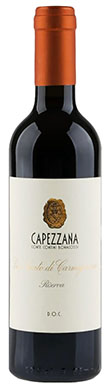

Moves in the glass in sluggish, viscous circles. Aromas of raisins and amaretti biscuits, touches of candied peel and a hint of charred steak introduce...
2017
CapezzanaVin Santo di Carmignano

Il Poggiolino, Vin Santo del Chianti Classico, Riserva, Tuscany, Italy, 1992
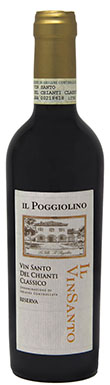
A breathtaking array of aromas, including candied fruit, marzipan, crème caramel, prickly pear and hints of marjoram. The palate has delicate honeyed sweetness, an airy...
1992
Il PoggiolinoVin Santo del Chianti Classico
Frascole, Vin Santo del Chianti Rufina, Tuscany, Italy, 2005
A mature, savoury-sweet nose rich in nuance with notes of wet moss, almonds, bitter honey, sour cream, fresh capers and hints of incense. Immense concentration...
2005
FrascoleVin Santo del Chianti Rufina
Fontodi, Vin Santo del Chianti Classico, Tuscany, Italy, 2014
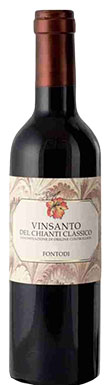
This slowly unfolds its aromas, with touches of wood smoke, dark chocolate, baked fruit, lavender, bitter honey, and a slightly ferrous note at the back....
2014
FontodiVin Santo del Chianti Classico
Fattoria San Giusto a Rentennano, Vin San Giusto, Toscana, Tuscany, Italy, 2017
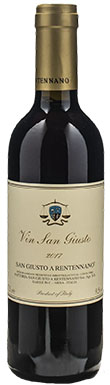
Delicate but very precise, with a nose of great freshness accompanying scents of peach kernel, caramel, some dry leaf and then a touch of liquorice....
2017
Fattoria San Giusto a RentennanoToscana
Talosa, Vin Santo di Montepulciano, Tuscany, Italy, 1995
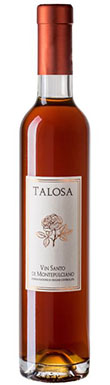
1995 is the current vintage release of this remarkable wine! On the nose the initial impression is autumnal, with damp earth and tobacco leaf, raisiny...
1995
TalosaVin Santo di Montepulciano
Avignonesi, Vin Santo di Montepulciano, Tuscany, Italy, 2011
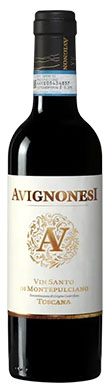
Immediately giving on the nose, which has very refined aromas of acacia honey, bright red berry fruit and hints of orange peel and spice. Vibrant...
2011
AvignonesiVin Santo di Montepulciano
Boscarelli, Familae, Vin Santo di Montepulciano, Tuscany, Italy, 2016
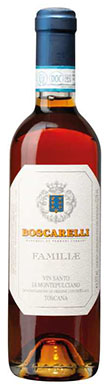
Beautifully balanced, precise and fresh nose with peach, mango and vanilla pod. Honeyed sweetness on the palate is supported by a grapey acidity, which gives...
2016
BoscarelliVin Santo di Montepulciano
Isole e Olena, Vin Santo del Chianti Classico, Tuscany, Italy, 2011
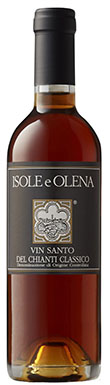
A complex nose with delicate oxidative notes of tobacco and moss, dried herbs and then figs, dried apricot and marmalade. More dry than sweet on...
2011
Isole e OlenaVin Santo del Chianti Classico
Rocca di Montegrossi, Vin Santo del Chianti Classico, Tuscany, Italy, 2014
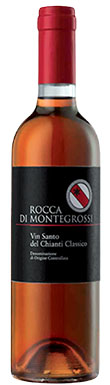
Very broad, rich passito nose, with raisins, dates and figs and a note of tomato leaf in the background. There's dense full-on sweetness with great...
2014
Rocca di MontegrossiVin Santo del Chianti Classico
Fattoria Selvapiana, Vin Santo del Chianti Rufina, Tuscany, Italy, 2017
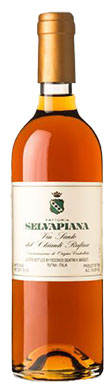
Ripe and raisiny on the nose, with a slightly stemmy quality. Intense vibrant impact on the palate and a luscious follow-through with stratified depth of...
2017
Fattoria SelvapianaVin Santo del Chianti Rufina
Poliziano, Vin Santo di Montepulciano, Tuscany, Italy, 2013
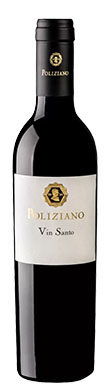
On the nose cocoa powder and chestnut honey mingle with a wet stone mineral note in the background. The palate has concentrated raisined fruit, a...
2013
PolizianoVin Santo di Montepulciano
Castello di Meleto, Vin Santo del Chianti Classico, Tuscany, Italy, 2012
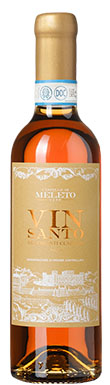
A vigorous, mature, mineral-ferrous nose with a touch of burnt-sugar botrytis leads into an intense, tightly-textured palate with bitter honey and an underlying vein of...
2012
Castello di MeletoVin Santo del Chianti Classico
Castello di Trebbio, Vin Santo del Chianti, Tuscany, Italy, 2019

Inviting freshness on the sultana and vanilla pod nose, with hints of pressed flowers at the edges. Very precise and agile, with a succulent progression...
2019
Castello di TrebbioVin Santo del Chianti
Fietri, Vin Santo del Chianti Classico, Occhio di Pernice, Tuscany, Italy, 2015
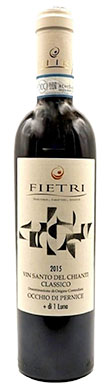
A fanfare of aroma on the nose, with lime blossom, fig leaf, cocoa, and bitter orange marmalade. On the palate it's off-dry with a firm...
2015
FietriVin Santo del Chianti Classico
Lornano, Vin Santo del Chianti Classico, Tuscany, Italy, 2015
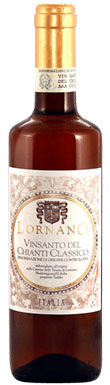
Intricate, sweet floral nose with touches of jasmine, tea leaf and hazelnut. Lovely round, sweet volume on the palate underscored by zesty acidity and a...
2015
LornanoVin Santo del Chianti Classico
Badia A Coltibuono, Vin Santo del Chianti Classico, Occhio di Pernice, Tuscany, Italy, 2009
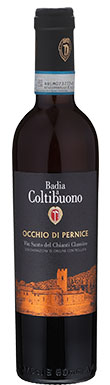
An intriguing nose of baked fruit, incense, dark chocolate and sweetly spiced Turkish Delight. Off-dry, chewy density with depth and intensity leads to a finish...
2009
Badia A ColtibuonoVin Santo del Chianti Classico
Bindella, Dolce Sinfonia, Vin Santo di Montepulciano, Occhio di Pernice, Tuscany, Italy, 2018
Starting a little closed on the nose, with a leafy, wet earth character, it bursts on the palate with delicious concentrated raisined fruit and mouthwatering...
2018
BindellaVin Santo di Montepulciano
Fassati, L’Augusto, Vin Santo di Montepulciano, Tuscany, Italy, 2016
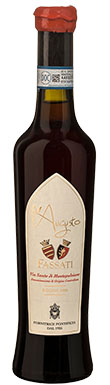
The fresh, precise nose has peach kernels and sugar plums with notes of toffee, moss and a hint of sage. On the palate it starts...
2016
FassatiVin Santo di Montepulciano
Ambra, Vin Santo di Carmignano, Tuscany, Italy, 2016
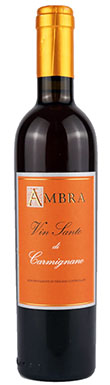
Lightly raisined berry aromas and tropical fruit with thyme and a hint of wood in the background. Bright and balanced on the medium-sweet palate, it...
2016
AmbraVin Santo di Carmignano
Le Bèrne, Ada, Vin Santo di Montepulciano, Tuscany, Italy, 2016
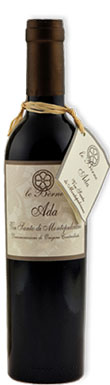
A touch of wet straw and then intense, fleshy ripe yellow fruit aromas which continue on the palate with bright underlying acidity and a rich,...
2016
Le BèrneVin Santo di Montepulciano
Castello di Gabbiano, Vin Santo del Chianti Classico, Tuscany, Italy, 2015
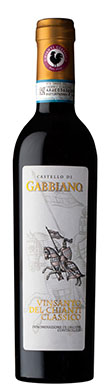
Mature, oxidative nose with notes of bitter honey. There's great power on the palate, which starts and finishes with the punchy, sweet intensity of caramelised...
2015
Castello di GabbianoVin Santo del Chianti Classico
Castello di Cacchiano, Vin Santo del Chianti Classico, Tuscany, Italy, 2009
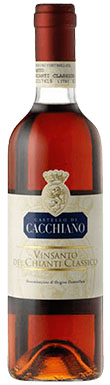
A powerful oxidative nose with notes of tar and wet earth. Dense and viscous with great concentration of caramel and raisined fruit, and a slightly...
2009
Castello di CacchianoVin Santo del Chianti Classico
Giacomo Grassi, Opre, Vin Santo del Chianti Classico, Tuscany, Italy, 2011
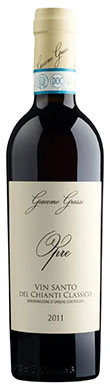
Mature, tertiary aromas with an attractive, slightly smoky botrytis character. Medium-sweet palate with sour apricot fruit and a concentrated grippy finish.
2011
Giacomo GrassiVin Santo del Chianti Classico
Casale Daviddi, Il Caratello, Vin Santo di Montepulciano, Tuscany, Italy, 2012
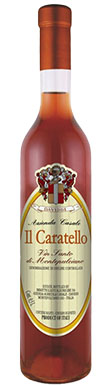
Complex apricot, sultana and almond aromas. The medium-sweet palate is balanced by firm acidity and a long, concentrated fruit finish, with hints of oak and...
2012
Casale DaviddiVin Santo di Montepulciano
Dei, Vin Santo di Montepulciano, Tuscany, Italy, 2018
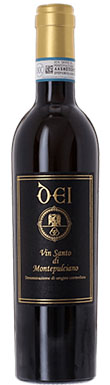
A refined nose with delicate camomile, peach and tropical fruit aromas, and hints of sweet oak. Balanced sugar, attractive freshness and precise fruit with a...
2018
DeiVin Santo di Montepulciano
Il Colombaio di Cencio, Vin Santo del Chianti Classico, Occhio di Pernice, Tuscany, Italy, 2011
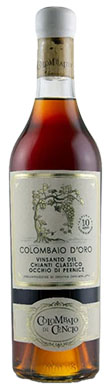
Intense, spirity nose with mature notes of tar and resin then a hint of tropical fruit. Off-dry on the palate with vivid intensity and a...
2011
Il Colombaio di CencioVin Santo del Chianti Classico
Riseccoli, Vin Santo del Chianti Classico, Tuscany, Italy, 2012
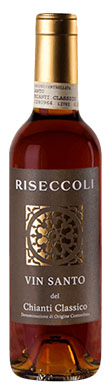
A mature, oxidative nose with a herby, leafy character. Attractive, grapey, medium-sweet entry and smooth, nicely balanced progression towards a finish with notes of fresh...
2012
RiseccoliVin Santo del Chianti Classico
Villa S.Anna, Vin Santo di Montepluciano, Tuscany, Italy, 2012
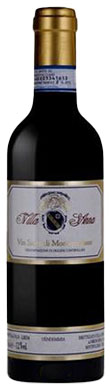
A mature nose in the oxidative style with notes of tobacco and incense, then a sweet-and-savoury palate with a very intense, grippy, peppery finish. Classic....
2012
Villa S.AnnaVin Santo di Montepluciano
Antinori, Vin Santo del Chianti Classico, Tuscany, Italy, 2020
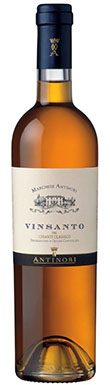
Low key but very precise peach and apricot aromas introduce a soft, sweet palate with a nice fluid progression and a finely calibrated fruit and...
2020
AntinoriVin Santo del Chianti Classico
Castello della Paneretta, Vin Santo del Chianti Classico, Tuscany, Italy, 2015
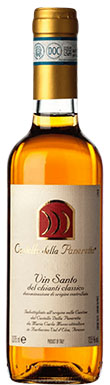
Inviting nose with a delicate botrytis character and touches of vanilla oak. The dense, viscous palate is enlivened by just the right touch of volatile...
2015
Castello della PanerettaVin Santo del Chianti Classico
