
Under the radar: 12 unsung heroes of Italy


Some of Italy’s best wines remain firmly under the radar for wine lovers. Richard Baudains explores why, and shines a light on names that deserve more recognition...
What exactly makes a wine ‘iconic’ is tricky to pin down, because the epithet does not denote any intrinsic quality but rather a status that may be acquired for a variety of reasons. Greatness clearly has something to do with it, but it is not exactly the same thing.
At the same time, in the literal meaning of the word, iconic wines are a representation; the quintessential expression of something, which may be a terroir, or a grape variety, a person, a tradition or even a winemaking philosophy.
Sassicaia is an icon of style and elegance, the charismatic Angelo Gaja an iconic producer, Quintarelli’s Amarone an icon of a unique tradition.
Scroll down for Richard’s 12 unsung heroes of Italian wine
Another characteristic is that wines attain iconic status over time, so history enters into the equation too. Iconic wines have a story to tell. They are often rare, and thus difficult to obtain, and this also adds to their aura. Icons inspire respect and admiration and even – taking up the religious connotation – a degree of devotion.
Ardent admirers
Which brings us to the important point: that iconic wines have a devoted following, but not necessarily among a wider public. Italy has many wines, such as Sassicaia, Gaja’s San Lorenzo and Quintarelli’s Amarone (to name but a few), that are recognised internationally as ‘iconic’, but there are many others which inspire the same level of devotion among their admirers but slip under the radar of the wine world at large. The reasons for this can be many.
The first thing to say is that Italian wine is hard to get to know in depth. The country’s production is both huge and extremely diversified, and getting a handle on its literally thousands of DOCs and DOCGs, as well as the estimated 600 native varieties currently in use, is no easy task.
All of this means that wines from lesser-known regions or minor varieties can often get overlooked.
Hidden treasure
In today’s world of global communication there are ways to overcome this, but icons will not always seek greater visibility and some even seem to shun it.
If Valentini’s wines from Abruzzo are not more widely known, it might well be because, anachronistically, they have neither a website nor a published email address. Then there are commercial reasons. Many smaller producers have neither the time nor the resources to market themselves or develop effective channels of distribution.
Finally, icons may lose visibility due to changing wine-drinking fashions. This is the case of sweet and fortified wines, for example – Italian specialities that are sadly disappearing from wine lists. For all these reasons, paradoxically in Italy, iconic wines can in some cases also be best kept secrets.
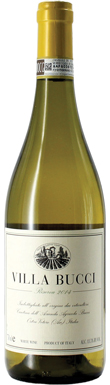
Bucci
Villa Bucci, Verdicchio dei Castelli di Jesi Riserva
Ampelio Bucci (by strange coincidence his name comes from the same Greek root as ‘ampelography’) has defined himself as a collector of old vines.
In the 20 or so years that he has been producing wine on the estate founded by his father, he has sought out and acquired abandoned plots in the calcareous hills of Castelli di Jesi in the Marche to put together a total of 31ha, 25ha of which are planted to Verdicchio.
Each plot is harvested and vinified separately and in the case of the Villa Bucci, aged for at least a year in large traditional Slavonian oak barrels which themselves are 80 years old.
The wines for the riserva are then assembled by Bucci and long- standing oenologist and master taster Giorgio Grai. The procedure is unique among Verdicchios and with few parallels in Italian white winemaking at large; and the result is wine with terroir as its raison d’être.
Avignonesi
Occhio di Pernice, Vin Santo di Montepulciano
Vin santo has become something of a rarity in Tuscany. Occhio di Pernice is a rarity among rarities, because it is made in minute quantities and not with the usual white grapes, but with Sangiovese.
Avignonesi has kept this almost-forgotten tradition alive in its most authentic form, drying the grapes naturally and leaving the concentrated sugary must to ferment and age on ‘mother’ yeasts for up to 15 years in small casks exposed to the heat and the cold of the changing seasons in an open loft on its Capezzine estate.
The result is one of the most exclusive (and expensive) liquids in Italian wine. Production is variable, but typically consists of about 1,500 half bottles and a certain number of 100ml phials that you can slip into your hand-luggage for the flight home. Avignonesi was taken over in 2009 and converted to organic/biodynamic viticulture by the Belgian Virginie Saverys.
Bruno Giacosa
Vigna Le Rocche, Falletto, Barolo Riserva
Possibly Bruno Giacosa’s famously taciturn nature has contributed to the iconic status he enjoys, as a kind of paradoxical self-promotion in reverse. However that may be, behind those dark-rimmed spectacles lies one of Italy’s greatest wine producers of all time.
He did his apprenticeship selecting grapes for the family business and used bought- in grapes for the first wines he made at his own company.
In 1982 he acquired the 3ha Falletto vineyard at Serralunga, which is the source of his Barolo. Southwest-facing in a natural amphitheatre, with sandstone and silty marl soils, it is by common consensus one of the finest crus of the Langhe.
Giacosa once said that he preferred his wines to speak for him and this perhaps explains his legendary perfectionism. He will never bottle a wine until he considers it ready and will never bring out a vintage unless it completely convinces him, which makes the release of the Vigna Le Rocche Riserva a truly iconic event.
Gini
Contrada Salvarenza Vecchie Vigne, Soave Classico
If Sandro Gini’s exquisite wines are not better known, it might have something to do with his self-effacing modesty, or perhaps with the generally low expectations that the outside world holds of Soave.
The Contrada Salvarenza Vecchie Vigne is anything but the stereotypical simple, light, dry summer wine. Gini’s family has owned the Salvarenza vineyard since 1852. The average age of the vines, around a third of which pre-date phylloxera, is around 100 years, give or take a decade.
Gini attended oenological school but says that when he started making wine he had to unlearn much of what he had been taught. For example, he has completely eliminated the use of sulphites during vinification.
The grapes for the Salvarenza, 100% Garganega, are picked at full ripeness and fermented in barrels of varying capacities, where the wine remains for 12 months. It is cellared for another year before release and will continue to develop for at least another decade.
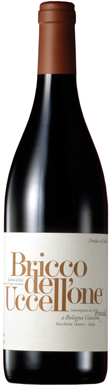
Braida
Bricco dell’Uccellone, Barbera d’Asti
Braida’s Bricco dell’Uccellone is iconic because, although is was possibly not the very first Barbera to age in barrique, it was the one that created the genre that launched humble Barbera into the realms of the super-premium in the early 1980s.
It also owed a lot in the past to the charismatic, larger-than-life figure of its creator Giacomo Bologna and to the involvement of the legendary critic and philosopher of Italian wine, Luigi ‘Gino’ Veronelli, in the concept of the project. Their genial intuition that new oak would harmonise with Barbera to turn the variety into a wine of silky smooth elegance, marked a new epoch for Italian wine.
Bologna’s son and daughter continue production today from the same south- facing single-vineyard plot at Rocchetta Tanaro in Asti. The label, in itself an icon, remains unchanged from the original.

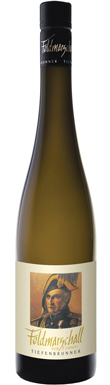
Tiefenbrunner
Feldmarschall von Fenner Müller-Thurgau
The 19th-century portrait of Feldmarschall Franz Philipp Fenner von Fenneberg, with his jauntily worn military cap, is the centrepiece of the Alto Adige’s most iconic wine label, reminding us of the central European culture of the border region and the origin of many of its grape varieties.
The Müller-Thurgau grape is not held in particularly high esteem in Trentino-Alto Adige, where it usually makes light and slightly ephemeral, citrussy wines. Tiefenbrunner’s Feldmarschall however is something else altogether.
Grown at 1,000m on one of the highest sites in the region, it has a depth, complexity and potential for ageing which give plausibility to one scientific theory that the variety is not after all a crossing of Silvaner and Riesling, but does have a strong genetic connection with the noble Riesling.
Vinified with long lees ageing but without oak, it is released two years after the vintage and tends to peak after another two or three.
Caggiano
Vigna Macchia dei Gotti, Taurasi
Taurasi has been called the Barolo of the south. The Aglianico grape from which it is made does have traits in common with Piedmont’s Nebbiolo: tannin, high acidity and a prodigious capacity for ageing.
Yet Taurasi hasn’t always enjoyed the same prestige as the reds of the Langhe. The reasons lie in part in the remoteness of the Irpinian hills where it is made and in part to inconsistent winemaking in the past.
If Taurasi has now started to gain the respect it deserves, it is down to a new generation of quality producers. One that has achieved iconic status is Antonio Caggiano, a modernist in the best sense.
He was one of the first to plant at high density and to bottle a single- vineyard selection. He was also the first to employ barriques to tame the aggressive tannins of Aglianico – and vitally to have mastered their use.
Castell’in Villa
Chianti Classico
Princess Coralia Pignatelli della Leonessa reigns over 52ha of vineyard at Castelnuovo Berardenga in the south of the Chianti Classico hills.
Her approach to wine production is simple and direct. She has always insisted that her intent is to make the wines that she likes best, independent of the stylistic fads that influence commercial demand. Following this principle for more than 30 years, she has established Castell’in Villa as an icon of classicism, a little detached perhaps (and little inclined to promotion), but with impeccable quality and consistency that speak for themselves.
She makes more powerful wines than her straight Chianti Classico – the Riserva Poggio delle Rose has the structure to age for decades – but it is this ‘basic’ cuvée that perhaps best represents the essence of Chianti Classico.
Don’t assume that it is a simple wine. It ages longer in wood than any other non-riserva Chianti, but it still expresses the joyous fruit-driven drinkability and transparent terroir character of The Real Thing.

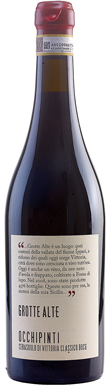
Occhipinti
Grotte Alte, Cerasuolo di Vittoria Classico
Arianna Occhipinti comes from a winemaking family (her uncle Giusto Occhipinti is one of the partners in the historic COS winery at Vittoria). With degrees in viticulture and oenology behind her, she started out with just 1ha of vineyard, a surface area which has now grown to 25ha.
Occhipinti is a high-profile champion of natural winemaking who has succeeded in taking much ambiguity out of the term ‘natural’ by simply making great wines that taste of their place of origin. She grows alberello-pruned native varieties on the sandy-calcareous soils of Vittoria in southeastern Sicily.
Grotte Alte is an old-vine, 50:50 blend of Frappato and Nero d’Avola, which marries the fragrance of the first with the body and brooding, bitter dark chocolate of the second. Aged for three to four years in 25hl Slavonian oak barrels, it is only produced in the best vintages.
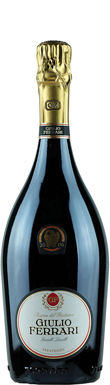
Ferrari
Riserva del Fondatore Giulio Ferrari
Giulio Ferrari was a pioneering polyglot nurseryman from Trentino with two great passions in life: Chardonnay, which he was instrumental in introducing into Italy on a wide scale, and Champagne.
Following his intuition that the slopes of the Adige valley offered the growing conditions for making great sparkling wines, he started experimenting with the Champagne method around the beginning of the last century and by 1906 was already picking up gold medals for the results.
The wine which bears his name was first made by the current owners of the house, the Lunelli family, in 1972 and has been produced in the same style ever since. The Riserva del Fondatore is extra brut in style and comes from vineyards on the Pianizza estate located 500m-600m above sea level on the cool side of the river valley. It ages on its lees for 10 years and will happily keep and improve for another decade.
Marco De Bartoli
Vecchio Samperi, Marsala
If you google ‘Marsala’ you get more pages about cooking sauces than wine. Marsala the wine is making a limited comeback, but for decades it has been one of those neglected Italian specialities that are easier to find in reference books than on a wine merchant’s shelf. For this reason Marco De Bartoli’s Vecchio Samperi fits exactly into the category of little-known icon; for icon it is, but one you’ll not likely find at your high street retailer.
Vecchio Samperi is a 20-year-old solera (perpetuo) preserved in oak and chestnut barrels to which 5% new wine is added every year. It is made entirely with Grillo, the traditional Marsala grape, and it is not fortified.
In this respect it connects with the natural wines which the English navy fortified in the mid-19th century for long sea journeys and which eventually ended up in your chicken marsala.

Valentini
Trebbiano d’Abruzzo
Valentini eschews conventional labels. Perhaps the only description to use for this unique producer is the term ‘artisan’ which Francesco Paolo Valentini applies to himself. Many of the technical details of his winemaking are obscure, since neither he nor his father Edoardo before him have ever spoken willingly about them, and the cellars are never shown to visitors.
What we do know is that their Trebbiano ferments with indigenous yeasts at natural temperatures, ages in large barrels, is not filtered or clarified, and that selection is very rigorous. All this contributes to a prodigious capacity for ageing in the bottle, which almost knows no limits.
Another major factor is the variety itself. Trebbiano is usually a workhorse grape, but in Abruzzo the local biotype known as Svagarina makes wines with structure and aroma which set them apart from any other Trebbiano in Italy.
12 lesser-known icon wines of Italy:
Richard Baudains is a DWWA Regional co-Chair for Italy, and has written on the country’s wines for Decanter since 1989
You may also like:
Top Super Tuscan wines
Resurrecting Monferace Grignolino in Piedmont
Pio Cesare: Introducing Mosconi
Avignonesi, Occhio di Pernice, Vin Santo di Montepulciano, Tuscany, Italy, 2002


Vin santo has become something of a rarity in Tuscany. Occhio di Pernice is a rarity among rarities, because it is made in minute quantities...
2002
AvignonesiVin Santo di Montepulciano

Ferrari, Riserva del Fondatore Giulio Ferrari, Trento, Trentino-Alto Adige, Italy, 2006
98
Giulio Ferrari was a pioneering polyglot nurseryman from Trentino with two great passions in life: Chardonnay, which he was instrumental in introducing into Italy on a wide scale, and Champagne. Following his intuition that the slopes of the Adige valley offered the growing conditions for making great sparkling wines, he started experimenting with the Champagne method around the beginning of the last century and by 1906 was already picking up gold medals for the results. The wine which bears his name was first made by the current owners of the house, the Lunelli family, in 1972 and has been produced in the same style ever since. The Riserva del Fondatore is extra brut in style and comes from vineyards on the Pianizza estate located 500m-600m above sea level on the cool side of the river valley. It ages on its lees for 10 years and will happily keep and improve for another decade. Tiny bubbles, with pristine clarity on a nose of toasted hazelnuts, apricot and baked apple with a nuance of bread crust and vanilla. Sumptuous creamy texture, vibrantly fresh and infinitely long.
2006
FerrariTrento
Valentini, Trebbiano d’Abruzzo, Abruzzo, Italy, 2013
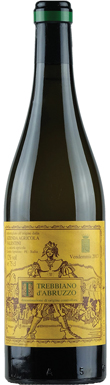
Valentini eschews conventional labels. Perhaps the only description to use for this unique producer is the term ‘artisan’ which Francesco Paolo Valentini applies to himself....
2013
ValentiniTrebbiano d’Abruzzo
Bruno Giacosa, Vigna Le Rocche, Barolo, Serralunga d’Alba, Piedmont, Italy, 2011
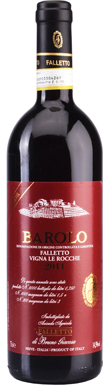
Possibly Bruno Giacosa’s famously taciturn nature has contributed to the iconic status he enjoys, as a kind of paradoxical self-promotion in reverse. However that may...
2011
Bruno GiacosaBarolo
Gini, Contrada di Salvarenza Vecchie Vigne, Soave, Classico, Veneto, Italy, 2014
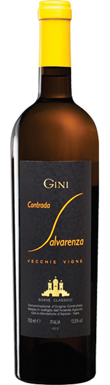
If Sandro Gini’s exquisite wines are not better known, it might have something to do with his self-effacing modesty, or perhaps with the generally low...
2014
GiniSoave
Occhipinti, Grotte Alte, Cerasuolo di Vittoria, Classico, Sicily, Italy, 2012
Arianna Occhipinti comes from a winemaking family (her uncle Giusto Occhipinti is one of the partners in the historic COS winery at Vittoria). With degrees...
2012
OcchipintiCerasuolo di Vittoria
Tiefenbrunner, Feldmarschall von Fenner Müller-Thurgau, Trentino-Alto Adige, Italy, 2015
The 19th-century portrait of Feldmarschall Franz Philipp Fenner von Fenneberg, with his jauntily worn military cap, is the centrepiece of the Alto Adige’s most iconic...
2015
Tiefenbrunner
Braida, Bricco dell'Uccellone, Barbera d'Asti, Piedmont, Italy, 2015
Braida’s Bricco dell’Uccellone is iconic because, although it was possibly not the very first Barbera to age in barrique, it was the one that created...
2015
BraidaBarbera d'Asti
Bucci, Villa Bucci Riserva, Verdicchio dei Castelli di Jesi, Le Marche, Italy, 2014
Ampelio Bucci (by strange coincidence his name comes from the same Greek root as ‘ampelography’) has defined himself as a collector of old vines. In...
2014
BucciVerdicchio dei Castelli di Jesi
Castell’in Villa, Chianti Classico, Tuscany, Italy, 2013
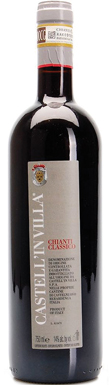
Princess Coralia Pignatelli della Leonessa reigns over 52ha of vineyard at Castelnuovo Berardenga in the south of the Chianti Classico hills. Her approach to wine...
2013
Castell’in VillaChianti Classico
Caggiano, Vigna Macchia dei Gotti, Taurasi, Campania, Italy, 2013
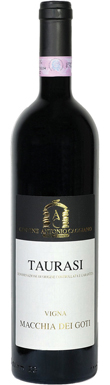
Taurasi has been called the Barolo of the south. The Aglianico grape from which it is made does have traits in common with Piedmont’s Nebbiolo:...
2013
CaggianoTaurasi
