
In praise of Rioja’s old vines
Rioja’s winemakers are busy exploring and celebrating the heritage of their oldest vineyards. Here, we look at why old vines are important to the region, the role they could play in the future, and meet the researchers leading the movement.


Rioja and age go well together. That’s bottle and barrel age. There’s nothing like a mature gran reserva, layered with the memories of red fruit, autumn, wood smoke and wild herbs; smooth and very long-lived.
Its age of maturation is firmly regulated: a minimum of two years in a 225-litre barrel, a minimum of two years in bottle, with five years’ ageing overall before release.
The wine world is talking about vineyards and old vines, and Rioja has joined the conversation.
Scroll down for tasting notes and scores for old vine Rioja
It deserves to. Something similar has already happened elsewhere in Spain – in Jerez. The glory years of Sherry’s late 20th century were led by brands, and their categories of fino, oloroso, cream, etc.
Now, Sherry producers are scrambling to highlight their vineyards, such as Balbaina and Macharnudo. In Rioja, many of the great brands were originally (and still are) blends. Some bodegas owned vineyards, but a named vineyard wasn’t the point, and neither was the age of the vines.
Rioja began to properly recognise its vine heritage with the viñedo singular classification, which was incorporated in 2017 and has a minimum vine age requirement. Not everyone eligible to market viñedo singular wines wanted to do so – but it changed the conversation. Then, in 2021, Rioja committed investment to support old vines and their growers.
What is an old vine?
There’s no specific definition. Australia’s Barossa Old Vine Charter has a useful guide: Old Vine, 35 or more years; Survivor Vine, 70 or more; Centenarian Vine, 100 or more; Ancestor Vine, 125 or more.
A minimum age of 35 years is widely recognised and is the minimum requirement for Rioja’s viñedo singular wines. While Spain has an exceptional heritage of old vines, it is not associated with any particular style (unlike Barossa Shiraz), region (think Carignan in Maule, Chile) or category.
There are vineyard parcels in Spain, red and white, which escaped phylloxera (in Rueda, Rías Baixas, Priorat, Toro, for example) with vines over 100 years, and, in a few sites, over 200 years. Note that the date of planting given does not always mean the specific date the vines were planted; rather, it is the year in which records were taken.
Recognising vineyards
Academic Juan Carlos Sancha is a Riojan who is working with centenarian vines. He has calculated that only some 0.6% of Rioja’s 66,000ha of vines fall into that age group. The figures look better for pre-1980 plantings, with at least 9,400ha of vines older than 40 years.
It’s always useful to have an external perspective. Winemaker Manu Michelini arrived in Rioja in 2017, aged 21. He works with his parents at the family winery, Michelini i Mufatto, making wine in Argentina’s Uco Valley, Maldonado in Uruguay and Bierzo in Spain.
Michelini was impressed – ‘completely shocked’ as he puts it – to find ‘old vineyards, in terraces, on calcareous soil’ in Rioja.
‘Old vines have always been here, but it seems like nobody cared for a long time,’ he reflects. ‘The important thing [in those days] was not to talk about the vineyards, but just to talk about the process. I think both are important for typicity and quality.’
So impressed was he that in 2018 he contacted Carlos Fernández of Creaciones Exeo in Labastida. Their project together, Dominio del Challao winery, is the result.
‘My first idea was high-altitude old vines, because I wanted to express what happened in Rioja 100 years ago,’ he explains. ‘The old vineyards have the field blend – approximately 75% Tempranillo, 10% Garnacha, 10% Viura/ Garnacha Blanca and 5% others – which gives typicity to the wines.’
He also wanted to continue other local traditions: using some whole-cluster, ageing in oak, a ‘kind of classic modernism’.
Vine management
Typically, the benefit of using old vines was seen as their concentrated fruit. The downside was the lower yield – and an obvious reason why growers turned to the more productive clones of Tempranillo in the 1970s and 1980s.
Effectively this created a monoculture, abruptly halting the diversity. In the longer term it can also narrow the palate profile. Just as the planting material has changed, so has the vine management. Today, some 60% of Rioja’s vineyards are machine-harvested from trellised vines.
However, Rubén Jiménez, director of viticulture at Bodegas Luis Cañas and Amaren, explains that traditional bush vines have benefits, not least their resistance to the wind, thanks to their three canes circling the stem at 120 degrees to one another.
Jiménez adds that, following the philosophy of Italian expert pruner Marco Simonit, the method today is not to prune back too hard.
‘Pruning was much more aggressive 50 years ago,’ he says. There’s an added requirement today: to find vines that can tolerate the pressures of climate change. These long-lived, dry-farmed vines are newly important for their tolerance to these conditions.
What’s more, Rioja’s old-vine material is a precious resource: it contains many varieties that fell out of favour after phylloxera. Rioja Alavesa, with its network of smaller parcels handed down through families, has the strongest concentration of old vines.
Together with Jon Cañas, winemaker at Amaren in Samaniego, Jiménez is working on a particularly interesting project. Their task is to recuperate old varieties in order to ‘prevent genetic erosion’, ‘assist future winemaking’, ‘add value to the region’ and ‘sustain the typicity of the family’s wines’.
Jiménez explains that the narrowing of diversity of plant material is, for winemakers, ‘like a painter only having blue paint in the palette’. He adds: ‘This work is crucial to protect against future diseases.’

Recovered varieties
The work they’ve carried out is based on a detailed investigation by the Institute of Grapevine and Wine Sciences (ICVV). Samples taken from Cañas’ vineyards revealed 167 biotypes of Tempranillo, 53 of Graciano, and so on, descending through Garnacha, Viura and Malvasía, down to 14 of Bobal and five of Calagraño. In 2021, Jiménez led the planting of three vineyards with the most promising varieties. It’s painstaking work.
One vineyard was planted with 447 strains of Graciano from 29 clones and eight clones of Viura, plus some Malvasía and Bobal. A second vineyard was planted to study recovered varieties in a different environment.
The third is their germplasm field. Across 2ha they planted 37 different varieties: diverse clones of the more well-known varieties, along with Benedicto, Garró and Cadrete. Remember the names of these three varieties; they may be part of the future.
Back at Amaren, Cañas has an experimental cellar that is a wine writer’s delight, full of stainless steel from jugs to deposits, glass carboys and concrete of all shapes and sizes. I tasted eight samples at Amaren, and the number of variables to assess was enormous.
Yet even at this early stage the Amaren team has clear ideas of what is working. They are looking for varieties with good acidity and pH.
Those that meet the criteria include Garró (aka Mando, already proving itself in Catalonia), X (that’s what they’re calling it for now), Julén, Malpuesta and Morate.
The latter has the added benefit of its lower alcohol, while Malpuesta has a dense spicy character with crunchy redcurrant acidity. For me, the Malpuesta sample ticked all the boxes with its acidity, pH, colour, aromas and structure.
Cadrete easily reaches 15%, but is deeply coloured, fresh and crisp, with firm, ripe tannin… it’s certainly promising.
Jiménez and Cañas were particularly excited about Benedicto, which is apparently the ‘mother’ of Tempranillo. (Unfortunately, my sample was not showing well.)
While Benedicto has been found elsewhere in Spain, this is the first time it has been identified in Rioja. It is typically floral, aromatic with terpenes, with silky, ‘friendly’ tannin, and usefully higher acidity and lower pH. One to watch – eventually.
Old vine campaigns
The pioneer in campaigning for the protection of old vines is the Old Vines Project (oldvineproject.co.za), founded in South Africa in 2002 by Rosa Kruger, the vineyard manager and great-great granddaughter of Paul Kruger, former president of the South African Republic. One of its initiatives that adds real value is the Certified Heritage Vineyard seal, and the old-vine wines sold under this label command a premium price.
The UK’s Old Vine Conference (oldvines.org) is a non-profit that works with its members and supporters in ‘developing commercial models to make old vines work in the real world’.
In Europe, Spain is undoubtedly the best source of old vines, and the network is recruiting producers and DOs. Luis Cañas, and its UK importer Alliance Wines, are both members. The Old Vine Conference is a partner in building the old vine database (oldvineregistry.org), which should develop into an essential record.

Looking ahead
These ‘new-old’ grape varieties will take time to prove themselves and come into production. Whether within blends or on their own they are certain to add exciting complexity to Rioja. They complement the work being done across the region by other producers in different soils, elevations and climates.
Still, it’s important not to get sentimental about age. I won’t forget being asked to host a masterclass on old vines in Rioja for viticulturists. I brought along some of the great old-vine wines, including samples from Barossa and California. I admit I was very romantic about their sense of history.
I asked the audience to vote on their age preference: almost unanimously, they voted in favour of working with 30-year-old vines rather than centenarians. I learned then that there’s romance and reality – though I believe there’s room for both.
I leave the last word to the clear-thinking Michelini. ‘In Argentina and Uruguay our challenge is completely the opposite; it’s to make the old vines of the future,’ he explains.
‘Rioja has a big opportunity to be great again, by talking about its vineyards, villages, terroir. It has everything: climate, soil, a beautiful variety and the most important thing of all: people with viticultural culture.’
Golden age: 10 top wines that showcase Rioja’s old vines…
Related articles
- Telmo Rodriguez and Remelluri’s new single-origin Riojas
- Rioja’s next generation: the producers to look for
- Rioja vintages 2000-2021: drink or keep?
Miguel Merino, Miguel Merino Blanco, Rioja, Northern Spain, Spain, 2021
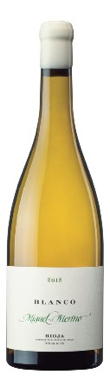

Complex in character, with citrus, fresh herbs, youthful fruit, and a rounded, stony finish. Miguel Merino’s first white, first launched in 2016, reveals a broad...
2021
Miguel MerinoRioja

Amaren, Malvasía 60, Rioja, Northern Spain, Spain, 2020
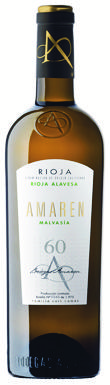
Fermented in a concrete egg, and matured on its lees, the result is textured, with notes of ripe fruits, fennel and dried flowers. Malvasía in...
2020
AmarenRioja
Artuke, La Condenada, Rioja, Northern Spain, Spain, 2021
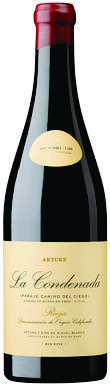
I still have vivid memories of my visit to La Condenada: such a very singular parcel of bush vines planted in 1920, each individual characters,...
2021
ArtukeRioja
Castillo de Cuzcurrita, Tilo, Rioja, Northern Spain, Spain, 2020
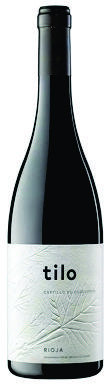
Dense, full of powerful black fruit, well-controlled firm tannins, and with an Atlantic freshness. Plenty of promise in years ahead. Tilo has a remarkably restrained...
2020
Castillo de CuzcurritaRioja
Dominio del Challao, Challao, Rioja, Northern Spain, Spain, 2020
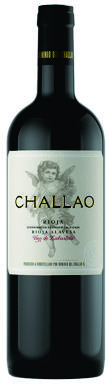
This, as winemaker Manu Michelini explains, is intended to reflect the region’s traditional wines: leaner, purer, less plush than the 21st century’s exuberance. Dominio del...
2020
Dominio del ChallaoRioja
Juan Carlos Sancha, Peña El Gato Garnacha, Rioja, Northern Spain, Spain, 2020
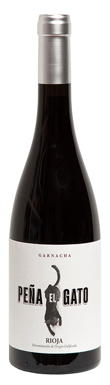
A model example of the complexity of old vines: dense with black fruits, wild herbs, fine oak. Juan Carlos Sancha is an expert on the...
2020
Juan Carlos SanchaRioja
Bodegas Bhilar, Phinca Abejera, Rioja, Northern Spain, Spain, 2017
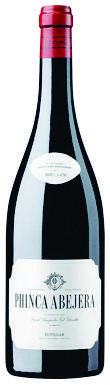
From a vineyard planted in 1932, David Sampedro has created a bold blend of Tempranillo, Graciano, Garnacha and Viura. None stands out, together they create...
2017
Bodegas BhilarRioja
Sierra de Toloño, Tereseño, Rioja, Northern Spain, Spain, 2019
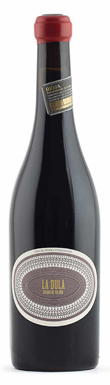
Sandra Bravo has worked in wineries all over the world but it’s no wonder she was drawn back to her native Rioja and its old...
2019
Sierra de ToloñoRioja
Tentenublo, Escondite del Ardacho El Abundillano, Rioja, Northern Spain, Spain, 2017
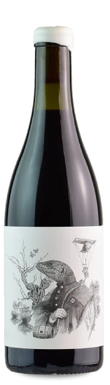
With its subtle oak maturation, the Garnacha-dominant wine is alive with sweet spices and succulent cherries, balanced by fine freshness. El Abundanillo is one of...
2017
TentenubloRioja
José Gil, San Vicente de la Sonsierra, Rioja, Northern Spain, Spain, 2021
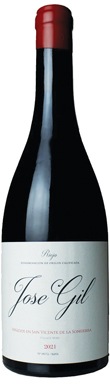
This dense, plump wine with plenty of juice, and supple tannnin is a blend of five parcels, fermented half in concrete and have in old...
2021
José GilRioja
