
Ipsus: The making of a modern Italian cru
Michelle Cherutti-Kowal MW takes a look at the creation of the Mazzei family's Il Caggio Ipsus project, born in 2006, with a tasting of the first three vintages; 2015, 2016 and 2018.


With 600 years of winemaking history behind them, the Mazzei family (Castello Fonterutoli and Belguardo in Tuscany, and Zisola in Sicily) knew a good opportunity when they found one. So, in 2006, when presented with the chance to purchase a neighbour’s property, they couldn’t resist.
Scroll down to see tasting notes and scores for the first three released Ipsus vintages
The family – specifically 25th-generation Giovanni Mazzei, son of managing director Filipo Mazzei and current export manager – embarked on a voyage to discover what the 50-hectare property was capable of. As Giovanni related, ‘they never really made wine on the property, they just sold the grapes, so we had a lot to learn.’
After a few years, they discovered a location where the Sangiovese was different and, in Giovanni’s words, ‘full of character.’ The family decided to separate these vines from the rest, folding most vineyards into the family’s holdings, and created the Il Caggio Estate.
Il Caggio
The property, located in a hamlet of Castellina in Chianti, encompasses 6.5ha, most of which was planted in the 1990s (a small portion was regrafted in 2008). The altitude (350m), southeast-west exposure and alberese, clay soils were ‘perfect’ for Sangiovese, according to Giovanni.
In fact, he was so passionate about the property that he relocated there with his young family so he could ‘understand the essence of the place.’ He continued: ‘I want these wines to express this terroir, hence the idea of a cru and its name, Ipsus: the Latin term for “itself”.’
After years of plot selection (there are currently six) and experimentation in the cellar, the quality of the 2015 vintage convinced Giovanni it was time, and so in 2020, Ipsus made its debut, followed in 2021 by the 2016 vintage. September 2022 sees the release of the 2018 vintage, as 2017 is still in the cellar. These first vintages have a production of 2,400 bottles, although Giovanni hopes to increase that to 6,000 bottles; he doesn’t envision expansion beyond that.
The job in the winery is to ‘intervene as little as possible and let the grapes speak for themselves’. Under the watchful eye of Gionata Pulignani, technical director of the family’s wineries, the six plots are separated into 16-18 micro-vinifications, fermented in a combination of stainless steel and large oak casks with around 20 days of skin contact.
Initially, maturation took place in all-new 500-litre French oak for 24 months but that has changed to a mix of 500-litre and 1,500-litre barrels with less new oak and slightly less time in wood, finishing with eight months in cement.
For the new 2018 vintage, cement has been exchanged for ceramic and a longer time in bottle to preserve more primary fruit. ‘I want the wines to be electric, vibrant, and the tannins to be silky and elegant,’ said Giovanni, admitting that there is no specific formula.
Ipsus is classified as Chianti Classico Gran Selezione DOCG. To qualify, the grapes must be from a single estate and the wine must be aged for 30 months before release. When asked if Il Caggio would ever produce a basic Chianti Classico as well as Ipsus, Giovanni smiled and said ‘no!’ To him, Il Caggio will only ever produce its cru, Ipsus. When I asked if he would consider it if the grapes were not good enough for Ipsus in a certain vintage, he shrugged and said, ‘I will not make a wine.’ The essence of a cru.
Tasting Ipsus: 2015, 2016 and 2018
Related content
Rosso di Montalcino: No longer a ‘baby Brunello’?
Amarone 2017: Vintage report
Cantina Tramin’s Epokale: No imitators
Il Caggio, Ipsus, Chianti Classico, Gran Selezione, Tuscany, Italy, 2018
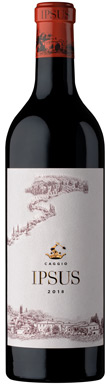

Similar to when I last tasted this in 2022, Ipsus 2018 is a combination of the ripe fruit of 2015 and the freshness of 2016....
2018
Il CaggioChianti Classico

Il Caggio, Ipsus, Chianti Classico, Gran Selezione, Tuscany, Italy, 2016
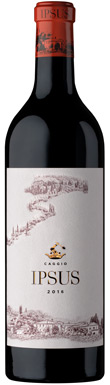
The 2016 is much more vibrant than the 2015, with fresh acidity and expressive layers of wood smoke, dried herbs and red berries. The tannins...
2016
Il CaggioChianti Classico
Il Caggio, Ipsus, Chianti Classico, Gran Selezione, Tuscany, Italy, 2015
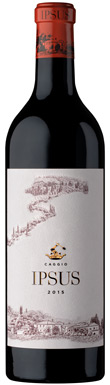
The ripeness of the vintage is still evident, along with notes of mushroom, iodine and wood spice. Smooth tannins and balanced acidity lend a feeling...
2015
Il CaggioChianti Classico
