
Isole e Olena: producer profile and latest releases tasted
Stephen Brook looks at the history of this Tuscan estate and tastes the range of latest-release Isole e Olena wines.


It was Paolo de Marchi ‘s father who decided in the 1950s to buy the Isole e Olena estate. The family property was in Alto Piemonte, in the village of Lessona, but in those days the wines were hard to sell.
Paolo was just 25 when he arrived in Tuscany to manage the new estate in 1976, and his first vintage was in 1978.
Scroll down to see tasting notes and scores for six latest release Isole e Olena wines
Aware that the vineyards badly needed renovation, he soon replanted two-thirds of the vines with low-yielding clones, doubled the vine density, and restored the terraces.
Paolo wanted to produce Chianti, of course, but he was unhappy with the quality of the Chianti vineyards – so much so that much of the wine he made was sold in bulk.
He was also intrigued by international varieties, and in 1984 he grafted Chardonnay onto existing Trebbiano vines.
Groundbreaking: Isole e Olena wines
The first vintage of this new wine, 1987, was immediately successful. Syrah followed in 1988, making it the very first Italian expression of the variety. Finally, Paolo planted Cabernet Sauvignon, which conserved acidity better here than on the Tuscan coast.
He is still keen on these international wines today, but insists they remain a sideline. Nonetheless, these novelties brought Isole e Olena worldwide attention.
Like other thoughtful producers, he was unhappy with the regulations that required the inclusion of white grapes in Chianti Classico. So, in 1980 he produced the first vintage of his most famous wine, the SuperTuscan Cepparello, which was a pure Sangiovese wine and thus not legally acceptable as Chianti at the time.
Cepparello may have been his most ambitious wine, but his Chiantis were delicious too once the vineyard renovations had been completed.
Isole e Olena: factbox
Founded: 1956
First vintage: 1978
Hectares under vine: 45ha
Annual production: 200,000 bottles.
Wines produced: Chianti Classico, Chianti Classico Gran Selezione, Cepparello, Collezione Privata (Chardonnay, Syrah, Cabernet Sauvignon)
Paolo always strove for typicity, disliking wines that were overoaked, or pumped up with over-ripe Merlot.
Some French varieties could be legally included in the blend, and he added them, though judiciously. But he was adamant that they should not override the typicity of Sangiovese from Chianti.
On the western slopes of the zone, the vineyards are refreshed by maritime breezes. High up at 350-450 metres, they naturally produced wines that are elegant and restrained, refreshed by fine acidity. Moreover, Paolo once told me, it’s the soil that is constant and gives a signature to the wines.
The standard Chianti Classico is a joy: not a deep or extracted wine, but one marked by freshness, zest and pure red fruits. I recall being so impressed by the 1985 Chianti Classico that I bought a case when it was released – it drank beautifully over the course of a decade.
Cepparello, thought of as a SuperTuscan but in fact nothing more than an apotheosis of Sangiovese from the estate’s best sites, has a similar freshness to the Chianti Classico but with greater intensity, depth and longevity.
Paolo’s love of fine acidity and length of flavour also marks the international ‘Collezione Privata’ wines: the delicious and vibrant Chardonnay, the silky and elegant Syrah, and the lean, stylish Cabernet.
Since those early days, Paolo De Marchi has never wavered, staying true to his vision and always seeking to improve quality.
‘I’m still learning from every vintage,’ he insists, ‘as we’re working with something that’s living: the vines. I seek long-term strategies as I don’t believe in short-term changes to satisfy a market trend or stylistic variation. Today our main challenge is to increase biodiversity by planting forests and to reduce our carbon footprint.’
Tasting the latest-release range of Isole e Olena wines:
You may also like:
Tua Rita: producer profile plus latest releases tasted
Castello Banfi: producer profile plus 14 wines tasted
Producer profile: Escudo Rojo plus 8 wines to try
Isole e Olena, Collezione Privata Chardonnay, Toscana, Tuscany, Italy, 2019
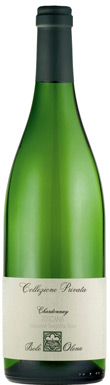

The Chardonnay vines are now well over 30 years old, grown on a slope at 400 metres. There are rich apricot and citrus aromas on...
2019
Isole e OlenaToscana

Isole e Olena, Collezione Privata Syrah, Toscana, Tuscany, Italy, 2017
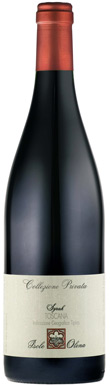
De Marchi obtained cuttings from the Rhône Valley when planting his three hectares of Syrah vines, and the wine does show some Rhône-like character. Oak...
2017
Isole e OlenaToscana
Isole e Olena, Collezione Privata Cabernet Sauvignon, Toscana, Tuscany, Italy, 2016
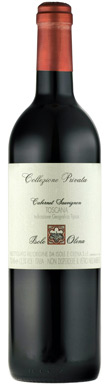
2016 was a great vintage for Chianti, and clearly suited Cabernet Sauvignon too. This has sufficient structure to benefit from its two years of ageing...
2016
Isole e OlenaToscana
Isole e Olena, Chianti Classico, Gran Selezione, Tuscany, Italy, 2015
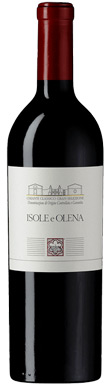
The rarest wine from this revered estate boasts exuberant perfumes of blackberry compote, dried mushrooms, menthol and a kiss of dark chocolate, the latter hinting...
2015
Isole e OlenaChianti Classico
Isole e Olena, Cepparello, Toscana, Tuscany, Italy, 2018
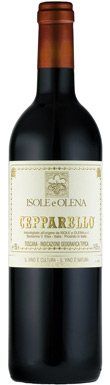
Like the 2018 Chianti Classico, Cepparello shows no dilution, although the pure Sangiovese fruit gives a more austere structure. The sour cherry nose is lightly...
2018
Isole e OlenaToscana
Isole e Olena, Chianti Classico, Tuscany, Italy, 2018
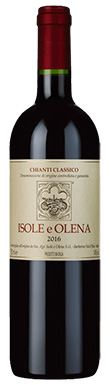
Besides a healthy dose of Canaiolo Nero, proprietor Paolo De Marchi blends in a dash of Syrah to give backbone, especially in lighter vintages -...
2018
Isole e OlenaChianti Classico
