
Discovering Italy’s high-altitude wines plus 12 worth seeking out
Growing wines in Italy’s hilliest regions is complicated, expensive and demands huge effort. So why do high-altitude producers carry on, and what makes their wines well worth seeking out?


Elegance over power, complexity due to a longer growing season, and – most of the time – craftsmanship of characteristically low-volume wines, represents an irresistible mix for experienced wine consumers.
Add to this the story of ‘heroically grown’ vineyards – exclusively farmed by hand on steep slopes or in marginal climates – and the appeal of wines from high altitudes becomes even stronger, particularly from a marketing standpoint.
Scroll down to see tasting notes and scores for Aldo Fiordelli’s pick of Italy’s high-altitude wines
However, compared to familiar terms such as ‘old vine’, ‘low yield’ or others that have become popular in the wine world, identifying which wines can be called ‘high altitude’ is considerably easier.
In Italy, there are several regions that produce wines at altitude: in the north, Valle d’Aosta, Alto Piemonte, Valtellina and Trentino-Alto Adige, with Tuscany in the centre, Campania to the south and the islands of Sardinia and Sicily.
Vineyards considered to be at altitude are those at more than 500m above sea level, according to the European Centre for Research, Environmental Sustainability and Advancement of Mountain Viticulture (CERVIM).
The higher the vineyard, the cooler the mesoclimate: for every 100m gained in altitude, the temperature drops by about 1°C.
This different temperature average brings longer growing seasons to the highest vineyards, improving the complexity of the wines and ensuring phenolic ripeness in red grapes. At the same time, hillside soils are typically shallow, vineyard vigour is relatively low and thus the quality of the grapes is typically regarded as higher.
Ups & downs
There are two crucial phenomena that occur at altitude. First, the longer growing season and increase in ultraviolet light intensity result in grapes with more phenols, which give more colour and concentration. Second, the so-called ‘thermal effect’ helps high vineyards avoid spring frost. This phenomenon, mostly observed in cool climates – the effect can be lessened if the air is even slightly warm – allows cold air to drain freely away at night, pushed out by warmer air rising from lower altitudes.
One disadvantage of growing at altitude is the risk of sunburned grapes. It’s not just Nebbiolo that is very sensitive – it is no coincidence that Cannonau (a local clone of Grenache) from Mamoiada in Sardinia as well as Nerello Mascalese from Etna in Sicily, both warm climates, are grown on shaded bush vines to protect the grapes from potentially harsh rays.
Soil erosion is also a threat at altitude, despite the implementation of mitigative measures such as dry stone wall terraces. ‘The terraces that represent the landscape of Mount Etna,’ says Salvo Foti of I Vignieri in Sicily, ‘have the fundamental role of containing volcanic sand, an inconsistent soil otherwise destined to f low to the valley f loor with abundant rainfalls.’
Another argument against altitude is the inconsistency of the harvests from year to year. Northern Italian regions such as Valtellina, Trentino-Alto Adige and the Valle d’Aosta, just below the Alps, are more prone to extreme weather events such as hailstorms.
Investing in altitude
In Alto Piemonte, at the foot of the Alps in the northeast of the Piedmont region, a lot of terraces were abandoned in the 1970s, when the arrival of machinery promised progress in the form of marked winemaking developments and less work in the vineyards.
The same happened on Mount Etna in Sicily, and also in Lamole, the highest village in the Chianti region. But things are changing. The Marzotto family, owners of the Santa Margherita wine group, purchased 15ha in Lamole in 1993, and now have 40ha spanning 350m-655m in altitude. ‘Over the past few years, we have invested €3m in new vineyards and structures, and another €3m in the restoration of old vineyards,’ says a source from the estate.
‘Hillside soils are typically shallow, vineyard vigour is relatively low and thus the quality of the grapes is typically regarded as higher.’
Today, the benefits of growing at altitude are being recognised, despite the hard and expensive manual labour required in the more demanding vineyards. Climate change is a key factor in the increased popularity of high-altitude sites.
Renowned Alto Adige producer Hofstätter has planted a vineyard of Pinot Noir at more than 1,000m. Slightly experimental at the moment, in the future it could become essential in order to counteract climate change: in the past 30 years, the temperature here has risen by 1°C, according to the Consiglio Nazionale delle Ricerche di Trieste, and this is allowing better ripening of grapes in higher vineyards and improved balance at harvest, compared to vineyards at lower altitudes where the same warming can begin to cause problems with ripeness and the timings of picking.
Further south in Tuscany, in order to counteract the effects of global warming, Angelo Gaja says he has purchased 5.5ha close to Lume Spento Pass in Montalcino, at 550m-580m, with the aim of preserving the freshness and the elegant style of his Pieve Santa Restituta Brunello di Montalcino.
Mountain misconceptions
Excitement over these benefits sometimes risks compromising the definition of altitude itself, as more and more consumers seek out ‘high-altitude wines’ and producers eagerly slap the words onto labels. In the northeast, according to Trento’s chamber of commerce, there were 10,270ha of vineyards dedicated to wine-growing in 2017. Almost a third (32%) of these were planted at up to 200m above sea level; 39% between 201m-350m; 15% between 351m-500m; and only the remaining 14% above 500m.
Nevertheless, Trento DOC promotes its products as ‘sparkling wine from the mountains’. This definition seems to hold for outstanding wines such as Ferrari’s Giulio Ferrari Collezione, one of the greatest sparkling wines from Italy, which comes from a single vineyard called Maso Pianizza at 500m-600m above sea level.
Otherwise, however, the highest-altitude vineyards contain 78% of the region’s Müller-Thurgau (which is not permitted in the traditional-method Trento DOC sparkling), 31.8% of its Pinot Noir, 21.2% of its Schiava (also not permitted), and only 14% of its Chardonnay, which forms the base for its DOC sparkling wines (which must be made using Chardonnay, Pinot Noir, Pinot Bianco or Meunier).
Hence, the proportion of vines at altitude being used for Trento’s ‘mountain’ sparkling wines is in reality minimal. During my last visit to the Ferrari estate, chief winemaker Marcello Lunelli told me that he and his team are investing in the Brenta valley, where this year they will plant 20ha at 700m.
Alto Adige is similarly misunderstood. Its simplistic image is of a region with the best sky-high vineyard areas in northern Italy, thus assumed to be cool climate.
Instead, and rather surprisingly, Bolzano’s temperatures match Florence as one of the hottest Italian towns during the summer. Thanks to its continental climate of cold winters and warm-to-hot summers, vineyard altitude here is more critical than anywhere else in the region. Valle Isarco is the highest wine-growing valley here, with vineyards at an elevation of about 400m-800m or higher, while the area near Caldaro lake, downat 216m, is one of the warmest in the region.
The steely character of whites from Valle Isarco can be compared with the lushness of Pinot Noir and Schiava wines from Caldaro lake.
Frozen north, cool south
To find truly mountainous wines, one must look to Valtellina, Carema and the Valle d’Aosta. In these regions, autumn easily registers overnight temperatures of about 0°C, and traditionally, the harvest is never undertaken before the middle of October. Given the conditions, achieving 12.5% alcohol was commonly considered a goal.
In Valtellina, Sassella is the highest sub-zone at 600m, while Grumello is below 500m and Inferno between 450m-550m. Climate change is improving the concentration of the wines, with alcohol levels reaching up to 14% for the Riserva bottlings.
There are very small, almost forgotten appellations here, such as the Chambave sub-zone in Valle d’Aosta, which produces soft red wines with a vinous character and intoxicating, fresh f loral aromas. The wines must contain a minimum of 70% Petit Rouge, with Dolcetto, Gamay and Pinot Noir making up the rest of the blend.
Though the combination of altitude and cool climate are a given for the northern regions, the same can also be said for the south. The vines of the Irpinia region of Campania easily reach 500m above sea level, with higher villages such as Castelfranci up to 650m. ‘Harvesting in November amplifies the climate effect,’ says Marco Tinessa, who produces Ognostro there. ‘So I preferred to explore both the lower and the higher altitudes in order to minimise the harvest variations.
For example, in the warm 2017 vintage, [fruit from the higher-altitude area of ] Vallicelli would help to maintain a fresher style of Aglianico, while in the cold and rainy 2018, the lower-altitude fruit helped.’
Island high life
On the warm, dry Mediterranean island of Sardinia, there is a village called Mamoiada, which was not easy to reach until the 1990s. Isolated and high in altitude – rising up to 900m – the Barbagia region was simply not safe, being controlled more by local brigands than the national government, despite the exceptional vineyards planted there.
However, as the importance of viticulture and tourism within Sardinia rose, along with some authoritative state intervention, the whole picture changed, and over the last 20 years the region has become more accessible: the people of Mamoiada are extremely welcoming, and the unspoiled environment is stunningly beautiful.
Here, Cannonau grows in the form of centenarian, bush-trained vines on extremely weak, sandy soil from decomposed granite. During the growing season rain has little impact, since water in the soil is drained away incredibly efficiently, giving the grapes exceptional concentration and complexity.
Combatting erosion
In Valtellina, in the far north of the Lombardy region close to the Swiss border, there are 2,500km of dry stone walls, according to the region’s wine consortium. Similar to Switzerland, the northern Rhône or the Douro in Portugal, this valley is one of the most terraced of all the world’s vineyard areas. Without these terraces, it would not be possible to grow vines on such steep slopes, given the soil erosion.
‘Here, the soil on the flatter plots is mostly sandy with a lot of drainage,’ explains Isabella Pelizzatti Perego, co-owner of ArPePe winery in Valtellina. ‘Growing at a higher altitude, [Valtellina Superiore DOCG sub-zone] Sassella is based on more rocky soils compared to the lower [sub-zone] Grumello, making wines nervier and more tannic.’
Valtellina is one of the most mountainous of all Italian regions, but measures to mitigate soil erosion aren’t always successful. ‘In the 2014 vintage we lost more than 10 dry stone walls due to rainfall, causing estimated damage of €50,000,’ adds Perego. Soil at altitude can become a limiting factor if it’s too shallow, as is often seen in the grands crus of Burgundy or some of the best MGA designated vineyards of Barolo.
Giuseppe Sedilesu and Giovanni Montisci are two producers to look out for, while along the SP22 road towards Orgosolo, Peppino Musina from Cantina Orgosa produces an authentic Sardinian blend of indigenous grapes based on Cannonau: the not-to-be-missed Nero di Orgosa.
The extremity of nature can also be tasted on the slopes of Mount Etna in Sicily. The red grape Nerello Mascalese is quintessentially indigenous to Etna with its solar Mediterranean elegance and smoky minerality. The northern valley of the active volcano is considered today to be Etna’s top area for single vineyards, which are called ‘contrada’ here. Frank Cornelissen has been working on Etna since 2001 with minimum intervention in order to preserve the balance of his old vineyards as much as possible.
The old bush vines have extremely low yields of 300g-600g per vine. ‘We harvest relatively late, in search of perfect phenolic ripeness, starting mid-October to early November, employing multiple passes through the vineyards to obtain dense and profound wines,’ Cornelissen explains.
Density and depth are two of the main qualities of Nerello Mascalese. Altitude here is essential for cooling the grapes, and to aid in aligning the phenolic and technical ripeness, giving wines the structure for ageing without stunting freshness of fruit or elegance.
Signature characteristics
Indeed, elegance and complexity are two of the main banners for wines at altitude. In my view, in southern Italy you can find concentration and power without compromising finesse, while in the cooler climates of the north, the wines tend to appear a bit leaner, totally focused on elegance. At times, the acidity of these wines can seem to be quite firm and upfront on the palate – a signature of altitude, if you will – and they often have a floral touch.
However, freshness of fruit and the overall grace of perfectly integrated structures – each an essential element for the long haul – are among the other gems to look for in wines grown at high altitude.
High praise: Aldo Fiordelli’s pick of Italy’s high-altitude wines
See also
Versatility of Vermentino: top dry white picks from across Italy
European wine weekends for 2021: four great short breaks planned
Southern Italy: The 12 native grapes to know about
Tiefenbrunner, Vigna Rachtl Riserva, Alto Adige/Südtirol, Trentino-Alto Adige, Italy, 2017
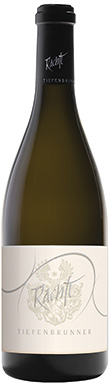

This Sauvignon Blanc is able to match the steeliness of the structure with concentration of fruit and extraordinary depth. It comes from Vigna Rachtl at...
2017
TiefenbrunnerAlto Adige/Südtirol

Anselmet, Mains et Coeur, Valle d’Aosta, Italy, 2018
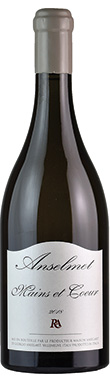
Maison Anselmet lies in the Aosta valley in the small village of Vereytaz, close to Villeneuve. The vineyards of Chardonnay are at 800 metres above...
2018
Anselmet
Terenzuola, Fosso di Corsano, Colli di Luni, Liguria, Italy, 2019
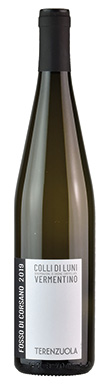
The Apuan Alps, famous for their marble, are home to steep vineyards on chalk overlooking the sea. Here, Vermentino is the main grape variety. Among...
2019
TerenzuolaColli di Luni
Frank Cornelissen, Magma, Terre Siciliane, Sicily, Italy, 2017
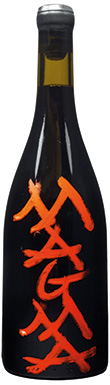
Magma is 100% Nerello Mascalese from old vines of Contrada Barbecchi, between 600 and 1,000 metres above sea level on the northern flank of Mount...
2017
Frank CornelissenTerre Siciliane
Ar Pe Pe, Rocce Rosse, Valtellina, Superiore Sassella, Lombardy, Italy, 2013
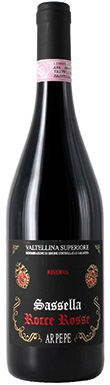
An extremely complex Chiavennasca (Nebbiolo), with the concentration of a leaner vintage and a vibrant, mineral-laden finish. Slightly garnet around the bright ruby core, this...
2013
Ar Pe PeValtellina
Azienda Agricola Tinessa, Ognostro, Vino da Tavola, Campania, Italy, 2018
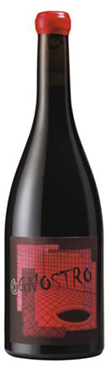
Marco Tinessa, who produces the Aglianico-based Ognostro in Irpinia, admits the 2018 vintage was quite rainy and cool. His vineyards reach 660 metres above sea...
2018
Azienda Agricola TinessaVino da Tavola
Kaltern, Project XXX Unoaked, Alto Adige/Südtirol, Trentino-Alto Adige, Italy, 2019
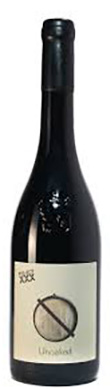
Forget that the quality of Pinot Noir should be linked to the amount of new oak used: the new generation of producers and winemakers in...
2019
KalternAlto Adige/Südtirol
Lamole di Lamole, Vigneto Campolungo, Chianti Classico, Gran Selezione, Tuscany, Italy, 2015
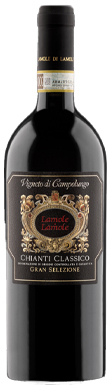
Lamole is one of the highest villages of the Chianti region, home to a widely planted clone of Sangiovese. Vigneto Campolungo lies above 500 metres,...
2015
Lamole di LamoleChianti Classico
Tenuta Tascante, Sciaranuova VV, Etna, Sicily, Italy, 2017
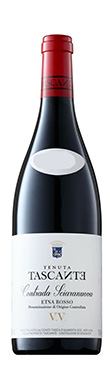
The old vines of Contrada Sciaranuova in the warm and dry 2017 vintage were essential to produce this concentrated and elegant Nerello Mascalese, picked in...
2017
Tenuta TascanteEtna
Giuseppe Sedilesu, Mamuthone, Cannonau di Sardegna, Sardinia, Italy, 2019
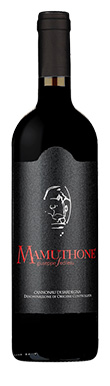
The Sardinian carnival of the Mamuthones brings out grotesquely masked men burdened with cowbells. From this ancient festival, one of the most famous Cannonau wines...
2019
Giuseppe SedilesuCannonau di Sardegna
Cantina Produttori Nebbiolo di Carema, Riserva, Carema, Riserva, Piedmont, Italy, 2017
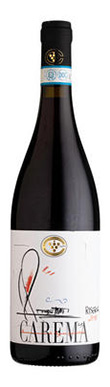
Carema is a fairly small appellation in Turin, producing Nebbiolo at altitude. The valley basin suffered from drought in 2017, however the vineyards are located...
2017
Cantina Produttori Nebbiolo di CaremaCarema
La Crotta di Vegneron, Chambave, Valle d’Aosta, Italy, 2019
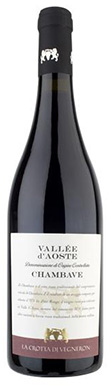
Chambave is an almost forgotten appellation in the Aosta valley. This red wine, interpreted by one of the few wineries who produces it, is based...
2019
La Crotta di VegneronChambave
