Jolie-Laide: Producer profile
This new-wave California producer with an old-school approach is making a name for itself with 'pretty-ugly' wines beloved by sommeliers and collectors alike


The French term ‘jolie-laide’ literally translates as ‘pretty-ugly’; used to describe someone who is attractive, with an imperfect charm and fascination, though not conventionally beautiful in a purely aesthetic sense. The ethos it brings to mind perfectly summarises the wines Scott Schultz produces.
Launched in 2010 with a 100-case production of a single wine – an avant-garde Trousseau Gris – Schulz’s Jolie-Laide label has grown to an average of 4,500 cases across 10 wines, and has become a key producer in a new generation of California wineries.
Schultz comes from a restaurant background, a journey that began in Chicago. While working as a busboy at Spago’s now-extinct midwest premises, he sat in on a wine class given by then wine director Ken Fredrickson. Discussions of tasting notes describing ‘wet river rocks and stones’ reframed what Schultz understood of wine, planting the seed that would later grow into his profession.
He left Chicago in 2004 and joined the Thomas Keller Group at Las Vegas’ Bouchon in 2005. After taking time off for a European road trip, he transferred to Bouchon in Yountville, Napa Valley, as beverage director. Now in one of the world’s most wine-centric places, he found himself exposed to all aspects of the industry.
Changing careers
In the restaurant world, ‘staging’, or working as an unpaid intern, is common – especially among high-end establishments. Schultz took this concept and applied it to the wine world. In 2007, he began an internship at Realm Cellars in the Stag’s Leap District, and was hired full-time in 2008.
He continued working at Realm through the 2009 vintage, but then needed a change of scene. After scouting out a few prospects, he landed with Pax Mahle at Wind Gap Cellars in Sebastopol, who has served as a mentor for a growing number of up-and-coming winemakers in Sonoma and the greater North Coast area.

While at Bouchon, Schultz fell in love with Mahle’s Trousseau Gris from Fanucchi Wood Road in the Russian River Valley. Historically, the fruit from this 4ha vineyard, planted in the early 1980s, was blended into large-production California Chardonnays, but has thankfully found an identity of its own.
It was Mahle’s wine – and him letting Schultz in on a portion of that same Fanucchi Wood Road fruit – that sparked the inspiration for Jolie-Laide.
A motorcycle accident that rendered him immobile for months interrupted Schultz’s initial foray into making his own wine. During and after his recovery, Schultz dipped into the restaurant scene again as interim wine director at Napa Valley’s Redd.
He returned to Wind Gap in 2012, eventually becoming Mahle’s assistant winemaker, building Jolie-Laide on the side until he could no longer do both jobs.
Esoteric lineup
Schultz took a different approach with Trousseau Gris than that of his mentor. His goal was to strike a balance between an orange wine and a simple rosé.
‘The grapes technically don’t ferment on the skins,’ says Schultz. ‘It’s just sugar and water. We step on it and cold soak it so there’s no heat or alcohol – nothing soluble extract the tannins. The colour ends up being a happy accident. The hope is always that these wines are spry, light on their feet and aromatic, but are just a little more round, visceral, textural and have more mouthfeel.’
This off-the-wall, funky style of white was indicative of the stylistic shift that occurred in California a decade ago, and continues to attract fans both across the US and around the world.
Over the coming years, Schultz steadily expanded the scope of Jolie-Laide into a unique lineup that includes a concrete-fermented and aged Melon de Bourgogne, a Pinot Gris made in parallel to the Trousseau Gris, as well as a whole-cluster Gamay, a Trousseau Noir blend and several Syrahs, all from sites throughout the North Coast and Sierra Foothills.
Such esoteric varieties and vinification techniques have become a defining factor of many new-school California producers. This pragmatic, experimental and forward-thinking approach can only be a positive one as producers in California’s myriad subregions continue to figure out what grapes are suitable for their terroirs in the reality of global warming.
Old-school approach
The Wind Gap facility (now Pax Mahle Wines) was and still is a shared one; Arnot-Roberts and Ryme also occupied the space at the time of Schultz’s arrival, and have since established their own homes. The current occupants include Jolie-Laide, Jamie Motley, Raen, Martha Stoumen and Monte Rio.
Both technical and voluntary limitations emphasise the old-school nature of the winery and ideals of the winemakers that work there. There is no temperature control, and no inoculation with commercial yeasts is allowed.

Until now, Jolie-Laide’s existence has been linked to this shared space, but there are plans to establish its own home. Schultz is building out and restoring a facility from the 1980s in the hills of Santa Rosa called Adelaide Thomas. Once up and running, this space will house Jolie-Laide – and, continuing Mahle’s sharing tradition, perhaps a few friends too.
Schultz’s girlfriend, Jenny Schultz (coincidentally the same last name) has been part of the project for most of its existence. She juggles full-time winemaking jobs of her own at Three Sticks, Banshee and Westwood.
The winemaking practices at Jolie-Laide are simple and straightforward. Grapes are harvested at modest alcohol levels, and the finished wines display purity and a lifted texture thanks to the extended hang time their marginal climates provide.
Grapes are foot-crushed and fermented whole cluster. The red wines spend 11 months in neutral oak barrels then aged a further 14 months in bottle before release.
Striking and pure
The striking label artwork changes every year, making each release one of a kind. It promotes local artists, friends and photographers; the current vintage release features Kate Scott’s stunning flower photography. Prior collaborators include a minimalist watercolour series from Sabrina Garrasi as well as edgier photos from Brian Gaberman, photographer for skateboard brand Element.
Jolie-Laide breaks up its wines into two releases, with most of the lineup shipped out in the spring, and the Trousseau Gris and Trousseau Noir blends reaching customers in autumn.
During the Covid-19 pandemic, the schedule has been adjusted. With global uncertainly at a height in March 2020, Schultz improvised and released his entire lineup at once, not knowing how long there would continue to be a wine market at all.
True to the ‘pretty-ugly’ name, the Jolie-Laide wines strike a midpoint between charming and earthy, clean and funky. These are wines of nuance, not power; and while showing a sense of place, purity of fruit flavour is of utmost importance to Schultz. ‘Wine is grape juice; it should taste like the fruit of the grape it comes from. I don’t think there’s anything wrong with that.’
While ‘cult status’ is often reserved for producers whose wines sit at higher, often prohibitive prices, that moniker could easily be applied to Jolie-Laide. The wines sell out every vintage, through their direct-to-consumer offer in the US as well as expanding worldwide distribution partnerships.
Sommeliers also adore the wines. They appear on Michelin-star restaurants throughout the US, disrupting many diners’ preconceived notions of California wine.
If the end goal of viticulture and winemaking is to express a place and a grape variety and transfer those characters into the glass, Jolie-Laide is a success story in the centre of a definitive movement in California.
Fact file
Owner Scott Schultz
Founded 2010
Winery location Sebastopol, California
Production 4,500 cases
Vineyards 8ha under contracts, mainly in Sonoma, Mendocino, and the Sierra Foothills
Wines 10 different bottlings, including Melon de Bourgogne, Pinot Gris, Trousseau Gris, Valdiguié Rosé, Gamay Noir, Syrah, a Trousseau Noir-based blend and a Syrah-Grenache-Mourvèdre blend
Jolie-Laide: a timeline
2007 Schultz works his first harvest at Realm Cellars
2008 Becomes full time cellarmaster for Realm
2010 Begins working at Wine Gap Cellars with Pax Mahle
2010 Founds Jolie-Laide label, releasing 100 cases of the 2010 Trousseau Gris, but the project is put on hold due to a motorcycle injury
2012 Returns to Wind Gap Cellars while building up Jolie-Laide
2017 Moves to Jolie-Laide full-time
A taste of Jolie-Laide
You might also like…
Mayacamas: producer profile
Interview: Robert Mark Kamen, Kamen Estate
Producer profile: Trinchero Family Estates
Jolie-Laide, Fanucchi Wood Road Trousseau Gris, Sonoma County, Russian River Valley, California, USA, 2019
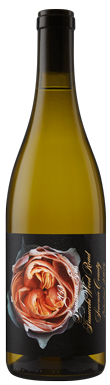

The signature bottling from Jolie-Laide, and the wine that sparked the project in the first place. Handled identically to the Pinot Gris in the cellar, where the grapes are stomped by foot and then cold-soaked for three days. The nose gives off aromas of watermelon rind, dried mushrooms and peonies. The palate is more rustic than that of the Pinot Gris, while being a bit softer and more nuanced on the finish.
2019
Jolie-LaideSonoma County

Jolie-Laide, Fanucchi Wood Road Trousseau Gris, Sonoma County, Russian River Valley, California, USA, 2017
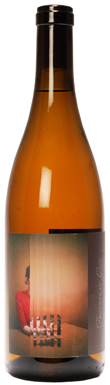
Deeper in colour and concentration than the 2019 vintage, this is a remarkable, singular wine, with aromas of pomegranate, nougat and bubblegum. The palate combines decadence with linearity, all wrapped up in a punchy, oily package. Flavours include cherry skins, soft red candy and walnut oil. There is nothing quite like this wine; a fantastic and versatile dinner-table companion.
2017
Jolie-LaideSonoma County
Jolie-Laide, Glen Oaks Vineyard Pinot Gris, Sonoma County, California, USA, 2019
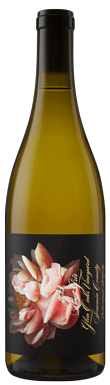
This Pinot Gris sits somewhere between an orange wine and a rosé in colour and style. The grapes are foot-trodden then cold-soaked for three days before being fermented in both stainless steel and neutral barriques. Aromas of almond skin, yellow apple and cantaloupe lead to a zesty palate that also displays width and breadth, giving way to a slightly gritty, floral finish. Refreshing and unique.
2019
Jolie-LaideSonoma County
Jolie-Laide, Rodnick Farm Melon de Bourgogne, Chalone, California, USA, 2019
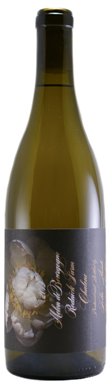
<p>Sourced from the historic Rodnick Farm in Chalone, planted by Richard Graff in 1985, these vines were originally thought to be Pinot Blanc. This is a round, tropical iteration of Melon, with aromas of papaya, lemon meringue, balsa wood and fresh sourdough bread. The palate is focused but fleshy, showing Asian pear and crushed chalk notes, leading to a soft and subtle finish. A fun, flashy California take on this Loire grape.</p>
2019
Jolie-LaideChalone
Jolie-Laide, Syrah, North Coast, California, USA, 2018
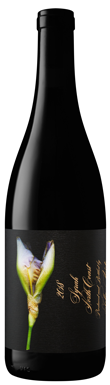
Fruit for this vintage was sourced from two sites in Yorkville Highlands: Hawke’s Butte and Halcon. The nose is simply stunning: beef jerky, olives and violets radiate out of the glass. The palate is svelte and perfectly balanced, melding dark fruits with roasted, charred earth flavours. Quintessential Syrah through an elegant, feminine lens, and one of the best from California I've ever tasted.
2018
Jolie-LaideNorth Coast
Jolie-Laide, Halcon Vineyard Syrah, Mendocino County, Yorkville Highlands, California, USA, 2016
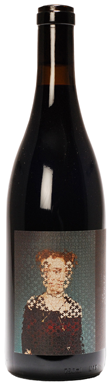
Halcon Vineyard sits at 700m above sea level in the Yorkville Highlands. A cool site above the fog line, it experiences less of a diurnal shift than its neighbours. Simultaneously a darker-fruited and more floral showing than the savoury North Coast Syrah, its texture is more expansive but its finish more ethereal. A fine counterpoint within the Jolie-Laide lineup.
2016
Jolie-LaideMendocino County
Jolie-Laide, Halcon Vineyard Syrah, Mendocino County, Yorkville Highlands, California, USA, 2015
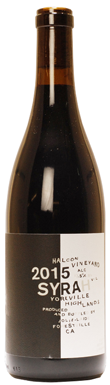
Spice-driven and earthy, with aromas of cardamom, anise and leather. The palate is rich but not heavy, showing notes of black plums, milk chocolate and espresso. It is texturally consistent with the rest of the Jolie-Laide lineup in combining silky precision, poised rusticity and a floral quality to the finish.
2015
Jolie-LaideMendocino County
Jolie-Laide, Barsotti Vineyard Gamay, Sierra Foothills, El Dorado County, California, USA, 2019
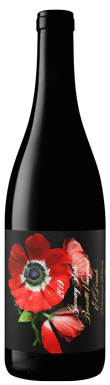
Barsotti Vineyard sits on decomposed granite at 790m in the Sierra Foothills. This site is one of two in the El Dorado AVA (the other being Witters Vineyard) that is showing great promise for Gamay production in California. Bright and red-fruited on the nose, deep, rustic and brambly on the palate, and notes of cherry purée and raspberry skin on the finish. A beautiful example of high-elevation California Gamay.
2019
Jolie-LaideSierra Foothills
Jolie-Laide, Barsotti Vineyard Gamay, Sierra Foothills, El Dorado County, California, USA, 2016
An exceptional example of what is currently a niche wine category. Sourced from 790m above sea level in the Sierra Foothills this undergoes partial carbonic maceration, as in Beaujolais. The nose is fantastic: violets, roses and bing cherries leap from the glass. The palate is weightless but succulent, with a clean finish of pomegranates and blueberry sherbet. Highly recommended if you can track it down.
2016
Jolie-LaideSierra Foothills
Jolie-Laide, Shake Ridge Vineyard Red, Amador County, California, USA, 2018
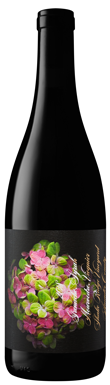
A Sierra Foothills cornerstone site, Shake Ridge Vineyard boasts an impressive array of California wineries as clients, and its proprietor Ann Kraemer is uncharacteristically amenable to adjusting her farming techniques to the specifications of each. This blend of mostly Grenache, Syrah, Mourvèdre and a dash of Viognier is both extremely floral yet quite rustic on the nose – my first thought was 'baby Bandol with Viognier added to it'! Harder-edged and more tannic than the Syrahs of this lineup, the evolution of this wine will be intriguing to follow.
2018
Jolie-LaideAmador County
Jolie-Laide, Trousseau Noir-Poulsard-Gamay-Valdiguié, California, USA, 2019
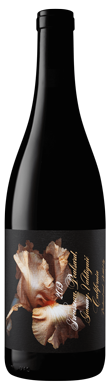
An Jura-inspired blend based on Trousseau Noir, Poulsard and Gamay with the unconventional addition of Valdiguié. Aromas of dried cranberries, sweet black cherries and cinnamon, then flavours of dried flowers, clove and sandalwood. A light and charming wine, displaying a pretty, spry and earthy palate. It's unconventional, yes, but done so in a meticulous and complete manner.
2019
Jolie-Laide
